
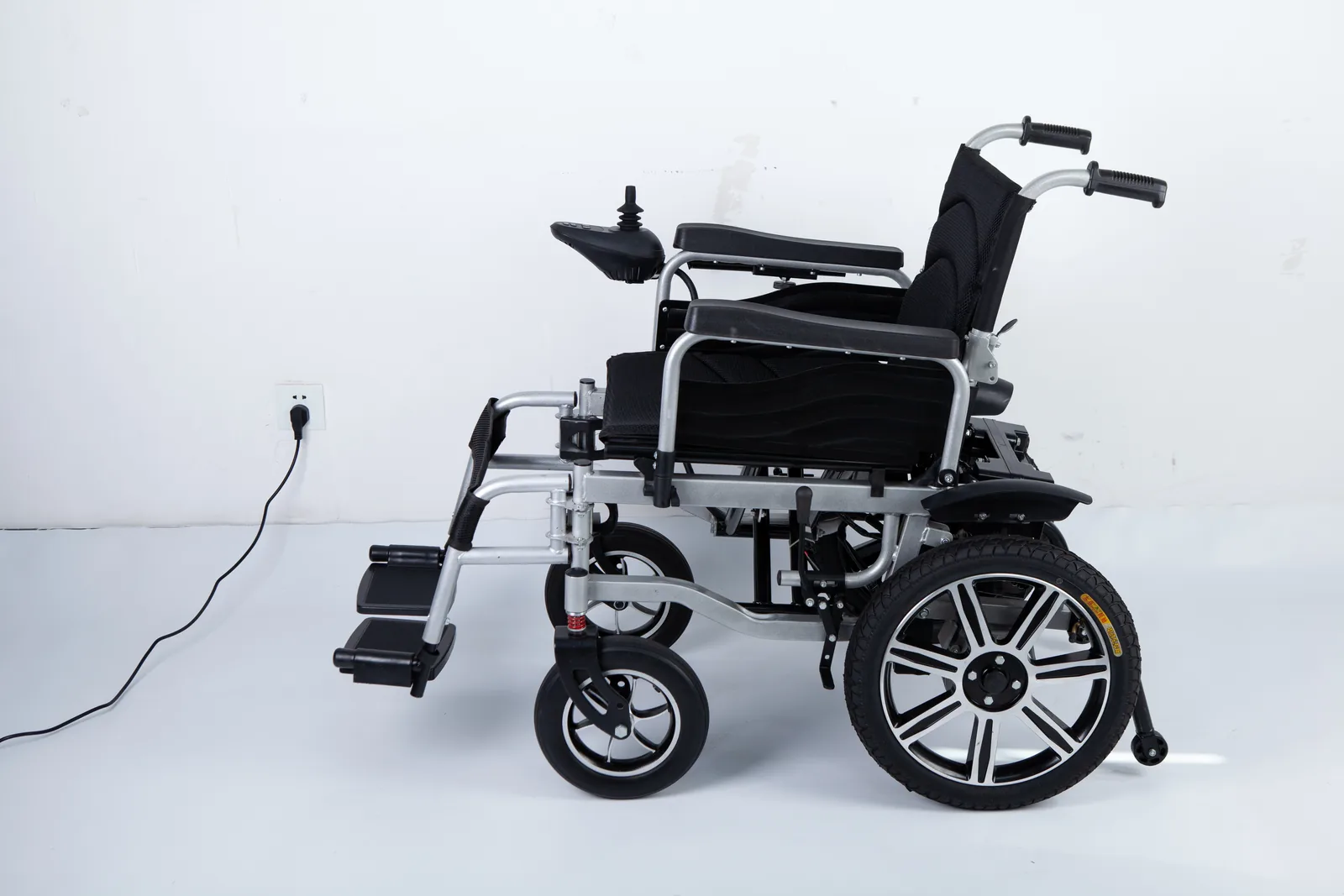
A power chair arrives from another market, and the charger label shows two voltage figures. Before you approve the shipment, quote a spare, or hand the chair to a user, you need to know which figure describes the wall supply and which describes the battery. The phrase power wheelchair charger input voltage 110 220 captures exactly this confusion: two numbers appear on one label, and it is easy to assume they describe one interchangeable supply.
The input rating describes the AC supply the charger expects; the output rating describes the DC current sent to the battery system. They are separate specifications, and neither one alone confirms that a charger suits a particular chair, battery, or country.
Power wheelchair charger input voltage 110 220: Separate input and output
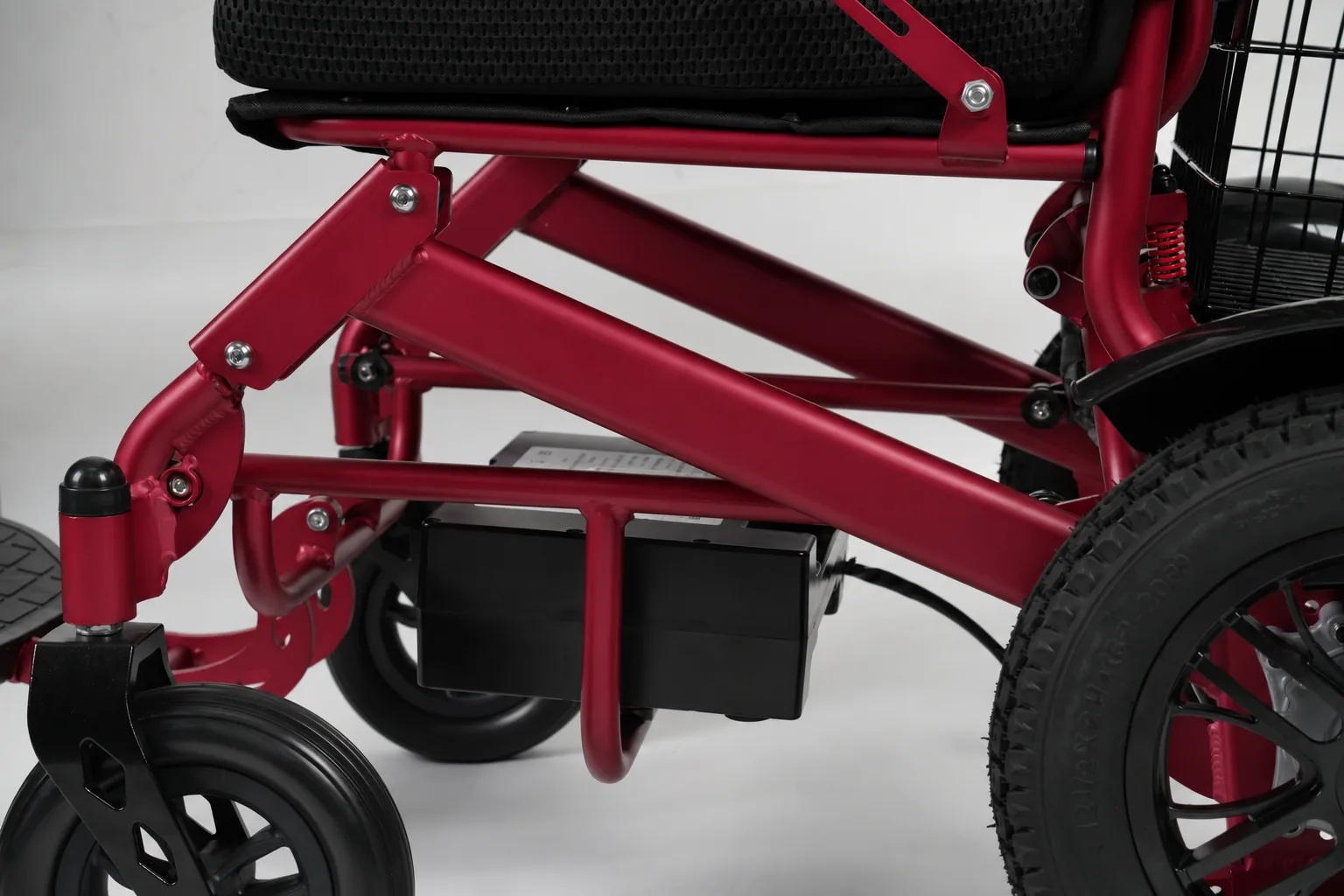
A charger sits between two electrical worlds, and its label records both. On one side is the mains supply from a wall socket. On the other is the direct-current system inside the power chair. Procurement and after-sales staff who read a single voltage number and treat it as "the charger voltage" lose the distinction that matters most when a unit crosses a border or a spare is ordered against a model list.
The practical consequence is that a charger record has to hold at least two ratings, and often three once the battery's own nominal voltage is added. A distributor who stores only one figure in a spare-parts database cannot later tell whether a replacement was matched on the wall side or the battery side. That gap tends to surface at the worst moment, when a chair is down and a technician is trying to decide whether a charger pulled from stock is the right one.
AC input and frequency
The input side of the label describes alternating current from the grid. Two fields usually appear: a voltage figure or range, and a frequency in hertz. Frequency is not a formality. A charger designed around one mains frequency is not automatically interchangeable with a supply running at another, and the label is where that expectation is recorded. MIUSA's electricity conversion tip sheet treats supply voltage and charger labelling as a practical question for people using powered equipment across different electricity systems, which is exactly the situation a cross-market buyer faces. What the label does not tell you is whether the charger tolerates a different supply; that has to come from the manufacturer's documentation for the exact unit.
A voltage figure printed alone, without a frequency, is already an incomplete input statement. It may still be correct for the market the charger was built for, but it does not by itself describe the conditions under which the charger was approved. Buyers should treat a missing frequency as an open question rather than as evidence that frequency does not matter for this product.
DC output to the system
The output side describes direct current delivered to the battery system. It typically includes a voltage and a current rating, and it belongs to the chair's battery configuration rather than to the wall. A charger with a correct-looking input range can still be the wrong charger if its output does not match the battery system it is meant to charge. This is why the two halves of the label should be recorded together, as a pair, in any spare-parts list or purchase record. Recording only the input figure creates a document that looks complete but cannot support a compatibility decision.
The same logic applies in reverse. A charger whose output matches the battery but whose input does not match the destination market is equally unsuitable, even though the battery-side numbers look right. Neither half of the label can carry the decision alone, which is why the pair is the minimum useful record and the battery configuration is the third element that completes it.
For readers comparing battery technologies alongside charger questions, the site's discussion of lithium versus lead-acid power wheelchair batteries sets out buyer checks at the battery level; the charger label is a separate document and should be read on its own terms.
Read a named charger label
A worked example makes the reading habit concrete. The ComfyGo Majestic IQ-9000 manual, as published on ManualsLib, presents charger information in a way that separates an input statement from an output statement. That separation is the useful lesson; the specific figures belong to that manual and that product, not to chargers generally. The example is worth walking through slowly, because the value is in how the document is structured rather than in any number it contains.
Printed input range
The input wording in that manual is not a clean, unambiguous range. It presents voltage information in a form that could be read more than one way, and that ambiguity is the point. A buyer should not convert an unclear printed input statement into a confident claim that the charger accepts any supply from 100 to 240 volts. Automatic wide-range operation is a design property that has to be stated, not inferred from the presence of two numbers near each other. When the label or manual is ambiguous, the correct procurement action is to ask the manufacturer to confirm the rated input voltage and frequency for the exact charger part number, and to keep that written confirmation with the order file.
This is where many cross-market errors begin. A reader sees two voltage figures, recognises both as familiar supply values, and concludes that the charger was built to handle either. That conclusion may turn out to be correct, but it is a conclusion the document has not yet supported. The difference between "the manual mentions two voltages" and "the manufacturer confirms this charger accepts both supplies" is the difference between a guess and a record. Only the second can be defended if a unit fails or a customer disputes a supply.
Output and chemistry
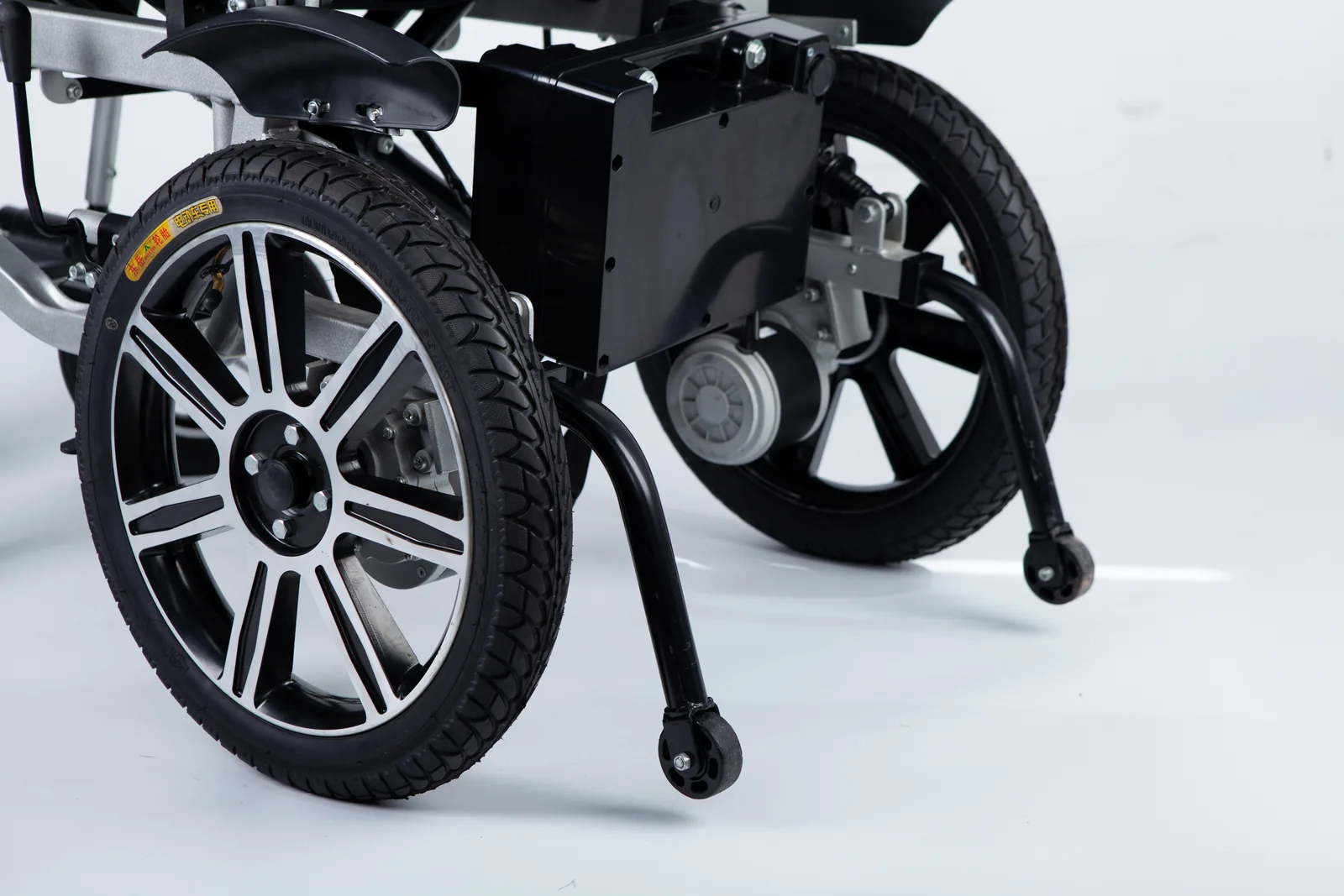
The output fields connect the charger to a battery system, and battery chemistry is part of that system. A charger is approved for a combination, not for a voltage in isolation. The manual for one model documents that model's charger; it does not license the same charger for a different chair, a different battery pack, or a later revision of the same product. Distributors building a spare-parts catalogue should therefore key charger records to the chair model, the charger part number, and the battery configuration the manufacturer specifies, rather than to a generic voltage class. Where the manual is silent or unclear on chemistry-specific charging, that gap is a question for the manufacturer, not a space to fill with an assumption.
A useful habit is to read the output line and the battery specification line together and ask whether the manufacturer has explicitly joined them. If the manual lists a charger output and separately lists a battery pack but never states that this charger is the approved match for that pack, the record is still incomplete. The join has to be documented somewhere, and if it is not in the paperwork in hand, it belongs on the list of questions rather than in the approved file.
Compare market documentation

Cross-market purchasing turns a labelling question into a documentation question. The same chair family may be sold into markets with different supply systems, and the charger supplied with each unit should be traceable to the market it was built for. A purchase order that specifies only the chair model leaves the charger underspecified, and the gap is usually invisible until someone tries to source a replacement or ship a unit onward.
Market and documentation
A workable record for each market pairs the destination with the manufacturer's approved charger configuration. The table below shows the fields worth capturing; the entries are questions to resolve with the supplier, not values to assume.
| Record field | What it should contain | Why it matters |
|---|---|---|
| Destination market | Country or region of intended sale | Ties the unit to the supply system it was configured for |
| Charger part number | Exact identifier from the manufacturer | Distinguishes revisions and variants |
| AC input rating | Voltage and frequency as printed | Defines the supply the charger expects |
| DC output rating | Voltage and current as printed | Links the charger to the battery system |
| Battery configuration | Chemistry and nominal voltage per manufacturer | Confirms the approved combination |
| Documentation source | Manual revision, date, and page | Makes the record auditable later |
| Open questions | Anything ambiguous or unstated | Prevents silent assumptions in the file |
Filling this table forces the buyer to notice where evidence stops. A row with a charger part number but no documented input rating is visibly incomplete, which is safer than a purchase file that appears finished because nobody wrote down the gap. The same table works as a receiving checklist: when a shipment lands, the label on the charger can be compared against the record, and any mismatch is caught before the unit reaches a user rather than after a fault is reported.
Plug shape is not voltage
A plug that fits a socket says nothing about the supply behind it, and a plug adapter changes the physical connection only. It does not convert voltage or frequency, and it does not make a charger suitable for a supply it was not built for. Buyers sometimes treat a matching plug as evidence of market suitability because it is the most visible feature of the charger. The label, not the connector, carries the electrical expectation. When a unit is offered for a market whose supply differs from the one on the label, the question to put to the manufacturer is whether an approved charger variant exists for that market, not whether an adapter can bridge the difference.
The connector on the chair side deserves the same caution. A charger that plugs into the chair correctly has satisfied a mechanical test, not an electrical one. Two chargers can share a connector and still differ in output, in approved battery chemistry, or in the market they were built for. Matching connectors are a starting point for identification, never a conclusion about compatibility.
Escalate uncertainty safely

Some label questions cannot be settled from the documents in hand, and that is a normal outcome in cross-market service work. The safe response is to stop the compatibility decision and route it to the party that holds the design authority: the manufacturer or an authorised service professional. Rewiring a charger, substituting a transformer, or connecting an unidentified charger to a chair moves the question from documentation into electrical work that this article does not cover and that untrained staff should not attempt.
Escalation is not a failure of the procurement process; it is part of it. A distributor who escalates an ambiguous rating has produced a documented question and, eventually, a documented answer. A distributor who guesses has produced nothing that can be checked later. The first outcome costs a little time; the second can cost a chair, a battery pack, or a customer relationship.
Unresolved rating
An unresolved rating usually looks like one of a few patterns: an input statement that could be read two ways, a missing frequency figure, an output rating that does not obviously match the battery pack in front of you, or a charger that arrived without documentation. Each pattern has the same handling rule. Record exactly what the label says, note what is missing, and put the specific question in writing. "Does charger part number X accept a 220 V 50 Hz supply?" is answerable. "Is this charger okay for Europe?" invites a guess. The written answer, with a date and the name of the person who gave it, becomes part of the service record and protects both the distributor and the end user.
A short escalation note is enough: the charger part number, the label text as printed, the destination market, and the specific question. Keeping the note with the order file means the next person to handle the same model does not have to rediscover the ambiguity.
Qualified confirmation
Confirmation should come from someone with the authority to approve the combination for that product. In practice that means the manufacturer's technical or service function, or a service professional the manufacturer recognises. Internal sales staff can relay the answer but should not originate it. For fleet and rental operators, the same rule applies at handover: the charger that travels with a chair should be the one documented for that chair, and any substitution should be approved before the unit goes out. Readers dealing with charging routines more broadly may find the site's article on leaving a power wheelchair charging overnight useful for the usage side, while this article stays with the label and documentation question.
FAQ

Does a plug adapter change the voltage? No. A plug adapter changes the shape of the connection so it fits a socket. It does not convert voltage or frequency, and it does not alter what the charger was designed to accept. Suitability still depends on the charger's printed input rating and the manufacturer's approval for that market.
Is charger input voltage the same as battery voltage? No. The input rating describes the AC supply the charger expects from the wall. The output rating describes the DC current delivered to the battery system, and the battery has its own nominal voltage. These are three related but distinct figures, and a charger is approved for a combination of them.
Does one model's label apply to every charger? No. A label or manual entry documents a specific charger, often a specific part number and revision. Other chargers, other battery configurations, and later product revisions need their own documentation. Where the supplied paperwork is ambiguous, ask the manufacturer to confirm the exact rating rather than extending one label to a whole product family.
Conclusion

Read the input and output fields as a pair, record them with the charger part number, and confirm anything ambiguous with the manufacturer before approving a cross-market unit.
Video: Wheelchair Tips: Charging your battery