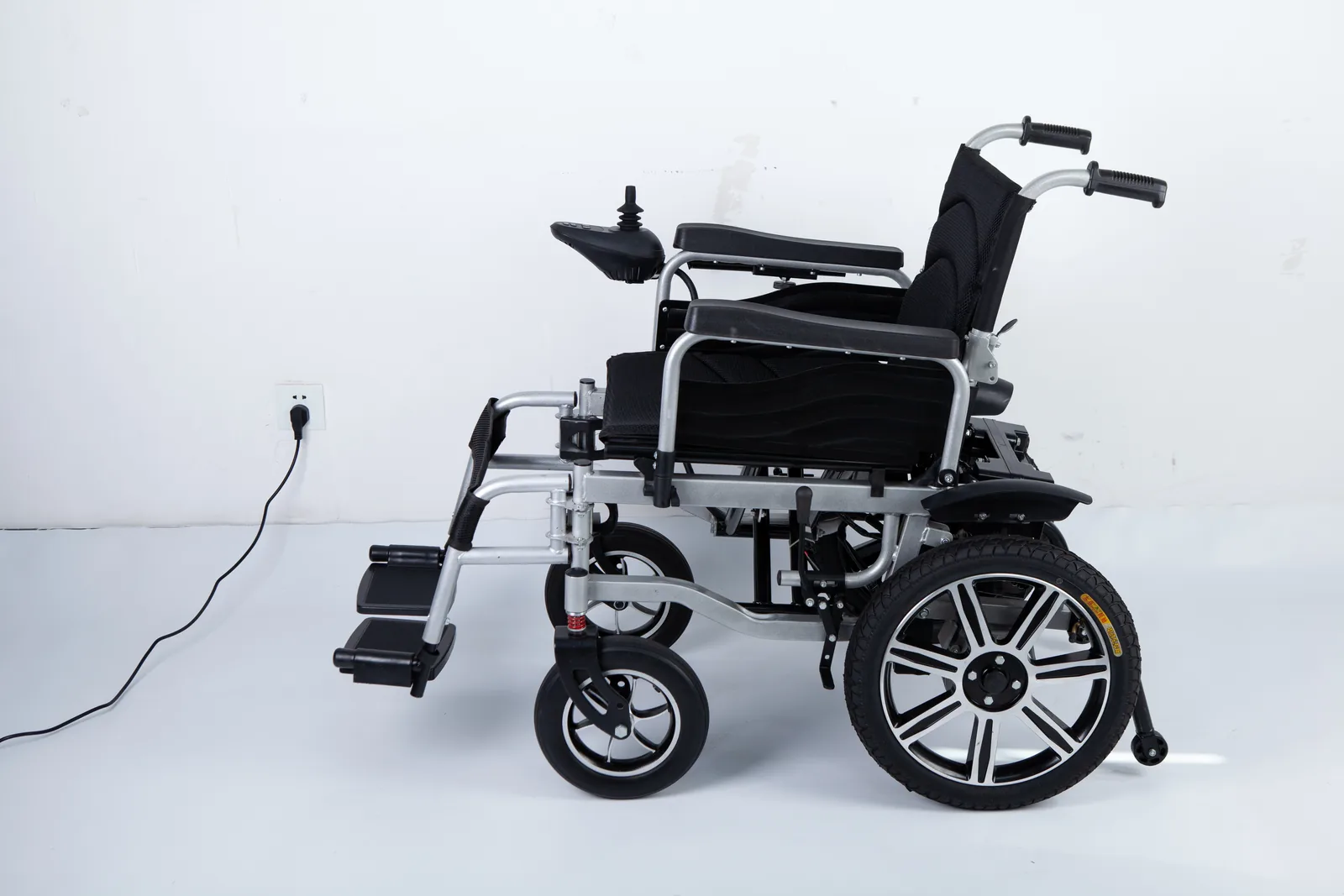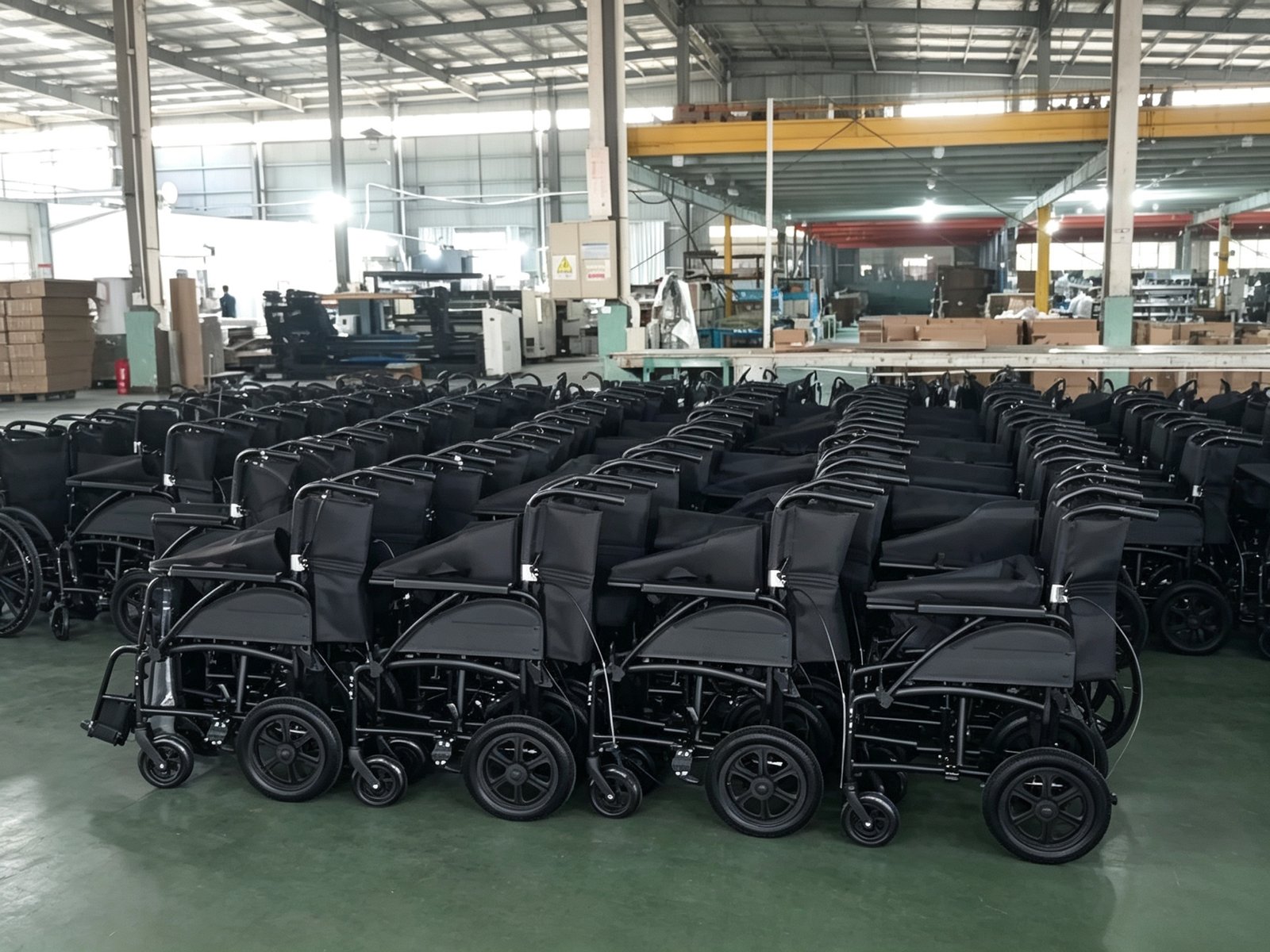
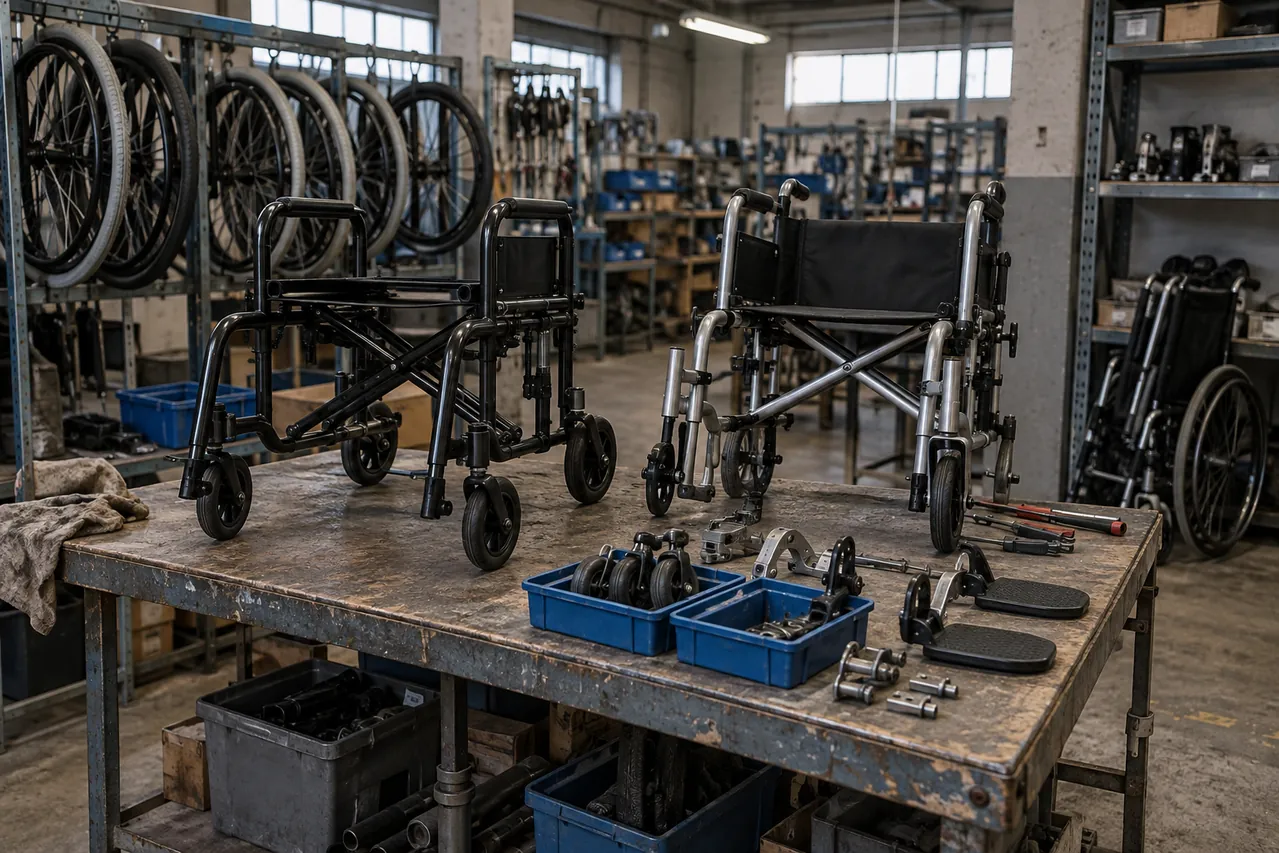
Lithium vs lead-acid power wheelchair batteries should be compared as part of a complete electric wheelchair system, not as interchangeable batteries. Lithium batteries may offer lower weight and higher usable energy density, while sealed lead-acid batteries can provide a lower initial purchase cost. However, actual range, charging performance, durability, safety and lifetime cost depend on the exact battery pack, wheelchair model and supporting electrical components.
For distributors, importers, durable medical equipment (DME) suppliers and institutional procurement teams, the important question is not simply which battery chemistry is better. Buyers need to confirm which complete wheelchair configuration has been designed, tested, documented and supported with the selected battery, charger, power system and service parts.
This guide explains six practical checks for comparing lithium and lead-acid battery configurations in finished power wheelchairs. It covers battery specifications, charger compatibility, whole-chair range and weight, relevant ISO standards, transport documentation, warranty and total ownership cost. It is a procurement guide, not an instruction manual for replacing or retrofitting batteries in an existing wheelchair.
Lithium vs Lead-Acid Power Wheelchair Batteries: Confirm the Chair Type First
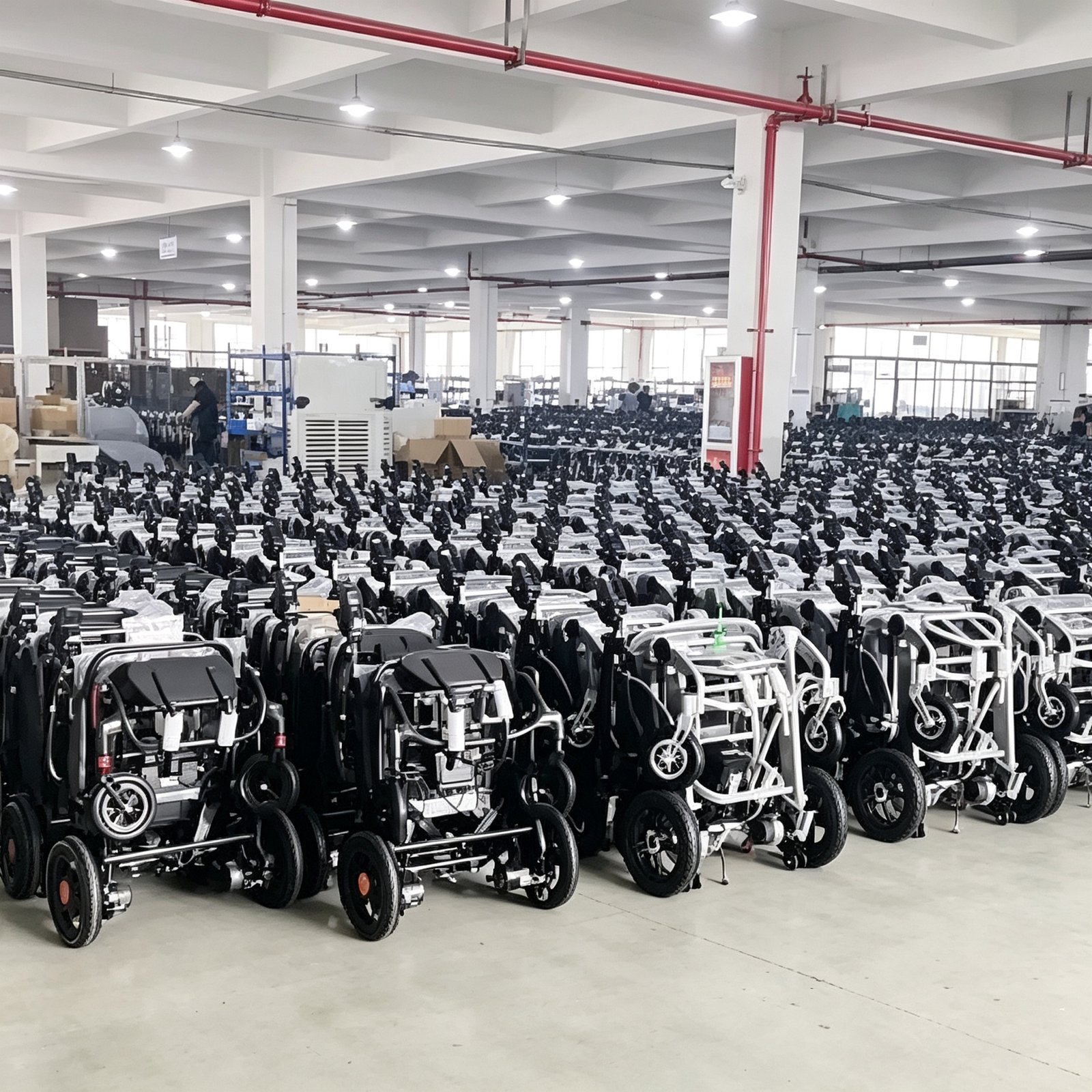
Before comparing batteries, identify the wheelchair category. Different types of wheelchairs have different propulsion systems and product requirements.
- Electric wheelchair or power chair: Uses a battery-powered propulsion system with motors and electronic controls. This is the product category covered by this guide.
- Manual wheelchair: Typically propelled by the user or an attendant without an integrated battery-powered propulsion system.
- Transport wheelchair: Normally attendant-propelled and not equipped with a powered drive system.
Some manual wheelchairs can be fitted with manufacturer-approved power-assist products. Those are separate configurations requiring their own system documentation and should not be treated as conventional power wheelchairs without review.
Scope: This article compares complete, manufacturer-specified electric wheelchair configurations. It does not recommend replacing a lead-acid battery with lithium, changing chargers or modifying wiring in a wheelchair already in service.
Why Battery Chemistry Is a Whole-Chair Procurement Decision
A wheelchair battery is connected to several other systems. Changing the battery chemistry can affect the charging arrangement, electrical protection, battery enclosure, system monitoring, overall weight and manufacturer-approved service procedures.
For lithium-powered wheelchairs, the battery pack commonly includes a battery management system (BMS) that monitors and protects the cells under defined conditions. The actual protective functions depend on the pack design.
Sealed lead-acid systems use different battery characteristics and charging requirements. Their protection and monitoring arrangements depend on the wheelchair’s original electrical design and charger.
Neither system should be judged by nominal voltage or connector shape alone. Two battery packs with similar voltage labels may have different charging profiles, protection requirements, capacity characteristics and integration constraints.
For a finished-chair procurement decision, request one complete specification covering the battery, charger, controller, connectors, installed configuration and applicable documentation.
Lithium vs Lead-Acid Wheelchair Batteries: Key Differences
The table below summarizes typical technology differences. These are general characteristics, not verified specifications for an individual wheelchair model.
| Comparison factor | Lithium battery system | Lead-acid battery system | Buyer evidence |
|---|---|---|---|
| Common chemistry | LiFePO4 and other lithium-ion chemistries. | AGM, gel and other specified lead-acid types. | Exact chemistry and battery part number. |
| Battery weight | Typically higher gravimetric energy density, offering weight-reduction potential. | Typically lower gravimetric energy density at comparable nominal stored energy. | Installed pack mass and complete-chair weight. |
| Initial cost | May have higher initial battery system cost. | May offer lower initial battery cost. | Complete chair, charger, spares and shipping quotation. |
| Cycle life | Can offer longer cycle life under appropriate operating conditions. | Cycle life depends strongly on design, discharge depth and charging conditions. | Supplier cycle-life test method and end-of-life criterion. |
| Charging | Requires a manufacturer-approved lithium charging arrangement. | Requires the charging profile specified for the actual lead-acid battery. | Charger model, electrical specifications and system validation. |
| Protection and monitoring | Review BMS functions and battery-to-chair integration. | Review charging controls, electrical protection and any monitoring system. | Whole-chair electrical and battery system documentation. |
| Range | Potential advantages depend on installed energy and system efficiency. | Performance depends on capacity, load, discharge behavior and chair efficiency. | Complete-chair range test data under stated conditions. |
| Maintenance | Follow approved battery pack and BMS service procedures. | Follow the specified sealed lead-acid battery and charger maintenance requirements. | Maintenance manual, warranty and authorized replacement policy. |
| Transport | Review lithium dangerous-goods classification and UN 38.3 requirements. | Review non-spillable, dry or spillable classification as applicable. | Battery-specific transport and logistics documents. |
Important: A lithium battery is not automatically safer, longer-lasting or more suitable for every wheelchair. A lead-acid battery is not automatically inferior for every institutional or commercial purchasing program. Evaluate the complete product against the intended application and the manufacturer’s verified data.
6 Essential Checks for Power Wheelchair Battery Procurement
These six checks are designed for wholesale buyers comparing finished electric wheelchair models or factory-approved battery configurations.
1. Confirm the Exact Wheelchair SKU and Battery Chemistry
Start with the supplier’s finished-chair specification. The document should identify the exact wheelchair model and the battery system supplied with that configuration.
Ask for:
- Wheelchair model and finished product SKU.
- Battery manufacturer and part number.
- Battery chemistry, such as LiFePO4, AGM or gel.
- Nominal voltage, capacity in ampere-hours and rated energy in watt-hours.
- Number of batteries or battery modules installed.
- Installed pack weight and location within the chair.
- Approved battery connector, mounting and enclosure configuration.
If a supplier offers the same wheelchair with lithium and lead-acid batteries, ask whether they are separately approved SKUs with their own specifications, test documentation and service parts.
Do not assume a supplier can offer a valid battery substitution merely because the two packs have a similar nominal voltage or physical size.
2. Verify Charger, BMS and Electrical Compatibility
The charger must be suitable for the exact battery system approved by the wheelchair manufacturer.
For lithium configurations, ask the manufacturer to identify the BMS and its documented protective functions, including relevant voltage, current, temperature and fault protections.
For lead-acid configurations, verify that the charger uses the charging characteristics specified for the battery type and arrangement. AGM and gel batteries should not automatically be treated as having identical charging requirements.
Request the following documents together:
- Battery and charger model numbers.
- Charger input and output specifications.
- Approved charging and disconnection instructions.
- Relevant BMS or system protection documentation.
- Connector and electrical integration details.
- Manufacturer-approved replacement charger and battery part numbers.
Do not choose a replacement charger based only on connector compatibility or rated voltage. Likewise, do not treat a BMS as a substitute for suitable charger design and complete system verification.
3. Compare Complete-Chair Weight, Range and Operating Conditions
A battery with higher energy density may reduce system mass, but the actual assembled wheelchair weight also depends on the motors, chassis, seating, wheels and accessories.
Compare the following values for the finished wheelchair, not only for the battery pack:
- Complete-chair mass with the installed battery system.
- Battery module mass and any approved removal configuration.
- Declared user weight capacity.
- Measured travel range under specified conditions.
- Operating speed and relevant drive settings during testing.
- Test load, surface, temperature and battery condition.
- Charging time measured under the specified test conditions.
If a supplier advertises that a lithium configuration has longer range than a lead-acid configuration, ask whether both were tested with comparable chair configurations, loads and operating procedures.
A larger battery’s nominal watt-hour rating does not by itself prove that the finished wheelchair will travel farther. Motor efficiency, controller operation, terrain, temperature, user load and other factors affect range.
Battery weight changes can also affect the overall product configuration. Any claimed improvement in handling or stability must be supported by the manufacturer’s appropriate whole-chair assessment.
4. Review the Applicable ISO 7176 Battery and Power-System Standards
Different ISO 7176 standards address different wheelchair systems. In particular, lithium and lead-acid wheelchair batteries have separate battery-specific standards.
Relevant references include:
- ISO 7176-31:2023: Requirements and test methods for lithium-ion battery systems and chargers used with powered wheelchairs.
- ISO 7176-25:2022: Requirements and test methods for lead-acid batteries and chargers used with powered wheelchairs. The published 2025 amendment should also be considered where applicable.
- ISO 7176-14:2022: Requirements and test methods for powered wheelchair power and control systems, together with its applicable amendment.
- ISO 7176-21:2025: Electromagnetic compatibility requirements for relevant electric wheelchairs, scooters and battery chargers.
These standards address different technical concerns and should not be treated as interchangeable certificates.
For example, a lithium battery test report does not automatically prove compliance with all powered wheelchair electrical and control-system requirements. Similarly, a charger test does not establish the finished chair’s operating range or overall product conformity.
When reviewing documentation, confirm:
- The standard and edition used.
- The exact battery, charger and wheelchair model covered.
- The tested configuration and relevant component revisions.
- The report issuer and report date.
- The reported results and stated limitations.
- Whether any engineering or component changes require additional evaluation.
Referencing an ISO standard does not establish that a product has passed its tests or obtained authorization for a specific destination market. Request the applicable evidence for the exact SKU.
5. Check Shipping Classification and Battery Transport Documents
Shipping requirements differ between lithium and lead-acid batteries and also depend on whether the shipment contains standalone batteries, batteries packed with equipment or batteries installed in a finished wheelchair.
For lithium-ion batteries, the U.S. Pipeline and Hazardous Materials Safety Administration (PHMSA) explains that battery designs offered for transport must meet the applicable UN Manual of Tests and Criteria, subsection 38.3 requirements.
PHMSA also states that lithium battery manufacturers must make the required UN 38.3 test summaries available upon request.
Official reference: PHMSA — Transporting Lithium Batteries.
Lead-acid batteries require separate classification checks. A non-spillable AGM or gel battery may be handled under different requirements from a spillable wet battery, provided the applicable classification conditions are satisfied.
For export procurement, request:
- Exact battery chemistry and technical specifications.
- Applicable battery transport classification.
- UN 38.3 test summary for the relevant lithium battery design.
- Relevant safety data and transportation documentation.
- Battery markings and required packaging information.
- Current shipping instructions appropriate to the goods and transport mode.
- Written confirmation of the handling requirements from a qualified freight provider.
Airline Mobility-Aid Rules Are Not the Same as Commercial Export Shipping Rules
The IATA 2026 Battery-Powered Mobility Aid Guidance addresses the transportation of powered wheelchairs used by passengers.
The FAA PackSafe wheelchair guidance distinguishes installed lithium batteries that are adequately protected by the wheelchair design from batteries that must be removed and separately protected.
Different limits and handling instructions can apply to removable lithium batteries, installed batteries, spare batteries, non-spillable lead-acid batteries and spillable battery systems.
Do not apply a blanket 300 Wh limit to every installed lithium wheelchair battery. The rules depend on the actual battery configuration and protection arrangement, among other conditions.
Passenger mobility-aid rules also should not be used as the shipping classification for commercial inventory, spare batteries or wholesale sample consignments. Confirm the correct shipment classification and carrier requirements separately.
6. Verify Warranty, Replacement Batteries and End-of-Life Support
A battery purchasing decision affects long-term product support. Distributors and institutional buyers need more than a stated battery warranty period.
Ask the supplier to confirm:
- Battery warranty duration and covered conditions.
- Applicable capacity-retention or end-of-life criteria, if specified.
- Replacement battery and charger part numbers.
- Availability of authorized service documentation.
- Whether replacement batteries require configuration, pairing or another approved service process.
- Spare battery stock availability and expected lead times.
- Handling requirements for defective, damaged or recalled batteries.
- End-of-life battery collection or recycling obligations in the destination market.
The supplier should identify who provides technical support and which party is responsible for warranty claims, replacement components and product-related battery incidents.
Do not assume that a replacement battery from another manufacturer is compatible simply because its voltage, capacity or connector appears similar.
For institutional fleets, a documented replacement path can be as important as initial purchase cost. Delays in sourcing compatible batteries may affect equipment availability and service planning.
Lithium vs Lead-Acid Wheelchair Batteries: Total Cost of Ownership
The lowest battery purchase price is not necessarily the lowest total procurement cost. Compare whole-chair pricing, replacement requirements, service support and logistics over a defined purchasing period.
For a meaningful total cost of ownership (TCO) comparison, request the same cost categories from each supplier.
A practical comparison uses a consistent period, such as the buyer’s intended fleet replacement or purchasing cycle, and documents the assumptions for each cost.
Do not claim that lithium always has a lower lifetime cost or that lead-acid always offers better value. The result depends on actual purchase prices, battery performance, duty cycle, replacement requirements and service arrangements.
How to Compare Battery Capacity Without Misleading Buyers
Battery capacity is often advertised in ampere-hours (Ah), but Ah alone does not provide a complete comparison when nominal voltages differ.
For a battery with a stated nominal voltage and rated capacity, a basic nominal energy estimate is:
Nominal energy (Wh) = Nominal voltage (V) × Rated capacity (Ah)
This estimate helps standardize battery specification data, but it does not establish actual usable energy, real-world wheelchair range or the energy delivered under every discharge condition.
Different battery systems may have different discharge behavior, management limits and manufacturer-defined operating conditions. Therefore, ask for both the electrical specification and the finished wheelchair’s measured range.
Questions to Ask a Lithium or Lead-Acid Wheelchair Supplier
For wholesale purchasing, send the supplier a structured request that identifies the complete product rather than asking only for lithium or lead-acid battery prices.
- Can you supply this exact wheelchair model as a manufacturer-approved lithium or lead-acid configuration?
- If both chemistries are offered, are they separate finished-chair SKUs with distinct specifications?
- What are the battery manufacturer, chemistry, voltage, capacity, watt-hour rating and part number?
- Which charger and electrical protection system are approved for each configuration?
- Which complete-chair range, weight and charging results are available, and under what test conditions?
- Which ISO 7176 standards and other applicable requirements are supported by exact-model test documentation?
- What battery transport documents are available for the intended shipping method and destination?
- What spare battery, charger, warranty and end-of-life support arrangements are offered?
- Are there any restrictions on battery changes, replacement procedures or approved service providers?
- What is the minimum order quantity, unit price, sample timeline and production lead time for each SKU?
Ask for answers in writing and distinguish confirmed product data from pending technical feasibility or documentation review.
Procurement rule: If the supplier cannot connect the battery, charger and finished wheelchair to one clearly identified, documented configuration, do not treat the proposed chemistry as a verified alternative for the same model.
Prepare a Model-Specific Power Wheelchair Battery RFQ
Before requesting a quotation, define your procurement requirements so the supplier can compare complete power wheelchair systems on an equivalent basis.
For distributors and institutional buyers, this request can help establish whether two battery options are genuinely comparable or whether they represent different finished-wheelchair configurations.
When sourcing through Wheelchairs Factory, include the target market, estimated quantity, wheelchair model and required technical documents in the quotation request. Any specific lithium or lead-acid configuration, customization, documentation package or service arrangement must be confirmed during the supplier review.
Lithium vs Lead-Acid Power Wheelchair Batteries: Frequently Asked Questions
Are Lithium Batteries Better Than Lead-Acid Batteries for Electric Wheelchairs?
Not in every application. Lithium batteries can offer weight and cycle-life advantages, while lead-acid batteries may provide a lower initial purchase cost. The correct buying decision depends on the exact wheelchair model, complete system cost, supported charging arrangement, verified performance and service requirements.
Can You Replace a Lead-Acid Wheelchair Battery With Lithium?
Do not assume the chemistries are interchangeable. A conversion can affect the charger, electrical protection, controller integration, wiring, compartment configuration and overall wheelchair performance. Any change must be expressly approved and documented by the responsible manufacturer. This article does not provide retrofit instructions.
Is a Lithium Power Wheelchair Always Lighter?
No. Lithium batteries typically have higher energy density by mass, but complete wheelchair weight also includes the frame, seating, motors, wheels and accessories. Compare the assembled weight of the exact chair configurations rather than estimating the result from battery chemistry alone.
Which ISO Standards Apply to Wheelchair Batteries?
ISO 7176-31:2023 addresses lithium-ion battery systems and chargers for powered wheelchairs. ISO 7176-25:2022 addresses lead-acid batteries and chargers, with a published 2025 amendment. ISO 7176-14:2022 covers powered wheelchair power and control systems. Buyers must confirm the applicable standards and model-specific evidence for their intended product and market.
Does a UN 38.3 Test Summary Prove a Wheelchair Is Safe?
No. UN 38.3 addresses specified lithium battery transport testing. It does not replace the testing, regulatory assessment or technical documentation applicable to a complete powered wheelchair, its electrical system or its intended market.
Can All Lithium Electric Wheelchairs Be Taken on an Airplane?
No universal acceptance can be assumed. The applicable requirements depend on battery type, protection, whether the battery remains installed or must be removed, device dimensions and airline procedures. Commercial export shipments follow separate transport requirements. Confirm each journey or shipment with the responsible carrier.
Which Battery Chemistry Has a Lower Total Cost of Ownership?
The answer depends on purchase price, actual cycle life, usage, replacement costs, shipping, maintenance, service availability and the buyer’s ownership period. Compare manufacturer-supported figures for complete wheelchair configurations instead of applying a universal battery lifespan or savings claim.
Final Buyer Checklist: Compare the Complete Power Wheelchair
Before approving lithium or lead-acid electric wheelchair procurement, confirm these points:
- The exact wheelchair SKU and its approved battery configuration are identified.
- The battery chemistry, part number, voltage, capacity and energy rating are documented.
- The charger and electrical protection system are approved for the installed battery.
- Complete-chair weight and range are supported by defined product specifications or tests.
- The applicable ISO 7176 standards have been identified and relevant documentation requested.
- The appropriate battery transport classification and supporting documents are available.
- Warranty, replacement batteries, charger supply and authorized service procedures are defined.
- End-of-life and damaged-battery handling requirements have been reviewed.
- The quotation identifies the exact configuration, quantity, packaging and shipping terms.
- Any unverified battery option is treated as pending manufacturer assessment rather than an approved replacement.
Lithium vs lead-acid power wheelchair batteries is ultimately a complete-product purchasing decision. Lithium may offer lower battery mass and favorable operating characteristics, while sealed lead-acid configurations may provide a different balance of upfront cost and service requirements.
For distributors, importers and institutional procurement teams, the strongest comparison is based on manufacturer-approved wheelchair configurations, verified performance, compatible chargers, relevant testing, documented transport requirements and long-term replacement support.
Use the supplier’s current specifications and exact-model evidence before approving a purchase, rather than relying on chemistry-level marketing claims.
Source review: October 28, 2026. Technical references include ISO 7176-31:2023 — Lithium-Ion Battery Systems and Chargers, ISO 7176-25:2022 — Lead-Acid Batteries and Chargers, ISO 7176-25:2022 Amendment 1:2025, ISO 7176-14:2022 — Power and Control Systems, ISO 7176-21:2025 — Electromagnetic Compatibility, PHMSA Lithium Battery Transport Guidance, IATA Passenger Dangerous-Goods Guidance and FAA Wheelchair and Mobility Device Battery Guidance. These resources describe standards and transport requirements; they do not establish the compliance, availability or performance of a particular Wheelchairs Factory product. All finished-chair specifications, test results, shipment classifications and commercial terms must be confirmed for the actual model and destination market.
Video: Pride Jazzy Evo 613: Lithium vs U1 battery — Mobility Solutions