A seating team, caregiver, or facility user notices that a wheelchair cushion looks flattened under the person sitting on it and asks whether the cushion has "bottomed out." The term is used in seating practice, but it is often applied loosely to any visible dip. Understanding wheelchair cushion bottoming out starts with separating a loaded support problem from ordinary compression, permanent deformation, and surface wear.
Bottoming out means the cushion's loaded surface has compressed far enough that the person's contact area is no longer being supported as the cushion was designed to support it. It is a loaded, product-specific condition, not a synonym for wear, a permanent dent, or a single low reading on a pressure map.
Wheelchair cushion bottoming out: Define bottoming out
In seating language, bottoming out describes a cushion that has been loaded to the point where the support it was designed to provide is substantially reduced or lost. The important word is loaded. A cushion that looks thin on a shelf is not bottoming out; a cushion that compresses when someone sits on it may be. The concept therefore belongs to the interaction between a specific cushion, a specific person, and a specific seating setup, not to the cushion alone.
Specialist seating writing treats bottoming out as a threshold condition rather than a mild change. Posture and Mobility's seating-focused blog post on checking for bottoming out frames it as a state in which the cushion can no longer do its supporting job, which is why the term carries more weight than "a bit squashed." That framing is conceptual: it explains what the term means in seating practice, and it does not supply a universal inspection procedure that applies to every cushion on the market. Readers should treat it as a definition to discuss with a professional, not as a test they can run on an unknown product.
Support surface
The support surface is the part of the cushion that carries the person's weight and distributes it. In foam cushions it may be one or more foam layers; in air or fluid cushions it may be cells, bladders, or a contained medium; in other designs it may be a combination. Each design achieves support differently, so the point at which support is lost differs by product. A cushion with a defined load-bearing structure can be assessed against that structure, while a cushion whose support depends on contained volume needs a different kind of question. This is why a single visual rule cannot be carried from one cushion type to another, and why the cushion's own documentation matters more than a general impression of firmness.
Critical immersion
Immersion is how far the body sinks into the cushion. Some immersion is normal and expected: a cushion is supposed to conform enough to distribute load and reduce concentrated pressure. Bottoming out describes immersion past a critical point, where the cushion has little or no remaining capacity to do that work. The distinction matters for readers because a cushion that visibly compresses is not automatically failing. The question is whether the compression has passed the point the design intended, and that threshold is defined by the product and by the seating professional's assessment, not by how dramatic the dip looks.
For a facility or family reader, the practical consequence is that "it looks flat" is an observation, not a conclusion. Record what was seen, under what load, and on which cushion, then route the question to someone who can evaluate it against the correct product information. Keeping the observation separate from the interpretation protects the person from a premature replacement decision and protects the team from acting on an impression that may not reflect how the cushion performs in use.
Separate it from visible wear
Wear, material state, and loaded performance are three different questions, and one does not answer another. A cushion can show surface wear and still support well; a cushion can look intact and still bottom out under load; a cushion can hold its shape when empty and lose support when someone sits on it. Treating any single observation as proof of the others leads to wrong replacement decisions and missed assessment needs.
Wear or deformation
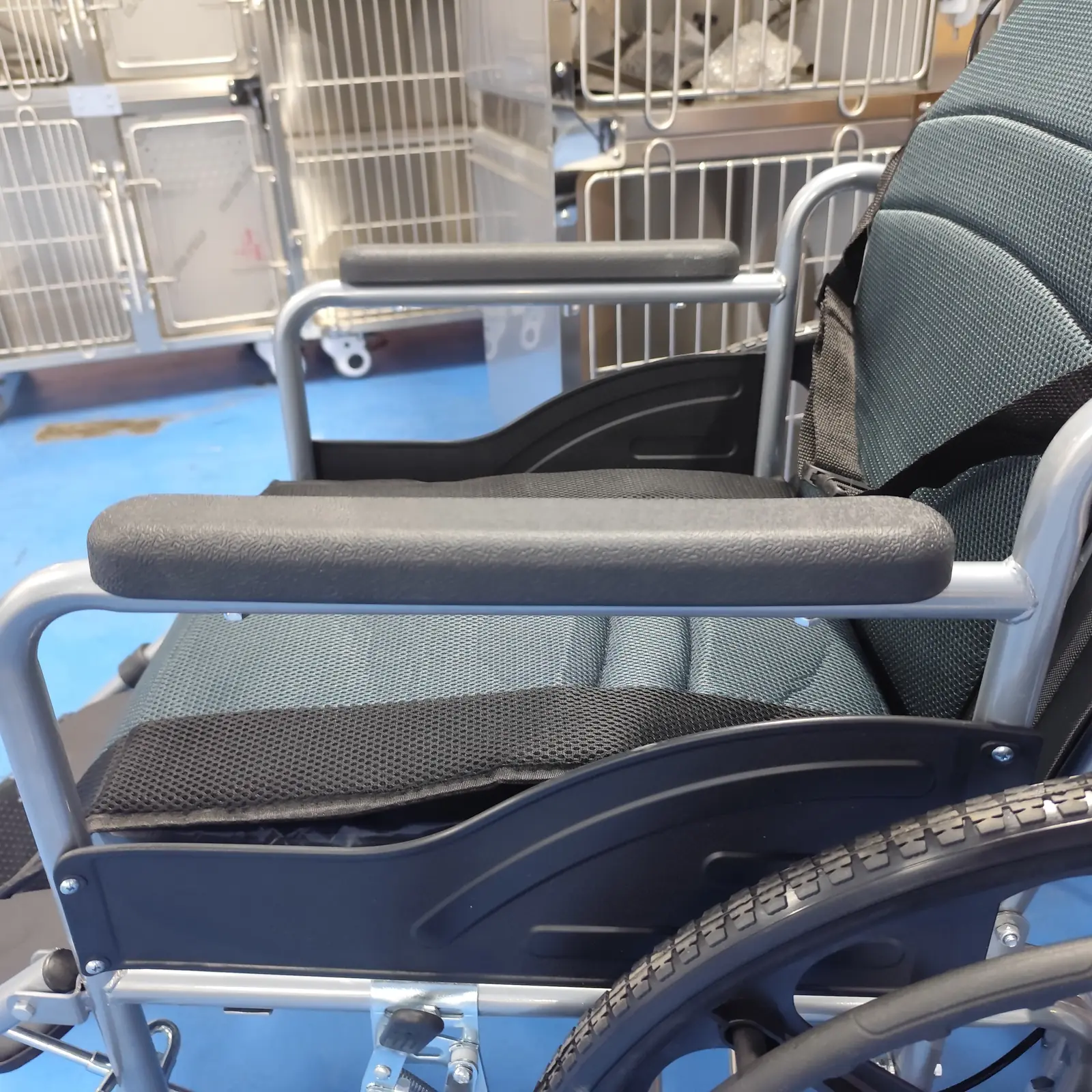
Wear includes cover abrasion, stitching failure, compressed or crumbling foam, delamination, and permanent deformation such as a dent that remains after the person gets up. These are material and condition observations. They are useful because they are recordable and comparable over time, and our article on when a wheelchair cushion is worn out deals with recording those changes. But a permanent dent is not the same event as bottoming out under load, and a cushion without a visible dent is not cleared by that absence. Deformation describes what the material has become; bottoming out describes what happens when the cushion is used.
Observed seating context
The context of an observation changes what it can tell you. The same cushion may behave differently depending on the person's position, the wheelchair's seat surface, the cushion's placement, whether the cover is the specified one, and how the cushion has been maintained. A dip seen during a brief transfer is not equivalent to a loaded observation during actual sitting. For institutional readers, this argues for recording context alongside the observation: who was seated, on which cushion and serial or model identifier, on which chair, and what exactly was seen. That record supports a later professional conversation without pretending to be an assessment.
| Observation | What it can indicate | What it cannot establish on its own |
|---|---|---|
| Cover abrasion or split seams | Surface wear; possible contamination or fit change | Whether the support surface still performs under load |
| Foam feels soft or crumbly when handled | Material degradation | The loaded threshold for this person and cushion |
| Dent remains after unloading | Permanent deformation | That the cushion bottoms out during use |
| Visible compression while seated | Immersion under load | Whether immersion has passed the critical point |
| Low reading on a pressure map | A pressure distribution result at that moment | The cause of the pattern or a diagnosis |
| Cushion model and manual on file | Which product-specific guidance applies | That the cushion is or is not suitable for this person |
Read the table as a set of separate evidence types rather than a checklist where one row confirms another. The strongest position for a seating team or facility is usually several rows recorded together, with the exact product identified, so the professional assessment starts from facts instead of impressions.
Read the named cushion manual

Product documentation is where a cushion's own terms and limits live, and it should be read for the exact model in front of you. Manufacturer manuals describe the design, the intended setup, maintenance, and the conditions the manufacturer associates with loss of performance. Those statements are written for that product. They are not a general standard for cushions from other makers, other models, or other design types.
Named product example
The Sunrise Medical JAY J3 cushion owner's manual is one supplied example. Its page 4 discusses bottoming out in relation to volume loss for that cushion. That is a product-specific statement about the JAY J3, and it is useful precisely because it shows how a manufacturer frames the condition for its own design. It does not establish that every cushion loses support through volume loss, that the same wording applies to foam or hybrid cushions, or that a reader can apply JAY J3 guidance to a different product. When citing it, keep the model name and the manual attached to the claim.
Limits of a product guide
A manual tells you what the manufacturer says about its product; it does not tell you what is happening for a particular person. It cannot weigh the person's seating requirements, posture, history, or the clinical judgment that belongs to a qualified seating professional. It also cannot confirm that the cushion in use is the model and configuration the manual covers, which is why model and serial identification matter before any guidance is applied. For a facility, the sensible practice is to keep the correct manual with each cushion type in the fleet and to check that the cushion in service matches it. Where the manual is missing or the model is unclear, that gap is itself the finding to resolve before drawing conclusions. A manual also cannot tell you whether a cushion that once suited a person still does after their needs change, so documentation and reassessment work together rather than replacing each other.
Ask for professional assessment

Bottoming out is a seating-performance question, and the responsible next step for a user, caregiver, or facility team is to request assessment by a qualified seating professional rather than to decide from appearance. That is not a way of avoiding the question; it is the correct route, because the judgment depends on the person, the product, and the setup together. This article does not diagnose skin or tissue condition, does not prescribe a cushion, and does not convert one manufacturer's checks into a universal procedure.
Assessment context
A productive assessment starts with context the reader can gather without making clinical judgments. Useful items include the cushion's make, model, and serial or asset number; how long it has been in use; the wheelchair it sits on; the cover in use; any maintenance or cleaning history; what was observed and when; and whether the observation was made under load. For institutional readers, add the asset record and any previous seating review. Bringing these facts shortens the assessment and reduces the chance that the wrong cushion or the wrong manual is being discussed. Photographs of the label and the cushion in place can help identify the product, though a photograph cannot demonstrate loaded performance.
Questions for the provider
Specific questions make the referral more useful than a general request to "check the cushion." Consider asking which product-specific guidance applies to this cushion; whether the observed change is wear, deformation, or a loaded support problem, or more than one; what information the assessment needs from the user or facility; whether the cushion's configuration or cover is part of the issue; and what the appropriate follow-up and recording should be. A seating professional can also clarify what the reader should watch for between reviews, within the limits of their own assessment.
| Who | Useful contribution | Decision that stays with others |
|---|---|---|
| Wheelchair user or caregiver | Observations, changes noticed, dates, comfort and routine context | Clinical or seating judgment |
| Facility or fleet staff | Asset records, model and serial, manual on file, maintenance history | Individual seating suitability |
| Seating professional | Assessment of the person, cushion, and setup together | Manufacturer's product statements |
| Manufacturer documentation | Product-specific design, setup, and maintenance information | The individual's needs |
FAQ
Is every visible cushion depression bottoming out? No. Some immersion is normal and intended, and a visible dip does not by itself show that support has been lost. Bottoming out refers to compression past a critical point under load, which depends on the specific cushion and the person using it. A depression is an observation to record and, where it raises concern, to discuss with a seating professional.
Can a pressure map alone establish the cause? No. A pressure map records a pressure distribution result at a point in time. It can be part of an assessment, but it does not by itself explain why a pattern appears, whether a cushion has bottomed out, or what a person's tissue condition is. Those conclusions require professional interpretation alongside product information and the person's context.
Do all cushion types use the same checks? No. Foam, air or fluid, and combined designs manage load differently, and manufacturers describe their own products in their own manuals. Guidance written for one named cushion, such as the JAY J3 manual's discussion of volume loss, applies to that product. For any other cushion, use its own documentation and the seating professional's assessment.
Conclusion
Bottoming out describes lost support under load, not every dent or worn cover. Record the exact cushion and context, then ask a seating professional to assess.