You are comparing electric wheelchairs and one line in the specification reads "ground clearance." Before you treat that number as a pass-or-fail answer for a curb, threshold, or rough path, you need to know which part of the chair it describes and what it does not tell you.
Electric wheelchair ground clearance is the distance between a stated lowest point of a specific model, in a stated configuration, and the ground. It is not the same as the obstacle height that model is tested or rated to climb, and one figure alone cannot confirm that a route will work.
Electric wheelchair ground clearance: Identify the model, configuration and measurement point
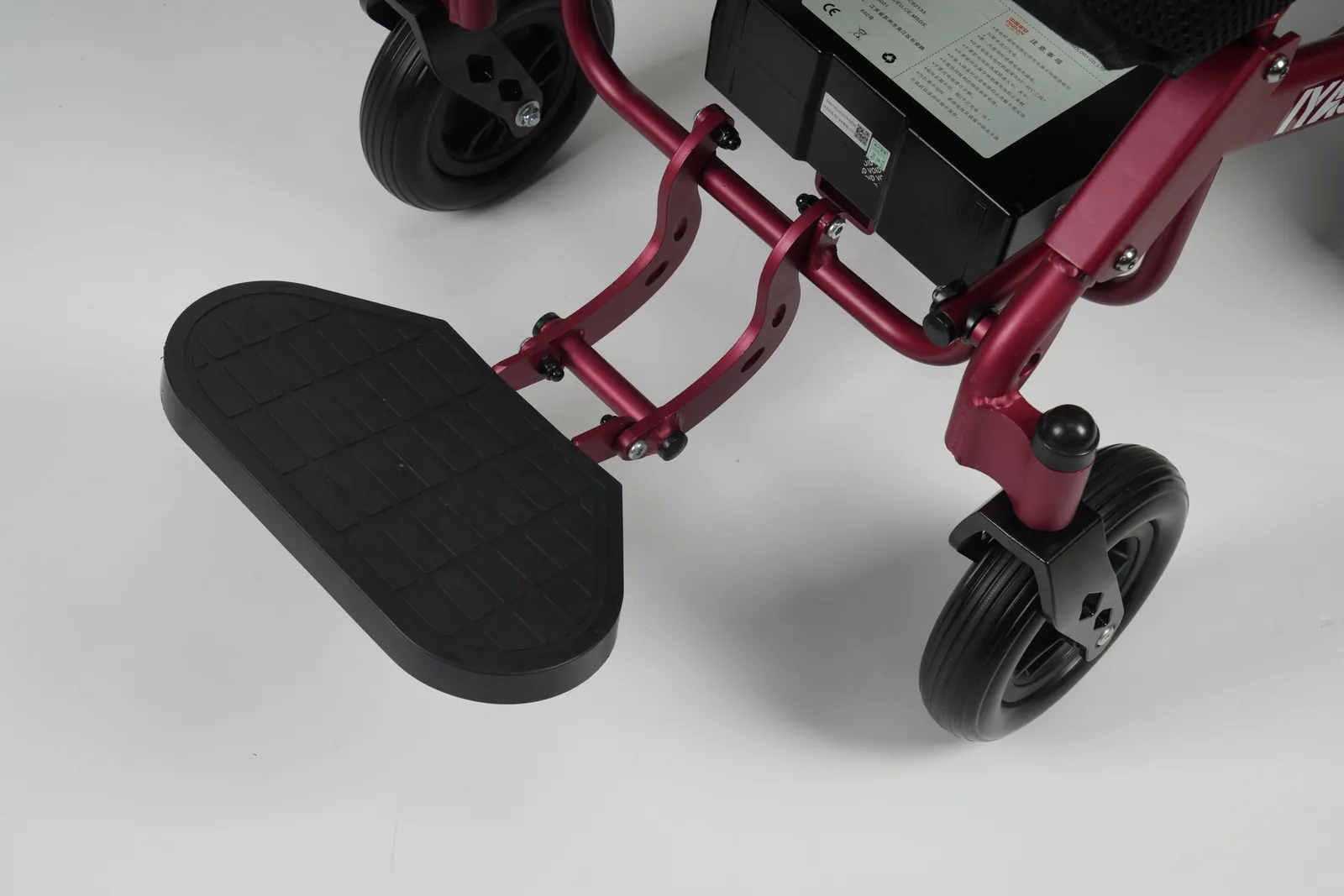
The first step is to stop treating "ground clearance" as a single universal property of electric wheelchairs. It is a measurement attached to a particular model, a particular build, and a particular reference point. Two chairs that look similar can publish different figures because they are measuring different things, not because one is better.
Published specifications show this clearly. WHILL's page for its Model F lists ground clearance and obstacle clearance as separate entries, which signals that the manufacturer treats them as two different facts about the same chair. Pride Mobility's specification page for the Go Chair lists ground clearance values against different parts of the chair rather than offering one blanket number. Those two examples are useful precisely because they show that the label "ground clearance" can sit next to a part name, a test value, or a single headline figure depending on the source.
That matters for a dealer building a comparison sheet or a fleet manager writing a procurement requirement. If your shortlist column says "clearance" and you paste in whatever number appears first, you may be comparing a frame height against a footrest height and calling it a comparison. The result looks tidy and is not comparable. A dealer who later has to explain the shortlist to a client, or a procurement officer who has to defend a specification to a committee, inherits that error and has to unpick it.
Configuration belongs in the same record. A chair may be offered with different footrest arrangements, anti-tip fittings, or seating setups, and those choices can change which part sits lowest. The specification you are reading may describe a standard build, a specific version, or a configuration that differs from the one you would actually order. Treat the figure as belonging to the exact version named on the page, and note the version alongside the number. If the page does not name a version at all, that absence is itself worth recording, because it means the figure cannot yet be tied to a build you could order.
Record each stated reference point
When a source gives more than one clearance figure, keep each one with its label instead of collapsing them into a single value. A simple record keeps the comparison honest and shows a colleague or supplier exactly what you compared.
| What to record | Why it matters | Example of a source pattern |
|---|---|---|
| Exact model and version | A figure belongs to one build, not a whole product family | WHILL Model F page lists clearance entries for that model |
| The part named as the reference point | Frame, footrest, and anti-tip parts sit at different heights | Pride Go Chair page lists clearance against different parts |
| Configuration or accessory state | Fitted parts can change which point is lowest | Confirm the build the figure describes |
| Whether the figure is a clearance or a test height | These answer different questions | WHILL page separates ground and obstacle clearance |
| Source and date checked | Specifications get revised | Note the page and the date you read it |
A table like this is not bureaucracy. It is the difference between a shortlist that survives a second look and one that quietly mixes incompatible numbers. It also gives you something concrete to send a supplier: instead of asking a general question about clearance, you can point to the exact cell that is missing or ambiguous and ask for it to be filled in for the configuration you intend to order.
Distinguish ground clearance from obstacle test height
Ground clearance and obstacle clearance answer different questions, and confusing them is the most common way a specification gets over-read. Ground clearance describes a physical gap under the chair at a named point. Obstacle clearance, where a manufacturer publishes it, relates to an obstacle the chair is described as able to negotiate. The WHILL Model F page presents both as separate specification entries, which is a reminder that the manufacturer did not intend them to be read as the same number.
A clearance figure tells you how much space exists beneath a stated part. It does not, by itself, tell you that the chair will climb a curb of that height, roll over a lip of that depth, or clear a threshold without contact. Climbing involves drive configuration, wheel size, traction, approach angle, speed, and the surface, none of which a single under-frame measurement captures. A chair with generous clearance at the frame might still have a low footrest or an anti-tip fitting that contacts an edge first.
This is why a clearance number should be read as one input among several, not as a rating. If a route includes a raised lip at a doorway, the useful question is not "is the clearance bigger than the lip?" but "which part of this chair would meet that lip first, and what does the manufacturer say about that part and that maneuver?" Those are different questions, and only the second one leads toward a real answer. The first question produces a comfortable yes or no that the specification was never designed to support.
The same logic applies when a specification sheet lists a maximum obstacle height. That figure belongs to the tested or stated conditions for that model, and it should be carried with its conditions rather than generalized. A number published for one chair, in one configuration, on one test basis, does not transfer to another model or to a different setup of the same model. When you build a comparison, keep clearance and obstacle figures in separate columns so nobody later reads one as the other. If a colleague asks why the columns are split, the answer is simple: one column describes geometry, the other describes a stated capability under conditions, and merging them destroys both meanings.
For readers who want to understand how obstacle performance is reported, the site's discussion of wheelchair obstacle climbing ability test results covers that topic separately from clearance measurement.
Compare footrests, anti-tip parts and frame
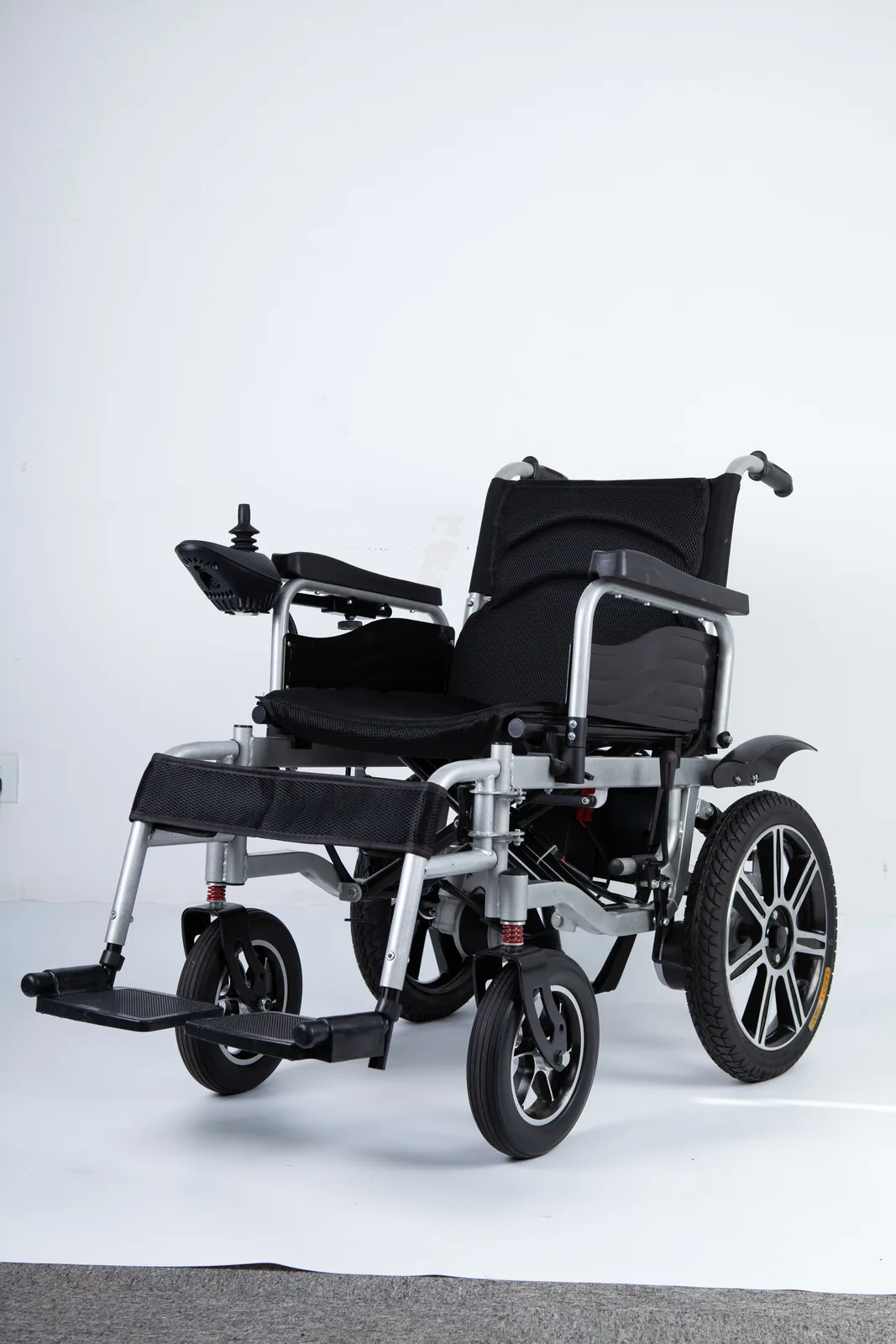
Once you accept that clearance is part-specific, the comparison becomes more useful. Instead of asking which chair has "more clearance," ask which parts of each candidate chair sit closest to the ground and whether those parts are the ones your route would challenge.
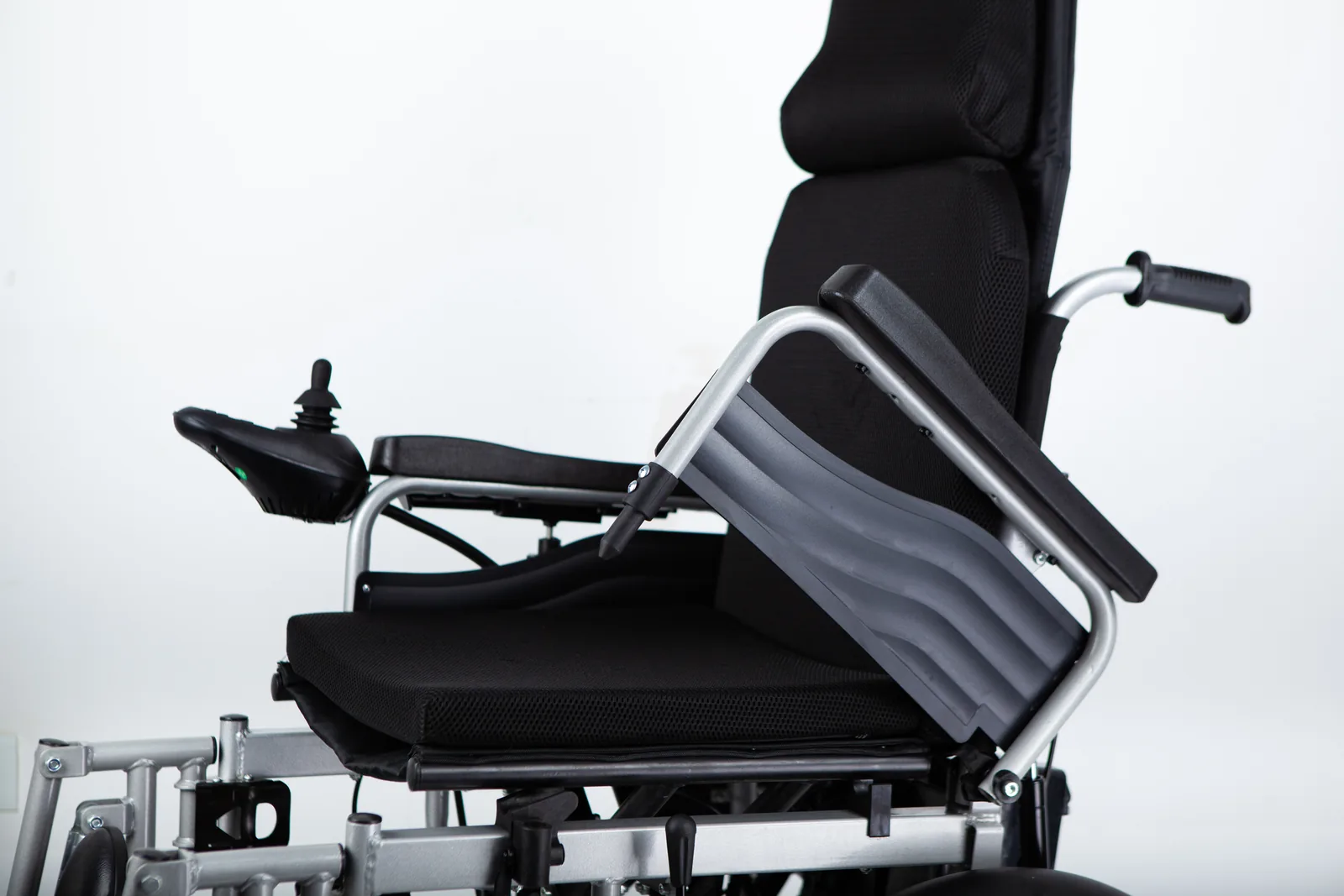
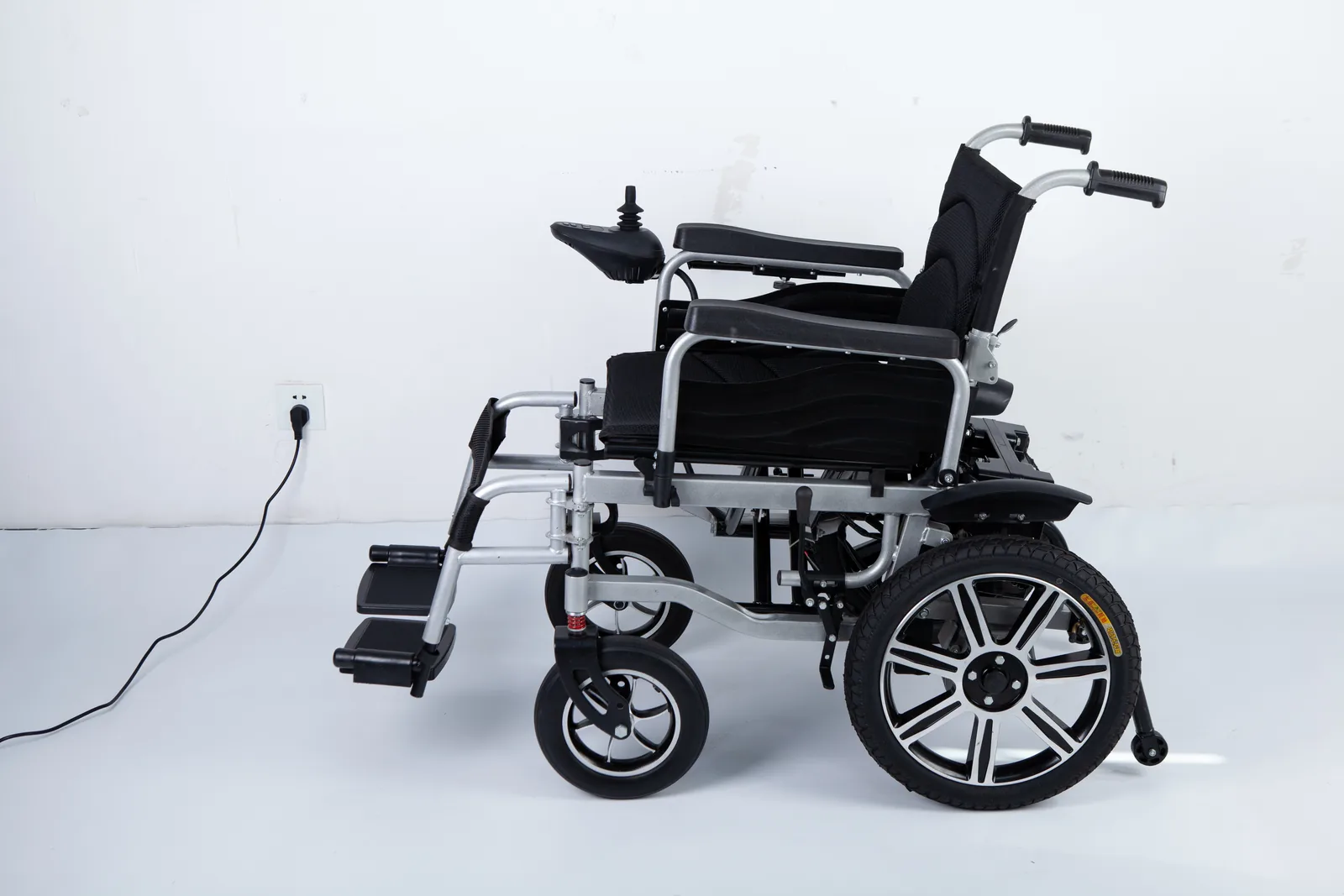
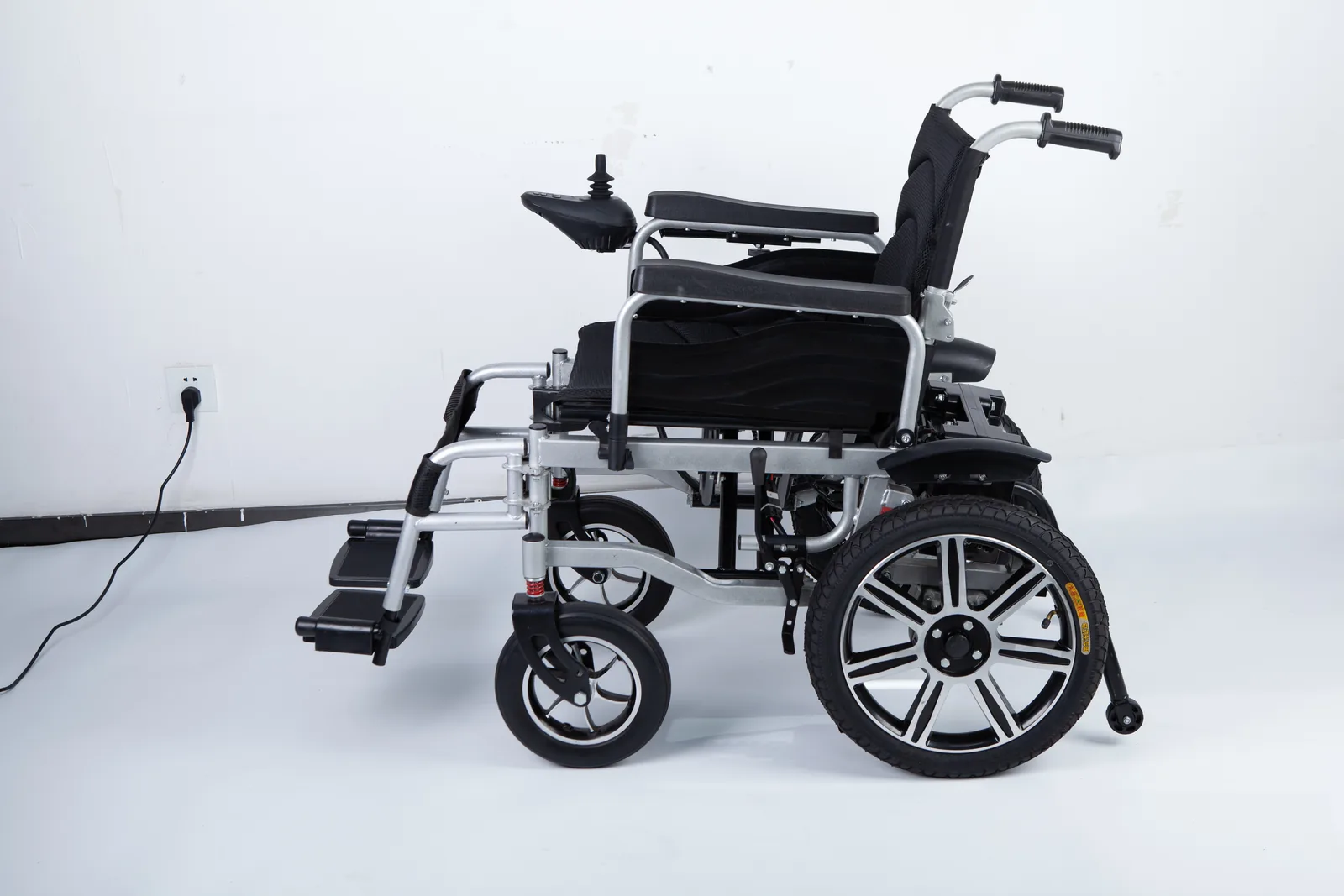
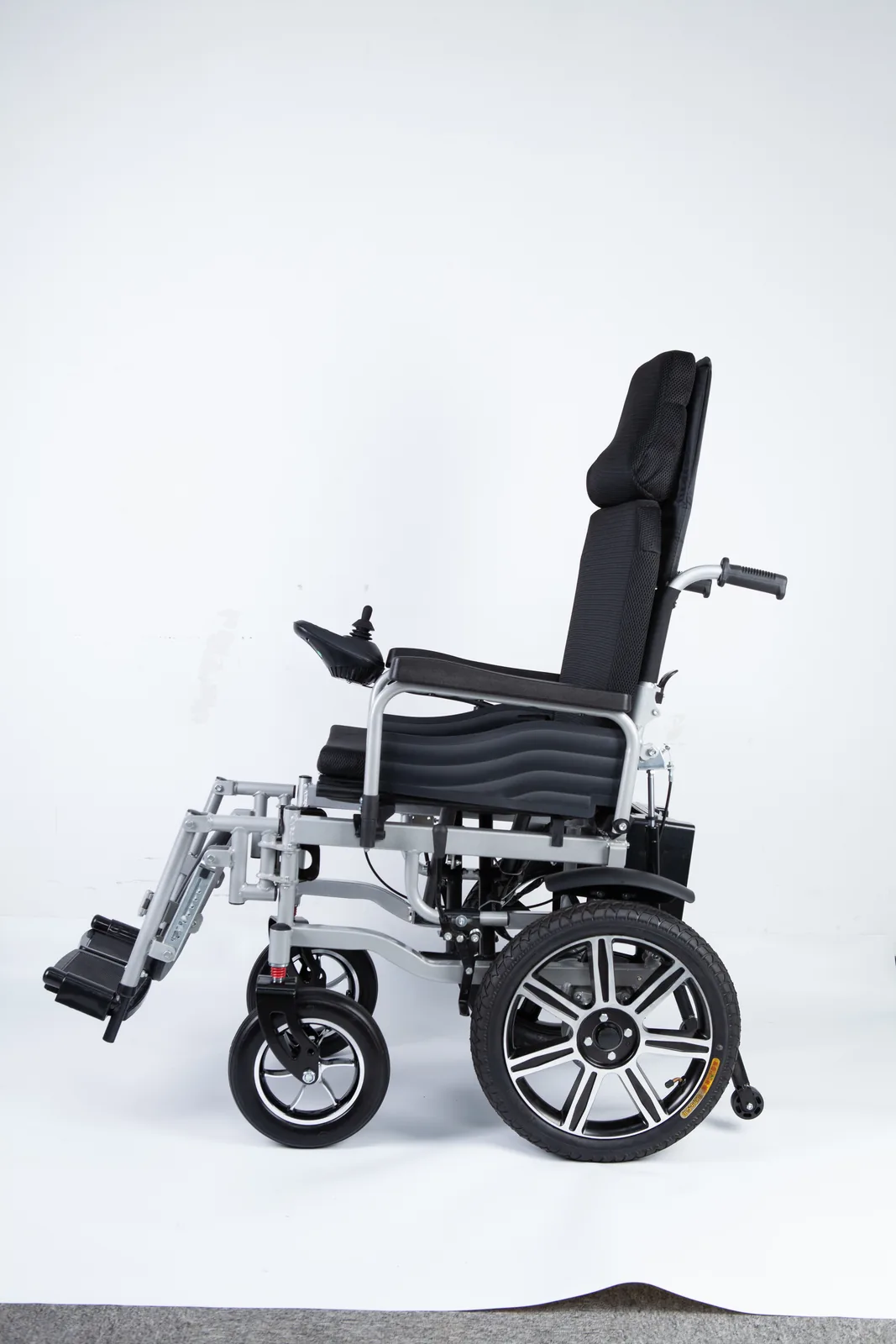
Footrests are a frequent low point because they hang below the seat and forward of the drive wheels. A footrest that sits low may meet a threshold, a ramp transition, or uneven ground before the frame does. That does not make it a defect; it makes it the part to check. If a specification page names a footrest clearance separately, that figure is more informative for doorway and threshold questions than a frame figure alone. It also tells you where to look when a user reports that a chair "catches" on a particular doorway, because the contact is more likely to be at the front than under the middle of the chassis.
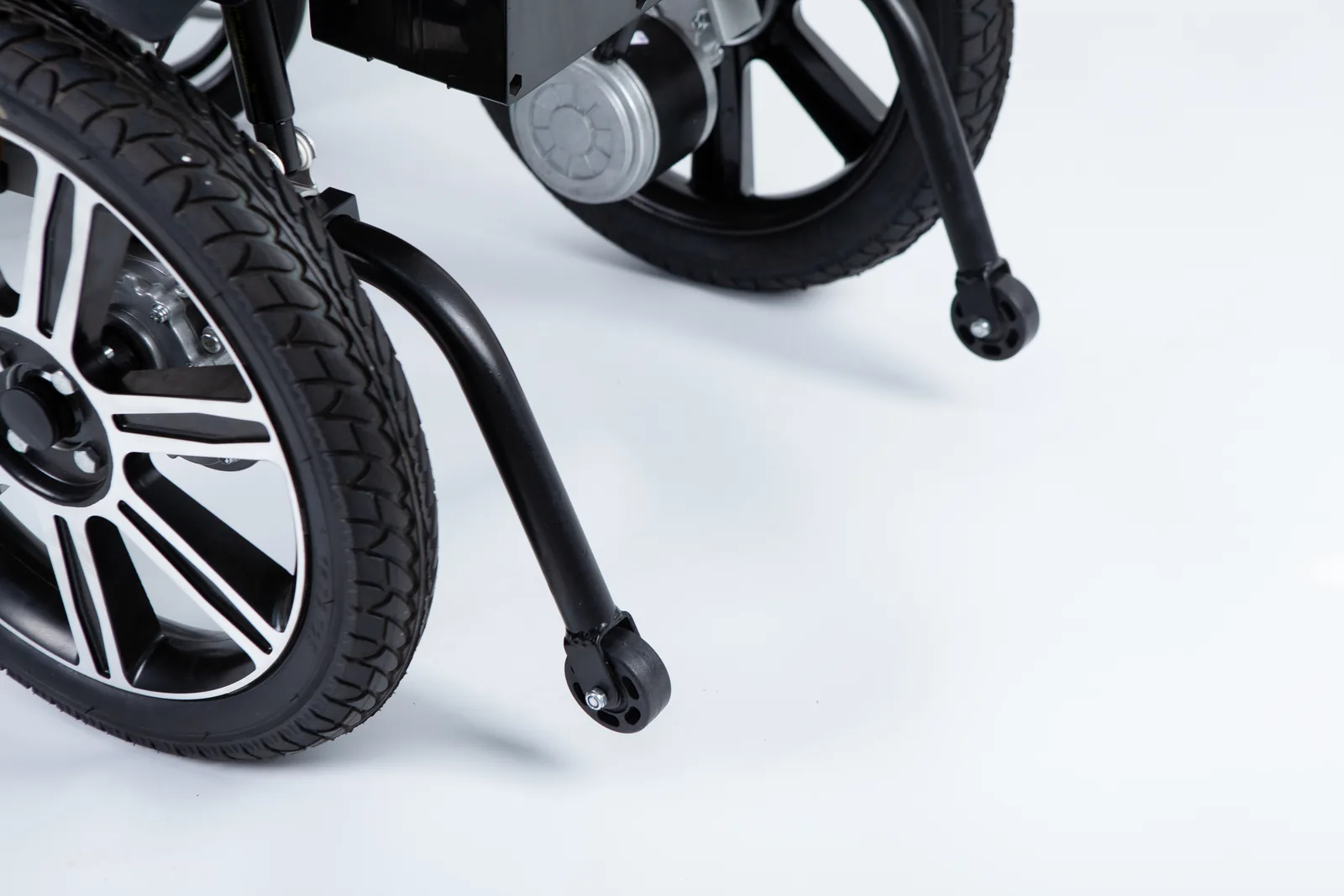
Anti-tip parts sit at the rear on many power chairs and exist to limit rearward tipping. Their position near the ground means they can also be the first contact point on a slope transition, a curb ramp lip, or soft ground. A chair with a high frame clearance but a low anti-tip fitting may behave very differently from what the headline number suggests. Again, the specification's part label is the clue. Where a manufacturer publishes only a frame figure, the rear geometry remains an open question rather than a settled one.
The frame and chassis figure is the one most often quoted and the one most often misapplied. It describes the underside of the structure at a stated point. It is useful for understanding how much space exists beneath the chair, and it is not a statement about what the chair can roll over.
| Component | What the figure describes | What it does not establish |
|---|---|---|
| Footrest | Height of a named footrest point above ground | That the footrest will clear a specific threshold |
| Anti-tip part | Height of a named rear component | That slope or curb transitions are safe |
| Frame or chassis | Underside height at a stated point | That the chair climbs obstacles of that height |
| Obstacle clearance (where published) | A stated obstacle figure for that model | That the same result applies to another configuration |
Read the table as a set of questions to ask, not a set of answers. Where a manufacturer publishes only one figure, the missing part-level detail is a gap to raise with them rather than something to estimate. Do not fill a blank cell with a guess, and do not copy a number from a similar-looking chair. Two models from the same brand can differ in footrest design and rear fittings, so brand-level assumptions are no safer than model-level ones.
Check route needs without promising clearance

Route checking is where clearance figures meet the real world, and it is also where overconfidence does the most damage. The goal is not to prove a chair will pass; it is to identify the features that need a closer look before a decision is made.
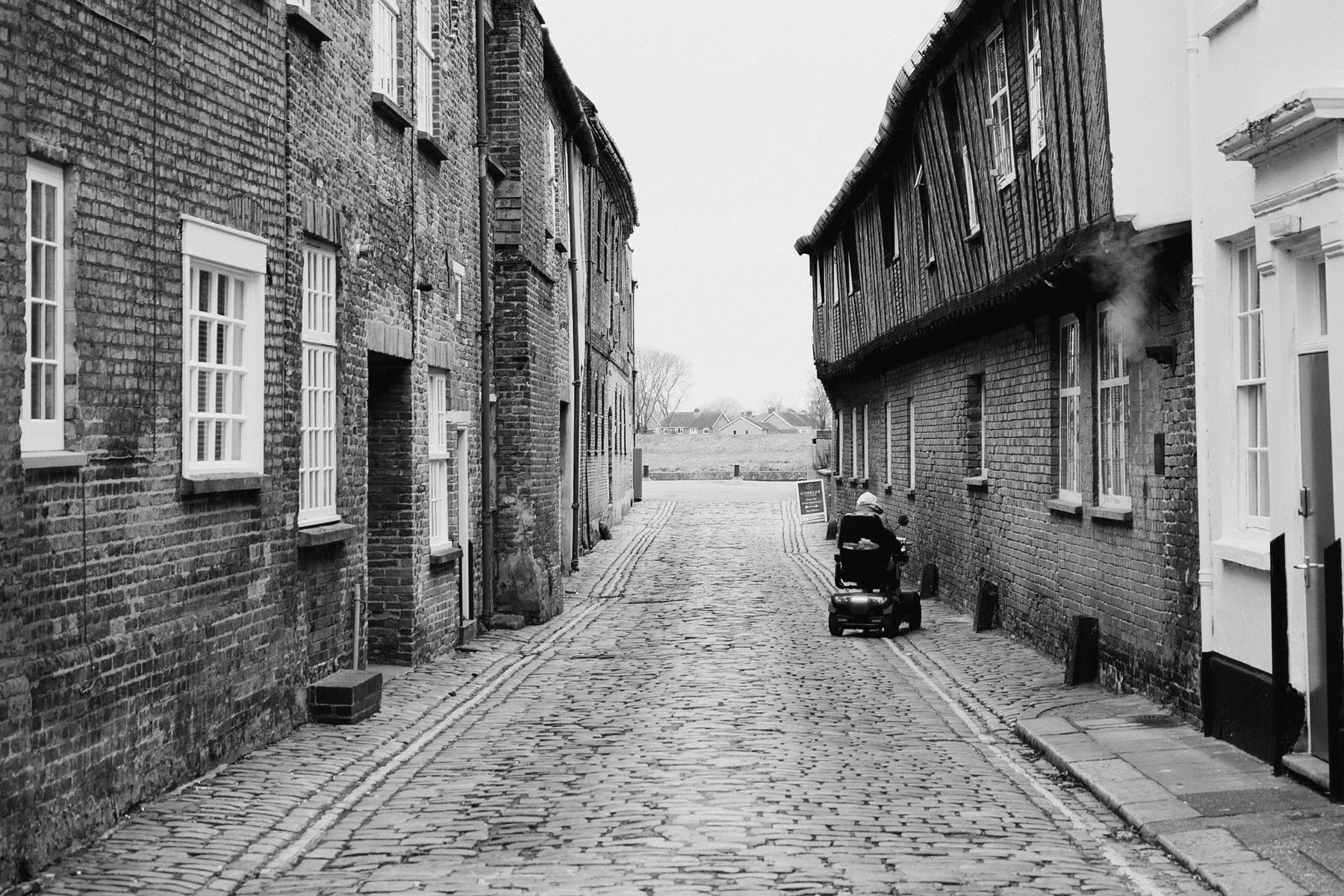
Start by listing the actual surfaces and transitions the chair will meet. A typical list includes door thresholds, lift or elevator lips, curb ramps, driveway transitions, gravel or grass, drainage grates, and the joint lines between paving slabs. For each one, note what kind of feature it is: a raised lip, a gap, a slope change, or a soft surface. These are different problems, and a clearance figure speaks to only some of them. A gap between paving slabs, for instance, is a width and edge problem as much as a height problem, and a soft surface raises questions about support and traction that no under-frame measurement addresses.
Next, note what you can actually observe. A threshold height can be measured with a ruler. A slope change can be described. A gravel path can be recorded as loose surface. What you should not do is convert an observation into a promise. Knowing a lip is a certain height does not establish that a chair with a larger clearance figure will pass it, because the lowest contact point may be a footrest or anti-tip part, and because traction, approach, and speed all matter.
A practical route record separates what is known from what needs confirmation:
- The feature and where it is on the route.
- Whether it is a height, a gap, a slope, or a surface type.
- Any measurement taken, with the method noted.
- Which chair part is most likely to meet it first.
- The question to put to the manufacturer or supplier.
- Whether an alternative route exists.
That last point deserves attention. For many routes, the useful outcome of checking is not "this chair passes" but "this section needs an alternative or a second look." A venue team, a dealer advising a client, and an institutional buyer can all use the same record, and all three should resist turning a clearance number into an access guarantee. If the route matters for daily travel, the person who uses the chair and anyone who supports them are the right people to judge whether the route works in practice, because they know the timing, the weather, the crowding, and the alternatives in a way a specification sheet never will.
Ask the manufacturer and qualified professional
When the specification is ambiguous, the productive move is a precise question to the party that holds the answer. Vague enquiries get vague replies; a question that names the model, the part, and the configuration is far more likely to produce something usable.
Useful questions to put to a manufacturer or supplier include: Which part is the stated clearance measured at? Does the figure apply to the standard configuration or to a specific build? Are there separate figures for footrests and anti-tip parts? Is an obstacle figure published for this model, and under what conditions? Has the specification changed between versions? These are factual questions about the product, and they can be answered without anyone making a judgment about a particular person's needs. Keep the answers with the model name and the date, so a later revision does not silently invalidate your comparison.
Separately, questions about whether a chair suits a particular user belong with a qualified professional who can assess seating, posture, and daily use. A clearance figure is not a clinical finding, and a specification sheet cannot substitute for an individualized assessment. Keeping the two conversations separate makes both more useful: the supplier answers product questions, and the clinician or seating professional addresses the person's needs. Mixing them tends to produce a reply that is cautious about everything and specific about nothing.
For buyers who need current model information and configuration details, the Wheelchairs Factory quote request page is the place to start a specific enquiry. Bring the model name, the configuration you are considering, and the exact questions above, so the reply can address the actual decision rather than a general description.
If a source you are reading does not state the measurement point, treat that as missing information rather than assuming the frame. Ask, record the answer, and keep the date. A specification that cannot be tied to a part and a version is not yet a comparison input.
FAQ
Is ground clearance the same as obstacle height? No. Ground clearance describes a gap under a named part of a specific model. Obstacle clearance, where published, relates to an obstacle figure for that model. WHILL's Model F page lists them as separate entries, which shows they are not interchangeable.
Is the lowest point always the footrest? Not necessarily. Footrests, anti-tip parts, and frame sections can each be low points depending on the chair and its configuration. Pride's Go Chair specification page lists clearance against different parts, which is why the part label matters more than a single headline number.
Do load and configuration change the reading? Configuration can change which part sits lowest, and a specification may describe a standard build rather than the one you would order. Ask the manufacturer whether the published figure applies to your intended configuration, and record the answer with the model and version.
What if the specification does not state the measurement point? Treat it as an open question. Ask the manufacturer which part the figure describes, whether separate part-level figures exist, and which configuration the number applies to. Until that is clear, do not use the figure in a side-by-side comparison.
Conclusion

Read clearance as a part-specific measurement for one model and version, then confirm the rest with the manufacturer.