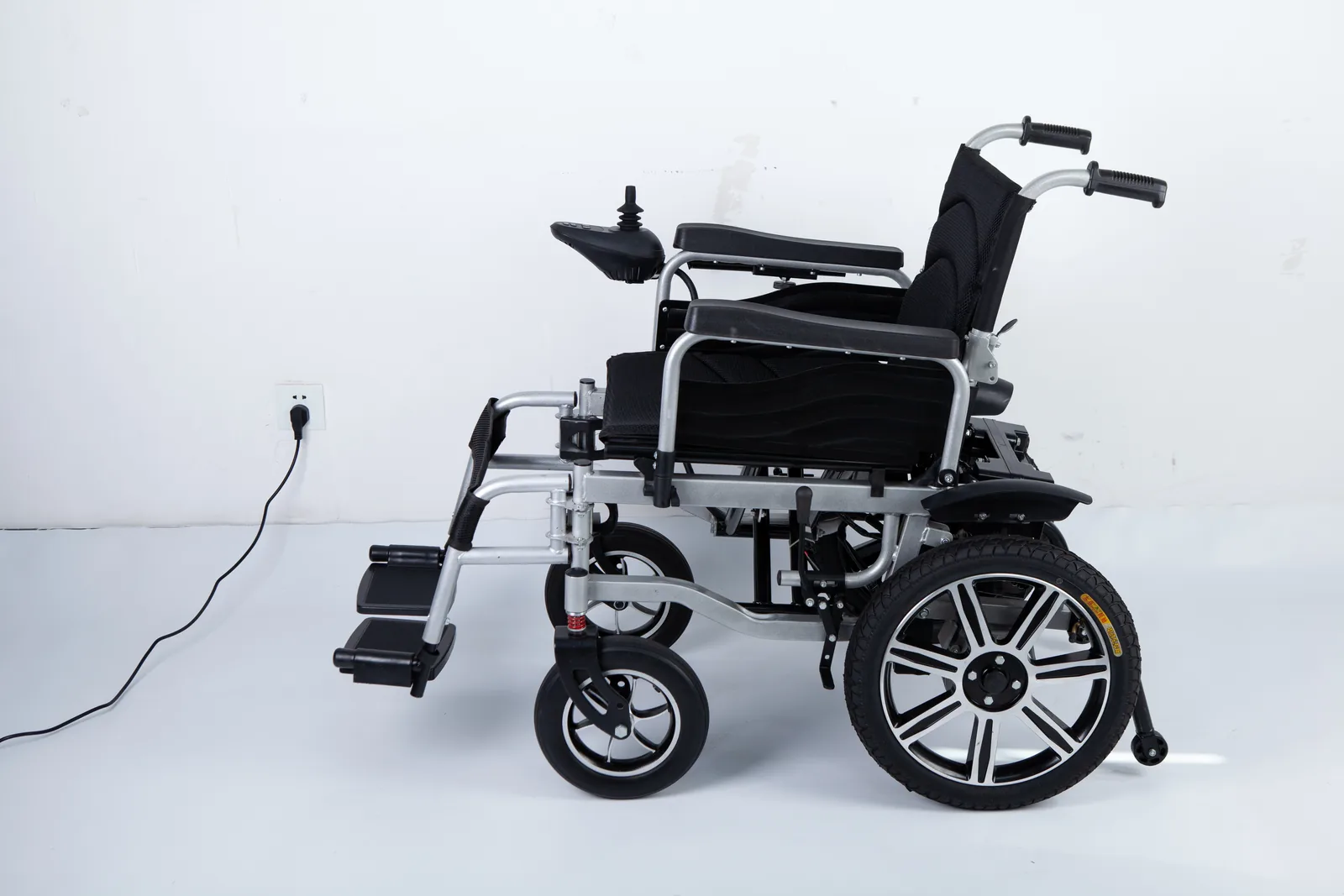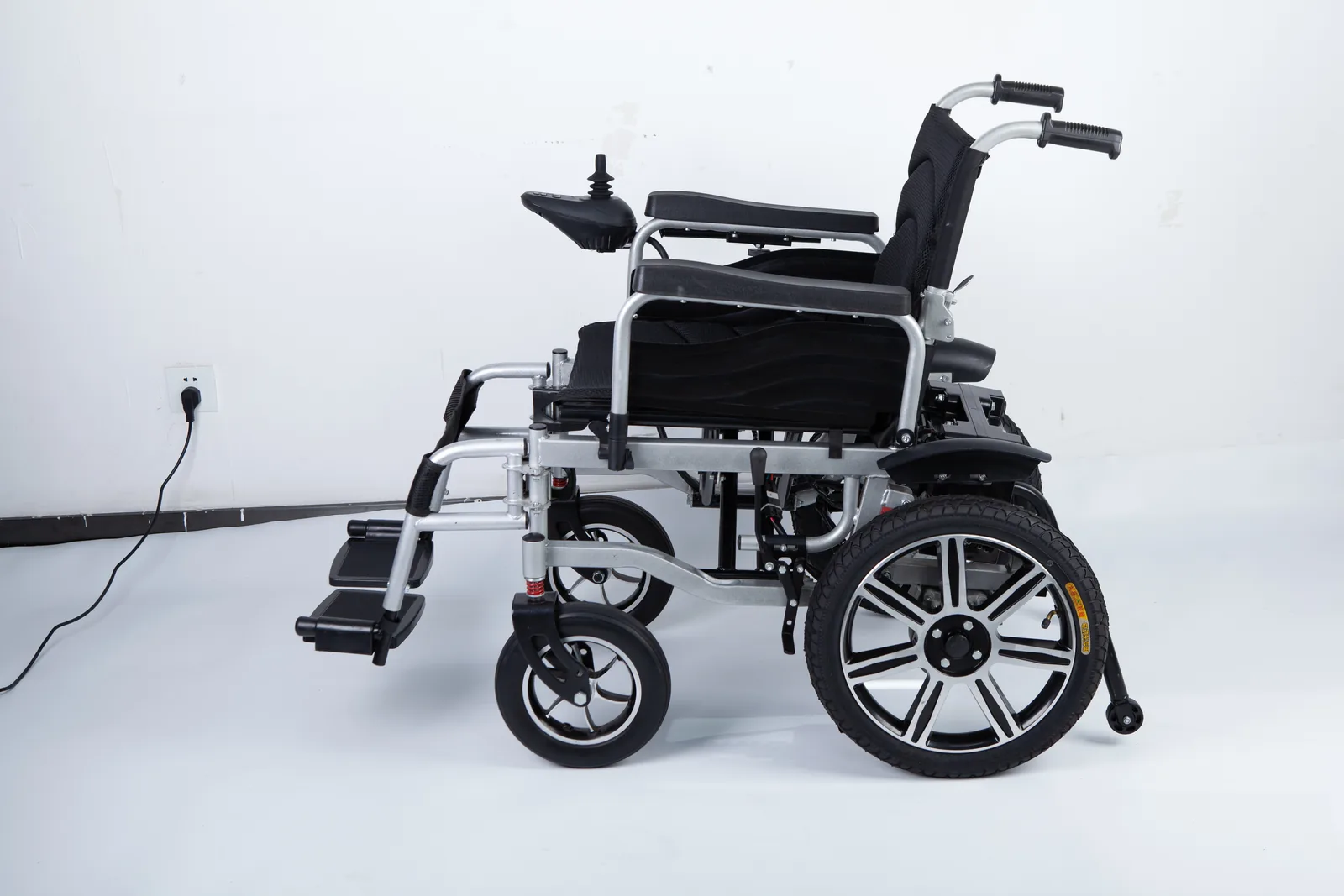
A dealer or fleet buyer comparing two power chair armrest options faces a narrow question: which movement lets this user and this support team handle side access, control placement, and parts without creating a new problem. The answer depends on the exact model.
Flip-up armrests pivot upward on a hinge; removable armrests lift out of a mount. Neither is automatically better. When weighing power wheelchair flip up vs removable armrests, check the named model's armrest option, left and right configuration, joystick mounting, wiring route, and who handles the chair before ordering.
Power wheelchair flip up vs removable armrests: Identify the model and armrest options
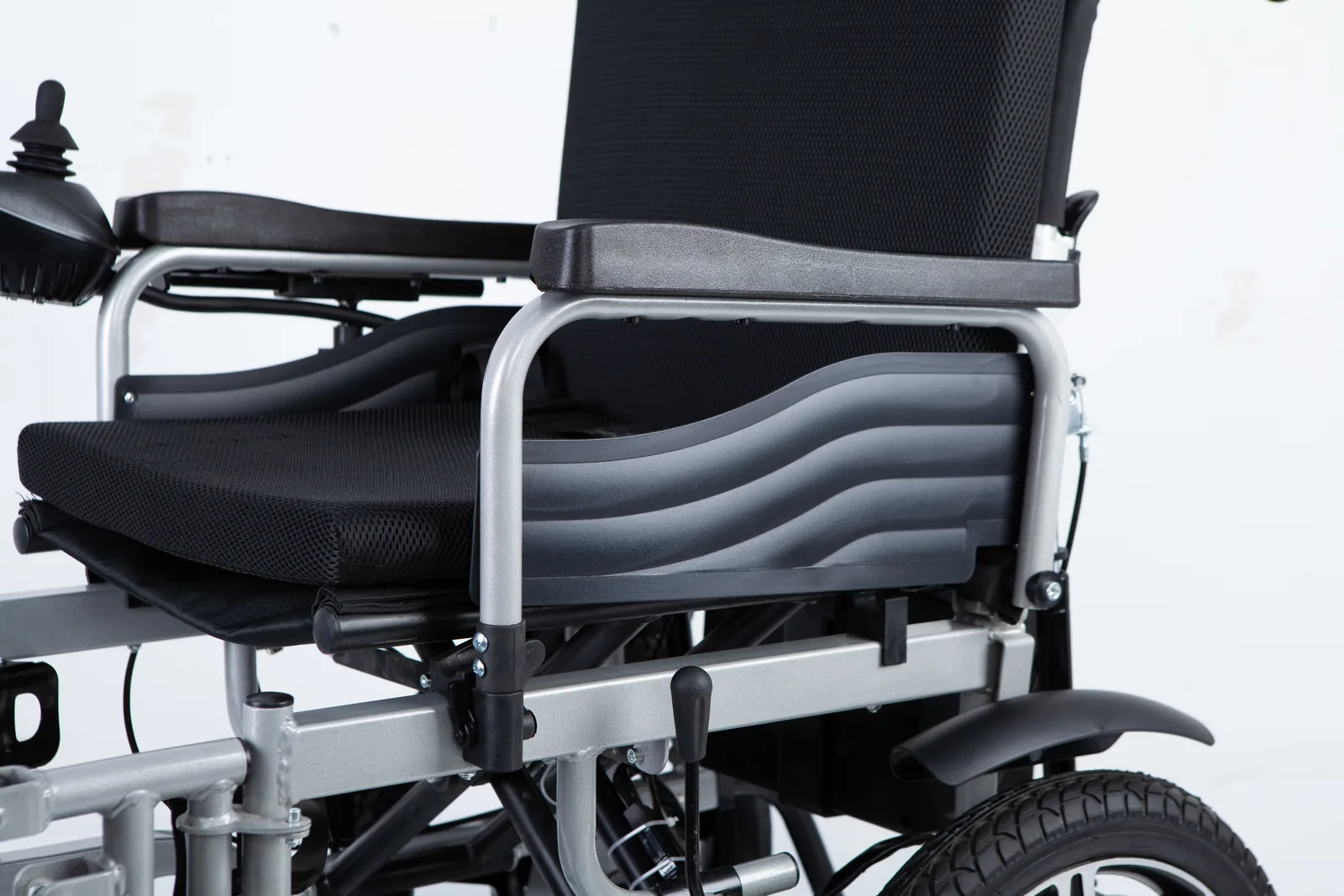
Start with the exact model name, not the category. "Power wheelchair with flip-up armrests" describes a feature, not a configuration. Two chairs sold under similar descriptions can differ in hinge design, latch type, armrest pad length, mount position, and whether the same option is available on both sides. Before comparing anything, write down the manufacturer, model, and the document or order sheet that lists armrest choices.
A useful record separates four things that are often mixed together: the base chair, the armrest option, the controller package, and any dealer-added parts. The base chair may accept more than one armrest style, but the accepted combination may change with the seat width, the controller bracket, or the side the joystick is mounted on. If the option list is a separate sheet from the chair specification, keep both and note which version and date you are reading. A 2018 manual for one model, such as the Glide Centro power wheelchair manual hosted by Enable NSW, describes that chair only; it cannot be used to describe a different brand's hinge, latch, or wiring.
Dealers and institutional buyers should also record what is actually being quoted. A quotation line that says "flip-up armrest" may not state whether both sides flip, whether the pad is the same length as the standard armrest, or whether the controller arm is included. Ask for the option code or the exact wording from the manufacturer's order form, and keep that wording with the quote. When the wording is vague, the safe position is that the configuration is unconfirmed.
The same discipline applies to the user's own chair. If someone is comparing a chair they already use with a possible replacement, the current armrest type, the side it is on, and any controller bracket should be photographed and written down. That record gives the supplier something concrete to match, rather than a memory of how the chair "usually" works. It also protects the buyer later, because a written description of the existing setup can be compared line by line with the new order instead of being reconstructed after delivery.
Compare flip-up and removable movements
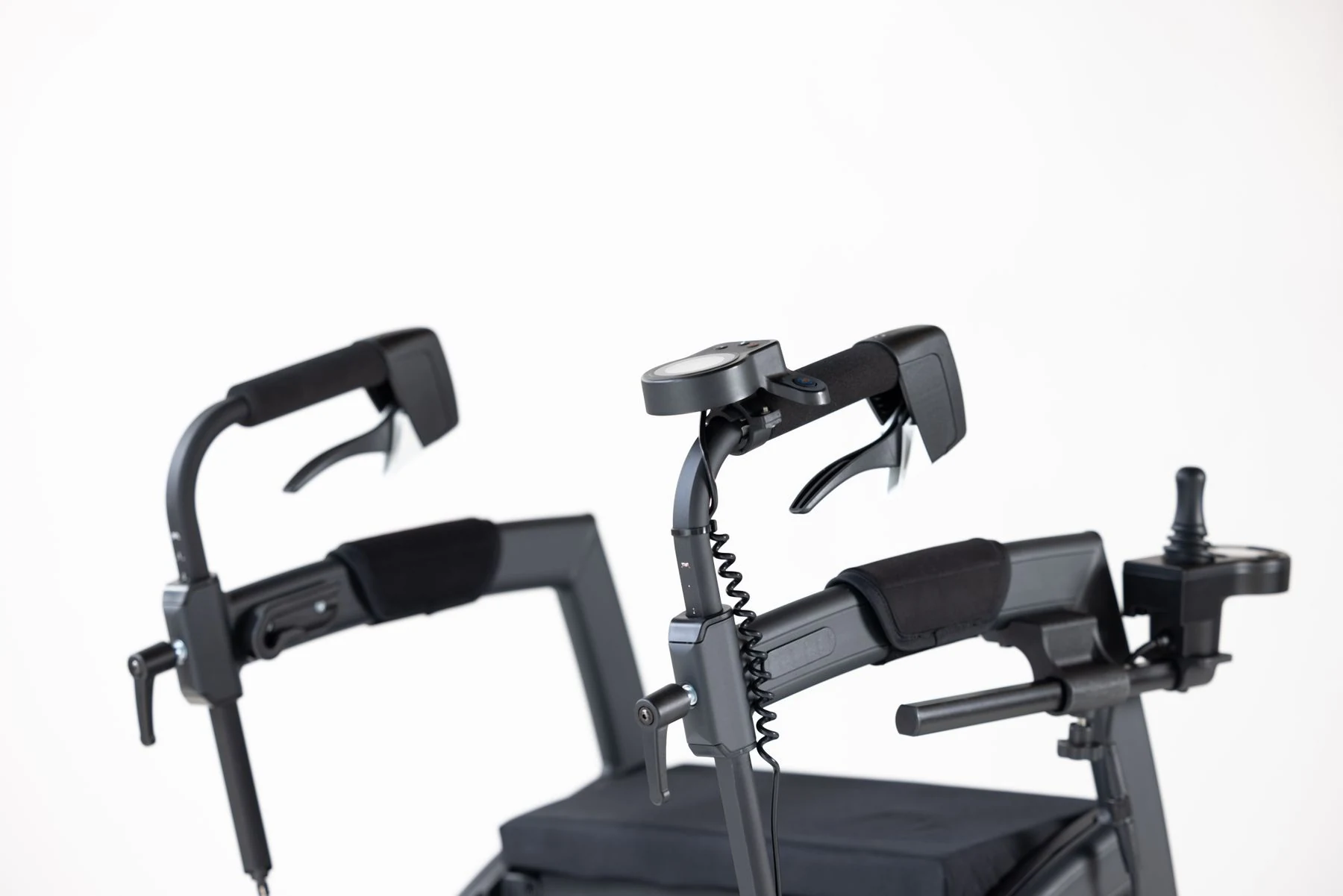
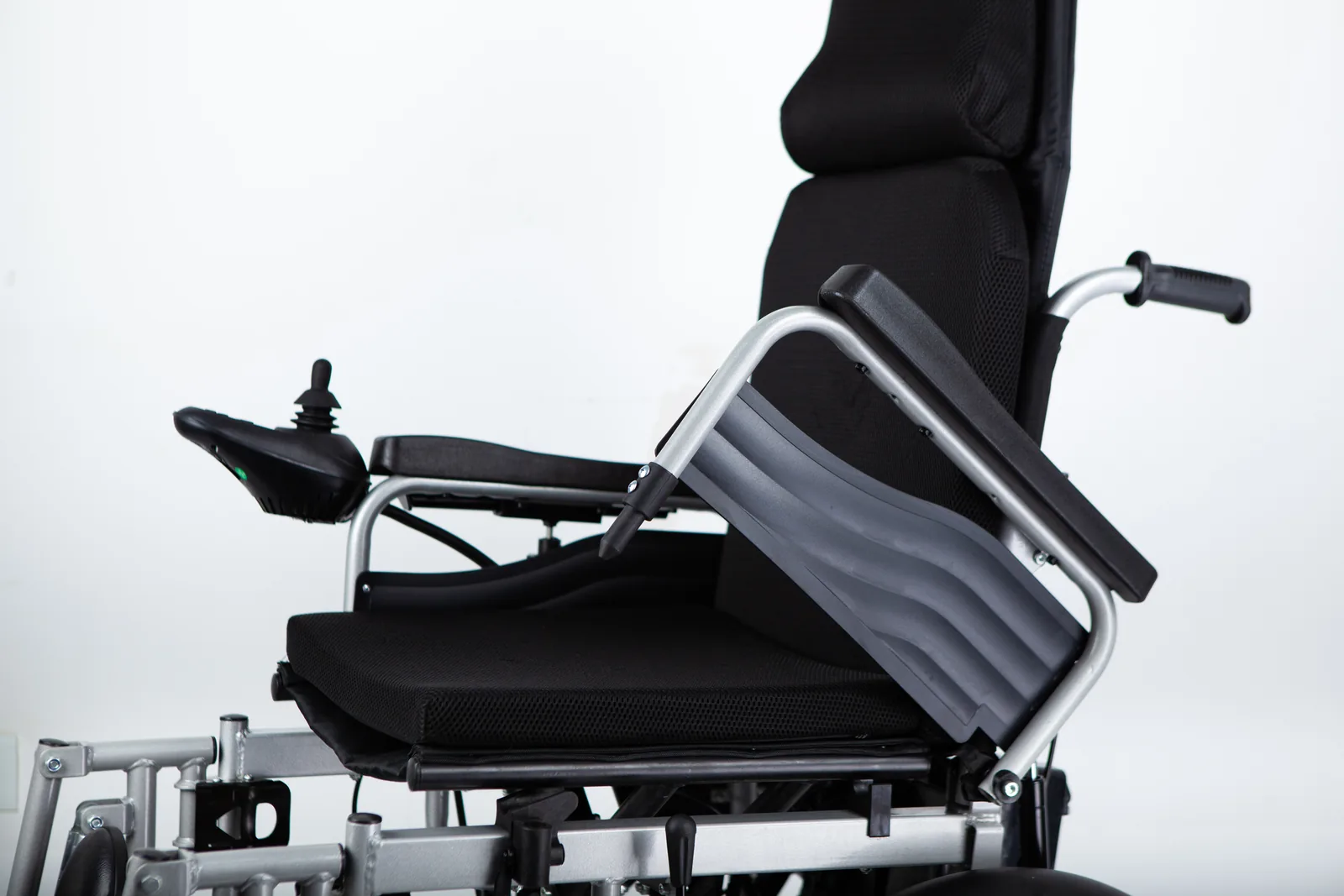
A flip-up armrest stays attached to the chair and rotates up and back, usually around a hinge near the rear of the armrest. A removable armrest lifts out of a receiver or bracket and is set aside. The practical difference is not only the motion but what happens to the part afterward. A flipped armrest remains part of the chair; a removed armrest becomes a separate object that has to be placed somewhere safe, remembered, and put back in the correct orientation.
That difference shapes several everyday tasks. Flipping may be quicker for a person who can reach and operate the release with one hand, because the armrest does not leave the chair. Removing may create more open space at the side, because the whole armrest and its support are out of the way rather than folded against the back. Which matters more depends on the route, the transfer method the user has chosen with a qualified professional, and the space beside the chair. Neither motion should be treated as a transfer instruction; the movement of the armrest is a mechanical fact, while how a person moves into or out of the chair is an individual decision.
Other differences to record include the release mechanism, the effort needed, whether the armrest locks in the raised position, and whether the hinge or receiver is exposed when the armrest is moved. A hinge that stays raised on its own behaves differently from one that must be held. A receiver that stays open may collect debris or interfere with a side panel. These are model-specific details, so they belong in the record for each chair rather than in a general rule.
A further distinction is what the armrest does to the chair's overall footprint. A flipped armrest may still sit above or behind the seat, so the chair is not necessarily narrower at the side even though the seat edge is clear. A removed armrest can reduce the width at that point, but only if the mount and any bracket are also out of the way. Buyers who care about fitting the chair through a doorway or beside a bed should ask which parts remain in the path after the armrest moves, rather than assuming the movement alone solves the space question.
Record left and right separately
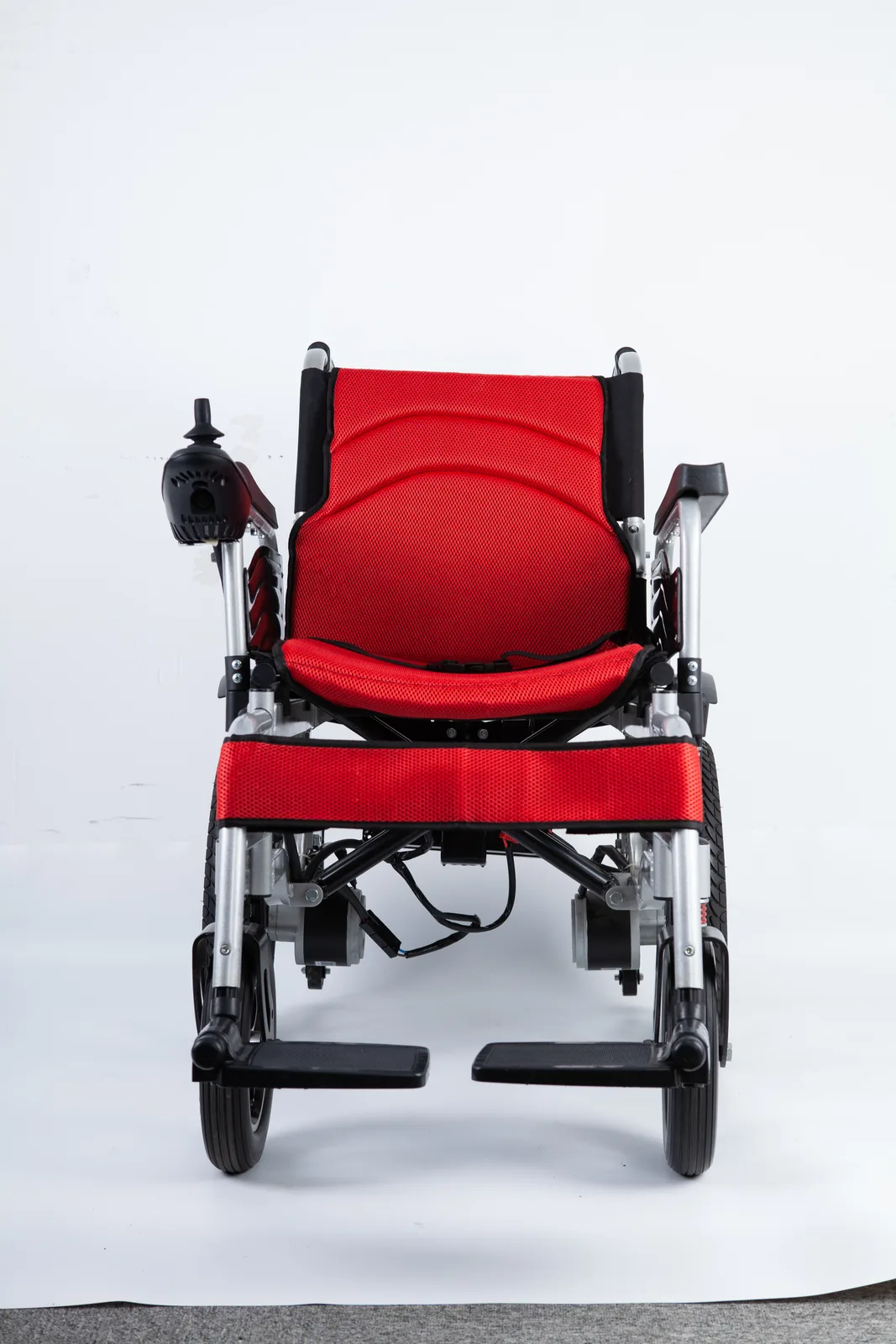
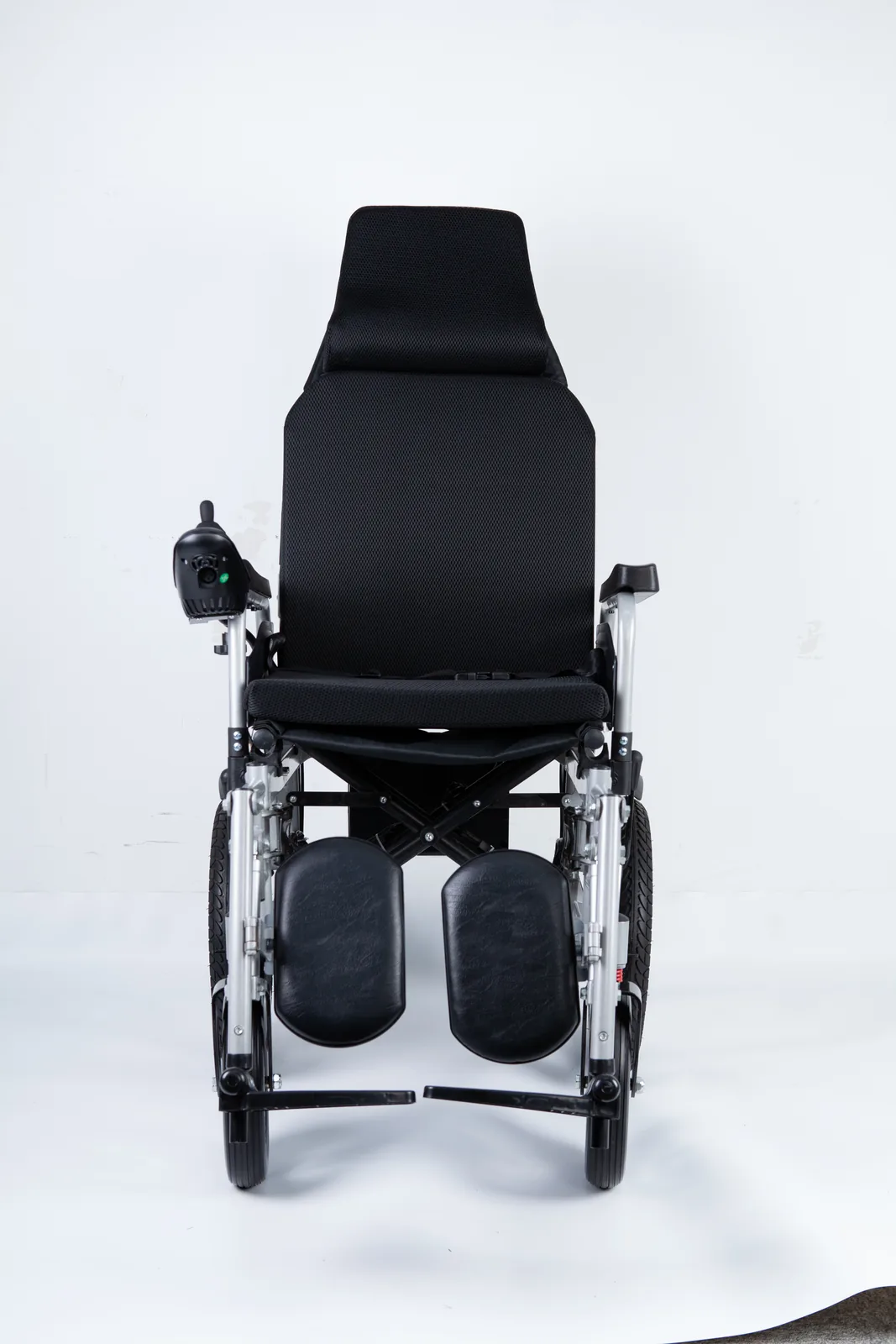
Many power chairs do not use the same armrest arrangement on both sides. The joystick side often has a shorter armrest, a different pad, or a bracket that carries the controller, while the opposite side may have a full-length armrest. A chair described as having "flip-up armrests" may flip on one side only.
Build the record as two columns, left and right, and fill each one from the model documentation or a supplier confirmation. If a side is not described, mark it as unknown rather than assuming it matches the other side. This matters for dealers configuring a fleet, because a mixed order can produce chairs that look alike but behave differently at the side where staff or the user needs access.
| Item to record | Left side | Right side |
|---|---|---|
| Armrest type (flip-up, removable, fixed) | Confirm from model option list | Confirm from model option list |
| Release or latch location | Confirm | Confirm |
| Armrest pad length and shape | Confirm | Confirm |
| Joystick or controller mounted on this side | Confirm | Confirm |
| Wiring route at the armrest | Confirm | Confirm |
| Behavior when moved (stays raised, detaches fully) | Confirm | Confirm |
The table is a worksheet, not a specification. Every cell has to be filled from the named model's documentation or a written supplier answer. A completed row for the left side says nothing about the right.
Check side access, support and handling
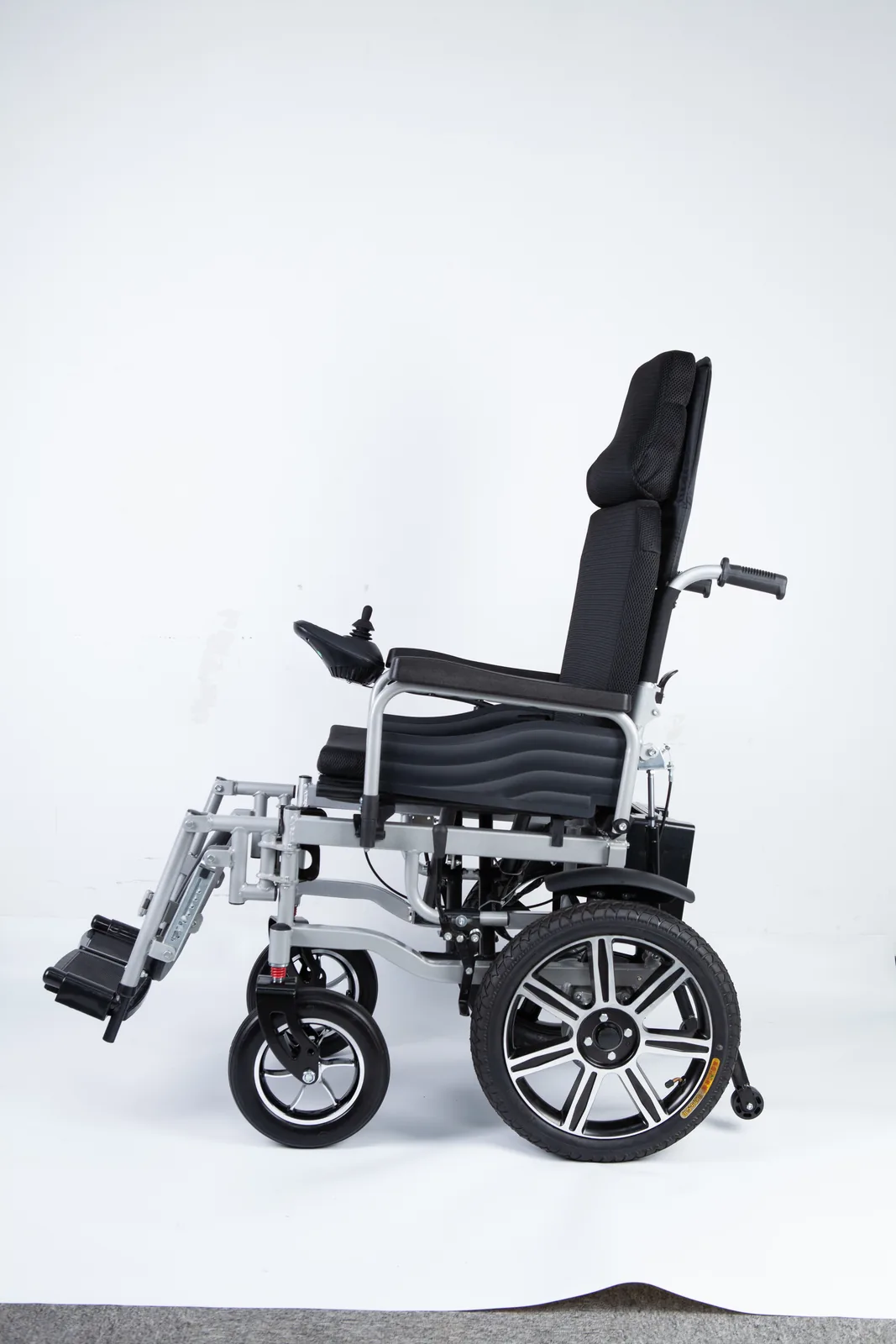
Side access is the reason most buyers ask about armrest movement, but "more space" is not a single measurement. Flipping an armrest changes the shape of the obstacle beside the seat; removing it may clear the side more completely. What the user needs depends on the route into the chair, the furniture or equipment beside it, and the method they use. A dealer can describe the mechanical clearance the armrest movement creates, but should not tell a user that a particular armrest makes transfer safe.
Support is the other half of the comparison. An armrest provides a surface for the forearm and, on some chairs, a mounting point for the controller. When it is flipped or removed, that support is gone for the duration. Some users want the armrest back in place as soon as they are seated; others need it out of the way for a longer period. The release design affects how easily the armrest can be restored, and whether it can be done from a seated position. These are questions for the user and the supplier, not assumptions for the order sheet.
Handling matters most for the people who move the chair when the user is not in it. Caregivers, transport staff, and fleet technicians may need to fold, lift, or store the chair. A removable armrest that comes off completely can reduce the chair's width for storage, but it also creates a loose part that must be tracked. A flip-up armrest stays with the chair and cannot be left behind, but it may still project when raised. For a rental fleet or an institutional pool, the risk of a missing armrest is a real management cost, and the choice may depend on how parts are logged and returned.
Storage and transport also interact with the armrest choice. If the chair is carried in a vehicle, the armrest position during loading and unloading should be part of the handover routine. A removed armrest placed on a seat or in a bag can be forgotten, while a flipped armrest may need to be returned to its down position before the chair is used again. Neither is a safety instruction; both are handling details the operator should confirm for the specific chair.
A simple way to compare the two options is to list the tasks that happen at the side of the chair and note who performs each one. If the user manages the armrest alone, the release effort and reach matter most. If a caregiver or technician handles it, the question shifts to where the part goes and how it is checked back in. The same chair can score differently depending on that answer, which is why a single "best" armrest type does not exist across users and sites.
Check joystick side, wiring and mounting
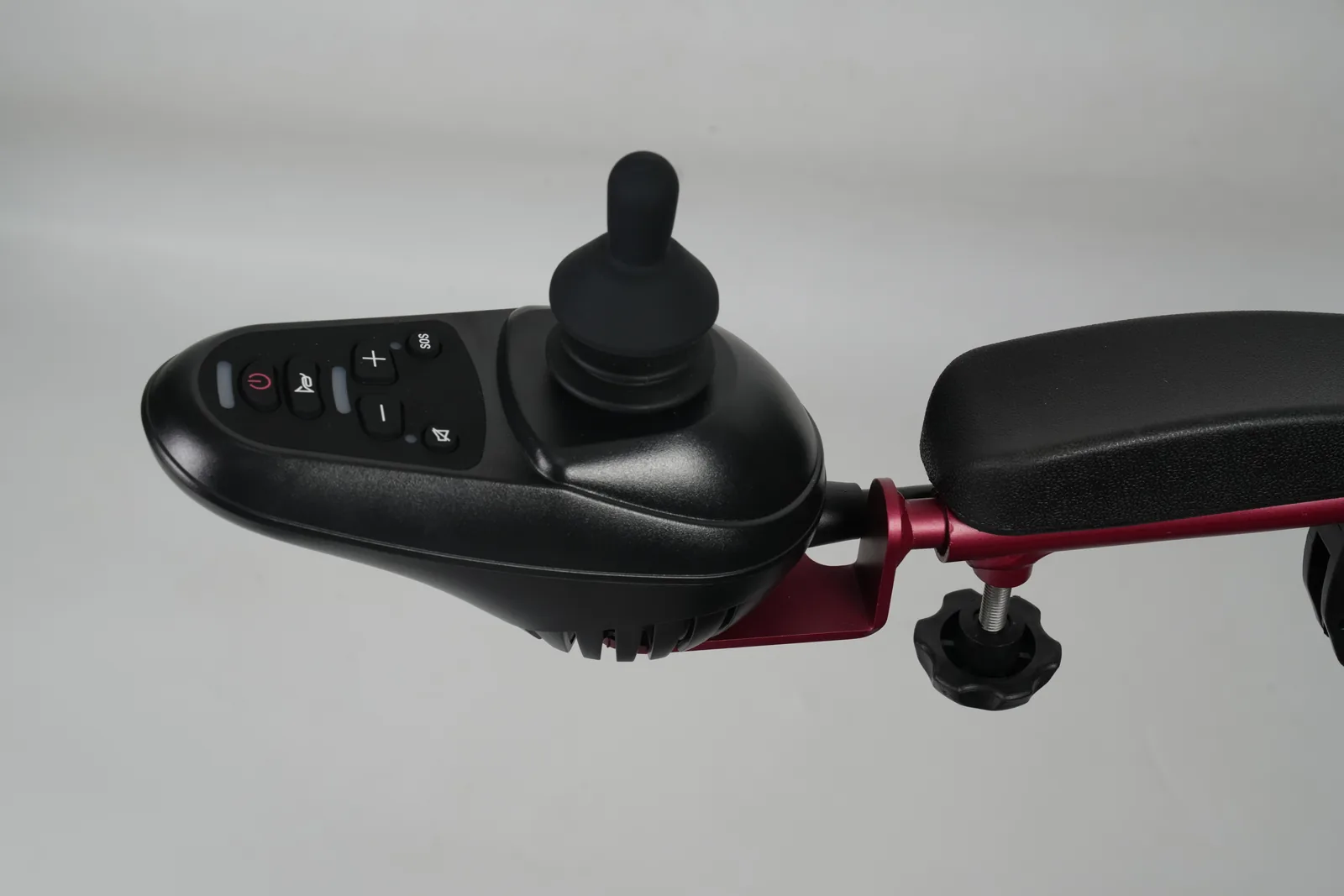
The controller is where armrest choice and power chair operation meet. On many power chairs the joystick is mounted to the armrest or to a bracket attached near it. If the armrest flips or comes off, the controller may move with it, stay fixed to the chair frame, or need to be disconnected first. The model documentation should show which arrangement applies, and the supplier should confirm it for the exact configuration being ordered.
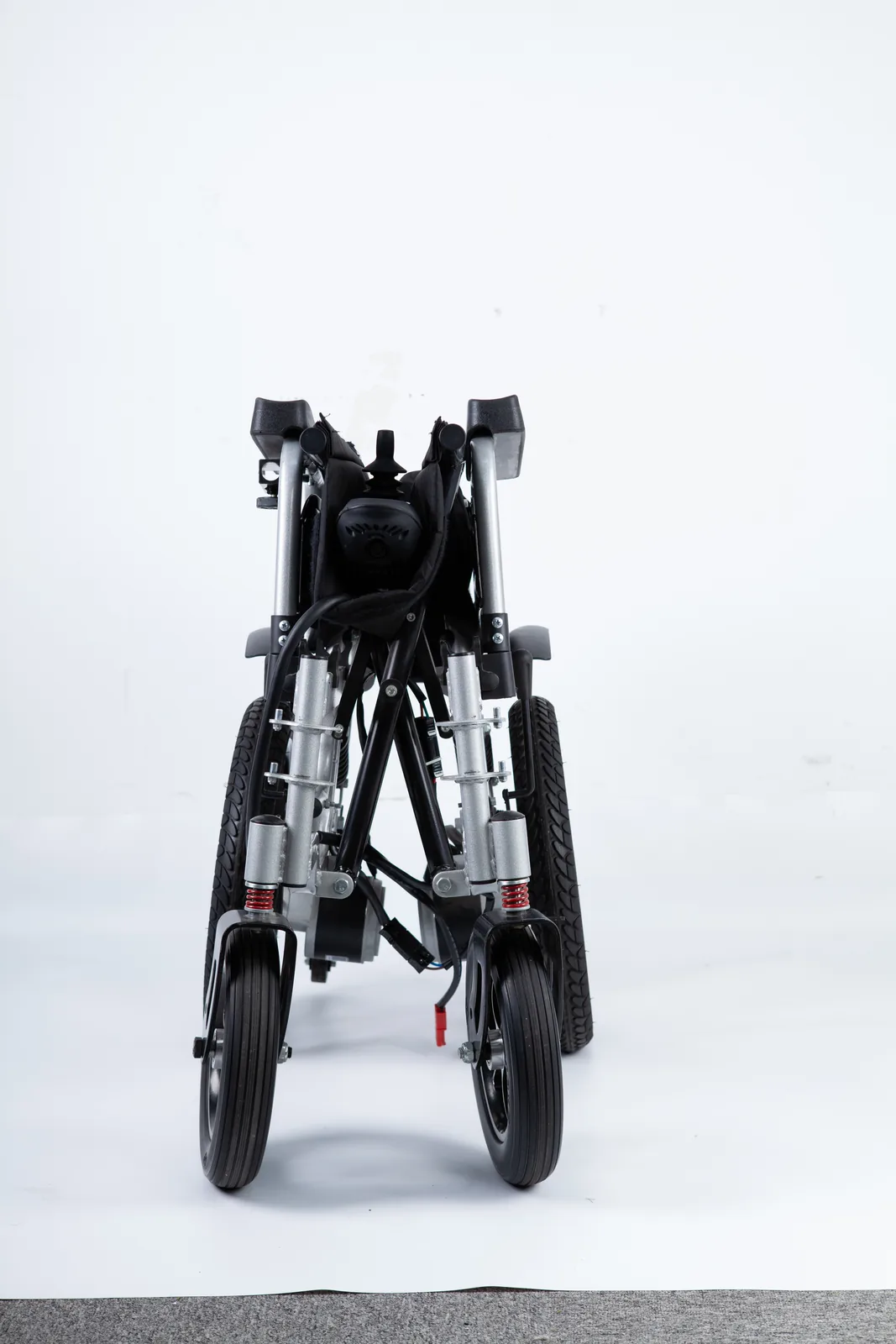
Wiring is the detail most often overlooked. A cable that runs along or through the armrest may be exposed, pinched, or pulled when the armrest moves. A removable armrest with a controller attached may require a connector that separates, and that connector has a correct way to be joined and a limit to how often it should be handled. Do not assume a cable can be rerouted, extended, or disconnected without guidance from the manufacturer or an authorized service provider. Cable routing and connector handling are service-level questions, not dealer improvisation.
Joystick side also affects the armrest record. If the user operates with the left hand, the left armrest may carry the controller and may be shorter or shaped differently. A chair ordered with the joystick on one side and a full-length armrest on the same side may not match the intended setup. Confirm the side, the bracket, and the armrest option together, and check that the combination appears in the manufacturer's configuration information rather than only in a dealer's description.
For fleet buyers, standardizing the joystick side across a group of chairs simplifies training and spare-part management, but it may not suit every user. The decision should be recorded per chair, with the controller side and armrest type noted together. When a chair is reassigned, that record tells the next user or technician what to expect before the chair is powered on.
It also helps to note whether the controller bracket is part of the armrest assembly or a separate frame-mounted part. If the bracket is separate, moving the armrest may leave the joystick in place, which changes how the side of the chair feels during use. If the bracket travels with the armrest, the controller's position after the armrest is raised or removed should be described in the record. Either way, the buyer should ask for the specific mounting arrangement rather than inferring it from a product photo.
Confirm with the user, clinician and supplier
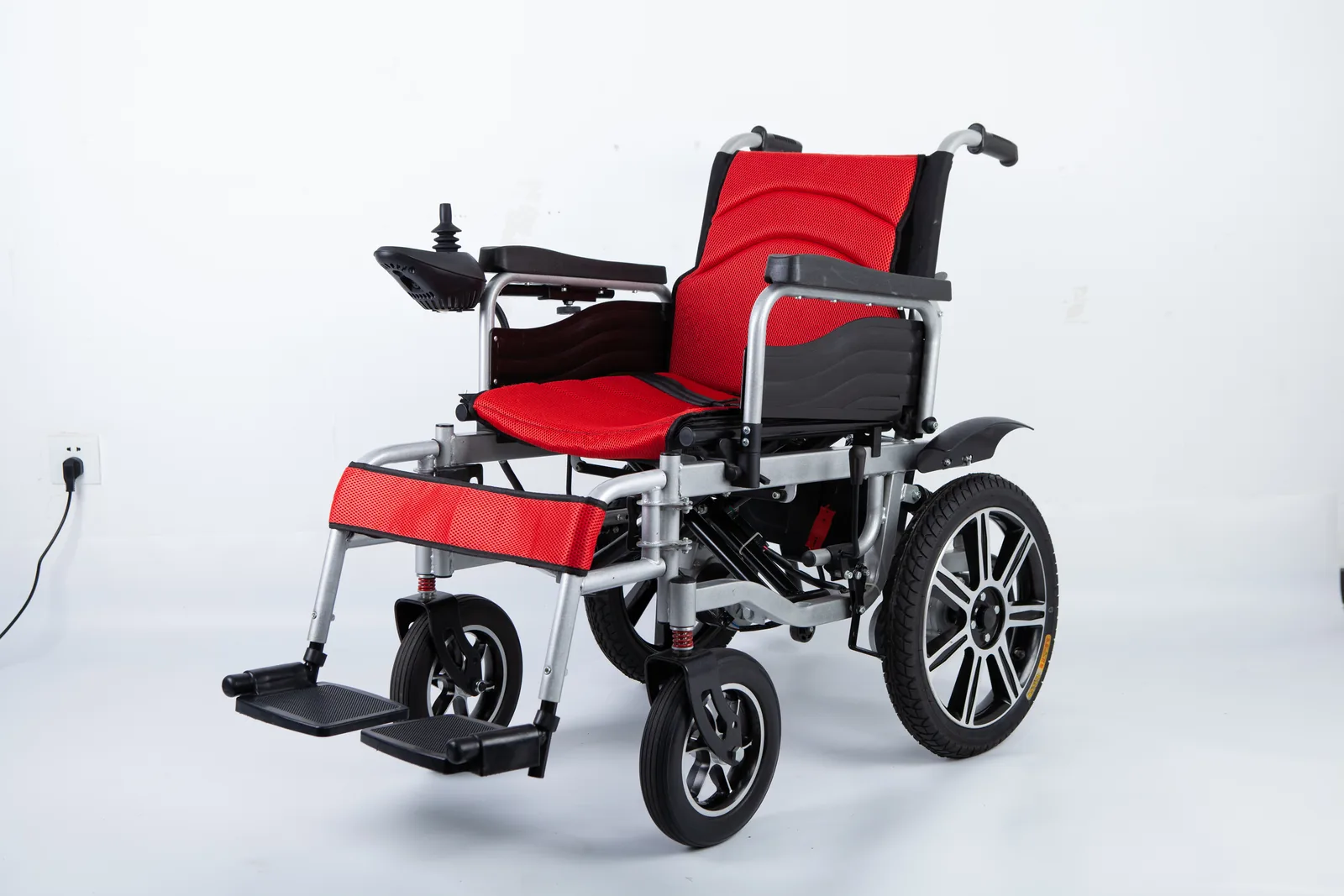
The final check brings three perspectives together. The user describes what they need at the side of the chair and how they operate the controller. A qualified clinician or seating professional addresses the individual's posture, support, and transfer method. The supplier confirms what the named model actually offers, including both sides, the controller bracket, and the wiring. No single one of these answers the whole question, and a dealer should not substitute a product description for the other two.
Prepare a short list of questions before contacting the supplier. Ask for the exact armrest option name and code, whether it is available on both sides, whether the joystick can be mounted on either side with that armrest, how the cable is routed when the armrest moves, and what the order includes. Ask for the relevant page of the current model documentation rather than a general brochure. If the supplier cannot confirm a point, record it as open and do not fill the gap with an assumption.
For institutional buyers, add questions about parts and service. Is the armrest pad or latch available as a separate part? Does the removable armrest use the same receiver across the fleet? Who checks that armrests are present and correctly seated before a chair goes out? These are management questions that belong in the handover routine, and they are separate from any clinical judgment about the user.
It is also worth deciding in advance what will count as a confirmed answer. A written reply that names the option code, the side, and the controller mounting is stronger than a verbal assurance or a general statement that the chair "comes with flip-up armrests." Where the supplier sends a document, keep the version and date with the order file so that a later change can be traced. If a question stays open, the buyer can still proceed with the chair while noting the unresolved item, but the record should show clearly that it was not confirmed rather than implying it was.
Wheelchairs Factory publishes product and quotation information at wheelchairsfactory.com, and buyers can request configuration details through the quote page. Any model, option, or compatibility detail still needs written confirmation for the exact chair being considered.
FAQ
Are flip-up armrests always more convenient? No. Flip-up armrests keep the part attached to the chair, which can simplify handling, but they may not clear the side as fully as a removable armrest and may still project when raised. Convenience depends on the model's hinge, the user's needs, and the space beside the chair.
Can the joystick move with the armrest? It depends on how the controller is mounted on that model. Some controllers are attached to the armrest, some to a separate bracket, and some require a connector to separate before the armrest is removed. Confirm the arrangement in the model documentation and with the supplier.
Should both sides have the same armrest configuration? Not necessarily. The joystick side often uses a different armrest or bracket. Record left and right separately and confirm each side from the model's option list rather than assuming symmetry.
What if the model information is unclear? Ask the supplier for the exact option name, the relevant documentation page, and written confirmation of both sides and the controller mounting. Until that arrives, treat the configuration as unconfirmed and avoid ordering on the basis of a general description.
Conclusion
Compare armrests by named model, side, and controller mounting, then confirm each detail in writing before ordering.