
A seating team, dealer, or fleet buyer comparing a flat and a contoured cushion is usually asking a practical question: which shape will sit more predictably under a particular person in a particular chair? The answer depends on geometry, the rest of the seat, and information that only an individual assessment can supply.
The flat vs contoured wheelchair cushion choice is a geometry decision before it is a materials decision. A flat cushion presents one continuous top surface; a contoured cushion is built with raised areas and recesses that pre-shape where the pelvis and thighs rest. Shape changes how the cushion meets the body, but it does not by itself establish suitability, pressure outcomes, or stability for a given user.
Flat vs contoured wheelchair cushion: Describe the geometry
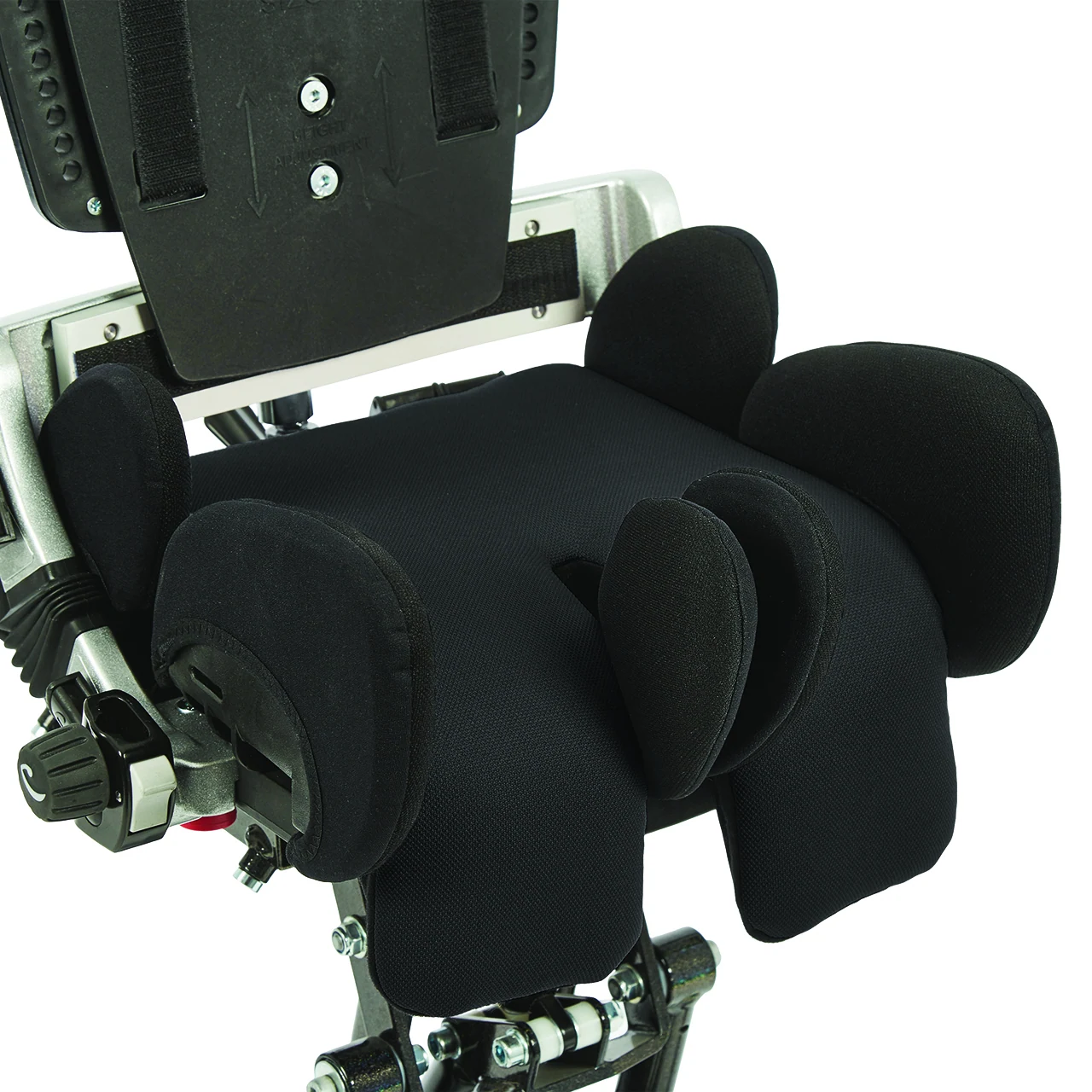
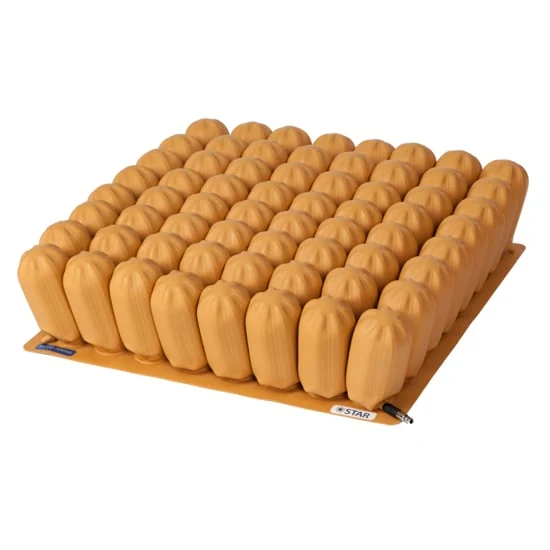
Start by describing what the top surface actually does, because the words "flat" and "contoured" are often used loosely in catalogs and quotations. A flat cushion has a top surface that is essentially level across its usable area, so the body meets a single plane. A contoured cushion is molded, carved, or assembled so that some regions sit higher than others, creating a shaped surface rather than a plane. The distinction is about the outer form the body contacts, not about how soft or firm the cushion is.
That form can be described in a few concrete terms. Where is the highest point? Is there a recess under the pelvis, a raised ridge along the outside of the thighs, or a build-up at the front of the seat? Does the contour run across the full width or only part of it? Two cushions both sold as "contoured" can differ substantially in how much material is raised, where, and over what area. Asking for a profile drawing or a cross-section is more useful than accepting the label alone, because the label does not tell you the depth or location of the shaping.
Flat surface and pre-shaped contours
A flat surface is easier to describe and easier to compare across products. Its usable area is one level plane, so the questions become about the cushion's thickness, its behavior under load, and how it is positioned on the seat rails. A pre-shaped contour adds a second layer of questions: which anatomical landmarks the shaping is intended to sit around, how deep the recesses are, and whether the raised areas align with the intended user's body rather than with an average.
This is where the geometry conversation overlaps with, but stays separate from, the immersion and envelopment vocabulary. Immersion and envelopment describe how the cushion material responds as the body sinks into or is wrapped by it; contour describes the shape the material is made into before anyone sits down. A cushion can be contoured and still allow substantial immersion, or contoured and relatively firm. Keeping the two ideas apart prevents a shaped surface from being read as a guaranteed pressure strategy. Our companion article on wheelchair cushion immersion vs envelopment covers that material-response side of the question.
For a dealer or procurement team, the practical output of this section is a short geometry description that can travel with a quotation: surface type, location and approximate depth of any recess or build-up, and the intended orientation of the cushion on the chair. That description lets a seating team check the product against a specific user instead of relying on a category name. It also gives the buyer a written basis for comparing two quotations that both say "contoured" but may describe very different profiles, and it makes later questions about a delivered cushion easier to answer against the original specification.
Compare fit and movement
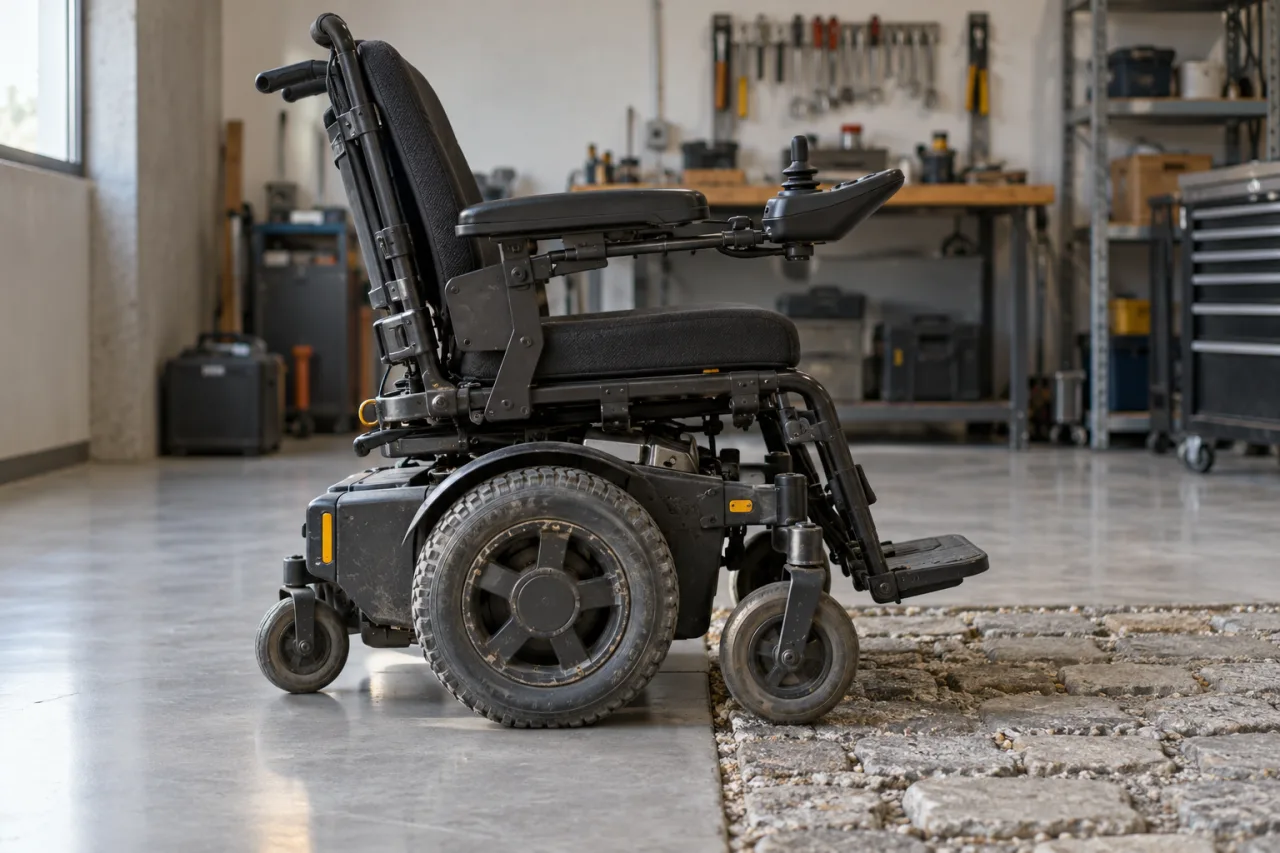
Fit and movement are where the shape difference becomes most visible in daily use, and also where the trade-offs are easiest to overstate. A contoured surface is intended to give the pelvis and thighs a defined place to rest, which can make the seated position more repeatable when the contour matches the user. A flat surface leaves the position less pre-defined, which can suit a user whose posture and seating plan are managed through other means, or whose body does not align with a given pre-shaped profile. Neither outcome is automatic; both depend on the individual and on how the whole seat is set up.
When comparing options, separate three questions that are often merged. First, does the contour sit where this person's pelvis and thighs actually are? Second, does the shaped surface interfere with how the person changes position, reaches, or propels? Third, does it change what happens during a transfer? Each question has a different answer path, and a cushion that looks favorable on the first can create work on the second or third.
Pelvic and thigh contours
Pelvic and thigh contours are the shaping most often discussed, because they sit closest to the parts of the body that determine seated stability. A recess or build-up around the pelvis is intended to influence where the pelvis settles; a raised area along the thigh is intended to influence how the thighs are positioned. The useful comparison is not "more contour versus less" in the abstract, but whether the specific contour geometry corresponds to the specific user's body dimensions and seating plan.
That correspondence is exactly what a catalog cannot confirm. A shaped cushion is built around some reference body, and a user may match it closely, partially, or not at all. A partial match can matter: a ridge that sits slightly inboard of where it was intended may press rather than guide, and a recess that is too shallow or too deep changes the contact pattern. These are observations for a seating assessment, not conclusions a product page can make. What procurement can do is require enough geometry information, and enough trial or evaluation opportunity, for the seating team to judge the match rather than assume it.
Transfers and individual shape
Transfers add a movement dimension that flat and contoured cushions handle differently. A flat surface presents a consistent level to slide across or lift from; a contoured surface introduces edges, recesses, and raised areas that a person may need to clear or work around. Whether that is a help or a hindrance depends on the transfer method, the person's own technique, and the assistance available. A contour that helps a user locate their position when seated may still be something they must manage when moving in and out of the chair.
The same logic applies to propulsion, reaching, and shifting position during the day. A shaped surface that holds the pelvis in a repeatable place can reduce the effort of re-establishing position; it can also limit how freely a user shifts weight if the contour is pronounced. These are individual-shape questions, and the honest comparison is a list of what to observe during a trial rather than a ranking of shapes.
| Comparison point | Flat cushion | Contoured cushion | What to confirm |
|---|---|---|---|
| Top surface | One continuous level plane | Raised areas and recesses forming a shaped profile | Location, depth, and extent of the shaping |
| Position repeatability | Position defined by the user and other seating supports | Position partly guided by the pre-shaped surface | Whether the contour matches the user's body |
| Transfers | Consistent surface to move across | Edges and recesses to clear or work around | Transfer method and assistance needs |
| Weight shifting and reach | Less pre-defined; depends on the seating plan | May guide or may limit movement, depending on depth | Observed movement during a trial |
| Information needed to compare | Thickness, dimensions, load behavior | Profile drawing, contour location, dimensions | Exact model documentation from the supplier |
Consider the complete seat

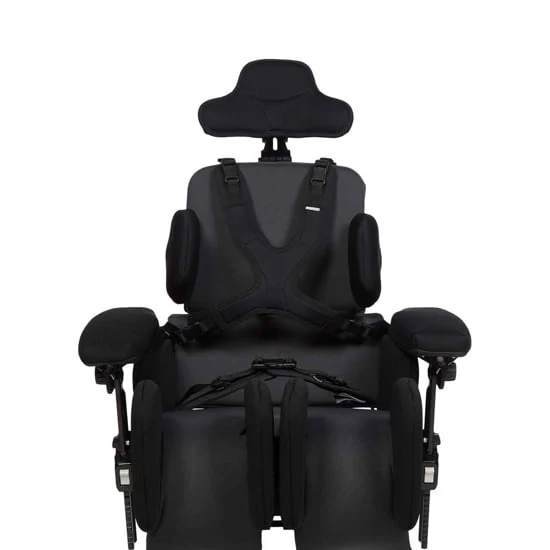
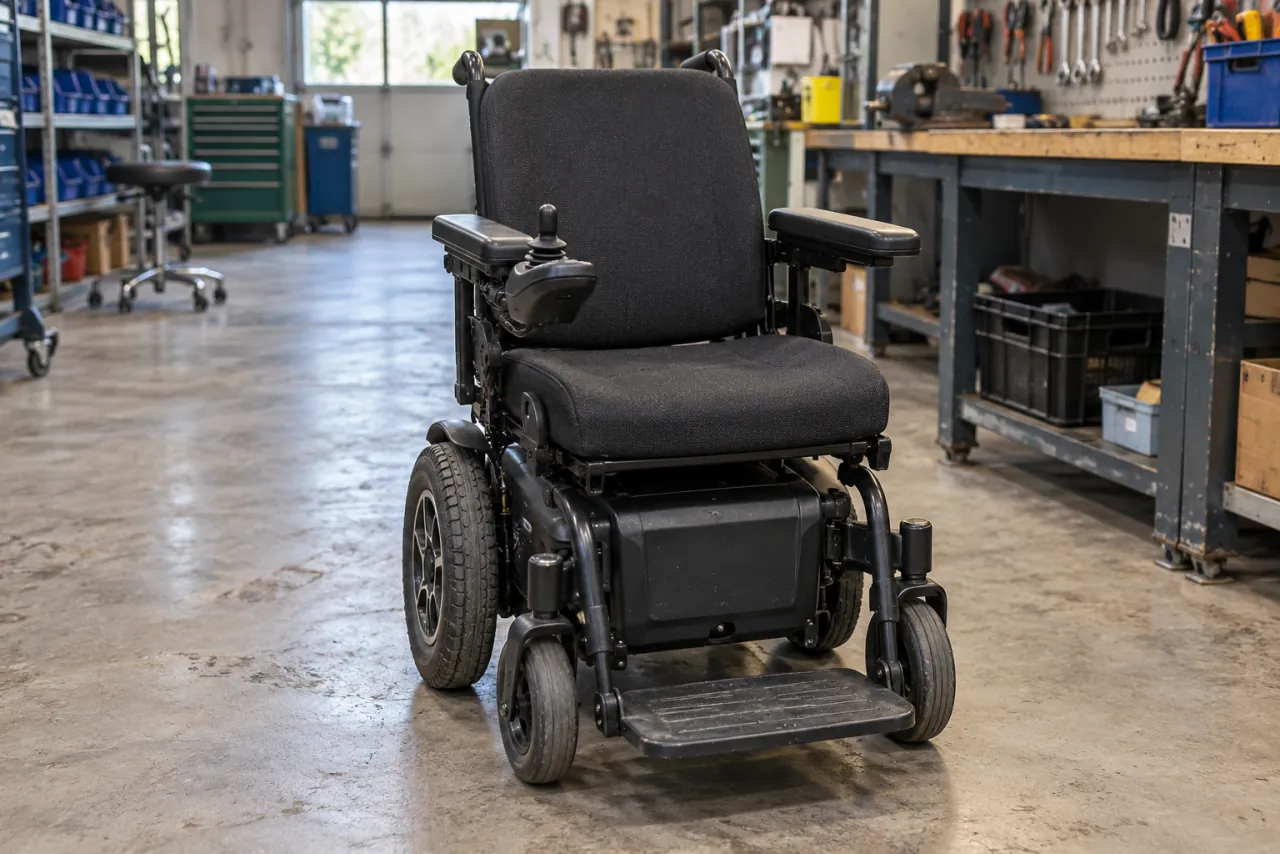
A cushion is one layer of a seat system, and its shape only makes sense in relation to the layers beneath and around it. The cushion base, the chair's seat dimensions, the back support, and any other seating components together determine the surface a person actually sits on. A contoured cushion placed on a seat that is too narrow, too short, or not level will not deliver the geometry its profile suggests, and a flat cushion may be the more predictable choice when the rest of the seat is being changed or is not yet settled.
This matters for dealers and institutional buyers because cushions are often specified separately from chairs, sometimes by different people at different times. A cushion ordered to fit a seat width is not automatically compatible with the seat's depth, the back support angle, or the intended positioning of the user. Recording the chair model, seat dimensions, and existing seating components alongside the cushion specification keeps the geometry question attached to the actual seat rather than floating free.
Cushion base, chair dimensions and professional assessment
The cushion base is the part of the cushion that carries the shaped top surface, and its stiffness and thickness influence how the contour behaves under load. A firm base may preserve a contour's shape; a more compliant base may allow the contour to flatten or change under a user's weight. Neither is universally preferable, and the supplier's documentation is the right place to establish what a specific model does. Where that information is not available, it is a question to put to the supplier rather than an assumption to make.
Chair dimensions set the outer boundary. Seat width and depth determine whether the cushion sits fully on the seat, whether its edges overhang, and whether the contoured regions land where they were designed to. A cushion that is slightly too wide may be compressed by the side frame, changing the effective contour; one that is too narrow leaves the user's thighs unsupported at the edges. These are dimensional checks that can be made before delivery, and they are cheaper to resolve in the specification than after the cushion is in use.
Professional assessment is the step that connects the geometry to the person. A seating team can observe how a user sits on a flat versus a contoured surface, where the pelvis settles, how the thighs are supported, and how transfers and movement are affected. That assessment draws on the individual's needs and circumstances, which no product description can supply. The WHO's guidance on wheelchair provision supports a service model in which seating and positioning decisions are made with appropriate professional input rather than from product labels alone. For procurement, the practical implication is to build evaluation and sign-off into the process, and to treat the cushion shape as one input to a seating decision rather than the decision itself.
| Decision input | Who can supply it | Why it matters for shape choice |
|---|---|---|
| Cushion profile and contour location | Supplier documentation | Establishes what the shape actually is |
| Seat width, depth, and condition | Chair specification or dealer measurement | Determines whether the cushion sits as designed |
| Existing back support and seating components | Seating team records | Shape works as part of a system, not alone |
| User's seated position and movement | Seating assessment | Connects geometry to the individual |
| Transfer method and assistance | User and care team | Shows whether contour helps or hinders |
| Trial observations | Seating team | Tests the match before commitment |
FAQ

Does contoured mean foam?
No. Contour describes the shape of the cushion's top surface, not its material. A contoured cushion can be built from foam, from other cushion materials, or from a combination, and a flat cushion can also be made of foam. The two questions should be asked separately: what is the surface geometry, and what material and construction produce it. A supplier's specification should answer both, and one answer does not imply the other.
Is contour always better for pressure redistribution?
No. Contour is a shape characteristic, and pressure redistribution depends on the interaction between the cushion's material behavior, the user's body, the seating position, and the whole seat system. A contoured cushion that does not match the user's shape may perform less predictably than a flat cushion that does, and a flat cushion may suit a user whose seating plan manages position through other means. The appropriate question is which configuration works for this person, which is a matter for individual seating assessment rather than a general rule about shape.
Conclusion
Match cushion geometry to the individual and the complete seat, then confirm the fit through professional assessment and a trial.