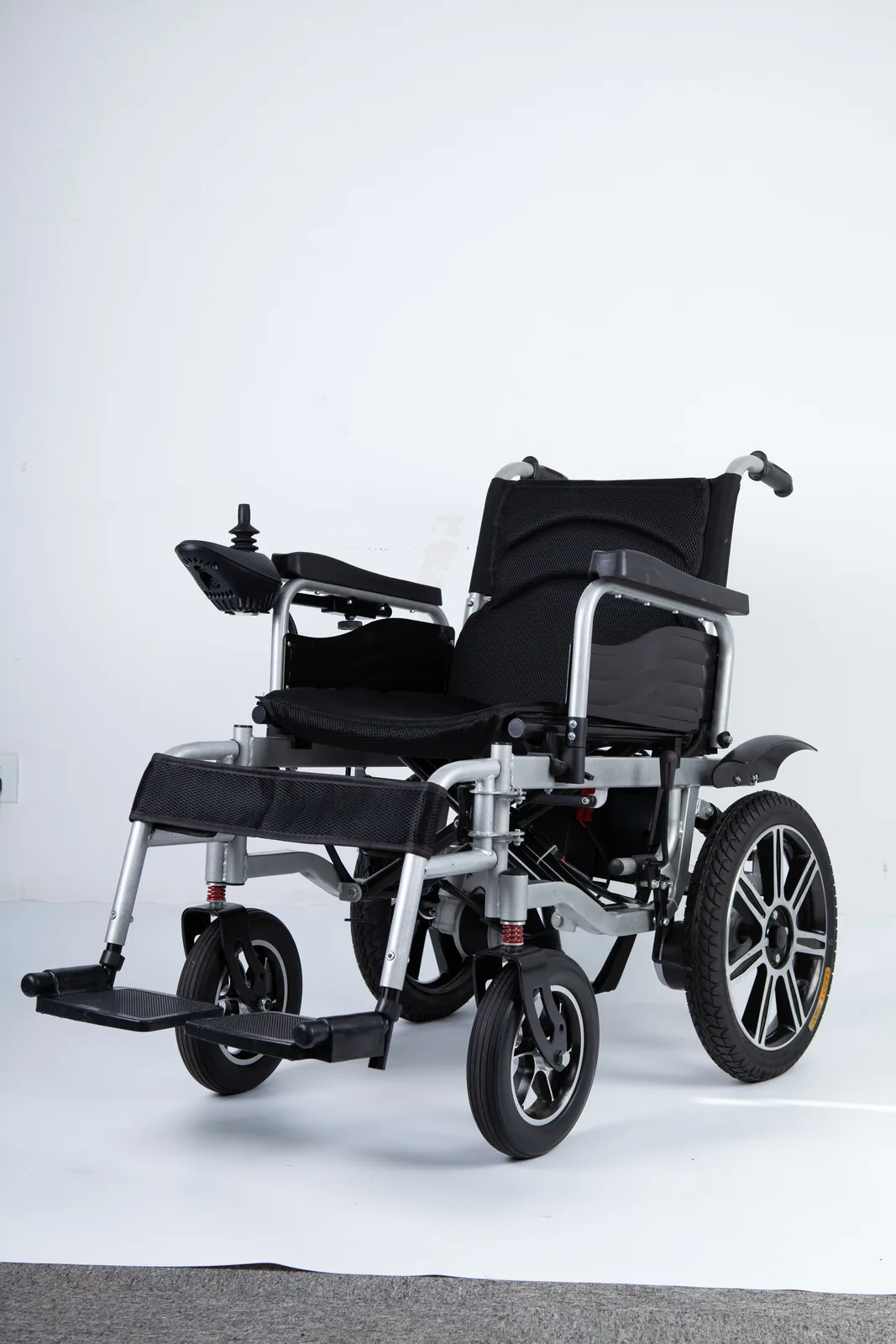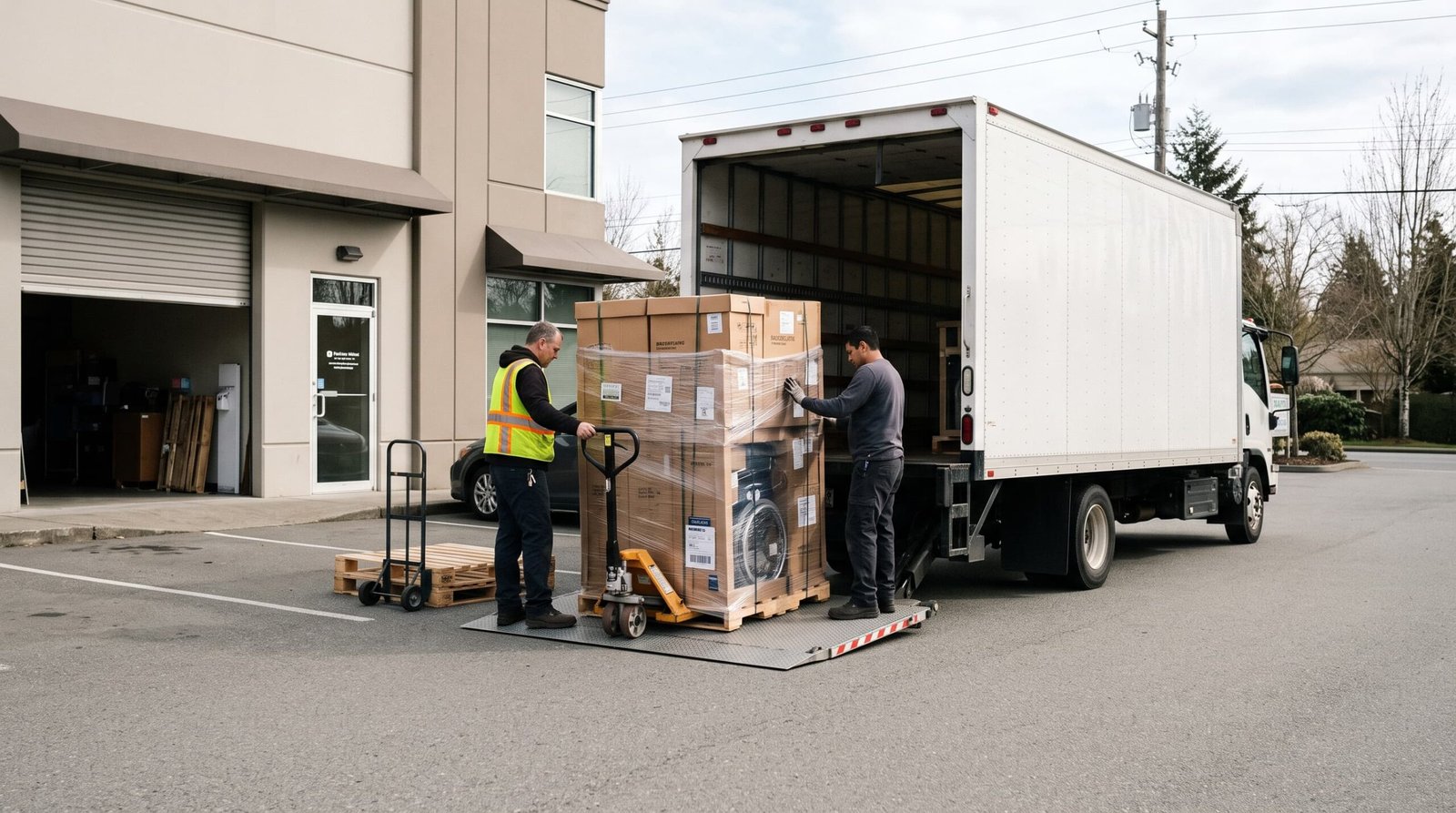
A mixed wheelchair order rarely ships as one neat cube. Cartons differ by model, accessories add boxes, and the total cubic metres you quote to a forwarder must come from the cartons you will actually hand over.
Wheelchair shipping carton cubic meters are calculated from each packed carton's outside length, width, and height, multiplied by its quantity, then summed across all lines. That total is a volume figure only. It does not tell you how many cartons fit in a container, because stacking limits, weight, door openings, and clearance also decide the load.
This guide is for exporters, importers, and less-than-container-load buying teams assembling a multi-model shipment. It shows a repeatable way to build the number, and it separates that number from the loading decisions a freight partner must confirm. The method matters because a mixed order is where volume errors accumulate: one carton measured in the wrong unit, or one model counted at the wrong cartons-per-unit rate, can shift the total enough to change how a forwarder plans the booking.
Wheelchair shipping carton cubic meters: Measure each packed carton
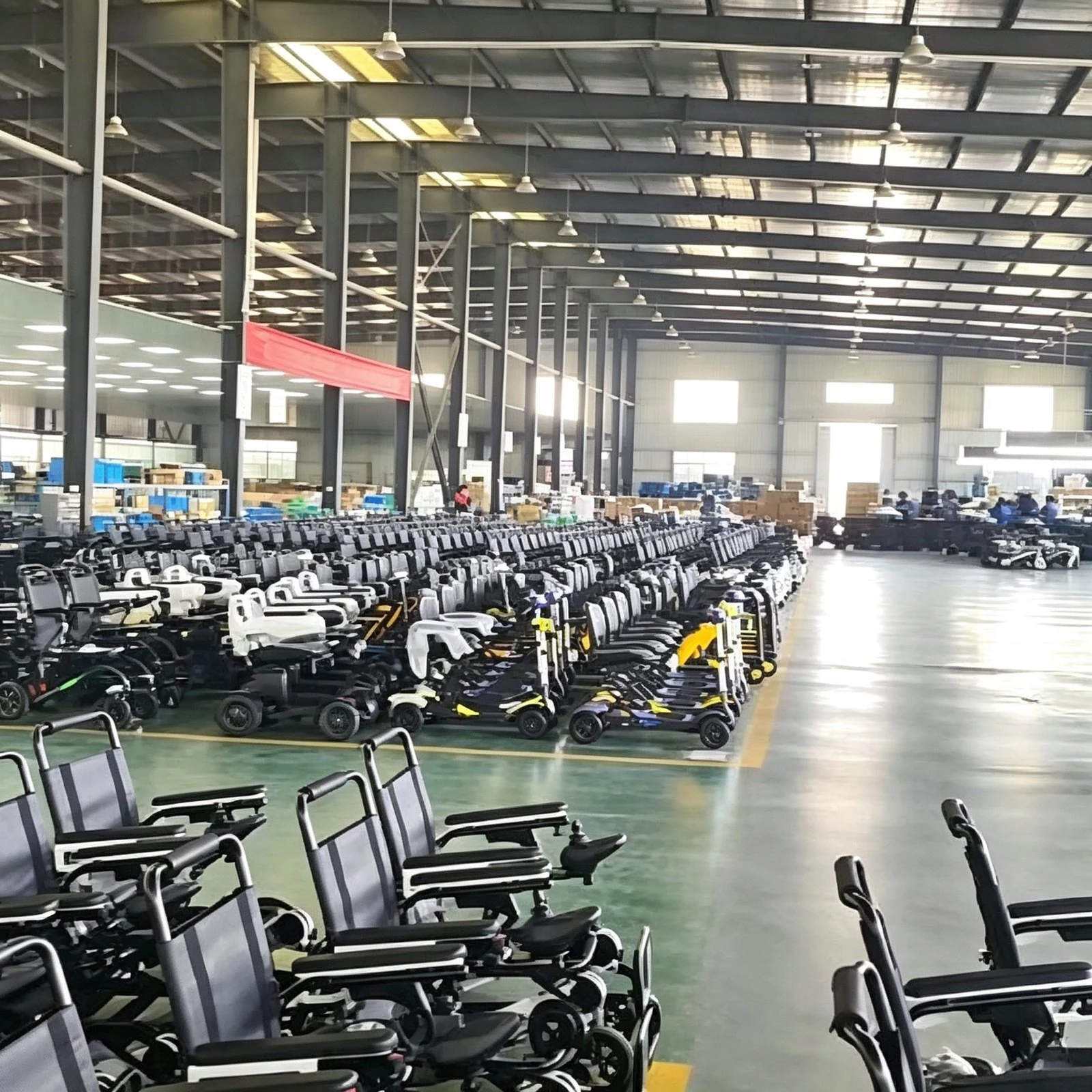
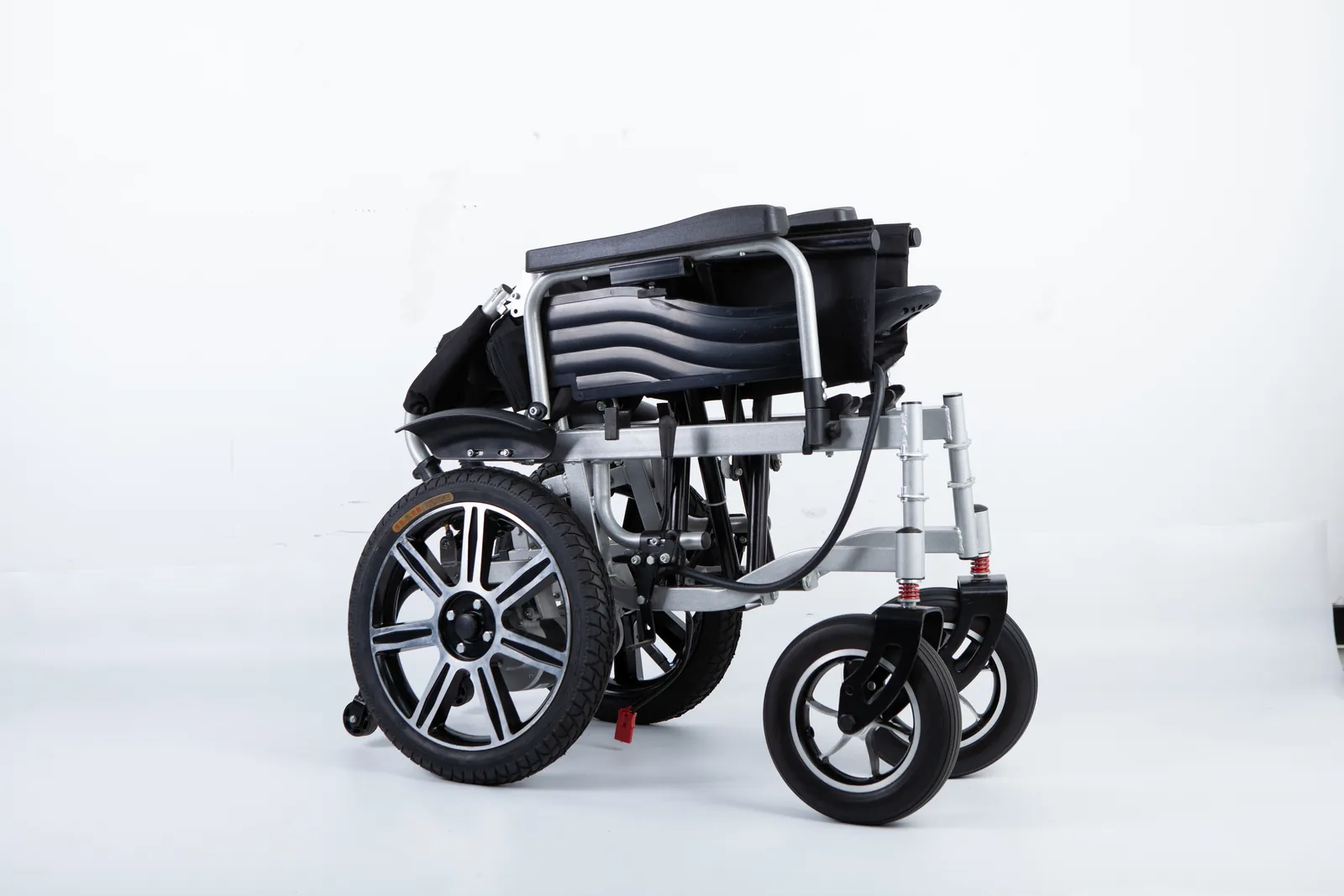
Start with the carton, not the chair. A folded wheelchair's published dimensions describe the product in a particular configuration; the export carton adds packaging, inserts, and possibly pallet or corner protection. Those are different measurements, and mixing them produces a volume that will not match the freight documents. The distinction is easy to lose when a specification sheet lists a folded length and width that look close to the carton figures, so treat the carton as its own record with its own source.
Packed outside dimensions
Measure the closed carton on its outside faces: the longest outside length, the outside width, and the outside height as it will sit in the shipment. Record which face you treated as height, because a carton can be turned, and the same box gives a different footprint depending on orientation. If a carton is palletised, the pallet base and any overhang change the space the unit occupies, so note that separately rather than folding it silently into the carton figure. A palletised unit is not the same shipping object as a loose carton, and a forwarder needs to know which one you are sending.
Use one unit throughout. Cartons are often measured in centimetres while freight systems expect metres, and a single line left in the wrong unit can distort a total by a factor of a million. Write the unit next to every number on your working sheet, and convert once, deliberately, before summing. If different colleagues measure different models, agree the unit and the rounding rule before anyone starts, so the lines can be added without a second conversion pass.
Mixed SKU quantities
A mixed order needs a line per carton type, not a line per model name. One model may ship in one carton; another may ship as a chair carton plus an accessory carton; a third may have two cartons per unit. Build the list from what the packer will actually close and label, then attach the quantity of each carton type. The cartons-per-unit rate is the figure most often assumed rather than checked, and it is worth confirming with the packing team rather than inferring it from a previous order.
Keep the model or SKU reference beside each line so a reviewer can trace the carton back to the order. This matters when a quantity changes late: you can correct one line and re-sum, rather than rebuilding the whole sheet. It also lets a forwarder ask a precise question about one carton instead of the entire consignment. A line that cannot be traced to a model is a line nobody can verify, and unverifiable lines tend to survive into the final quote unchallenged.
Calculate cubic metres per line

The arithmetic is simple; the discipline is in applying it consistently. Volume in cubic metres equals length times width times height in metres, multiplied by the number of identical cartons. The example below is hypothetical and exists only to show the method. It is not a Wheelchairs Factory specification, a standard carton size, or a loading estimate.
Single-carton volume
Take a carton measured at 120 cm × 60 cm × 50 cm. Convert first: 1.20 m × 0.60 m × 0.50 m. Multiply: 1.20 × 0.60 = 0.72, then 0.72 × 0.50 = 0.36. One carton occupies 0.36 cubic metres. If the order contains 40 of that carton, the line contributes 0.36 × 40 = 14.4 cubic metres.
Do the conversion before multiplying, or convert the final result once and label it. Both work; mixing the two across a sheet invites errors. Round only at the end, and state the rounding rule so a colleague repeating the calculation lands on the same figure. A small rounding difference per line is harmless on its own, but across many lines it can make two versions of the same batch disagree, which is exactly the kind of discrepancy that stalls a booking conversation.
Sum different cartons
A mixed batch is the sum of its lines. The table below uses invented dimensions purely to demonstrate the layout and the addition.
| Carton line | Outside L × W × H (m) | Single-carton CBM | Quantity | Line CBM |
|---|---|---|---|---|
| Model A chair carton (illustrative) | 1.20 × 0.60 × 0.50 | 0.36 | 40 | 14.40 |
| Model B chair carton (illustrative) | 1.05 × 0.55 × 0.45 | 0.26 | 25 | 6.50 |
| Accessory carton (illustrative) | 0.60 × 0.40 × 0.35 | 0.084 | 30 | 2.52 |
| Spare-part carton (illustrative) | 0.50 × 0.35 × 0.30 | 0.0525 | 20 | 1.05 |
| Batch total | — | — | 115 cartons | 24.47 |
The total is a volume statement about 115 cartons. It says nothing yet about whether those cartons can be loaded together, in what arrangement, or at what cost. Treat it as the input to a loading discussion, not the conclusion of one. When quantities change, re-sum the affected lines and keep a dated version so the figure you sent on Monday is distinguishable from the one you send on Friday. Note also that the single-carton figures above are rounded for display; if you round each line before summing, the batch total can drift slightly from a total built on unrounded values, so decide which convention you are using and say so on the sheet.
Separate volume from loading capacity

A container's nominal internal volume is not a target you can fill with cartons. Real loads lose space to the shape of the boxes, the way they stack, the need to close the doors, and the weight the shipment is allowed to carry. Two consignments with identical CBM can behave very differently once these factors apply, which is why a volume total should always travel with the constraints that produced it.
Cube versus weight
Volume and weight are separate constraints, and either can bind first. A batch of bulky, light cartons may run out of space before it reaches a weight limit; a batch of dense cartons, spare parts, or battery-containing units may reach a weight or handling limit while usable space remains. Because the two limits are independent, a CBM total alone cannot tell you which one will govern your shipment.
Ask your freight partner which limit applies to your route, equipment, and commodity, and supply both the carton volume and the actual gross weight per line. Do not assume that a figure described as a container's capacity is available to your cartons; the applicable weight allowance depends on the operator, the equipment, and the road or rail legs, and it must be confirmed for your booking rather than inferred from a general figure. The same logic applies to chargeable weight in air freight, where volumetric rules can differ from the space the cartons physically occupy. DHL's volumetric calculator is one entry point for that separate calculation; it does not tell you how many cartons a container will hold.
Orientation and clearance
Cartons that cannot be stacked, or that carry this-side-up and do-not-stack markings, consume floor area without using the height above them. Mixed carton heights leave voids unless the load is planned around them. Door openings and internal fittings reduce the usable envelope, and loaders need working space to place and secure cartons, so the last few cubic metres of a theoretical cube are rarely free.
Some wheelchair cartons also carry handling constraints that limit rotation. Where a carton must stay upright, its height is fixed and its footprint cannot be reduced by turning it on its side. Record these constraints per line, because they change the loading plan even when the CBM total stays the same. The practical question for your forwarder is not only how much volume you have, but which cartons can be stacked, rotated, or must stay upright. A manufacturer's account of container loading for electric wheelchairs and accessories illustrates how carton volume and loading arrangement are discussed as separate topics; its product figures are not transferable to your order.
Share assumptions with freight partners

A forwarder can only plan with what you send. Give them the carton-level list, the units, the constraints, and the questions you have not resolved, and mark clearly which figures are measured and which are still estimates. That lets them quote and plan against your actual consignment rather than a rounded summary. A short covering note explaining how the total was built is often more useful than a polished single number, because it shows where the figure can still move.
Packing list
A handover sheet that supports a loading discussion usually carries, per line: the model or SKU reference, a carton description, outside dimensions with units, single-carton volume, quantity, line volume, gross weight, and any stacking or orientation restriction. Add the total carton count, the batch volume, and the total gross weight. Note the date and version, and say who measured the cartons.
| Field | What to record | Why it matters |
|---|---|---|
| Model / SKU | Reference used on the order and carton label | Lets the forwarder match cartons to documents |
| Carton description | Chair carton, accessory carton, spare-part carton | Distinguishes lines with similar volume |
| Outside dimensions | L × W × H with the unit stated | Prevents unit mixing in the total |
| Quantity | Number of identical cartons | Turns single-carton volume into a line total |
| Gross weight | Per carton, as packed | Supports the separate weight check |
| Handling notes | Stacking, upright, fragile, battery-containing | Changes the loading plan, not the CBM |
| Status | Measured, estimated, or to be confirmed | Shows where the figure is still open |
Unconfirmed constraints
List what you do not yet know instead of leaving it out. Typical open items include final carton dimensions for a model not yet packed, whether accessory cartons will be consolidated, the gross weight of battery-containing units, and any carrier or destination requirement that applies to your commodity. Naming these items lets the forwarder plan around them or tell you what they need before booking.
For battery-containing wheelchairs, the packing list should identify the units and the battery information your carrier requests, and the applicable transport requirements should be confirmed with the operator for your route. Do not treat a general statement about batteries as approval for your shipment. Similarly, a volume figure is not a freight rate, a booking confirmation, or a statement that a particular container type will hold your order. Those are separate confirmations from the parties responsible for them. If you are still assembling the order itself, the steps in how to prepare a wheelchair order for export shipment cover the documentation side that sits alongside this volume work.
FAQ
Does total CBM equal the number that fits in a container? No. Total CBM describes the space your cartons occupy. How many fit depends on stacking, orientation, door openings, clearance, and weight limits, which your freight partner must assess for the actual load.
Should carton or folded-chair dimensions be used? Use the packed outside carton dimensions for shipping volume. Folded-chair dimensions describe the product, not the export carton, and using them will not match what is handed to the carrier.
Do batteries and accessories change the packing list? They can add carton lines, weight, and handling notes. List battery-containing units and accessory cartons separately, and confirm the applicable transport requirements with your carrier for the specific shipment.
Conclusion

Measure packed cartons, convert units once, sum each line, and hand the list to your forwarder with open constraints clearly marked. For single-parcel questions, see how to ship a manual wheelchair.