Short answer: Managing an LTL delivery without a loading dock is completely workable, but only when the receiver confirms site access, liftgate service, delivery placement, and paperwork before the shipment is booked. A missing dock is not automatically a failed delivery; it is a standard accessorial condition that must be specified on the freight quote.
This pre-booking receiver checklist is written for facilities receiving palletized or crated mobility equipment, such as electric wheelchairs, manual wheelchairs, and transport chairs. While freight operations align with federal safety rules outlined by the Federal Motor Carrier Safety Administration (FMCSA), the same sequence applies to any commercial freight order.
1. Start with the Receiving Site Profile
Before comparing carrier rates, define your delivery location in clear operational terms:
- Commercial dock: Business address with a standard 48-inch dock or dedicated forklift available.
- Ground-level commercial: Business address without a dock platform.
- Residential address: Private home, home office, or residential care facility.
- Limited-access site: School, clinic, medical warehouse, storage unit, or gated medical facility.
- Road surface condition: Paved surface suitable for a full 53-foot tractor-trailer, or restricted access requiring a 26-foot straight truck.
Do not assume a commercial address includes a dock. Many medical clinics, distributor showrooms, and regional dealers receive wheelchair freight through a storefront, rear parking lot, or ground-level roll-up door.
2. Planning an LTL Delivery Without a Loading Dock
Clear advance verification prevents unexpected detention fees and returned freight:
- Overhead clearance: Check for tree branches, security gates, entry canopies, and building overhangs.
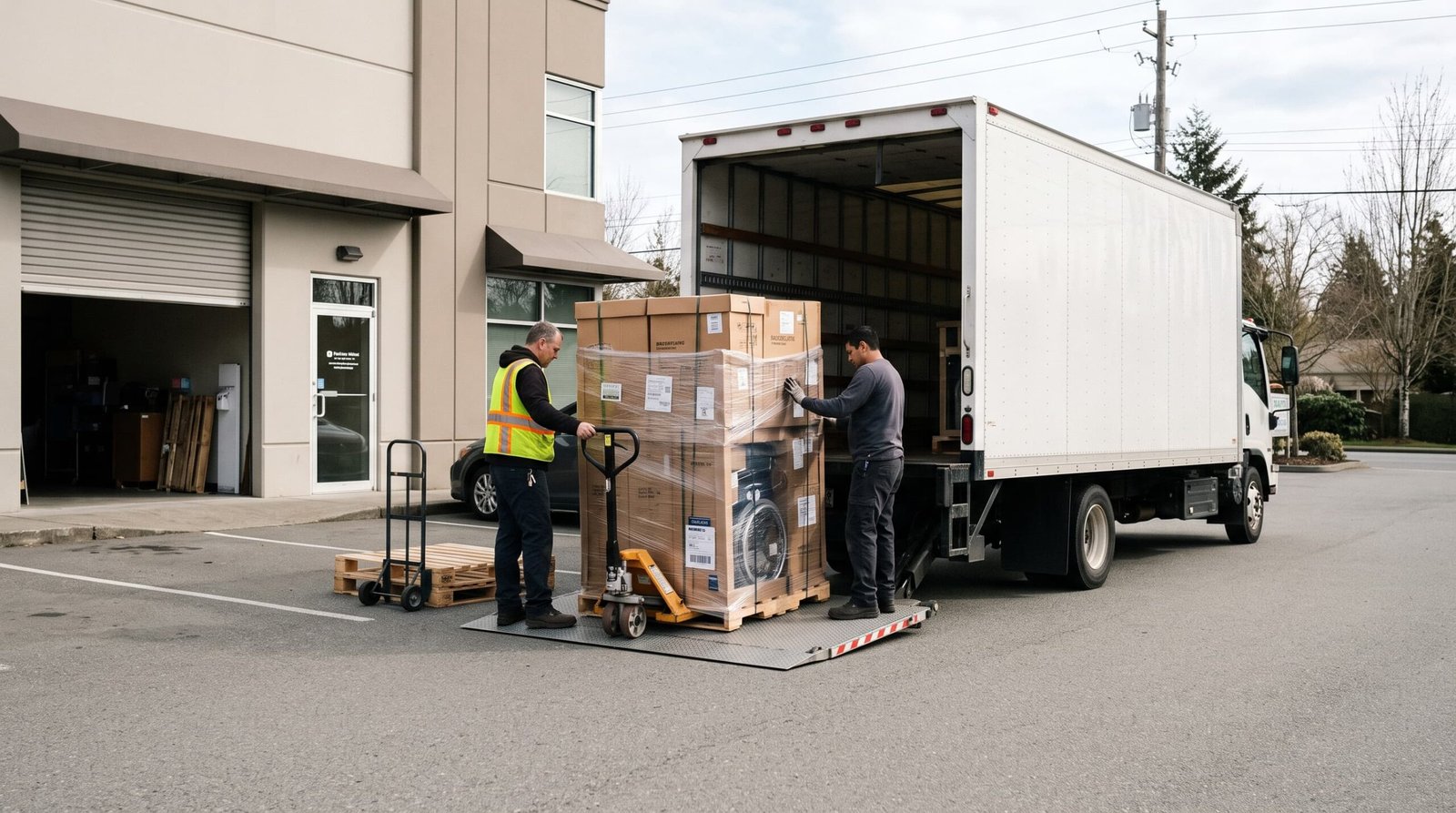
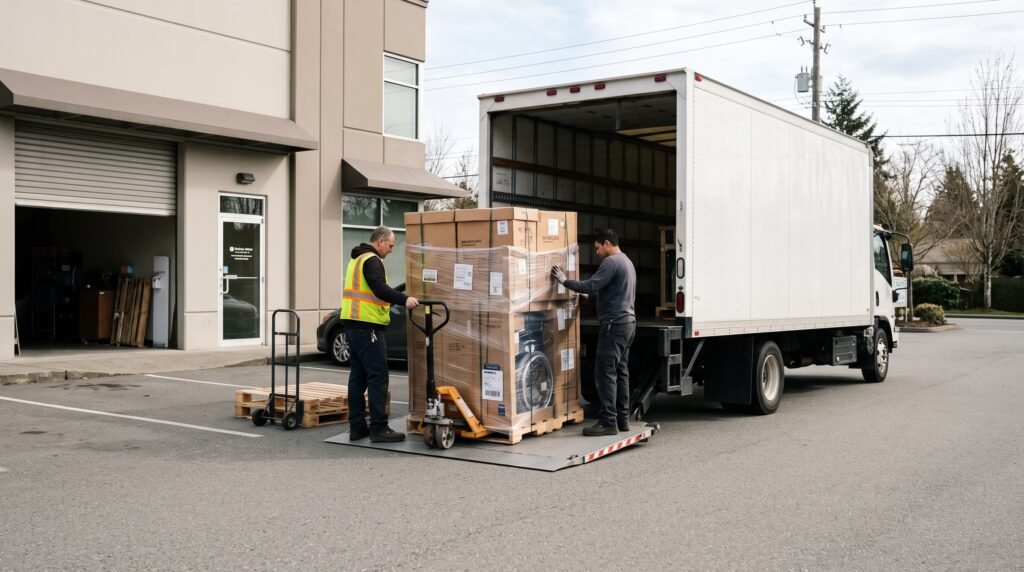
- Liftgate drop clearance: Ensure there is level ground behind the trailer for the hydraulic platform to unfold and touch the pavement.
- Surface stability: Confirm whether the ground is concrete, asphalt, packed dirt, gravel, or sloped.
- Transit distance: Measure the distance from the truck position to the final receiving doorway.
- Security protocols: Record gate access codes, security guard check-ins, or mandatory delivery appointments.
- Parking regulations: Verify local municipal parking permits or restricted commercial delivery hours.
Ask the shipper or carrier which truck length will be dispatched, then compare those dimensions to your delivery area.
3. Separate Dock Access, Liftgate Service, and Inside Delivery
These three terms represent distinct accessorial line items on an LTL quote:
- No Loading Dock: Indicates the freight trailer cannot back up to an elevated dock-height platform.
- Liftgate Service: Lowers freight mechanically from trailer bed height to ground level. It is not added automatically simply because a site lacks a dock platform.
- Inside Delivery: Involves moving freight past the building entrance threshold. By standard freight definition, this is restricted to the first dry interior area unless quoted further.
When arranging an LTL delivery without a loading dock, a single pallet of lightweight manual wheelchairs can be managed with a hand pallet jack. However, crated electric wheelchairs require a hydraulic liftgate and extra personnel. Never assume the freight driver will uncrate, assemble, or position individual wheelchairs inside your facility.
4. Wheelchair-Specific Receiving Considerations
Review your equipment packaging specifications with your supplier before approving the bill of lading (BOL):
- Manual Wheelchairs: Packed in individual cartons grouped onto wood pallets. Confirm whether boxes are banded to pallets or floor-loaded in the trailer.
- Transport Chairs: Lightweight but frequently shipped as mixed medical freight. Confirm carton counts and request ground-level placement.
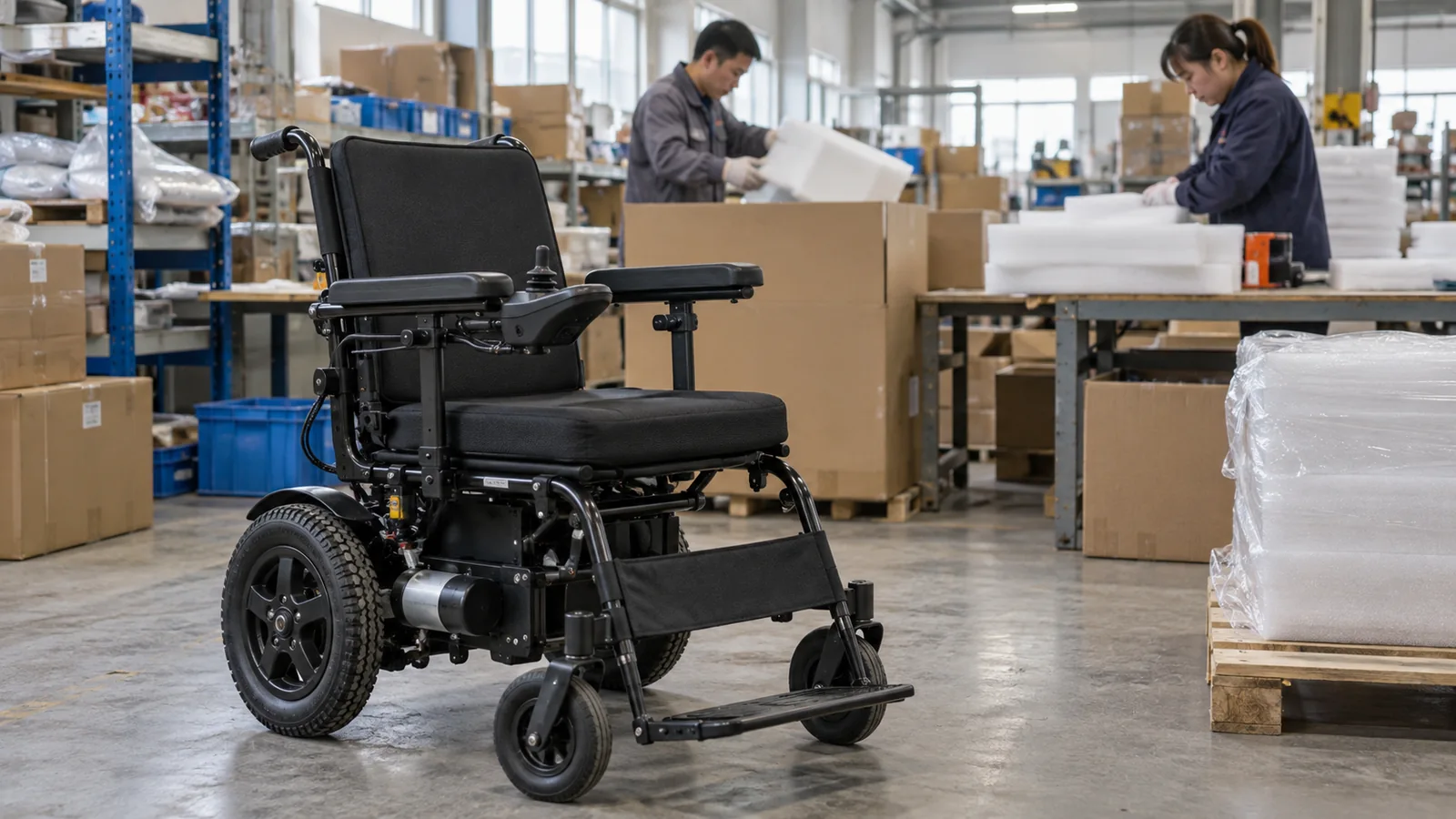
- Electric Wheelchairs: Shipped in heavy wooden crates or reinforced pallets. When booking an LTL delivery without a loading dock, liftgate service and ground placement are mandatory because crated power chairs often exceed 250 lbs.
Confirm with the shipper whether battery paperwork (such as UN3480/UN3481 lithium documentation or non-spillable AGM certificates) influences carrier freight class or handling rules.
5. Carrier-Specific Verification Table
Freight policies differ across national networks. Use this comparison table before finalizing bookings for an LTL delivery without a loading dock:
| Carrier | Questions to Confirm in Writing | Do Not Assume |
|---|---|---|
| R+L Carriers | Does the quote include liftgate or platform service at this specific ZIP code? Is the delivery point inside R+L’s direct service terminal network? | That every non-dock address automatically receives liftgate equipment. |
| Estes Express | Does the selected tariff include non-dock ground placement? What accessorial fee applies if the driver cannot access a dock? | That “non-dock delivery” means the driver will transport cartons inside the building. |
| FedEx Freight | Is this booked under FedEx Freight LTL rather than air cargo? Are liftgate and limited-access fees itemized separately on the quote? | That residential or liftgate exemptions from parcel services apply to LTL freight. |
6. Receiver-to-Carrier Information Handoff
Preparing clear documentation for an LTL delivery without a loading dock requires specific notes rather than a simple street address:
- “No dock. Liftgate delivery required for ground-level drop.”
- “Liftgate requested for [Number] pallet(s) of crated medical mobility equipment.”
- “Delivery entrance is at the rear alley; 53-foot trailers must enter from North Street.”
- “Do not block patient entrance ramp; driver must call 30 minutes before arrival.”
- “Electric wheelchair crates are top-heavy; standard manual pallet jacks cannot roll across the gravel lot.”
Instruct your freight broker or carrier to print these delivery notes directly on the Bill of Lading (BOL). If instructions are provided verbally, request an email confirmation prior to dispatch.
7. Pre-Booking Receiver Checklist
Before approving an LTL delivery without a loading dock, run through this 10-step verification checklist:
- Address classification: Confirm commercial vs. residential zoning and the exact receiving entrance.
- Vehicle clearance: Verify maximum allowable trailer size (53-foot semi vs. 26-foot straight truck).
- Liftgate accessorial: Secure written quote confirmation for hydraulic liftgate service.
- Delivery perimeter: Clarify curbside, threshold, or inside delivery terms in writing.
- Crate dimensions: Verify pallet dimensions, gross weight, and stackability limits.
- Receiving equipment: Stage an operational pallet jack, dock plate, or certified forklift operator.
- Receiving labor: Assign internal staff for visual inspection and staging.
- Time window: Confirm arrival notification parameters and dispatch phone numbers.
- Dock alternatives: Evaluate ground-level roll-up doors, yard ramps, or flat curbside drops.
- Exception process: Review freight claim documentation rules before the driver departs.
8. Buyer and Procurement Questions Before Booking
- What exact accessorial charge applies to a non-dock delivery in our delivery ZIP code?
- Does the carrier require liftgate delivery based on crate weight, or is it optional?
- Will our wheelchair order arrive palletized and shrink-wrapped, or loose carton loaded?
- Who provides the unloading labor once the freight reaches ground level?
- Can the carrier commit to a guaranteed morning or afternoon appointment window?
- What is the carrier’s redelivery fee if site access is temporarily blocked?
- What notation must be recorded on the delivery receipt (POD) if crates show external damage?
9. Day-of Delivery Inspection Protocol
- Clear the unloading lane: Keep the drop area unobstructed before the truck arrives.
- Photograph upon arrival: Photograph the freight while it is still on the trailer or liftgate platform.
- Verify piece counts: Match the pallet and carton count directly against the delivery receipt.
- Document damage immediately: If cartons or crates show crush marks, tears, or punctures, write specific damage details directly on the driver’s delivery receipt before signing.
- Safety first: Do not operate unloading machinery without proper safety clearance.
- Retain documentation: Secure a physical or electronic copy of the signed delivery receipt featuring the driver’s signature and the carrier PRO tracking number.
10. Managing Delivery Access Issues
If unexpected obstacles disrupt an LTL delivery without a loading dock, consult the driver and terminal dispatcher immediately. Practical adjustments include:
- Requesting transfer to a smaller straight truck for final delivery.
- Authorizing safe curbside drop-off if you have a powered pallet jack.
- Coordinating customer pickup at the carrier’s local destination freight terminal.
For mobility dealers managing regular inventory, explore our factory catalog of wholesale electric wheelchairs and transport chairs to review product crate dimensions, pallet weights, and packaging specifications before booking your next shipment.
Frequently Asked Questions (FAQ)
What happens if an LTL delivery arrives without a requested liftgate?
The driver will not be able to lower heavy palletized freight to the ground. The driver will return the cargo to the local terminal, triggering an expensive redelivery fee and shipment delay.
Is curbside delivery the same as inside delivery?
No. Curbside delivery means the driver lowers the pallet to the street or pavement next to the truck. Inside delivery requires moving the shipment across the doorway threshold, which requires a separate accessorial fee.
Can manual pallet jacks roll over gravel or grass?
No. Standard pallet jacks with small polyurethane wheels require smooth, solid concrete or asphalt. Moving heavy wheelchair crates across gravel requires an all-terrain pallet truck or a forklift.
Summary
Completing a successful LTL delivery without a loading dock comes down to advance planning, clear documentation, and selecting the right accessorials. By verifying liftgate requirements, confirming truck clearances, and securing written quotes before booking, receivers eliminate unexpected fees and ensure that valuable wheelchair shipments arrive smoothly and safely.
Video: Liftgate Service for Freight Shipments Without a Loading Dock