
You are choosing a manual wheelchair configuration or checking whether a chair will fit a doorway, and the rear wheels are not vertical. Before you compare models, you need to know what that tilt changes and which numbers to record.
Wheelchair camber is the angle of the rear wheels relative to vertical, viewed from behind the chair. Tilting the wheels outward can change hand access to the push rims and the chair’s widest point, so camber, wheel diameter, and measured overall width must be checked together on the exact model.
This article is for manual wheelchair dealers who configure chairs and for self-propelling users comparing options. It does not recommend one camber value, and it does not describe how to adjust an axle yourself. Instead, it builds a comparison card: wheel angle, bottom overall width, target doorway clearance, push-rim access, and the model reference fields you need before anyone confirms a configuration.
What wheelchair camber describes

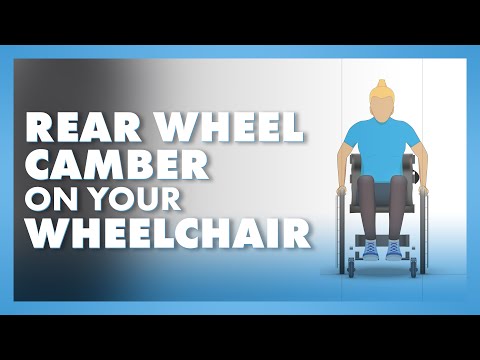
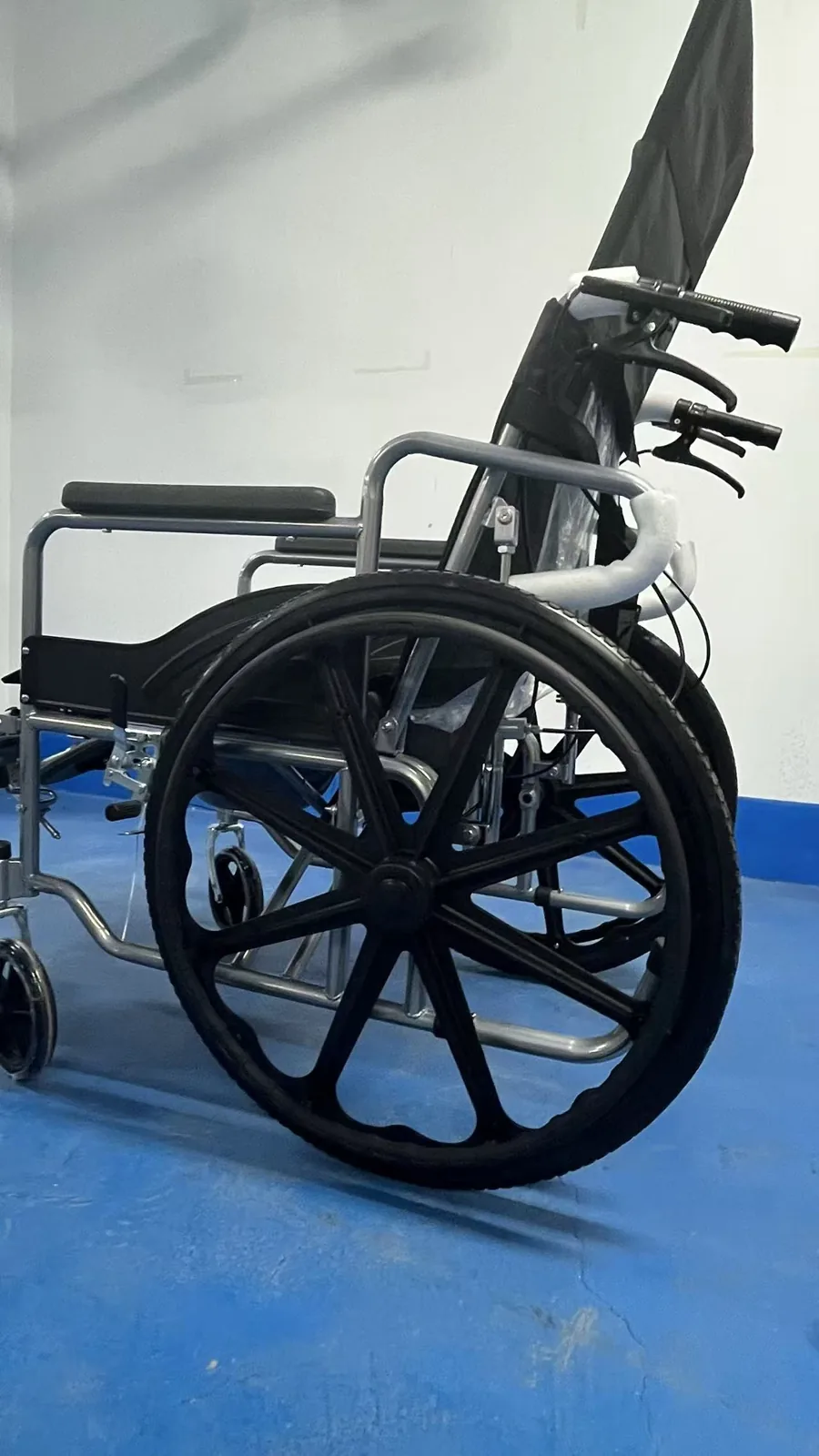
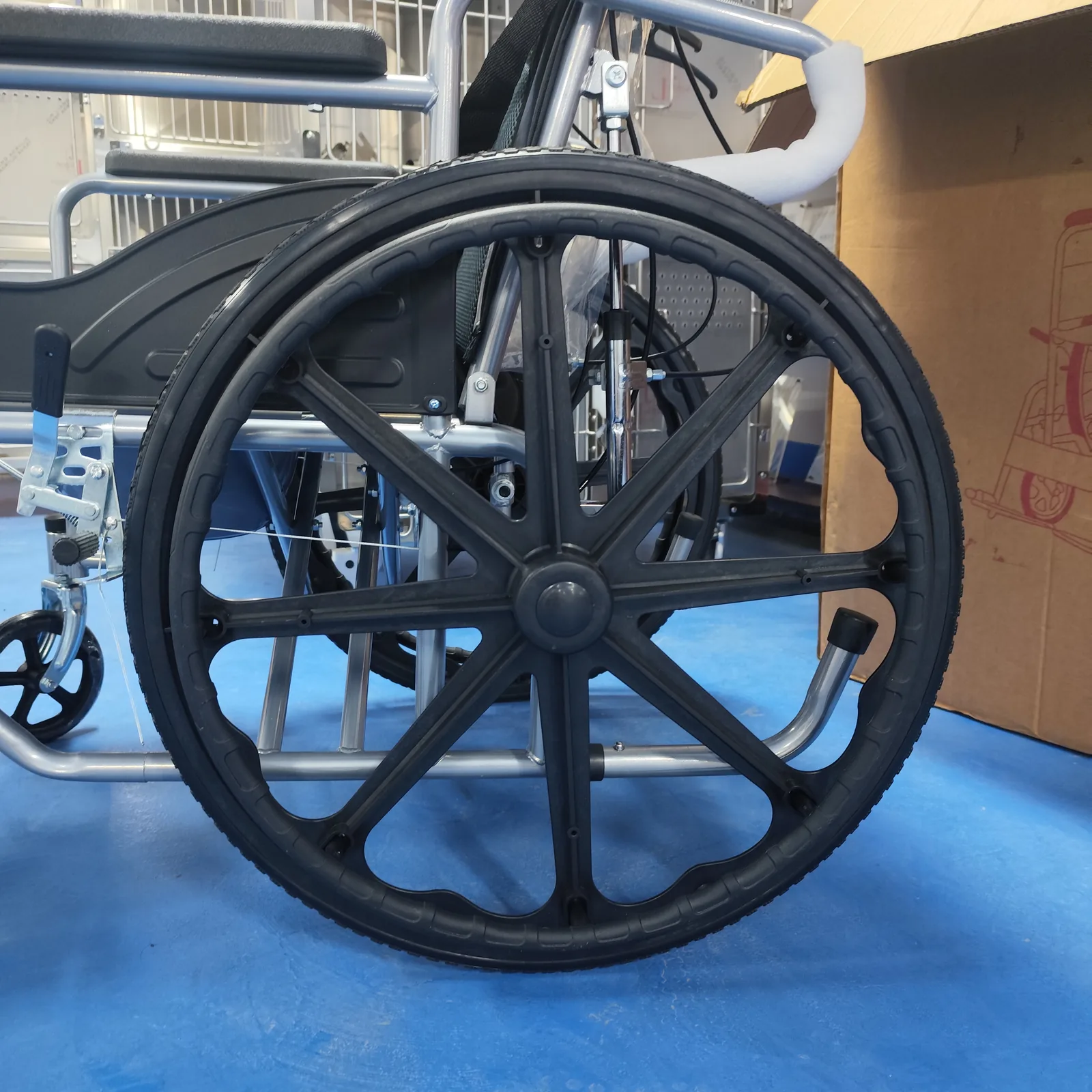
Camber describes how far each rear wheel leans away from a vertical plane when you look at the chair from behind. A chair with zero camber has rear wheels that sit close to vertical. As camber increases, the top of each wheel leans inward toward the seat and the bottom of each wheel moves outward, away from the chair’s centerline. The two wheels mirror each other, so the chair’s footprint at floor level grows wider as the angle grows.
That description is geometric. It tells you the direction of the change, not a number for any particular chair. The actual angle depends on the axle, the frame, and the parts the manufacturer specifies for that model. A configuration sheet may list camber in degrees, or it may describe a camber tube or axle option without stating an angle in the same place. Either way, the value belongs to the exact model and build, not to wheelchairs in general.
Camber is also not a measure of how well a chair suits a person. It is one rear-wheel setting among several, and its effect on the chair’s width and on where the push rims sit is what a dealer or user can actually compare. Keep the angle as a recorded input, and keep the access decision separate.
Rear-wheel angle versus wheel diameter
Wheel diameter and camber are different measurements, and mixing them up is an easy way to misread a specification. Diameter describes the size of the wheel itself, usually given as a nominal figure such as 24 inch or 25 inch. Camber describes the wheel’s tilt relative to vertical. A chair can have large rear wheels and zero camber, or smaller rear wheels and noticeable camber; one does not determine the other.
The two do interact in practice. A larger wheel, tilted outward, reaches further from the centerline at floor level than a smaller wheel at the same angle, because the bottom of the wheel starts further out. That is a geometric consequence, not a claim about any named product. It means a diameter change and a camber change can both move the chair’s widest point, so a configuration note that lists only one of them is incomplete for a width comparison.
When you read a specification, look for both fields. If the sheet gives a wheel size but no camber value, or a camber option but no measured width, treat the missing field as a question for the manufacturer or the supplying dealer rather than filling it in yourself. A useful habit is to write the two fields on separate lines of the same record, so a later reader cannot mistake a wheel size for an angle or an angle for a width.
Compare hand access, lateral stability and overall width

Camber changes three things that readers usually care about, and they pull in different directions. The push rims move with the wheels, so their position relative to the user’s hands changes. The base of the chair gets wider, which affects tight spaces. And the tilted wheels alter how the chair sits laterally, which is a handling question rather than a measurement you can read off a sheet.
These are trade-offs, not a ranking. A configuration that improves one aspect may make another harder, and the right balance depends on the individual’s propulsion style, the environments they use, and what a seating professional judges appropriate. The useful work for a dealer is to document each factor separately so the person making the decision can see the trade-off clearly.
Hand access
Because the push rims are mounted to the wheels, tilting the wheels outward moves the rims as well. The top of the rim shifts inward and the bottom shifts outward, changing the angle at which a hand meets the rim during a stroke. For some self-propelling users, that altered approach is the main reason to consider camber; for others, it is the reason to avoid it.
Whether a given rim position is comfortable or reachable is an individual matter. It depends on arm length, shoulder position, seating posture, and propulsion technique, and it is exactly the kind of judgment that belongs with a clinician or seating professional who can see the person in the chair. A dealer can record the rim position and the camber value, and can ask the user or their professional to confirm the setup, but should not promise that a particular angle will improve propulsion.
Overall width and narrow spaces
Camber affects the chair’s widest point at the bottom, where the wheels meet the floor. That is the dimension that matters for doorways, thresholds, bathroom entries, and tight turns. It is not the same as seat width, and it is not the same as the folded width of a chair. A chair can have a modest seat width and still be wide at the base because of how the rear wheels are set. Our guide to wheelchair seat width versus overall width explains why those two figures answer different questions.
The practical step is to measure the chair’s actual bottom overall width for the configuration in question and compare it with the clear opening of the tightest doorway the chair must pass. Clear opening is the usable width between the door frame and the open door edge, not the nominal door size. A chair that fits a hallway may still fail a bathroom door, and a chair with added camber may pass a doorway that a wider configuration would not. Record both numbers rather than assuming a standard doorway will work.
| Configuration factor | What it changes | What to record | What still needs confirmation |
|---|---|---|---|
| Rear-wheel camber angle | Tilt of each wheel from vertical; base width and rim position | Camber value or camber option named on the model sheet | Exact angle for the built chair; whether it is fixed or selectable |
| Rear-wheel diameter | Size of the wheel; how far the tilted wheel reaches at floor level | Nominal wheel size from the specification | Combined effect with the chosen camber on measured width |
| Bottom overall width | Whether the chair passes a given clear opening | Measured widest point at floor level for that build | Clear opening of each doorway on the user’s route |
| Push-rim position | Where the hand meets the rim during propulsion | Rim position relative to the seat and camber setting | Whether the user’s reach and technique suit it |
| Seat width | Seating fit, not base width | Seat width from the model sheet | Relationship to the user’s seating assessment |
Read the table as a checklist of separate fields, not a set of interchangeable numbers. The camber value and the bottom overall width are related but not identical, and neither one substitutes for the doorway measurement.
Read an actual configuration sheet
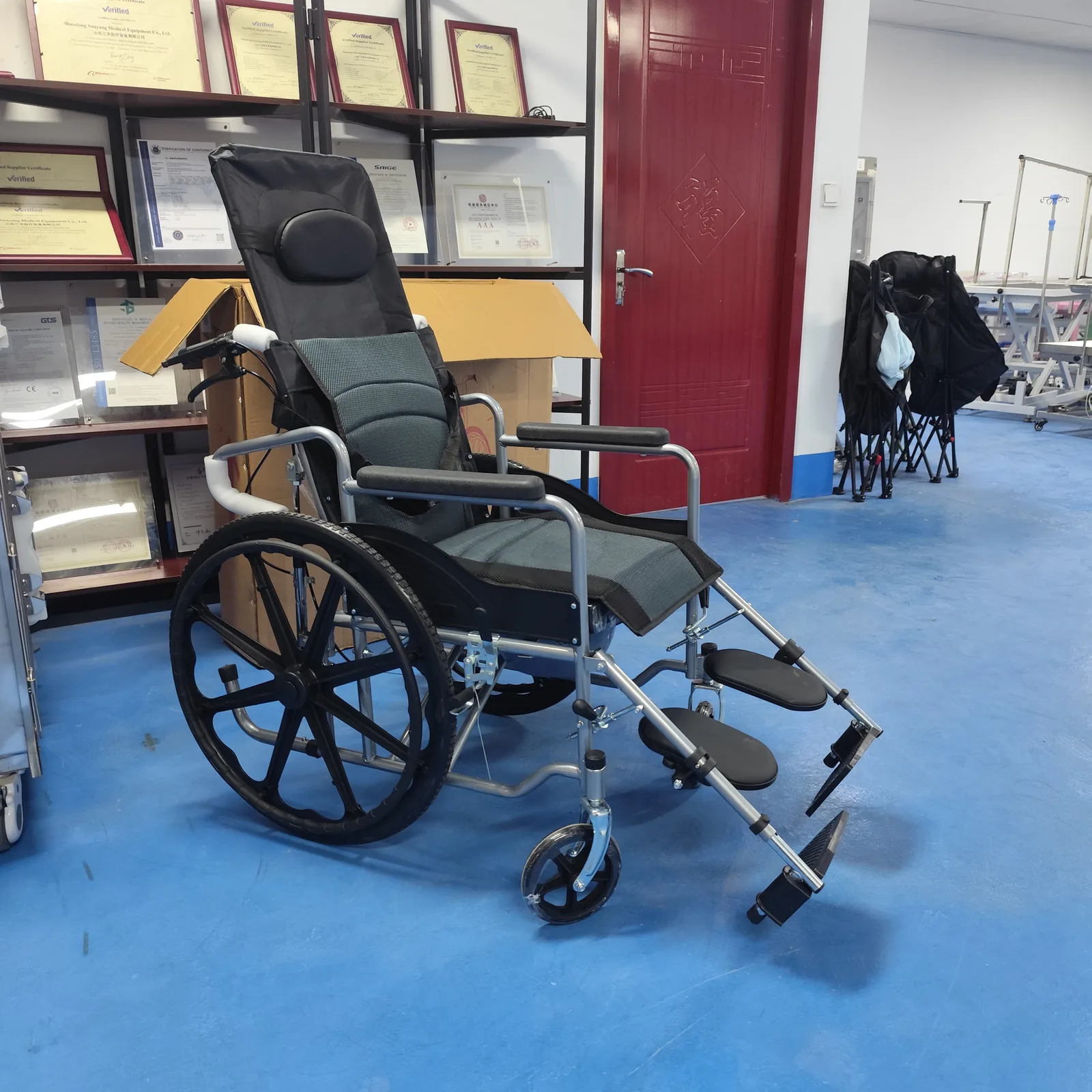
A configuration sheet is only useful if you read it as a model-specific document. Start with the exact model name and any build or revision identifier, because camber options, axle types, and rear-wheel choices can differ between models and between versions of the same model. Do not carry a value from one chair to another because the frames look similar.
Next, find where camber is defined. Some sheets state an angle in degrees; others name a camber tube, axle plate, or wheel option and leave the angle to a separate table. If the sheet lists camber as a selectable option, note which values are offered and whether the choice is made at order or set at build. Do not assume every model is adjustable, and do not assume a listed option is available on every frame size.
Then check the width information. A good sheet gives a measured overall width for a defined configuration, or tells you which measurements change with which options. If the sheet gives only seat width, it does not answer the doorway question. If it gives a range, note the conditions attached to that range. A range that applies to one frame size or one axle position should not be read as covering every build of the same model name.
Finally, note what the sheet does not say. Missing fields are questions, not blanks to fill with a guess. Ask the manufacturer or supplying dealer to confirm the camber value, the measured bottom overall width for the intended build, and whether the rear-wheel and axle parts are specified for that model. Keep the answer with the configuration record so the next person reviewing the order sees the same basis. Where a sheet mixes order codes with descriptive labels, translate each code into plain words in your own notes, so a colleague who does not know the catalogue can still follow the record.
Record the chair and doorway measurements
Measurement records are what turn a camber discussion into a decision. Build a simple record with two halves: the chair as configured, and the spaces it must pass. Keep the units consistent, note who took each measurement and when, and record the method so someone else can repeat it.
For the chair, record the exact model and build reference, the rear-wheel diameter, the camber value or option, and the measured bottom overall width at the widest point. Note whether the measurement was taken with the chair loaded or unloaded if that could matter, and note any accessories that extend the width. For the spaces, record the clear opening of each critical doorway, the width of the narrowest passage on the route, and any thresholds or turns that constrain the chair. Label each location so the numbers are usable later.
| Record field | Example entry format | Why it matters |
|---|---|---|
| Model and build reference | Model name plus revision or order reference | Camber and width options are model-specific |
| Rear-wheel diameter | Nominal size from the specification | Interacts with camber at floor level |
| Camber value or option | Degrees, or the named camber option | The input being compared |
| Bottom overall width | Measured widest point at floor level | The number compared with doorways |
| Doorway clear opening | Measured clear width, with location label | The constraint on the route |
| Measurement notes | Date, method, accessories fitted | Makes the record repeatable |
Compare the recorded bottom overall width with each recorded clear opening and note the margin. A small margin deserves a second look, because door frames, hinges, and uneven floors can reduce the usable opening. If a doorway is marginal, the honest next step is to confirm the measurement on site rather than to assume the chair will pass. Where a route has several tight points, the narrowest one governs the decision, even if it is not the doorway the user thinks of first.
Two habits keep the record trustworthy over time. First, keep the chair half and the space half in the same document, so a later reader cannot compare a width from one build against a doorway measured for a different chair. Second, write down what was not measured as clearly as what was. If a bathroom entry could not be checked because the door was closed or furniture was in the way, say so; an unmeasured opening is an open question, not a pass. That distinction matters most when a dealer is ordering a configuration before the user has moved into a new home or workplace, because the route may still be changing. A record that separates confirmed numbers from pending ones lets the order proceed on the parts that are settled while the remaining checks stay visible to everyone involved.
When a seating professional should review the setup

Camber is a mechanical setting, but its consequences for a person are not purely mechanical. When the question moves from “what is the angle and width” to “is this setup right for this user,” a seating professional or clinician with the relevant expertise should be involved. That includes questions about push-rim reach, propulsion comfort, shoulder or arm strain, posture in the chair, and how the chair behaves during everyday use.
A dealer’s role is to supply accurate configuration information and to make the review possible. That means bringing the model sheet, the camber value, the measured width, and the doorway record to the conversation, and being clear about which numbers are confirmed and which are still open. It also means not presenting a camber choice as a clinical recommendation or as a guarantee of easier propulsion.
The same applies to stability. Tilting the rear wheels changes how the chair sits laterally, but whether that change is helpful or problematic for a particular person depends on the chair, the user, and the environments involved. A professional review can weigh those factors; a specification sheet cannot. If the user reports discomfort, a change in how the chair handles, or difficulty reaching the rims, that is a reason to pause the configuration and seek review rather than to adjust the chair informally.
It also helps to separate the questions you can answer from the ones you cannot. A dealer can confirm what the model sheet states, what was measured, and which options were ordered. A seating professional can judge whether the resulting rim position and base width suit the person’s posture, reach, and daily routine. Keeping those two roles distinct makes the review faster and keeps the record honest about what has actually been verified.
FAQ

Is camber the same as wheel diameter? No. Wheel diameter is the size of the wheel; camber is the angle of the wheel relative to vertical when viewed from behind. They are separate specification fields, and both can affect the chair’s widest point at floor level.
Can greater camber change the widest point? Yes, in geometric terms. As the wheels tilt outward at the bottom, the chair’s base footprint widens. The amount depends on the specific angle and wheel size, so confirm the measured bottom overall width for the exact model and build rather than estimating it.
Conclusion
Record the camber value, rear-wheel size, measured bottom width, and doorway clear openings for the exact model, then let a seating professional judge the fit.
Video: Rear Wheel Camber on Your Wheelchair