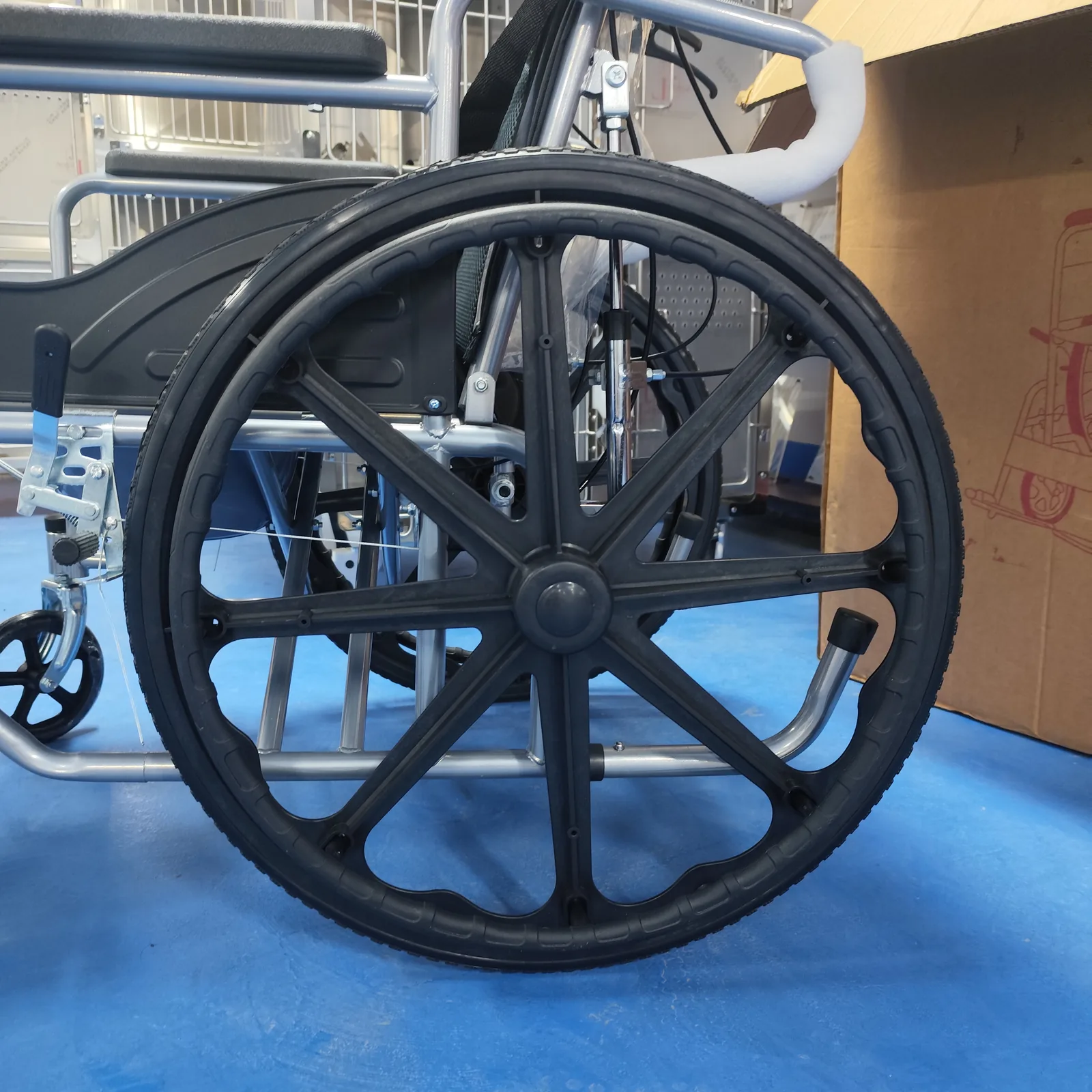
A tire has gone soft, or a service team has asked which replacement to order, and the only detail on hand is “24 inch.” That single number rarely gives a provider enough to work with. Wheelchair tire size markings usually carry more than that, and reading the full code is the difference between a useful parts record and a guessing game.
Copy the complete sidewall text exactly as printed, then record the wheel position, chair model and serial number, and any field you cannot read as unknown. A nominal 24-inch name is a label, not a fit specification, so the full code and the ETRTO fields matter more than the inch figure alone.
Wheelchair tire size markings: Start with the complete sidewall marking

The reason “24 inch” is not enough is that it describes a nominal wheel class, not a single physical size. Two manual wheelchair tires that both sit on chairs sold as 24-inch wheels can carry different printed codes, and the code is what a parts record is built from. When you report only the inch name, a provider has to guess which of several possible tires, tubes, or rim combinations you mean. When you report the full marking, the guesswork mostly disappears.
The practical first step is transcription, not interpretation. Read every line printed on the sidewall and write it down character by character, including punctuation, spaces, and any bracketed or hyphenated groups. Markings often combine an inch-based name with a millimetre-based code, and the order and separators matter. If a line is worn, cracked, or partly covered by dirt, clean what you can see without removing the tire, and leave the unreadable characters as a gap rather than filling them in from memory or from what a similar tire usually says.
You do not need to remove the tire, deflate it, or tip a chair with someone sitting in it to do this. Most sidewall text can be read by turning the wheel slowly and using a light. If the chair is occupied, ask the person before moving the wheel, and stop if turning it would disturb their position. If the marking sits where you genuinely cannot see it, that is a reason to record “not visible” and pass the question to a service provider, not a reason to start disassembling anything.
Record what you actually see in a way that survives the trip to the provider. A photograph taken straight on, in good light, with the whole marking in frame, is often more useful than a transcription alone, because it preserves details you might not recognise as significant. Keep the photo and the typed text together. If the tire has more than one set of numbers, photograph each one separately rather than trying to fit everything into a single image.
One more habit helps: note which wheel the marking came from. A manual wheelchair has a rear wheel and a front caster, and they are different components with different markings. Mixing them up in a parts request is a common source of confusion, and it costs nothing to write “rear left,” “rear right,” or “front caster” next to the text you copied. Doing this once, carefully, also means the next replacement request starts from a record rather than from scratch.
Separate ETRTO from inch-based names
Wheelchair tire markings commonly appear in two notations, and they are not interchangeable. The inch-based name is the familiar one, such as a 24-inch designation. The ETRTO notation is a millimetre-based code that describes the tire in a more structured way. Motion Composites, in its wheels and tires dimensions explanation (document MC-MKTG-WI-0052, revision 2023-08-16), sets out how sidewall markings and rim size fields are read. The point for a parts record is not to convert one into the other, but to capture both as printed.
Width and bead-seat diameter are separate fields
An ETRTO code is built from distinct fields, and the most important distinction for a service record is between width and the bead-seat diameter. These describe different things. The width field says how wide the tire is; the bead-seat diameter field relates to the rim the tire is designed to sit on. Treating the two as one number, or assuming that a larger width implies a different diameter, leads to mismatched records.
This is why a provider may ask for the ETRTO code even when you have already given the inch name. The inch name does not carry the same field structure, and it does not tell the reader which bead-seat diameter the tire is built around. When you copy the ETRTO code, keep its separators and order intact. Do not reorder the fields, drop a hyphen, or round a number, because each of those changes what the record says. A provider comparing your text against a specification needs the characters to match, not a tidied-up version of them.
Nominal wheel names are not a fit guarantee
A nominal wheel name such as “24 inch” is a label used to describe a wheel class, and it should not be read as a statement that the rim’s actual diameter is exactly 24 inches. Schwalbe’s wheelchair tire diameters page (updated 24 March 2025) makes the same underlying point: the nominal wheel number and the actual rim diameter are not the same field. That is precisely why a complete ETRTO record is worth the effort.
In practice, this means two chairs described as having 24-inch wheels may not accept the same tire, and a tire sold under a 24-inch name is not automatically the right part for a given chair. The label tells you the general category; the printed code and the chair’s own parts documentation tell you the specifics. Neither this article nor a single sidewall reading can confirm that a particular tire fits a particular rim, so the record you build should support a check by the manufacturer or service provider rather than replace it.
A short illustrative example shows the shape of the problem without asserting any real product’s dimensions. Suppose a sidewall reads a 24-inch name on one line and a millimetre-based code on the next. A record that captures only “24 inch” has lost the width and bead-seat information. A record that captures both lines, exactly as printed, gives the provider the fields they need to compare against the chair’s documentation. The example is about record structure, not about any specific tire, and it is why the two notations belong side by side in the same record rather than one being treated as a translation of the other.
Keep tire, tube and valve details separate
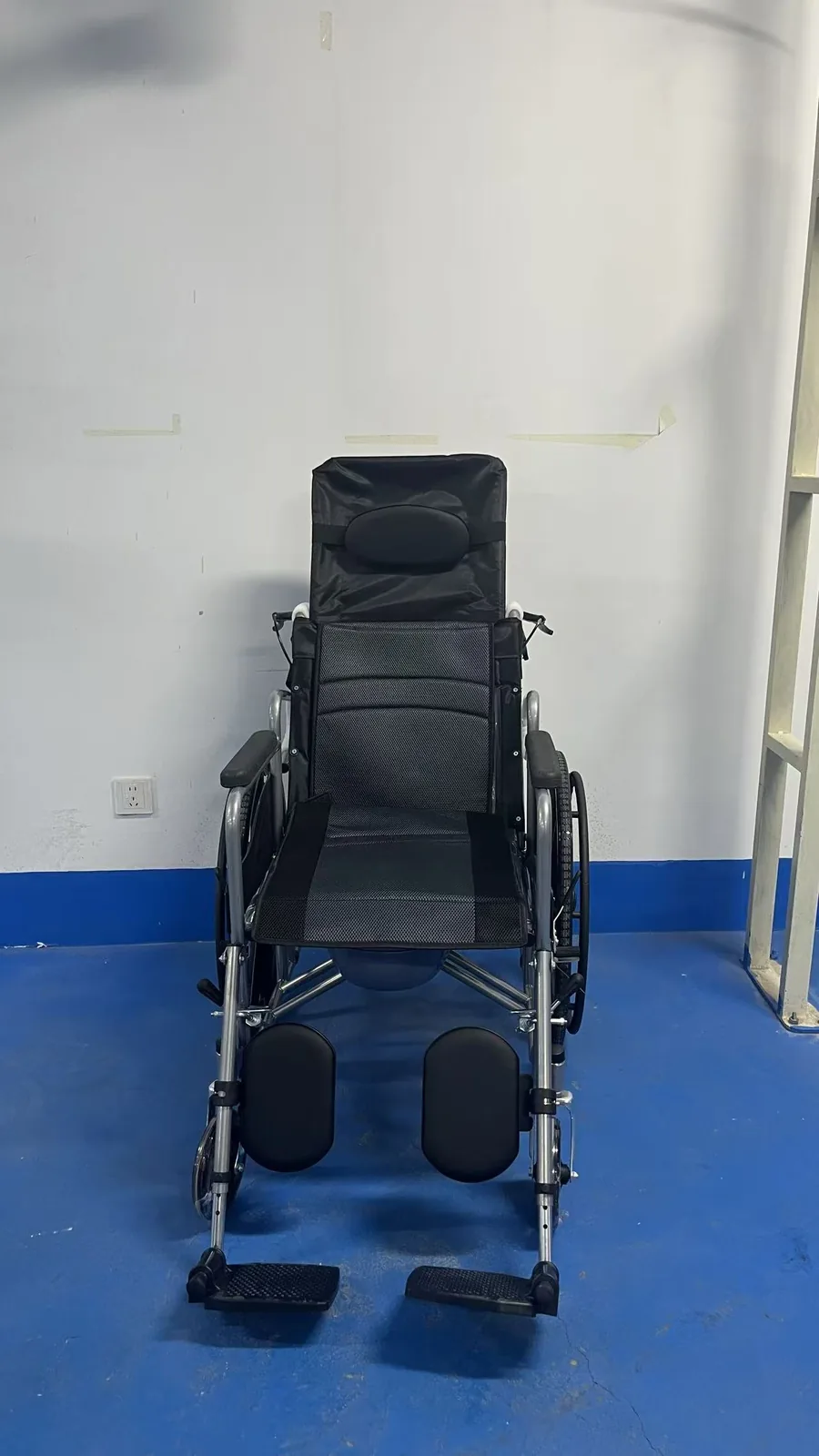
A wheelchair wheel is not one part, and a parts record should not treat it as one. At minimum, distinguish four things: the tire (the outer component), the tube (if the wheel uses one), the rim or wheel assembly, and the valve. Each may carry its own marking, and each marking belongs in its own field. Combining them into a single note makes it impossible for a provider to tell which component a number describes.
The tire’s sidewall is usually the richest source, but it is not the only one. The rim or wheel assembly may carry its own size information, and the valve type is a separate detail that matters when a tube or valve is being discussed. Write each one down under its own heading. If a component has no visible marking, say so explicitly rather than leaving the field blank in a way that could be read as “not checked.”
A specific caution applies to inner tubes. A tube may carry a size marking that spans more than one diameter, because tubes are sometimes made to serve a range. That range marking on a tube does not prove that a tire of a given size will fit a given rim, and it should not be used to infer tire compatibility. The tube’s marking describes the tube; the tire’s marking describes the tire; the rim’s marking describes the rim. Keep them apart, and let the provider reconcile them against the chair’s documentation.
Valve details deserve their own line for a similar reason. The valve is a small component, but it is the one a user or caregiver interacts with when inflating a tire, and its type is a distinct fact from the tire size. Record what is visible on or around the valve without attempting to remove or adjust it. If the valve type is not marked and not obvious, record it as a question for the provider rather than a conclusion.
A simple separation table helps keep the record honest. The fields below are a template, not a claim about any particular chair.
| Record field | What to enter | Source of the entry |
|---|---|---|
| Tire sidewall text (verbatim) | Every printed line, exactly as shown, including separators | Direct reading of the sidewall |
| ETRTO code | The millimetre-based code as printed, fields kept in order | Tire sidewall |
| Inch-based name | The nominal name as printed, without conversion | Tire sidewall |
| Tube marking | Any size text on the tube, recorded separately | Tube, if visible |
| Rim or wheel assembly marking | Any size text on the rim or wheel | Rim or wheel assembly |
| Valve details | Visible valve type or marking | Valve area |
| Wheel position | Rear left, rear right, front caster, and so on | Observation of the chair |
| Chair model and serial number | As shown on the chair’s label or documentation | Chair label or manual |
| Manual reference | Title and revision of the current chair manual | Chair documentation |
| Unknown or unreadable fields | Named explicitly as unknown | Your own check |
Used well, this table turns a vague request into a structured one. Each row has a defined source, so a reader can tell whether a value came from the tire, the tube, the rim, or the chair’s own paperwork. That separation is what allows a provider to check the right document against the right component, and it also shows at a glance which fields are still open questions.
Build the identification packet for your provider

Once the markings are transcribed, the next task is to assemble them into something a service provider can act on. A useful identification packet has five parts: the verbatim sidewall text, clear photographs, the wheel position, the chair model and serial number, and a reference to the current manual. Each part answers a different question, and leaving one out usually produces a follow-up request.
The verbatim text is the core. It should be a direct copy, not a summary. If the sidewall says something in a particular order with particular punctuation, keep it that way. Photographs support the text by showing wear, placement, and any characters that are hard to transcribe. Take them in good light, straight on, and close enough that the characters are legible. A photo of the whole wheel helps the provider see which component you mean, and a close photo of the marking helps them read it.
Wheel position and chair identity belong together. The position tells the provider which wheel on the chair is in question; the model and serial number tell them which chair documentation to consult. The serial number is the key that lets a manufacturer look up the configuration as built, which is more reliable than matching by appearance. Record it exactly as printed on the chair, including any prefix or suffix.
The manual reference matters because configurations change over time. A manual revision from several years ago may describe a different wheel specification than the current one. Note the title and revision date of the manual you are using, or state that you do not have one. Do not assume that a manual found online matches your chair; the revision and the model need to line up.
Finally, list the parts you believe you need and mark them as questions rather than conclusions. “Tire for rear wheel, size to be confirmed against the marking above” is a more useful line than a confident part number you have inferred. The provider can then confirm or correct the request against the documentation.
A blank record card, using placeholder fields rather than any real serial number, might look like this:
| Field | Example entry (placeholder) |
|---|---|
| Chair model | [model name from chair label] |
| Serial number | [serial number from chair label] |
| Wheel position | Rear left |
| Sidewall text | [copy every printed line exactly] |
| ETRTO code | [as printed, fields in order] |
| Inch-based name | [as printed] |
| Tube marking | [as printed, or “none visible”] |
| Valve details | [visible type or marking] |
| Manual reference | [title and revision, or “not available”] |
| Parts to confirm | [component and question] |
| Unknown fields | [list each one] |
This card is deliberately plain. Its value is that it separates what is known from what is being asked, and it gives the provider a single document to work from. If you want background on how tire construction affects maintenance, the article on solid vs pneumatic wheelchair tires covers that trade-off, but it does not replace the size confirmation described here. For help naming the components you are describing, see parts of a wheelchair.
What to do when a marking is missing
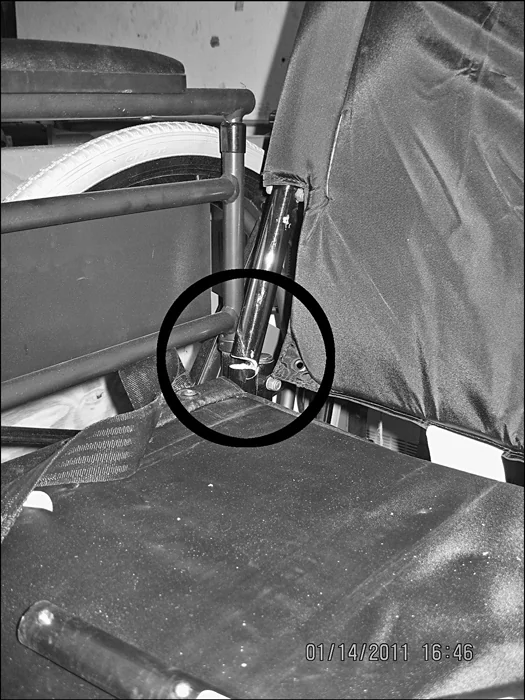
Sometimes the marking is simply gone. The tire may be worn smooth, the text may have been painted over, or the sidewall may be damaged. When that happens, the honest answer is that the size cannot be read from the tire, and the next step is to contact the chair’s manufacturer or a service provider to check the parts record for that exact model. That is a documentation question, not a measurement question.
It is tempting to substitute an estimate. Measuring the outside diameter of the wheel, comparing the tire to a similar-looking one, or assuming that a chair sold as 24-inch must take a 24-inch tire are all shortcuts that can produce a wrong request. Outside diameter in particular is affected by the tire’s width and profile, so a tape measure across the wheel does not reproduce the bead-seat diameter that the rim is built around. A provider needs the documented specification, not a field measurement.
When you contact the manufacturer or provider, say plainly that the sidewall marking is unreadable and give them the chair model, serial number, wheel position, and manual reference. Ask them to confirm the specified tire, tube, and valve for that configuration. If they ask for a photograph, send one of the wheel as a whole and one of the worn area, so they can see what remains. Do not send a photo of a different tire as if it were yours.
If part of the marking is readable, send that part and identify the gap. A partial code plus a clear statement of what is missing is more useful than a complete-looking code with guessed characters. Providers can often work with a partial record plus the chair’s serial number, because the serial number leads back to the build documentation. Say which characters are uncertain rather than silently choosing the most likely reading.
Finally, keep the record you build. If the tire is replaced, note the new marking alongside the old one and the date. Over time, that record becomes the reference for the next replacement and reduces the chance of another unreadable-sidewall problem. It also gives a caregiver or a new service team something concrete to work from, which matters when the person who originally ordered the part is no longer involved.
Frequently asked questions
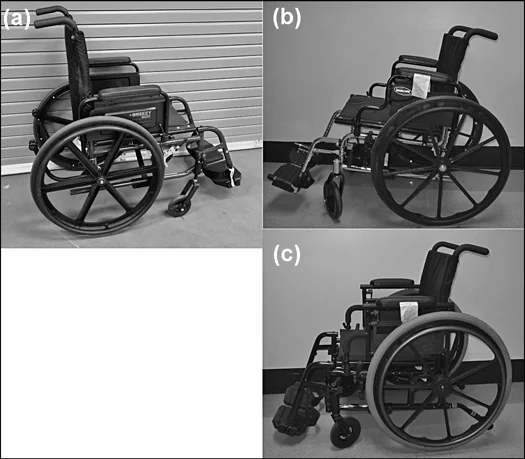
Is every 24-inch wheelchair tire the same size?
No. “24 inch” is a nominal wheel name, and it does not by itself define the tire’s width or the bead-seat diameter it is built around. Two tires sold under the same nominal name can carry different printed codes. The full sidewall marking and the ETRTO fields are what a parts record should be built from, and the chair’s own documentation is what confirms the specified part.
Does an inner-tube size prove that a tire will fit?
No. A tube marking describes the tube, and some tubes are marked to cover a range of diameters. That range does not establish that a particular tire fits a particular rim. Keep the tube marking, the tire marking, and the rim marking in separate fields, and let the manufacturer or service provider check them against the chair’s documentation.
What information should I send if the sidewall is unreadable?
Send the chair model, serial number, wheel position, and the title and revision of the current manual, and state clearly that the sidewall marking cannot be read. Include photographs of the wheel and of the worn area. Ask the manufacturer or provider to confirm the specified tire, tube, and valve for that configuration. Do not substitute a measured outside diameter or a visual match for the documented specification.
Conclusion
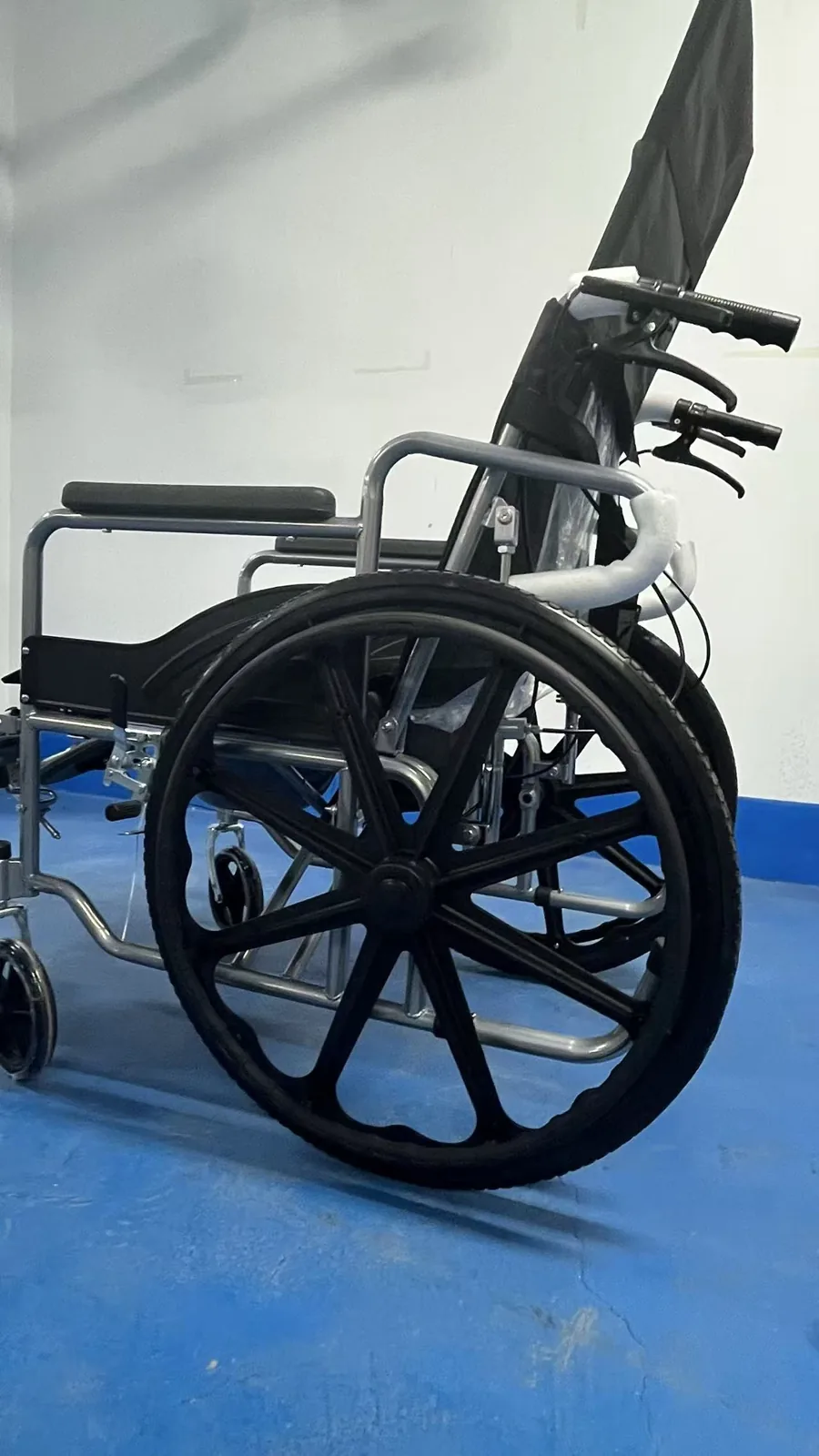
Copy the full sidewall text, keep ETRTO, inch names, tube, rim, and valve details separate, and mark unknowns as unknown. Send that record with the chair model, serial number, and manual reference so a provider can confirm the part.