
A seating note says "seat angle 5°," but nobody wrote which surface it was measured against. Was it the seat relative to the floor, the seat relative to the backrest, or a tilted position? The number alone cannot be compared with another chair, another clinic note, or a manufacturer's frame drawing until the reference is named.
A wheelchair seat angle is only meaningful when you state the reference: the seat plane against horizontal, the seat against the backrest, or a tilted configuration. Record the reference point, the chair model, and the measurement method alongside the number, then let the seating team interpret it.
Wheelchair seat angle: Identify the reference for each angle
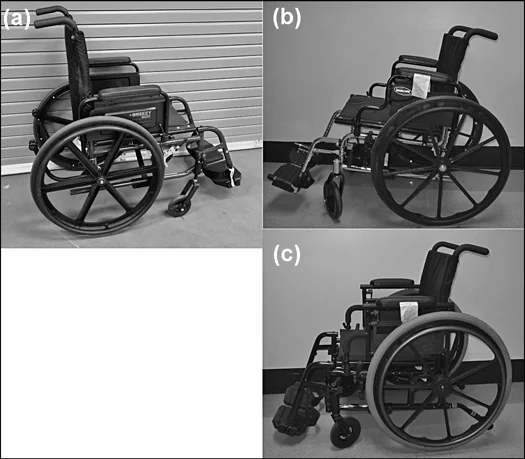
Before any number can be compared, the reader has to know what the two arms of the angle are. A seat plane can be described against the floor, against the backrest, or against a previous position of the same seat. These are different measurements, and a figure from one cannot be dropped into a conversation about another. Sunrise Medical's seating resource on wheelchair angles treats seat angle, backrest angle, and tilt as related but separate concepts, which is a useful reminder that the same chair can produce several valid angle figures at once. The practical consequence is simple: when you write down a wheelchair seat angle, write down the reference in the same sentence.
That discipline matters most in handovers. A user may move between a dealer, a clinic, and a repair technician, and each of them may record geometry in their own house style. If the reference is missing, the next person has no way to tell whether two notes agree, conflict, or simply describe different surfaces of the same chair. Naming the reference costs one short phrase and prevents a long round of clarification later.
Seat-to-floor versus seat-to-back angle
A seat-to-floor angle describes the seat plane relative to horizontal ground. If the rear of the seat sits lower than the front, the seat slopes downward toward the back, and that slope is often called seat dump or seat slope. A seat-to-back angle describes the relationship between the seat plane and the backrest plane. A chair can have a modest seat-to-floor slope and still show a very different seat-to-back figure, because the backrest may be upright, reclined, or set at its own angle. Neither figure replaces the other. If a dealer quotes one and a clinician quotes the other, they may both be correct and still not be discussing the same thing.
A third label sometimes appears in manufacturer material: a frame angle defined by that maker's own drawing conventions. It is not a universal seat angle, and it should not be assumed to match a seat-to-floor reading taken with a level. When a note cites a frame angle, the model documentation is the only reliable way to know what reference that maker used.
Fixed seat angle versus dynamic tilt
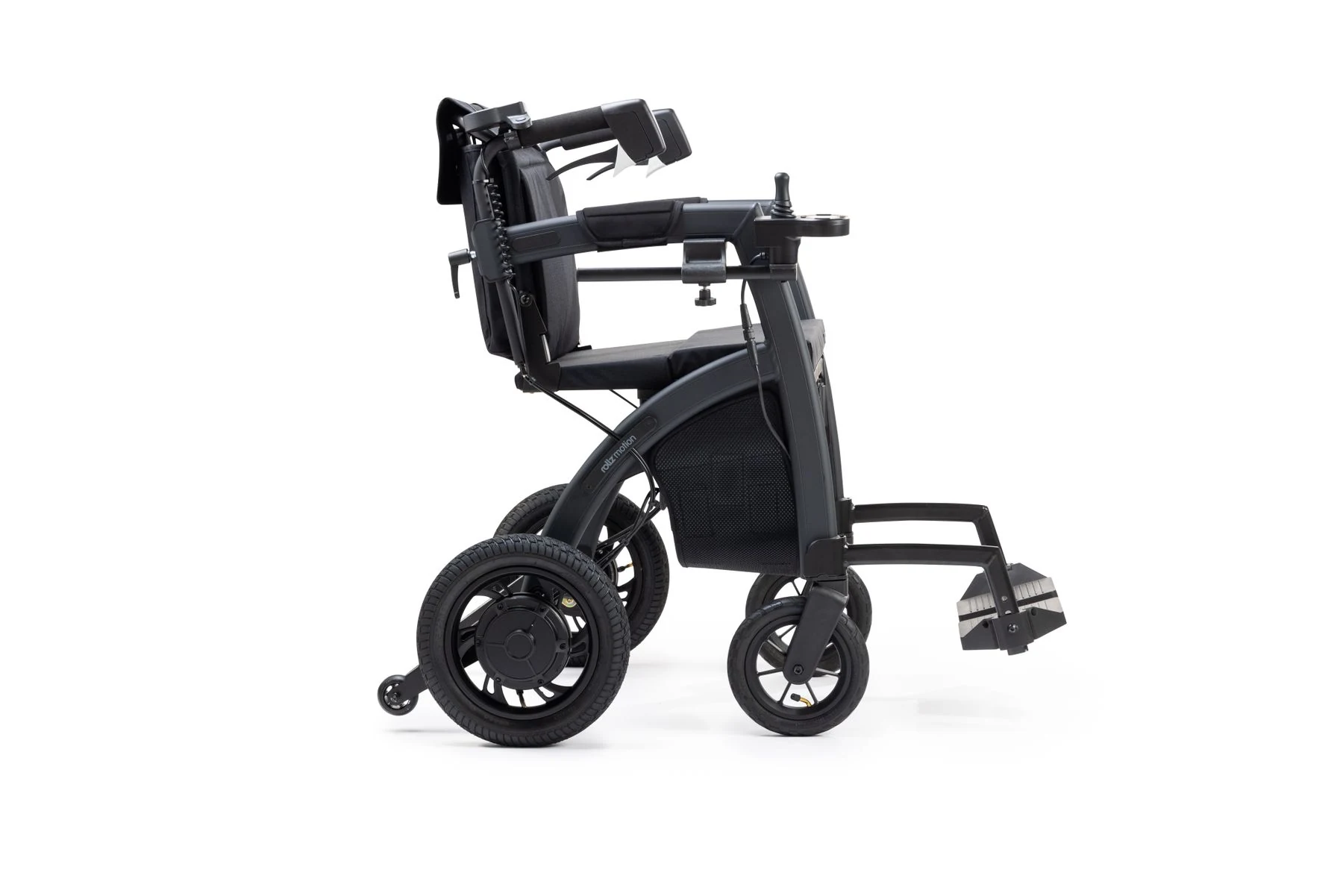
A fixed seat angle is built into the frame or set by the seat sling and cushion arrangement; it does not change while the user sits in the chair during ordinary use. Dynamic tilt, often called tilt-in-space, is a feature that rotates the seat and backrest together around a pivot while the chair is in use. That movement changes the orientation of the whole seating system, not just the seat plane. A note that says "seat angle 5°" on a fixed-frame chair and a note that says "tilt 5°" on a tilt-capable chair are not interchangeable records. The first describes a static geometry; the second describes a position within a range of movement. Mixing them up in a handover can lead to a chair being configured or compared on the wrong basis.
| Angle label in a note | What it measures | What it does not tell you |
|---|---|---|
| Seat-to-floor (seat slope, seat dump) | Seat plane relative to horizontal ground | Backrest angle or tilt position |
| Seat-to-back | Seat plane relative to the backrest plane | Slope relative to the floor |
| Dynamic tilt position | Rotation of the whole seating system around a pivot | The fixed frame geometry of the chair |
| Frame angle (if a manufacturer lists one) | A frame-specific reference defined by that manufacturer | A universal seat angle for every user |
Use the table as a labeling discipline, not as a conversion tool. It helps a reader notice when two notes are describing different things, and it gives the seating team a clear question to ask when a number arrives without its reference.
Read front and rear seat height
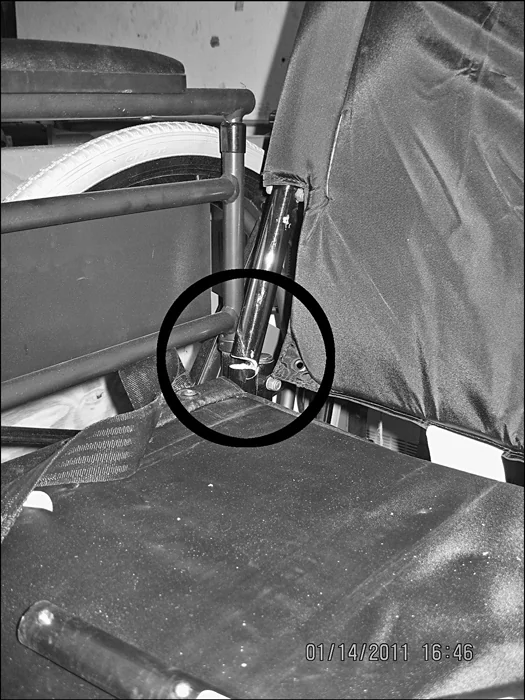
Many manual wheelchair frames are described by front and rear seat height rather than by a single angle. The two heights are measured at defined points on the seat, and the difference between them is what produces the slope of the seat plane. Queensland Health's manual wheelchair resource describes measuring seat height at the front and rear of the seat, which is a useful reminder that the angle is derived from geometry rather than read directly off a frame label. The important point for this article is the reference, not a formula: the front height and rear height must be measured at the same defined points, on the same chair, with the same method, or the comparison is meaningless.
A reader can therefore hold two valid records of the same chair: a pair of seat heights and a seat angle. They are related, but they are not the same record, and one should not be silently converted into the other without knowing how the original was taken. The conversion depends on the horizontal distance between the measurement points, the cushion and sling condition, and the frame's own reference definitions. A generic conversion would produce a number that looks precise but may not match the manufacturer's or the seating team's method.
This is also where a common error appears. A caregiver measures the rear seat height with the cushion in place, a dealer measures the front height without it, and the two figures are then compared as if they describe the same configuration. The slope implied by those two numbers is not the chair's seat slope; it is an artifact of two different measurement setups. The fix is procedural: state whether the cushion was in place, where on the seat the tape was placed, and whether the chair was on level ground. Those details belong next to the heights, not in a separate conversation.
It helps to think of the height pair as the raw observation and the angle as a derived description. If the raw observation is written down carefully, a seating team can re-derive the angle using its own method and check whether the two agree. If only the derived angle survives, that check is no longer possible, and a small difference in method becomes an unresolvable disagreement. Keeping both records is not duplication; it is what makes the note auditable later.
For readers who want to organize the surrounding measurements, the related guide on wheelchair seat depth measurement covers how the seat surface, sling, and cushion interact when a dimension is recorded. Seat depth and seat angle are different measurements, but they share the same lesson: the surface you measure against and the configuration you measure in must be written down.
Record related setup details

A seat angle does not exist in isolation. The same frame can produce different usable geometry depending on the front wheel position, the rear axle position, the footrest configuration, and the cushion. The task here is not to prescribe adjustments; it is to record enough context that a qualified person can review the setup against the exact model. A number without that context is hard to act on and easy to misread.
Start with the chair identity. Record the manufacturer, model, frame size, and any configuration code printed on the frame or in the owner's documentation. Two chairs from the same model line can have different frame geometry depending on the ordered configuration, so the model name alone may not be enough. Next, record the current setup as found: front wheel position if it is adjustable, rear axle position if the frame allows it, footrest height and angle, and whether anti-tip devices are fitted. These are observations, not recommendations. The related guide on wheelchair center of gravity and rear axle setup explains why rear axle position matters to how a manual chair handles, which is useful background when a seating team reviews the whole configuration rather than the seat plane alone.
Then record the seat surface details. Was the measurement taken on the sling, on the cushion, or on a rigid seat pan? Was the cushion the one the user normally uses, and was it in the same condition? A compressed or replaced cushion changes the effective seat surface, and a note that omits this cannot be compared with a later measurement. Finally, record the measurement conditions: level ground, unloaded or loaded chair, and the tool used. A digital angle finder, a smartphone level, and a physical protractor can all produce slightly different readings, and the method belongs in the record.
The front wheel and footrest details deserve particular care because they are often adjusted between visits. A footrest that has been raised or lowered changes where the user's feet rest, which affects how the seat surface is loaded and how the user's position is described, even though it does not change the frame's built-in seat angle. Recording the footrest setting lets the seating team see whether a change in the user's experience coincides with a change in setup. The same logic applies to front wheel position: it is a configuration detail that belongs in the record, and any adjustment should be reviewed by a professional against the specific model's documentation rather than changed to chase a target angle.
| Record item | Why it belongs in the note | Who confirms it |
|---|---|---|
| Manufacturer, model, frame size, configuration code | Identifies the exact geometry being described | Dealer or user from frame/documentation |
| Front and rear seat height with measurement points | Shows how the seat slope was derived | Person taking the measurement |
| Seat surface measured (sling, cushion, rigid pan) | Changes the effective seat plane | User or seating team |
| Cushion identity and condition | Affects the usable surface and comparison over time | User or seating team |
| Front wheel and rear axle position | Part of the chair's overall setup | Professional review against model documentation |
| Footrest height and angle | Affects foot support and position description | Professional review against model documentation |
| Measurement tool and ground conditions | Explains small differences between records | Person taking the measurement |
This table is a template for a handover note, not a checklist of adjustments to make. Its value is that it separates what was observed from what still needs a professional decision.
Bring the measurements to the seating team

Once the reference points and setup details are recorded, the next step is a conversation with the people who can interpret them: the user's seating team, a qualified clinician, or a dealer working with the manufacturer's documentation. The goal is not to arrive with a target angle and ask for it to be set. The goal is to arrive with a clear description of the current chair, the current configuration, and the specific question that needs an answer.
A useful handover note answers four things. First, what chair is this, exactly? Second, what was measured, against which reference, and with what method? Third, what else was in place at the time, including cushion, footrest, and wheel position? Fourth, what question is being asked? "Is the seat angle correct?" is hard to answer because it depends on the user's needs, the chair's design, and the purpose of the configuration. "The rear seat height is lower than the front by a recorded amount, measured on the cushion at these points; does this match the intended configuration for this model, and should anything be reviewed?" is a question a seating team can work with.
It also helps to bring the chair's documentation. Manufacturer manuals and frame drawings define how that model's geometry is described, and they may use reference points that differ from a generic measurement guide. Sunrise Medical's seating resource and Queensland Health's manual wheelchair resource both describe angles and measurements in ways tied to their own context; neither should be treated as a universal specification for every chair. The seating team can reconcile the note with the model's documentation and with the user's own requirements, which is a judgment this article cannot make.
Dealers and configuration teams can prepare for that conversation by keeping a simple comparison record. If the chair has been reconfigured since the last visit, list the old and new values side by side with dates, rather than replacing the earlier entry. That way the seating team can see what changed and when, and can judge whether a reported difference in comfort or positioning lines up with a documented change in geometry. The record does not need to be elaborate; it needs to be consistent enough that two entries can be read against each other.
Finally, keep the note with the chair. A measurement taken at one visit is most useful when the next person can see what was measured and why. If a configuration changes, add a dated line rather than overwriting the old one, so the history stays readable. That simple habit turns a single number into a record the seating team can actually use.
Frequently asked questions

What is seat dump? Seat dump is a common term for a seat plane that slopes downward toward the rear, so the rear of the seat is lower than the front. It is usually described as a seat-to-floor or seat-slope measurement. The term does not by itself say how much slope there is, and it does not describe the backrest angle.
Is fixed seat angle the same as tilt-in-space? No. A fixed seat angle is built into the frame or set by the seat surface and does not change during ordinary use. Tilt-in-space rotates the seat and backrest together around a pivot while the chair is in use. A tilt position is a setting within a range, not the same record as a fixed frame angle.
Can a generic angle fit everyone? No single angle is appropriate for every user or every chair. Seat angle interacts with the user's needs, the cushion, the backrest, and the chair's design, and those are matters for the seating team working with the exact model. A generic figure should not be used as a target without that review.
Conclusion
Name the reference before you quote a wheelchair seat angle, record the chair and setup details, and let the seating team interpret the number.
Video: Wheelchair Angles Explained for OTs