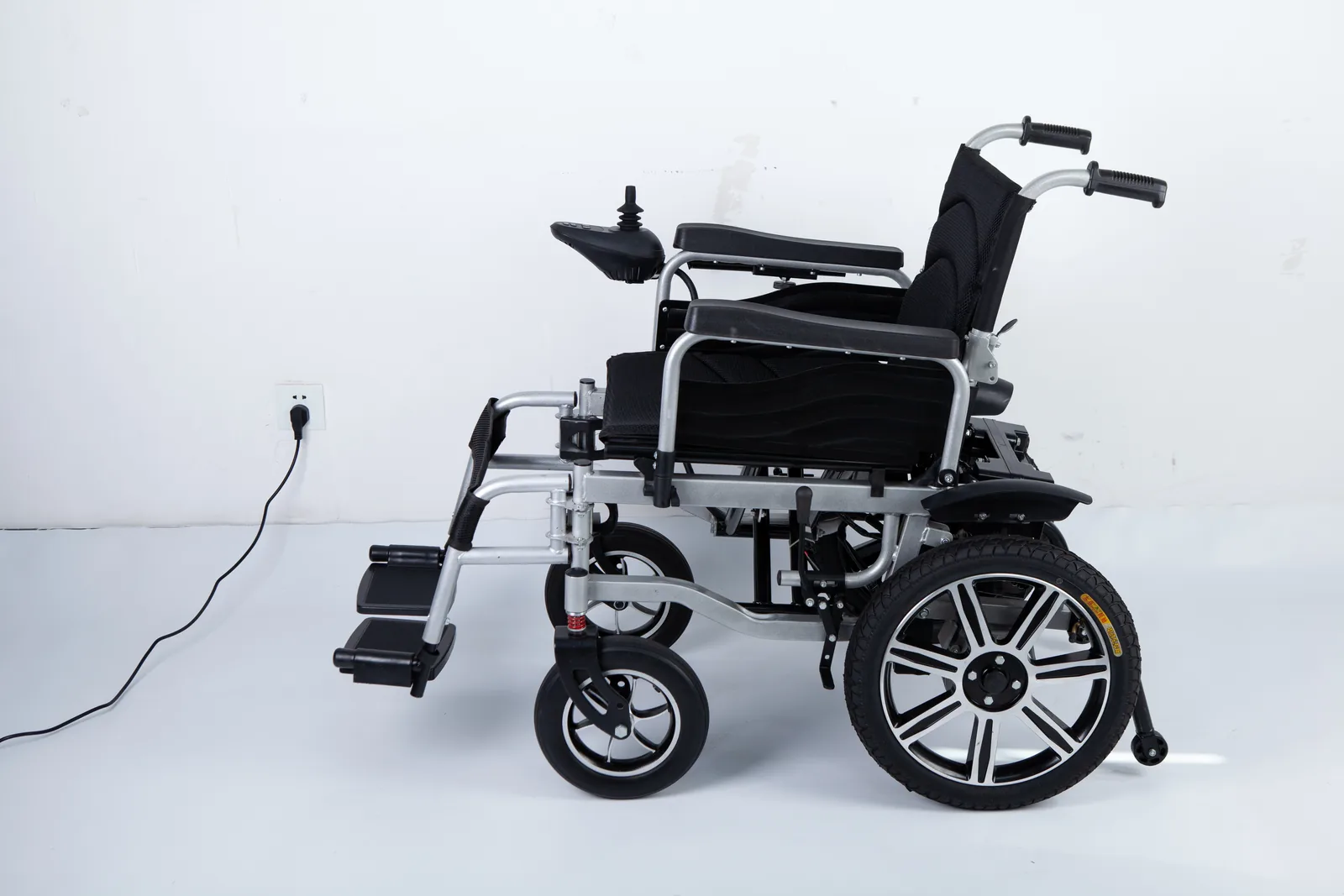
A dealer receives a request for “a replacement footrest” and has to decide whether the customer means a footplate, a hanger, or a complete leg support. The words sound interchangeable, but the ordering information behind them is not.
A footplate is the surface under the foot; a hanger is the frame that attaches it to the chair; a complete leg support combines both with the parts that connect to the chair. Ordering correctly means naming the whole-chair model, the side, and the manufacturer’s part number.
Understanding wheelchair footrest types is therefore less about memorizing product names and more about matching a description to a maker’s own vocabulary, then checking that vocabulary against the chair in front of you.
Wheelchair footrest types: Name the footplate, hanger and leg support separately
Most ordering errors start with vocabulary rather than with the chair. A customer, a caregiver, or a store clerk may use “footrest” for any of three different things, and each one sits at a different level of the assembly. Before anyone looks up a price or a part number, it helps to agree on which level the request belongs to. Manufacturer catalogs do not always use identical words, so the practical approach is to describe the part by where it sits and what it connects to, then match that description to the maker’s own terminology.
This is not a pedantic distinction. A footplate is a small, relatively inexpensive item; a complete leg support with an elevation mechanism is a larger assembly with more part numbers behind it. Treating the two as the same request can send a warehouse pick in the wrong direction, or produce a quote for a part the customer did not ask for. The vocabulary step is short, but it decides everything that follows.
Name the footplate and hanger
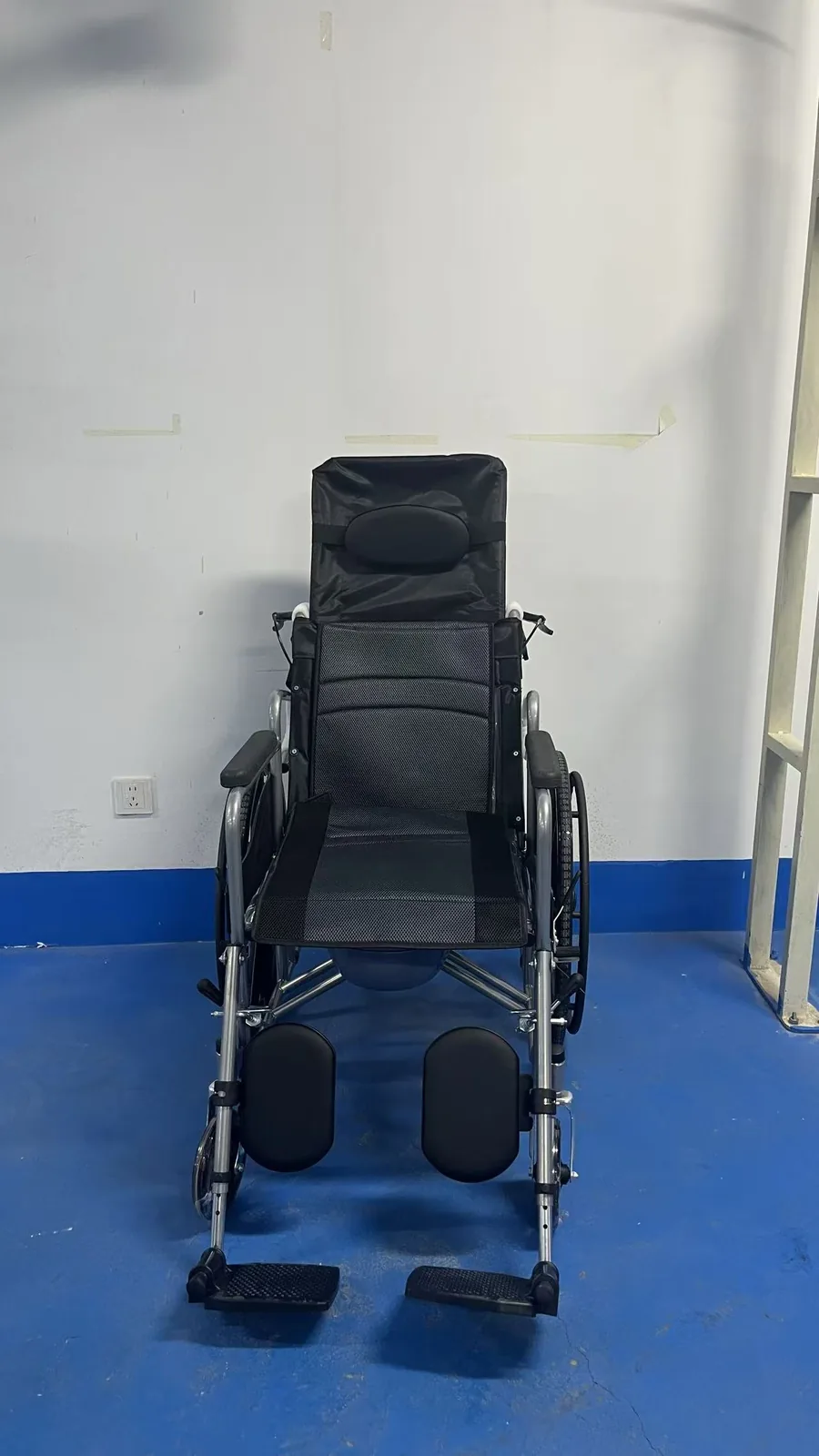
The footplate is the flat or shaped platform that supports the foot. It may be a single plate spanning both sides, or two separate plates, one per side. It may have a heel loop, a calf strap, or an angle adjustment, and those extras are usually listed as separate items rather than assumed. The hanger is the rigid or tubular arm that carries the footplate and attaches to the front of the wheelchair frame. On many manual chairs the hanger is the part that swings, detaches, or flips up, which is why the hanger and the footplate are often sold as separate line items.
When a customer says the footplate “broke,” the useful follow-up is to ask which piece failed: the plate itself, the hinge or latch on the hanger, or the point where the hanger meets the frame. Those are different parts with different part numbers, and a photo of the failed area usually resolves the question faster than a description. Karman Healthcare’s footrest and replacement-parts listing is one example of a manufacturer presenting footrest categories and replacement parts under its own naming; it is useful for seeing how a brand organizes the category, not as a statement about any other maker’s parts.
Identify the complete leg support
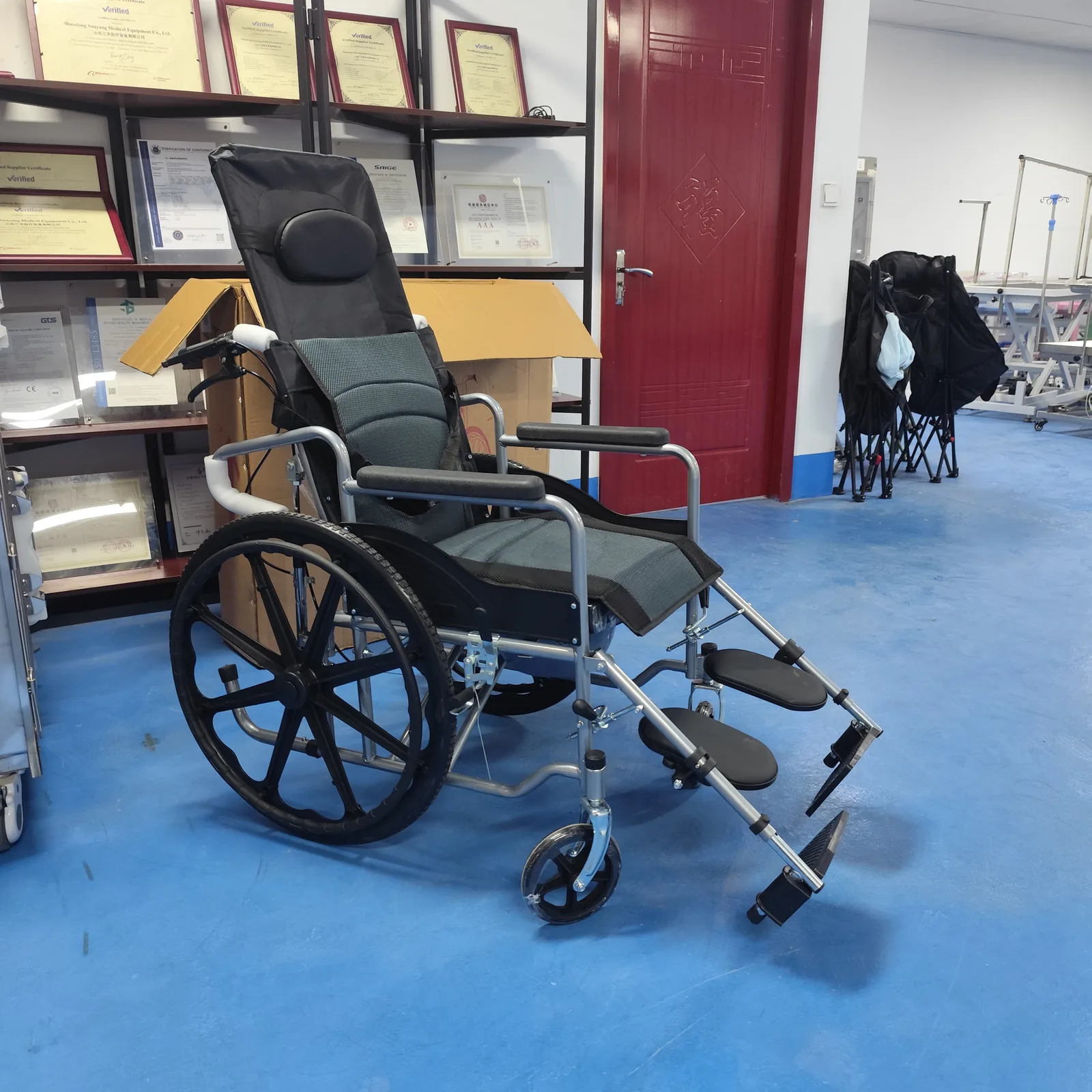
A complete leg support is the assembled unit: footplate, hanger, and the connecting hardware, sometimes including a calf pad or an elevation mechanism. This is the level at which many catalogs list a sellable accessory, and it is also the level at which compatibility questions become answerable. If the request is for a complete leg support, the model of the chair matters more than the description of the part, because the attachment point and the geometry have to match.
A useful habit is to write the request in three lines: the whole-chair model, the level of assembly (plate, hanger, or complete support), and the side. That short note prevents the most common mismatch, which is a correct part for the wrong chair or the wrong side. It also gives the manufacturer’s support desk something concrete to check against its own records. Where a maker publishes separate listings for a plate and for a full support, the two should be treated as different catalog entries even if a customer uses one word for both.
Compare fixed, swing-away and elevating configurations
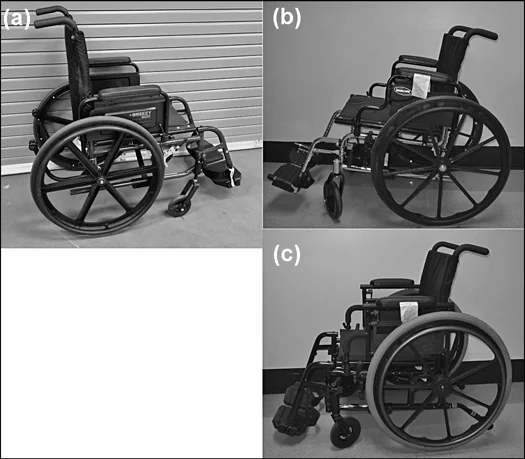
Configuration language describes how a leg support behaves, not what it does for a person’s body. Three broad families appear across manual and care chairs, and each changes what has to be ordered and what has to be confirmed with the chair’s documentation. The descriptions below are about mechanical arrangement and ordering scope only; they are not statements about comfort, posture, circulation, or clinical benefit.
A fixed configuration attaches the leg support rigidly to the frame. It is the simplest to describe and usually the simplest to match, because there is no hinge, latch, or elevation mechanism to specify. A swing-away configuration lets the leg support pivot outward, and often detach, so the front of the chair can be cleared. That movement introduces hinges, latches, and sometimes a release lever, and each of those can be a separate replacement item. An elevating configuration adds a mechanism that raises the leg support, and that mechanism is where model-specific compatibility becomes most important.
| Configuration | What moves or adjusts | Ordering information that usually matters | What still needs confirmation |
|---|---|---|---|
| Fixed | Nothing; rigid attachment | Whole-chair model, side, complete unit or plate only | Attachment style and part number in the current manual |
| Swing-away | Pivots outward and may detach | Model, side, hanger type, latch or hinge parts if replaced separately | Whether the replacement hanger matches the frame’s receiver |
| Elevating | Raises the leg support | Model, seat width where the maker lists it, side, elevation mechanism parts | Whether the maker lists that chair as compatible with that support |
Etac’s UK listing for elevating leg supports is a concrete example of how specific this gets. That listing presents leg supports by wheelchair model, by seat width, and by left or right side, which shows that a single “elevating leg rest” label is not enough to order from. The same page is a brand-specific example only; it does not describe Wheelchairs Factory products, and its model and market scope should not be carried over to another manufacturer. The lesson that does transfer is structural: when a maker publishes compatibility by model, seat width, and side, those three fields belong in every request.
Swing-away wheelchair footrests raise a related question. Because the hanger moves, the wear points are the hinge, the latch, and the receiver on the frame. A dealer taking a replacement request should ask which of those is loose or broken, since replacing the whole assembly when only a latch is worn is a different order and a different cost. None of this establishes that a given configuration suits a given person; it only establishes what has to be identified before a part can be supplied. A configuration that is easy to describe is not automatically the right one for a particular chair, and the maker’s listing, not the label, settles that.
Check the model, left/right side and part number
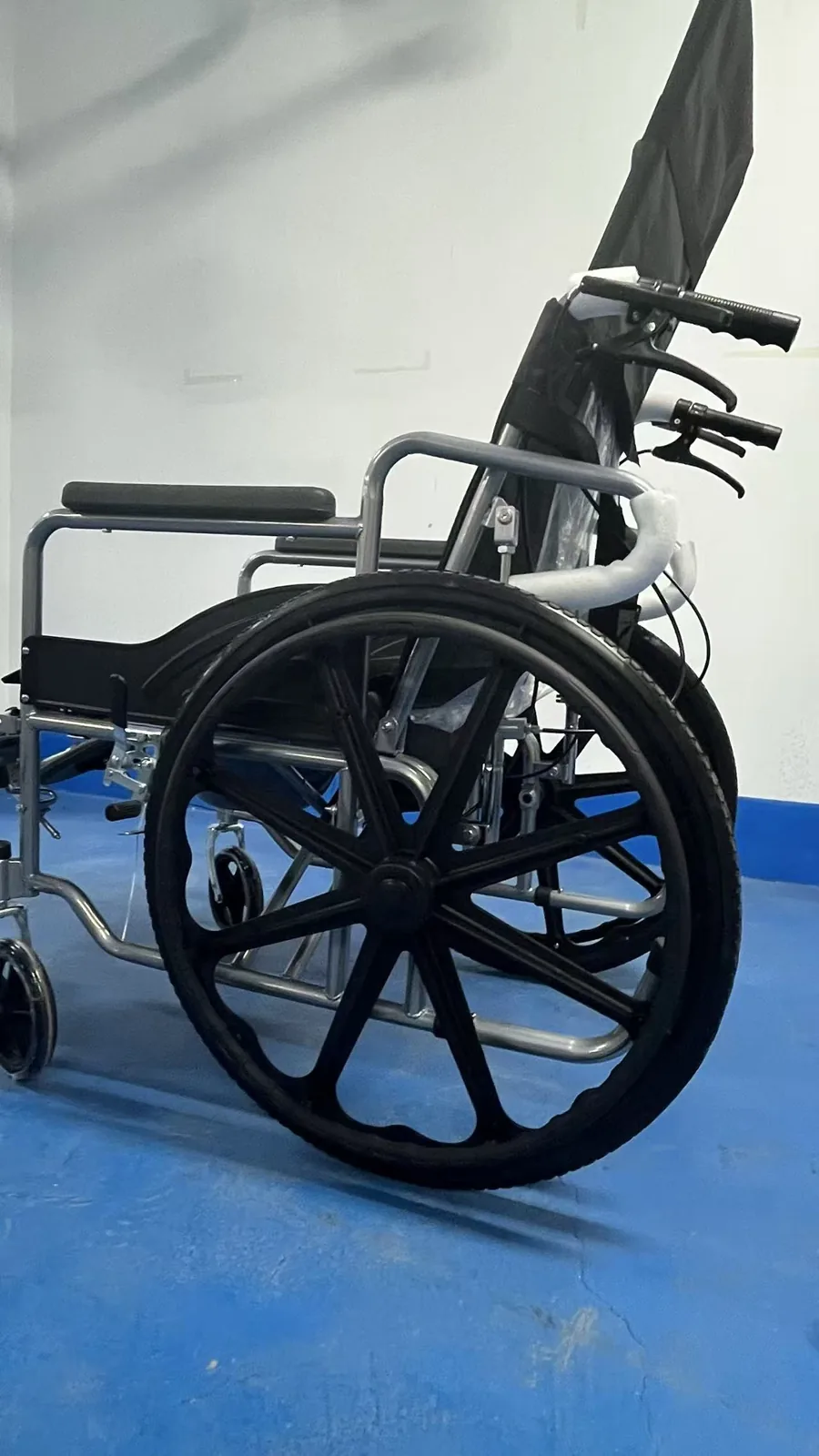
Model, side, and part number are the three fields that turn a vague request into an orderable one. Each does a different job. The model ties the request to the correct manual revision and parts list. The side distinguishes parts that are mirror images and not interchangeable. The part number is the maker’s own identifier, and it is the only field that survives translation between a customer’s description and a warehouse pick.
Side is the field most often skipped. Left and right leg supports frequently differ in the bend of the hanger, the position of a latch, or the mounting plate, so a part that looks correct on one side may not fit the other. A customer who says “the left one” is giving useful information, but the confirmation has to come from the manufacturer’s parts list for that model, not from the customer’s memory or from a photograph alone. The same caution applies to seat width where the maker lists it: Etac’s elevating leg support listing uses seat width as a selection field, which is a reminder that width can change which variant is correct even within one chair family.
| Field | Why it matters | Source to check | Common failure |
|---|---|---|---|
| Whole-chair model | Ties the request to the right manual and parts list | Chair label, order record, or manual cover | Using a similar model name from the same brand |
| Side (left/right) | Mirror-image parts may not interchange | Manufacturer parts list for that model | Assuming symmetry |
| Part number | The maker’s own orderable identifier | Current parts list or accessory listing | Substituting a description or photo |
| Seat width (where listed) | Can select a different variant | Maker’s compatibility listing | Ignoring it because the chair model matches |
| Manual revision and date | Parts lists change between revisions | The revision that matches the chair | Using an older or undated copy |
A practical rule for dealers and purchasing teams is that a part number without a model is weak evidence, and a model without a part number is an unfinished request. Both together, plus the side, give the manufacturer’s support desk enough to confirm or correct the order. Where the maker publishes a compatibility table, that table outranks any visual comparison; where no table is published, the question to ask is direct: does this maker list this part for this model and this side?
It also helps to record which document the answer came from. Two listings for the same brand can differ if one is older, and a part number that was correct under an earlier revision may have been superseded. Noting the revision and the date alongside the part number turns a one-off answer into something a colleague can re-check later, which matters most for teams that handle the same chair model repeatedly.
Build a configuration and ordering worksheet
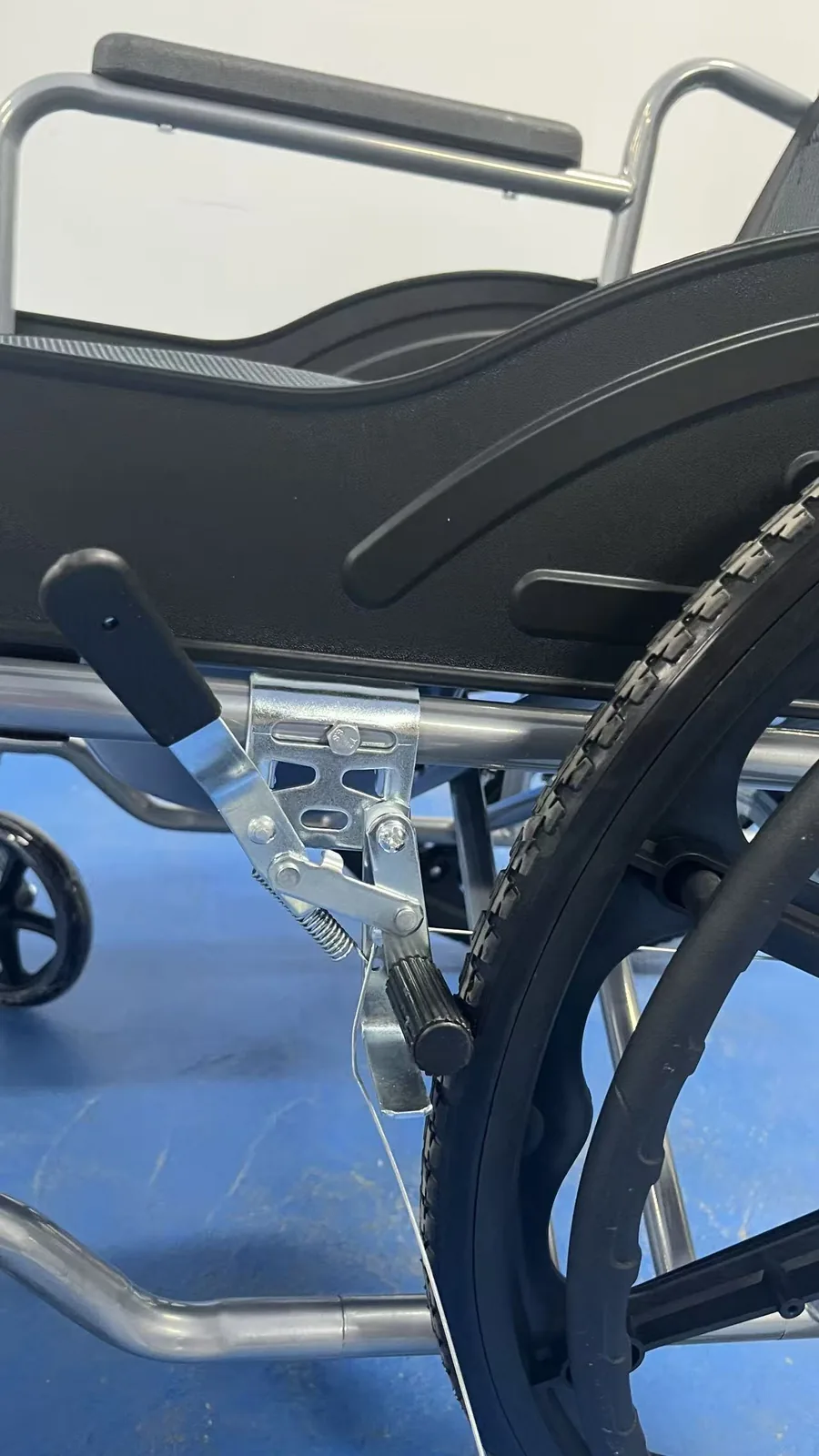
A short worksheet keeps a multi-chair order from turning into a series of email corrections. It does not need software. A single row per chair, filled in before the request goes out, captures the fields that manufacturers actually ask for and makes gaps visible early. The worksheet also creates a record that can be reused when the same chair needs a part again, which matters for rental fleets, clinics, and retail stores that handle repeat requests.
| Worksheet field | What to record | Example of a complete entry | If unknown |
|---|---|---|---|
| Whole-chair model | Maker’s model name and any suffix | As printed on the chair label | Photograph the label and ask the maker |
| Serial or asset ID | The specific unit, for fleets | Internal asset number | Add before the chair enters service |
| Level of assembly | Plate, hanger, or complete support | Complete leg support, left | Ask the customer which piece failed |
| Side | Left or right, per the chair’s own orientation | Left | Confirm against the parts list |
| Part number | Maker’s identifier for the exact item | From the current parts list | Request it from the maker |
| Seat width (if listed) | The width the maker uses for selection | As listed in the compatibility table | Check the maker’s listing |
| Manual revision | Revision and date of the parts list used | Revision on the manual cover | Obtain the matching revision |
| Open questions | Anything the maker must confirm | Whether the hanger receiver is unchanged | Send with the request |
The worksheet’s value is in the last row. Every unresolved item should be written as a question for the manufacturer rather than filled in with an assumption. “Does the current parts list show this hanger for this model and side?” is answerable. “Will this fit?” is not, because it does not name the model, the side, or the part. For teams handling several brands, keeping the maker’s own vocabulary in the worksheet, rather than translating everything into house terms, reduces the chance that a term drifts between the request and the order.
A second benefit appears when a request is refused or corrected. If the worksheet shows which fields were supplied and which were missing, the team can see whether the problem was a wrong part number or an incomplete request, and fix the process rather than just the order. That feedback loop is what makes the worksheet worth maintaining across a season of orders rather than filling in once.
Wheelchairs Factory’s applications page describes the kinds of settings where chairs are used; it is not a parts catalog and should not be read as confirming that any particular footrest or leg support is available. The worksheet is the reader’s own tool, and it works the same way regardless of which brand’s chair is being serviced.
When to involve a seating or service professional

Some questions in this process are about parts, and some are about a person. The two should not be answered by the same method. Whether a hanger fits a frame is a documentation question that the manufacturer’s parts list can settle. Whether a particular leg support configuration is appropriate for a particular user is a seating and posture question that belongs with a qualified clinician or seating professional who can assess the person, the chair, and the environment together.
That distinction matters for dealers and purchasing teams because it defines where their role ends. A store can confirm the model, the side, and the part number, and can pass along the manufacturer’s compatibility information. It should not decide, from a catalog description, that an elevating support is right for a customer’s leg position, or that a swing-away arrangement is needed because of how someone transfers. Those judgments depend on the individual and on professional assessment, and the resulting configuration change should be confirmed by the service team that maintains the chair.
A workable division looks like this: the dealer or purchasing team owns the identification fields and the order record; the manufacturer owns the compatibility statement for its own model; the seating or service professional owns the fit and posture decision and any modification to the chair. When a request crosses from one column to another, the useful move is to name the question precisely and route it to the right party rather than to answer it from the parts list. That keeps the order accurate and keeps the person’s needs with the people qualified to assess them.
For a user ordering a part for their own chair, the same split applies in a simpler form. The user can supply the model, the side, and a photo of the failed area, and can ask the maker to confirm the part number. Questions about whether a different configuration would better suit their position or daily routine are better raised with the professional who knows their situation, and any change to the chair should be confirmed by whoever services it. Naming the question correctly is often the most useful step a reader can take before contacting anyone.
FAQ
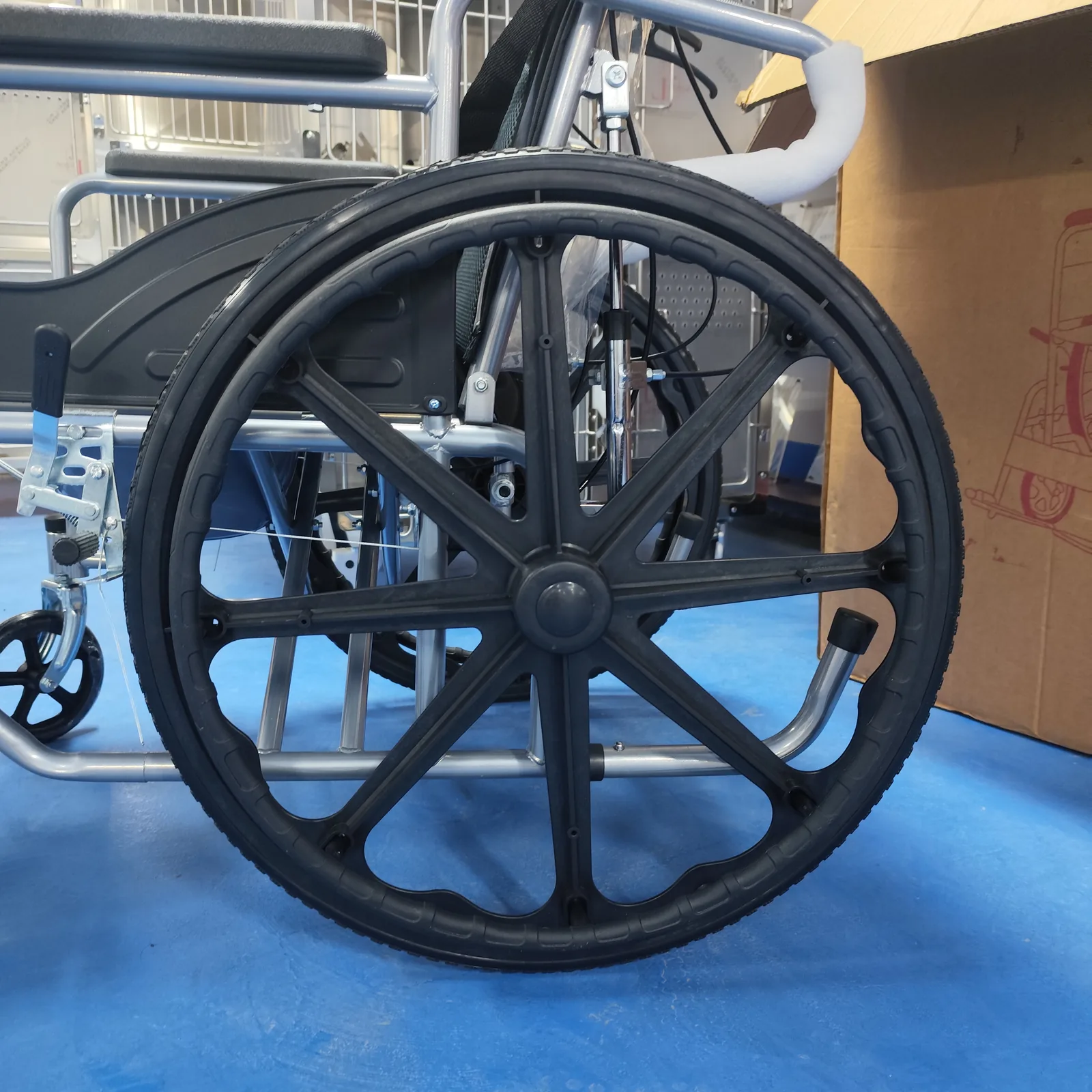
Are a footplate and a complete leg rest the same part?
No. The footplate is the surface under the foot. A complete leg rest or leg support is the assembled unit, typically including the footplate, the hanger, and the connecting hardware. A request for one is not automatically a request for the other, which is why the level of assembly belongs in the order note.
Are left and right footrests interchangeable?
Often not. Left and right parts can differ in the bend of the hanger, the latch position, or the mounting plate. The reliable check is the manufacturer’s parts list for the specific chair model, which should state the side for each part number. A visual comparison is not a substitute for that listing.
Who confirms the right configuration for the user?
The parts identification is confirmed against the manufacturer’s documentation for the chair model. The fit and posture decision belongs with a qualified seating or service professional who can assess the individual. Keeping those two confirmations separate prevents an ordering question from being answered as though it were a clinical one.
Conclusion
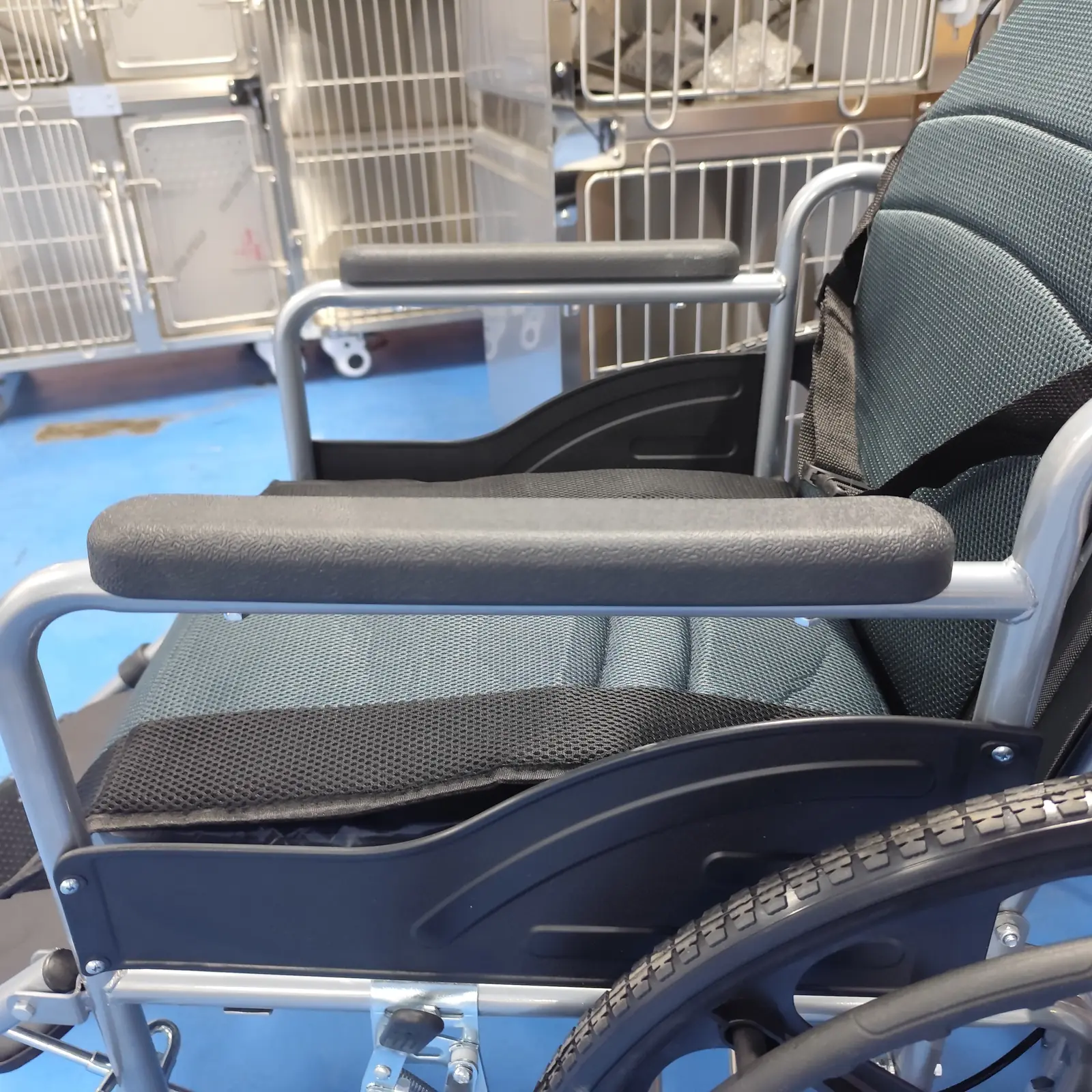
Name the part level, the chair model, the side, and the maker’s part number before ordering, and route fit questions to a qualified professional.
Video: Wheelchair Parts: Footrests