You are comparing power chairs for a regular commute or weekly outings, and one listing promises a mileage figure that looks comfortably longer than your route. The useful question is not whether the number is impressive, but what conditions produced it and whether your own days resemble those conditions.
A quoted electric wheelchair range per charge describes one test situation, not a promise about your route. It can help you shortlist chairs, but it cannot tell you how far you will travel on a cold morning with hills, frequent stops, a heavier load, or an older battery. Treat the figure as a starting question, then record your own route conditions.
Electric wheelchair range per charge: What a quoted range can and cannot tell you
A range figure is a summary of a measurement. Sunrise Medical’s power wheelchair FAQ material notes that range varies with how the chair is used and built, with weather, with stops, and with terrain. That single sentence already tells you the number is conditional. It is not a guarantee that every charge will carry you the same distance, and it is not a description of your street, your sidewalk surfaces, your daily schedule, or the way you use the chair.
What the figure can do is separate chairs at a rough level and give you a reason to ask questions. If one model is quoted at a noticeably longer distance than another under stated conditions, that difference may point to a larger battery option, a different motor and drive configuration, or a different test setup. What it cannot do is rank the chairs for your life. Two chairs with the same headline number may have been measured under different assumptions, and a chair with a shorter quoted figure may suit a route with regular charging stops better than a longer-quoted chair that is awkward to charge.
It also cannot tell you whether a particular trip is safe or feasible. Distance is one input among many: surfaces, kerbs, doorways, slopes, crossing times, weather, and the places where you can stop all shape whether a journey works. A range figure says nothing about any of those. Nor does it say anything about battery health after months of use, because the quoted figure normally describes a new or specified configuration under defined conditions.
The practical consequence is a shift in how you read a listing. Instead of asking “is this number bigger?”, ask “what situation does this number describe, and how close is that to mine?” That reframing keeps the specification useful without turning it into a promise. It also protects you from the opposite error: dismissing a range figure as meaningless. It is meaningful, but only alongside its conditions.
There is a second, quieter trap. A long quoted figure can make a chair feel like the safer purchase, so the route planning that would otherwise happen gets skipped. In practice the chair that fits your week is the one whose charging options, weight, and handling match the places you actually go, and a mileage claim does not describe any of that. Use the number to open a conversation with the supplier, not to close one.
| What the quoted figure offers | What it does not offer |
|---|---|
| A stated distance for a defined configuration and test situation | A prediction for your route, weather, or schedule |
| A rough way to compare documented options | A ranking of chairs for your body, home, or neighbourhood |
| A prompt to ask about battery version and test method | Any statement about an older battery’s remaining capacity |
| A starting point for planning charging stops | A guarantee that every charge reaches the same distance |
Compare the variables manufacturers actually name
Official manufacturer material tends to name the same broad set of influences rather than publish a loss percentage for each. Pride Mobility’s lithium-ion battery FAQ discusses route characteristics, load, stop-and-start patterns, temperature, and charger factors as things that affect performance. Sunrise Medical’s power wheelchair FAQ points to usage, build, weather, stops, and terrain. Neither source, as supplied here, gives a formula you can apply to your own street. That absence is itself informative: anyone offering you a precise percentage reduction for hills or cold is going beyond what these manufacturers state.
So the honest comparison is qualitative. A route with many starts and stops asks the chair to accelerate repeatedly, which is a different demand from steady travel on a smooth path. Terrain matters in kind, not just in steepness: rough surfaces, grass, gravel, and loose material change the effort involved. Load matters, and load is not only body weight; bags, equipment carried on the chair, and any added seating or support components all count as things the chair moves. Temperature appears in both sources as an influence, which is why a winter commute and a summer errand can behave differently even on the same path. Battery option and build are named too, which is why the same model name can appear with more than one battery configuration.
The useful move is to build a short list of variables and check which ones your supplier actually documents for the exact model you are considering. If a listing mentions a battery option, ask which option the range figure refers to. If it mentions terrain in general terms, ask whether the test route was indoor, paved, or mixed. If it says nothing about temperature, note that as unknown rather than assuming mild conditions.
It helps to think about which variables you can change and which you cannot. You cannot move your neighbourhood’s hills, but you can choose a route with a gentler gradient, shift a heavy bag off the chair, or plan a stop where charging is permitted. You cannot control the season, but you can plan differently in winter than in summer. Separating fixed conditions from adjustable ones turns a list of influences into something you can actually work with, and it stops a single unfavourable variable from making the whole comparison feel hopeless.
| Variable named in manufacturer material | Why it changes what you can compare | What to confirm for the exact model |
|---|---|---|
| Route and terrain | A smooth indoor path and a mixed outdoor route are different demands | Whether the test route type is stated at all |
| Stops and starts | Repeated acceleration differs from steady travel | Whether the test included stop-start cycles |
| Load | Body weight plus carried items and added components | Whether a test load is stated, and in what unit |
| Temperature and weather | Both sources name weather or temperature as an influence | Whether test conditions include a temperature range |
| Battery option and build | The same model name may ship with different battery configurations | Which battery version the quoted figure describes |
| Charger | Pride’s FAQ names charger factors among influences | Which charger is specified for that battery version |
Ask for the test conditions behind the number
Once you know the figure is conditional, the next step is to get the conditions in writing where possible. A supplier may not have every detail to hand, and that is acceptable; what matters is that you can tell a documented answer from an assumption. The three questions below cover most of what changes the meaning of a mileage claim.
Model and battery version
A range figure belongs to a specific chair configuration. Ask for the exact model designation and the battery version the figure refers to. If a listing shows one number for a model family that ships with more than one battery option, that number may describe only one of them. Record the version you are actually considering, and note if the supplier cannot confirm which version the figure covers. This is also the point to ask whether the battery is the one supplied with the chair you would receive, rather than an optional upgrade described elsewhere.
Test conditions and any standard cited
Ask what the test involved: indoor or outdoor, what surface, whether it included stops, what load was carried, and whether temperature was controlled. If a standard or internal test method is named, ask for its name and version rather than accepting a general phrase. A named method is checkable; a vague reference is not. Where no method is stated, write “not stated” in your notes instead of filling the gap with an assumption. This keeps your comparison honest when you look at two chairs side by side.
Units and the date of the material
Miles and kilometres are easy to mix up, especially when a page has been adapted from another market. Confirm the unit and convert only after you are sure which one applies. Then note the date of the document or page you are reading. Battery options, model names, and published figures change over time, and a figure from an older brochure may not describe the chair currently offered. Recording the date costs a moment and prevents a stale number from being treated as current.
A useful habit is to keep these answers in one place, next to the figure itself, so that a later comparison does not drift back to the headline number alone. When a supplier answers two of the three questions and leaves one blank, that blank is worth remembering: it marks the part of the claim you cannot yet check. None of this requires technical expertise. It requires only that you write down what was said, by whom, and when, and that you resist the pull of a round, attractive number.
| Question | Good answer looks like | Weak answer looks like | What to record |
|---|---|---|---|
| Which model and battery? | Exact model designation plus battery version | A model family name only | Model, battery version, source |
| What test conditions? | Named method or described route, load, temperature | “Typical use” with no detail | Method name or “not stated” |
| Which units and date? | Miles or km stated, document dated | Unit unclear, no date | Unit, document date, page source |
Build a daily-route planning record
A route record turns a vague worry about range into a set of facts you can act on. It does not need an app or a calculated prediction. A notebook page or a simple document works, and the value comes from separating what you know from what you are guessing. Build it over a normal week rather than a single exceptional day, because the point is to describe your regular pattern, not your best or worst trip.
For each journey you make regularly, record the segments: home to the bus stop, the stop to the clinic entrance, the entrance to the appointment room. For each segment, note the approximate distance if you can, the surface, whether there are slopes or kerbs, and how long it usually takes. Then add the practical layer: where charging is possible and permitted, how long a stop would need to be, who you could contact if a charge ran short, and what the return option is if the chair cannot complete the trip as planned. That last item matters more than any single distance figure, because a workable fallback changes a route from risky to manageable.
Keep a clear line between known and unknown. “Sidewalk from Elm to the library, paved, slight uphill, about ten minutes” is known. “Probably fine in cold weather” is not. Writing unknowns down as questions gives you something concrete to ask the supplier or an occupational therapist, rather than a general anxiety about mileage. It also gives you a baseline: if the same route later takes noticeably more charge, you have a record to describe the change.
It is worth recording the days that go wrong, too, not only the routine ones. A trip that needed an unplanned stop, a wait in the rain, or a lift home tells you where the margin is thin. Those notes are more useful than an average, because they show which segment is the weak link and whether a different charging point or a slightly shorter route would remove the problem. Over a few weeks the record becomes a description of your actual travel pattern, which is exactly what a quoted mileage figure cannot supply.
| Route segment | Distance or time | Surface and slopes | Charging available | Contact and return option | Known or unknown |
|---|---|---|---|---|---|
| Home to transit stop | |||||
| Stop to building entrance | |||||
| Entrance to appointment | |||||
| Return journey |
Review a change in range with the provider
If your chair starts covering less distance on a route it used to handle, the useful response is to describe what changed rather than to conclude why. A drop in range can coincide with colder weather, a new uphill segment, more carried weight, more stop-start traffic on the same path, a different charger routine, or a battery that is simply older. Those possibilities overlap, and separating them is a job for the service provider with the exact model information in front of them.
Prepare a short written note before you contact them. Include the model and serial details, the battery version, when the change became noticeable, whether it tracks with weather or route changes, what the chair does when it slows or stops, and how you have been charging it. Note observable facts rather than interpretations: “the chair needed charging after the library trip three times this month, where it previously managed two trips” is more useful than “the battery is failing.” Avoid opening the battery, substituting a charger, or changing battery types on your own; the correct charger and battery pairing is model-specific, and the supplied manufacturer material does not provide a universal substitution rule.
Ask the provider what they need in order to assess it, and ask whether the warranty documentation covers the battery and labour in this situation. Our page on power wheelchair warranty, parts, battery, and labour can help you organise those questions, though the terms that apply to your chair come from your own paperwork. If the change affects your ability to reach essential appointments, say so plainly; that is a planning problem as well as a technical one, and it may justify a temporary route or charging arrangement while the chair is reviewed.
It also helps to keep the conversation focused on what the provider can verify. They may ask you to reproduce the pattern, check the charger, or bring the chair in, and each of those steps is easier when your notes already separate the weather, the route, and the charging routine. If the answer is that nothing has changed mechanically, your route record still tells you whether the trip itself has become harder, which is a different question with a different solution.
FAQ
Can two chairs with the same quoted range perform differently?
Yes. The quoted figure describes a configuration and a test situation, and the two chairs may differ in battery version, motor and drive setup, weight, or the conditions under which each was measured. On your route, differences in terrain handling, stop-start behaviour, and charging practicality can matter more than the headline number. Compare the stated conditions, not only the distance.
Why might cold weather change usable distance?
Both Sunrise Medical and Pride Mobility name weather or temperature among the factors that affect range. Cold conditions can change how a battery performs, and winter routes may also involve different surfaces and more careful, slower travel. Neither source supplied here gives a percentage, so treat any specific cold-weather reduction you see elsewhere as a claim to check rather than a rule.
Does twice the battery Ah always mean twice the range?
No. Amp-hours describe battery capacity, but range also depends on the chair’s build, load, terrain, stops, temperature, and charger, as the manufacturer material notes. A larger battery option may support longer travel, but the relationship is not a simple doubling, and the figure for one battery version should not be applied to another without confirmation.
Conclusion
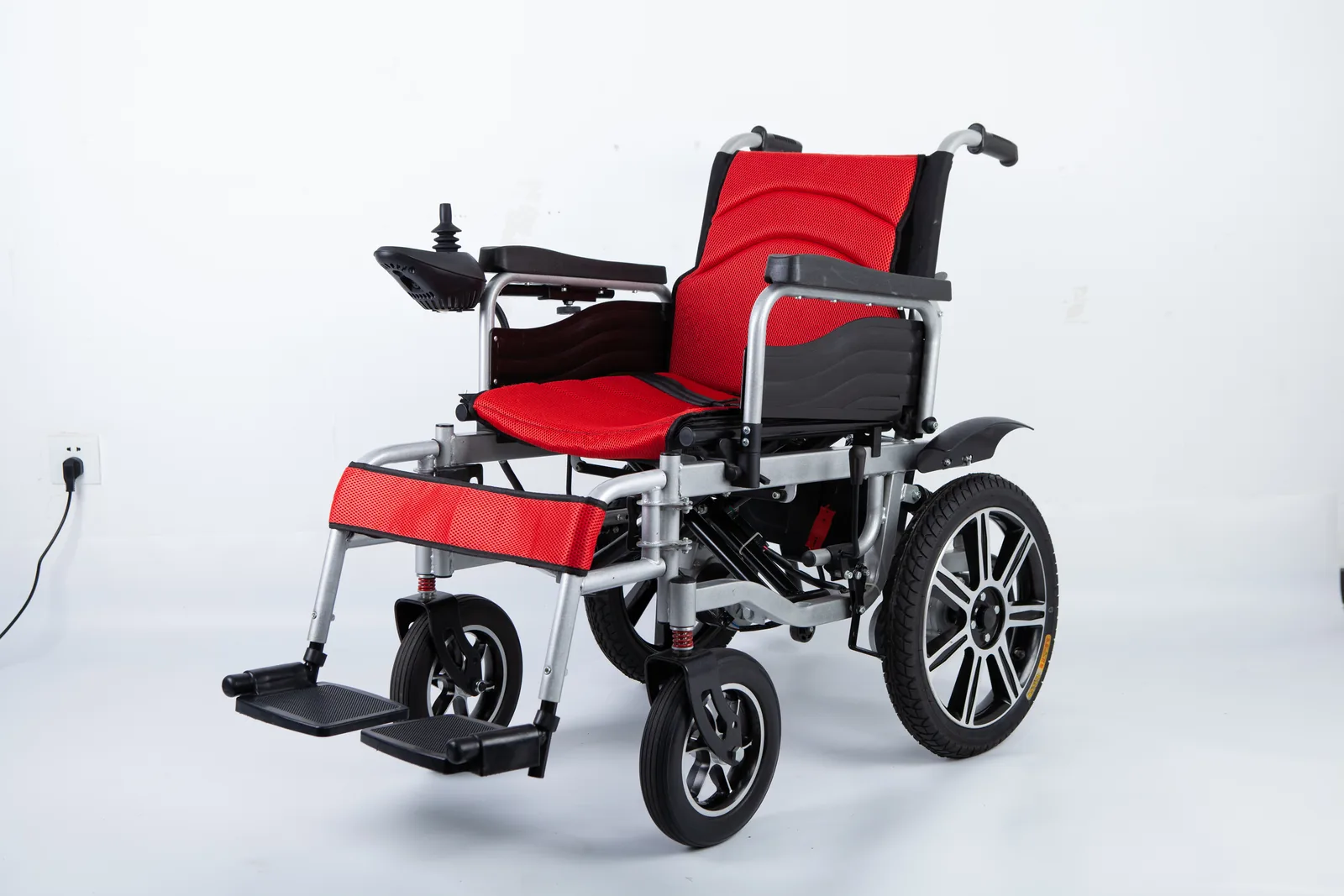
Read the range figure as a question, not a promise. Confirm the model, battery version, test conditions, units, and date, then record your own route, charging stops, and fallback options before you decide.
Video: How Long Do Wheelchair Batteries Really Last? Find Out!