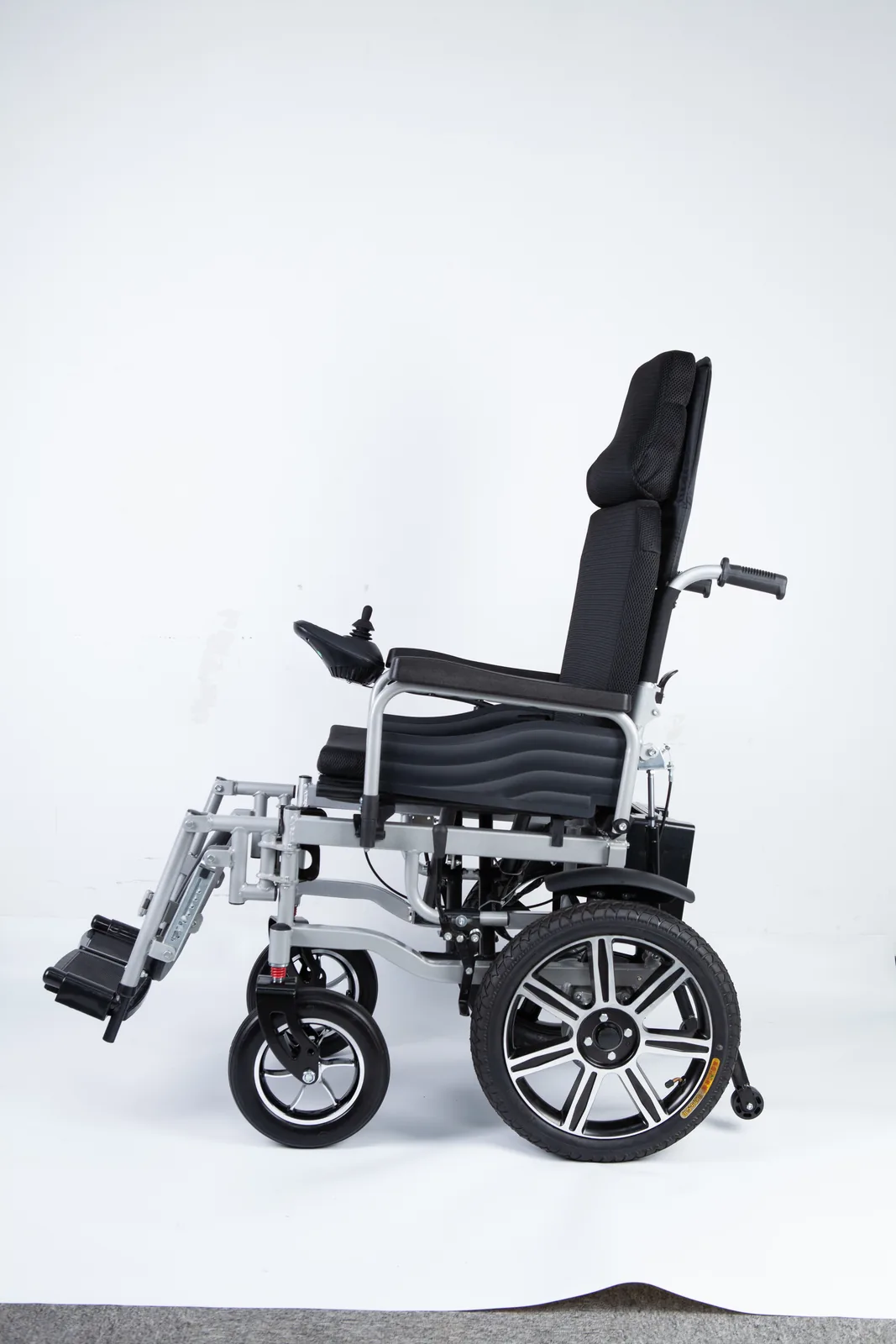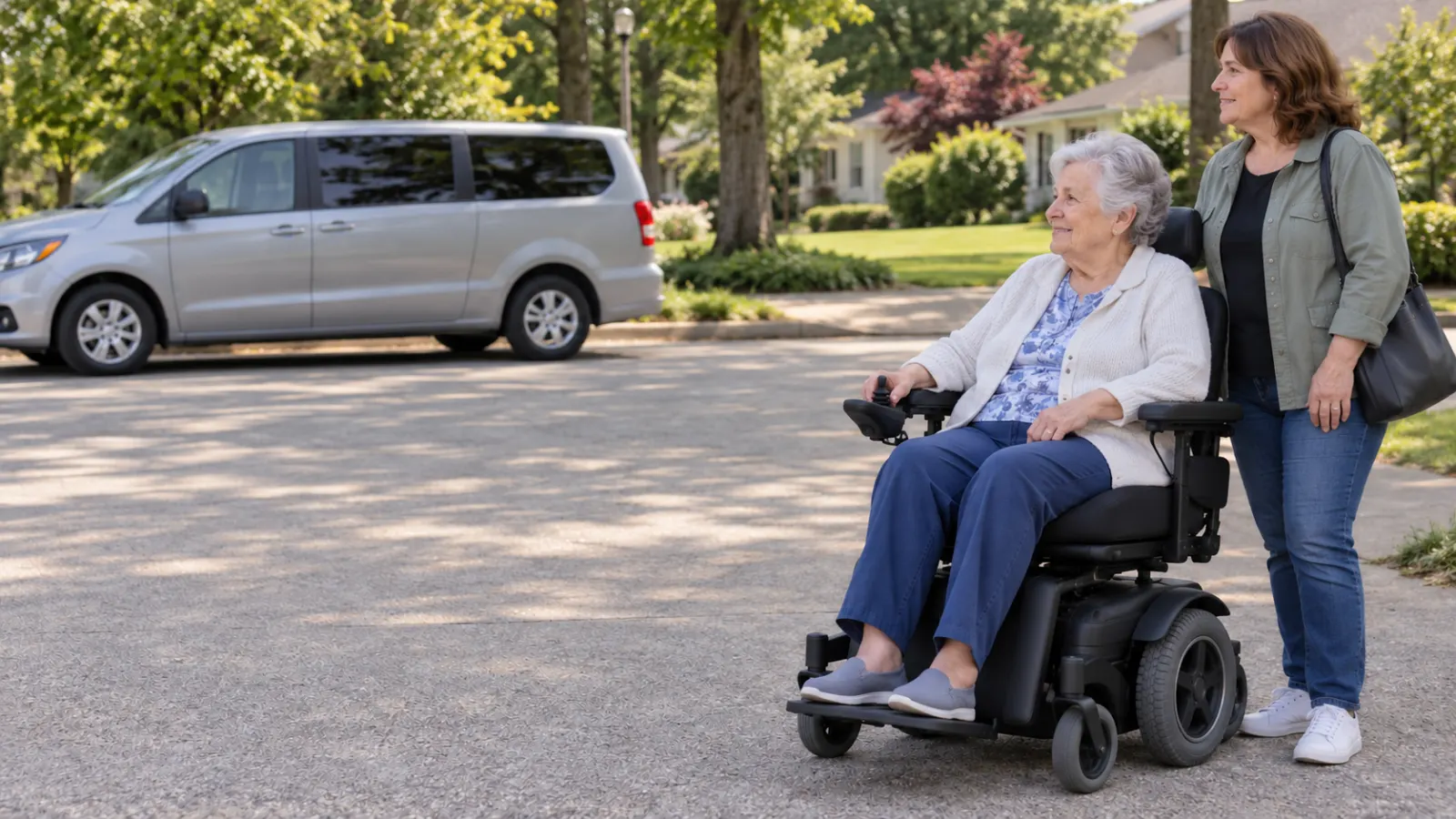
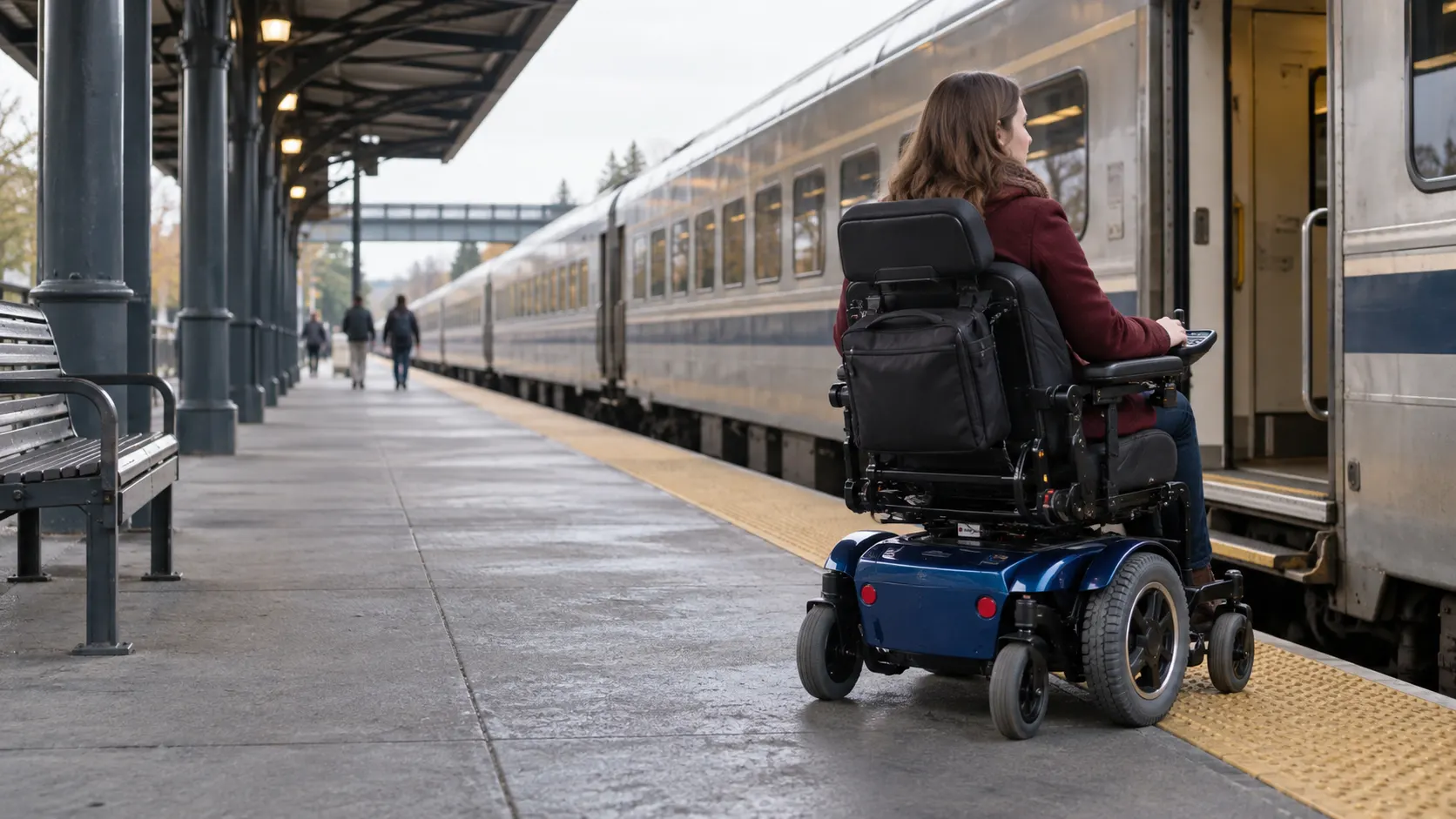
Wheelchair accessible train from Seattle to Tacoma options include Sound Transit’s Sounder S Line and Amtrak Cascades. Both provide accessibility accommodations, but they have different schedules, boarding procedures, reservation requirements, and arrangements for passengers using manual or power wheelchairs.
Sounder S Line is a commuter rail service that normally operates on weekdays. It provides a designated accessible boarding area where conductors deploy a ramp. Amtrak Cascades is an intercity train service requiring a travel reservation. Passengers who use wheelchairs should reserve the appropriate accessible space or seating accommodation.
This guide compares the two services, explains how wheelchair boarding works, identifies Amtrak’s published mobility-device dimensions, and provides a pre-travel checklist for Seattle King Street Station and Tacoma. Official service information was reviewed on October 27, 2026.
Wheelchair Accessible Train From Seattle to Tacoma: Which Service Fits?
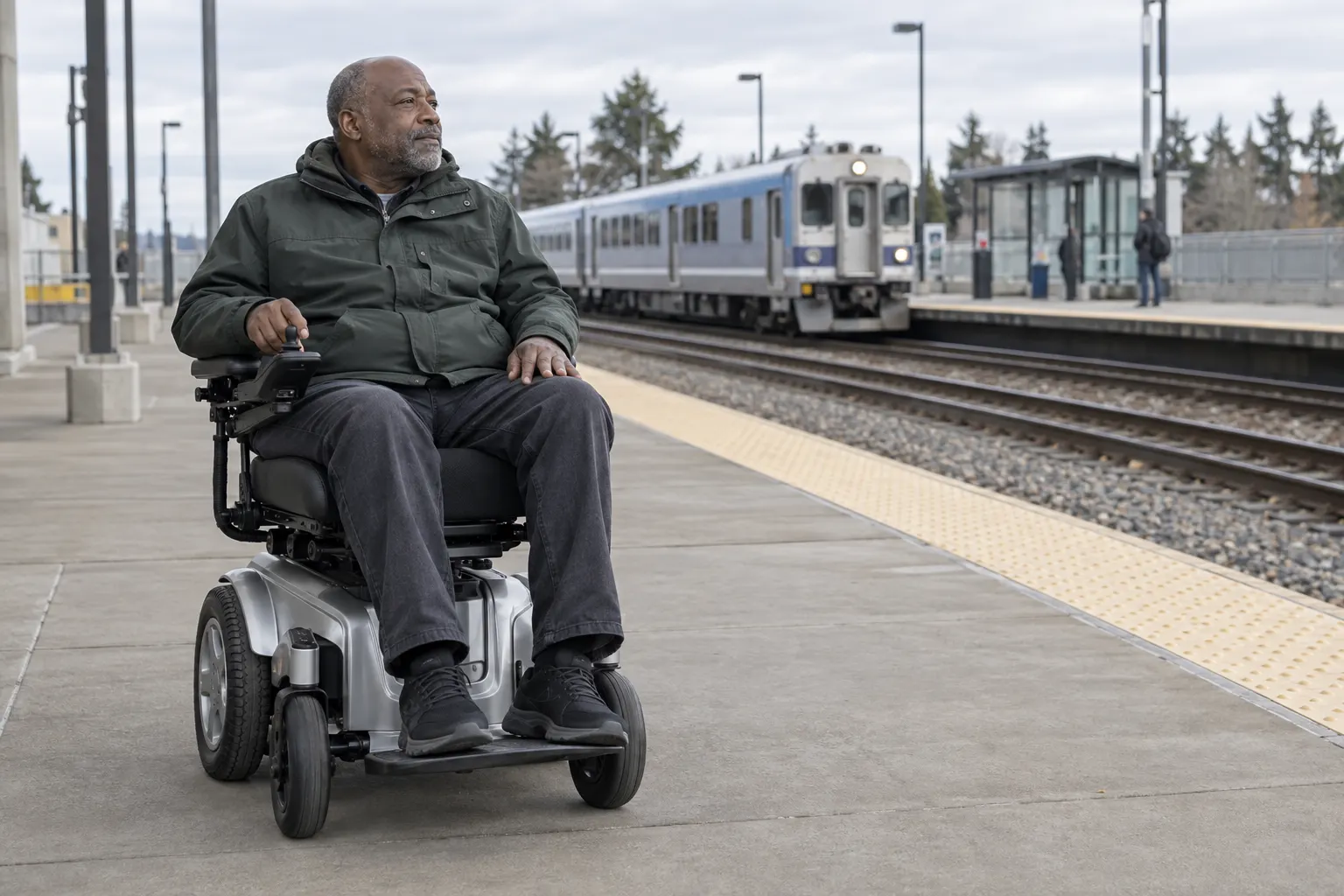
Sounder and Amtrak Cascades both serve the Seattle–Tacoma corridor, but they are designed for different travel patterns.
Sounder S Line: Commuter Rail Between Seattle and Tacoma
The Sound Transit Sounder S Line connects Seattle King Street Station with Tacoma Dome Station and continues to South Tacoma and Lakewood on selected trips.
Its regular schedule is weekday-oriented, with trains operating in both directions during published service periods. Additional service may be offered for certain special events.
Sounder does not require an individual seat reservation. Passengers must have valid fare payment before boarding and should check the current schedule for their exact travel date.
For wheelchair users, Sound Transit provides a designated accessible boarding area on each Sounder platform. Conductors assist passengers by placing a ramp between the platform and train.
Sounder may be convenient for trips that fit its published commuter timetable. However, regular weekend service should not be assumed, and travelers must verify the return schedule as carefully as the outbound trip.
Amtrak Cascades: Reserved Intercity Rail Service
Amtrak Cascades connects Seattle and Tacoma as part of a longer passenger rail corridor serving communities in Washington, Oregon, and British Columbia.
Unlike Sounder, Amtrak Cascades requires reservations. The service provides accessible travel arrangements for passengers who use wheelchairs and other mobility devices.
Its official accessibility page states that each train provides space for at least four mobility-impaired passengers. That statement should not be interpreted as guaranteeing four available spaces for any particular wheelchair configuration on every departure.
Passengers should identify whether they need space to remain in a wheelchair during travel or an accessible seat after transferring from a collapsible wheelchair. The appropriate arrangement should be included in the reservation.
Amtrak Cascades may be a better scheduling option when regular Sounder service does not operate at the time needed, but ticket and accessible-space availability must be checked for the specific departure.
How Wheelchair Boarding Works on Sounder and Amtrak Cascades
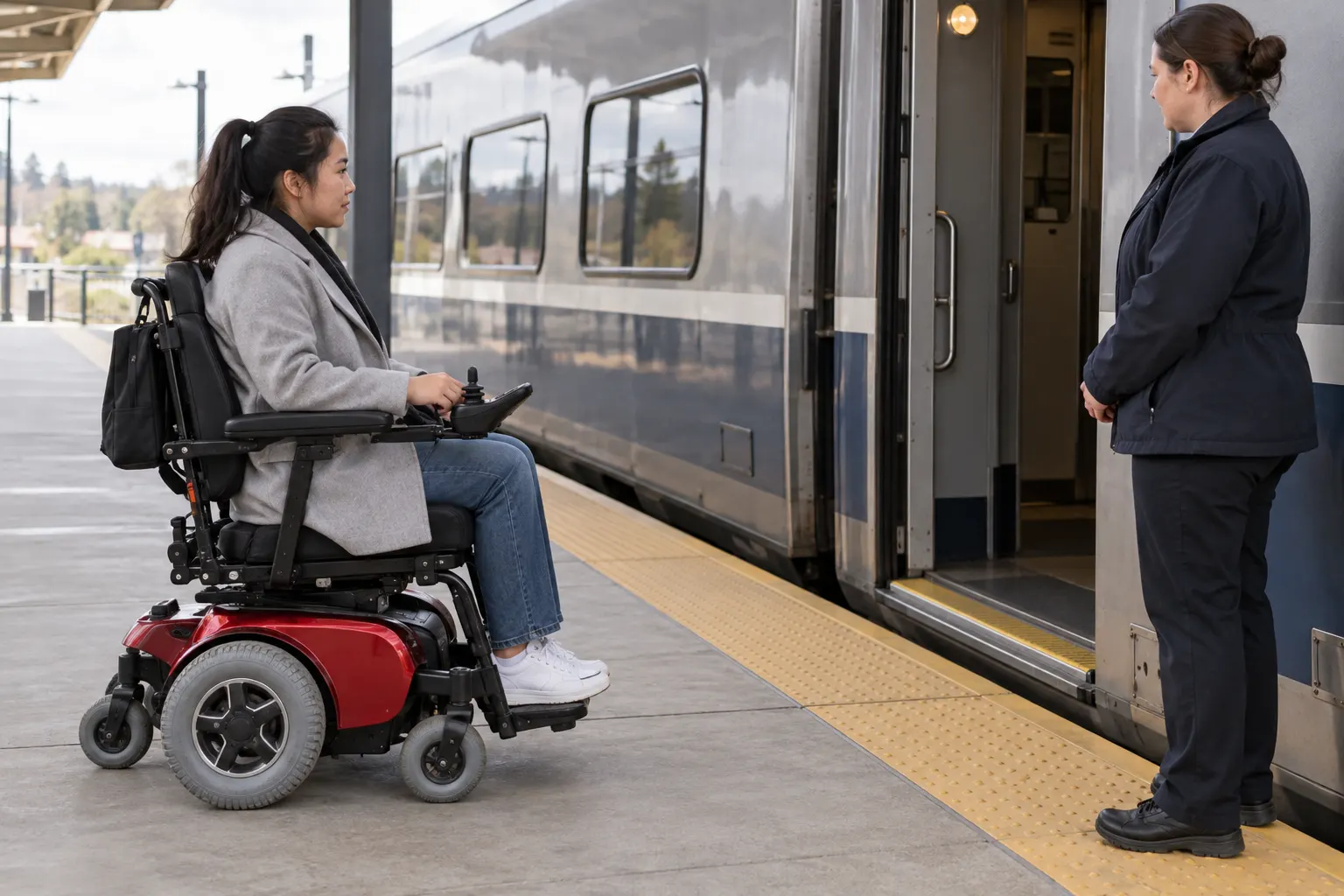
Both operators offer assisted boarding, but their equipment and procedures differ. Do not assume that a boarding ramp or accessible seating arrangement used by one service applies to the other.
Sounder: Designated Platform and Conductor-Assisted Ramp
Sound Transit’s official accessibility guidance states that all Sounder platforms have a single raised boarding area marked with the accessibility symbol.
The conductor deploys a boarding ramp between the platform and the railcar to assist passengers using mobility devices.
When planning a Sounder journey:
- Find the accessibility symbol marking the raised boarding area.
- Ask station staff or the conductor for boarding assistance when needed.
- Wait for the conductor to position the boarding ramp before entering the train.
- Use the designated wheelchair area and follow the applicable onboard safety instructions.
- Confirm the appropriate exit assistance at the destination station.
Sound Transit states that riders do not have to secure their wheelchairs to a vehicle-mounted restraint system on Sounder trains. This differs from the securement procedures commonly used on accessible buses.
Sounder trains also provide restrooms designed to accommodate most passengers using wheelchairs or other mobility devices. However, the operator warns that some larger wheelchairs may not fit in the available restroom space.
If onboard restroom access is essential, request clarification about the actual wheelchair dimensions and train configuration before relying on the general accessibility statement.
Amtrak Cascades: Accessible Reservation and Boarding Assistance
Amtrak offers boarding assistance using equipment appropriate to the station and train. Depending on the platform height and railcar, this may involve a station-based lift, a boarding ramp, or another approved boarding arrangement.
The Amtrak mobility-device services page explains how its boarding assistance differs between high platforms, low-level platforms, and bi-level railcars.
For Amtrak Cascades, specify the wheelchair accommodation when making the reservation instead of waiting until arrival at the station.
Amtrak recommends arriving approximately 30 minutes before departure for ordinary boarding and checking in with ticket staff to arrange pre-boarding when wheelchair assistance is needed.
Confirm the appropriate arrival time for your actual station, assistance requirements, and departure. Allow additional time when another accessible transit connection is involved.
Manual, Power and Transport Wheelchairs
The mobility device you use can affect boarding, positioning, turning space, and available assistance.
- Manual wheelchair: Confirm whether you intend to remain in your wheelchair or transfer to an available accessible seat. Ask about the boarding device and onboard wheelchair location.
- Electric or power wheelchair: Confirm the manufacturer’s stated dimensions, occupied weight, ground clearance, and any relevant equipment information. Ask whether the train and boarding equipment can accommodate your specific device.
- Transport chair: Ask about the boarding arrangement and whether the device can be occupied during travel. Do not assume an attendant-propelled chair is handled identically to a standard self-propelled wheelchair.
Do not infer equipment compatibility from a photograph or a generic wheelchair description. Use the mobility device’s manufacturer documentation and the rail operator’s current requirements.
Amtrak Cascades Wheelchair Size and Reservation Requirements
Amtrak publishes dimensions for wheeled mobility devices and identifies route-specific differences. These specifications are particularly important for larger power wheelchairs.
Published Amtrak Mobility-Device Dimensions
Amtrak’s general wheeled mobility-device guidance describes a baseline accommodation for devices not exceeding:
- Width: 27.5 inches.
- Length: 48 inches when occupied.
- Occupied weight: 600 pounds or less.
- Ground clearance: At least 2 inches.
However, Amtrak also publishes a separate route-specific width table. Its Wheelchair Dimensions on Trains page lists a 29.5-inch maximum width for Amtrak Cascades.
This larger route-specific figure should not be interpreted as guaranteed compatibility with every boarding device, railcar configuration, or individual wheelchair. The operator explains that equipment differences can affect what a specific train can accommodate.
If your device exceeds a published dimension, Amtrak advises contacting its accessibility team. Some larger devices may still be accommodated depending on the particular car and equipment used for the journey.
Amtrak reservations and accessibility support: 1-800-872-7245 (1-800-USA-RAIL).
Remaining in a Wheelchair or Transferring to a Seat
Amtrak distinguishes passengers who need to remain seated in a wheeled mobility device from passengers who want an accessible seat and a place to stow a collapsible wheelchair.
Amtrak’s mobility-device guidance describes different seating arrangements according to whether the device is collapsible and whether the passenger remains in it. Confirm the applicable current arrangement when booking, especially if transferring from your wheelchair is not possible or not desired.
Accessible spaces and transfer-accessible seats are limited. Reserving the appropriate accommodation in advance helps ensure that the requested seating arrangement is recorded against the correct train.
The Amtrak accessible reservation page explains the booking options for passengers traveling in their own mobility devices or requesting accessible transfer seating.
Check Seattle King Street and Tacoma Station Accessibility
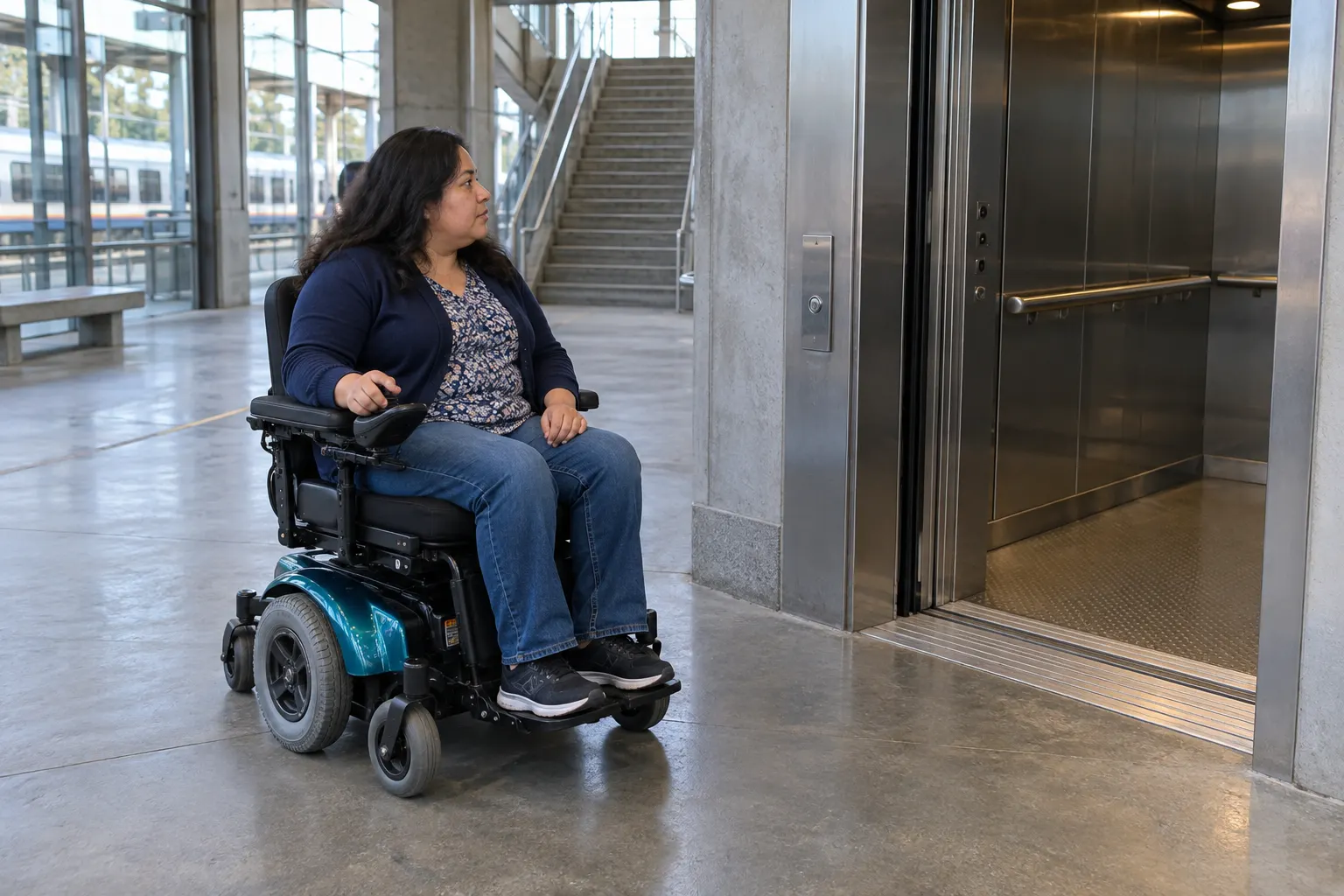
A train offering wheelchair accommodations does not automatically confirm every part of your station journey. Check the accessible route from arrival or drop-off to the correct boarding area, as well as the route from the destination platform to your onward transportation.
Seattle King Street Station
Address: 303 S. Jackson Street, Seattle, WA 98104.
Seattle King Street Station serves Sounder commuter rail and Amtrak passenger trains.
The Sound Transit King Street Station page identifies the Sounder stop as accessible. The Amtrak Cascades Seattle station page also lists wheelchair-accessible services.
Before traveling, confirm:
- The entrance and accessible route appropriate for your selected train service.
- The correct Sounder or Amtrak boarding platform.
- Available station assistance and pre-boarding instructions.
- Any temporary closure, construction work, or accessible-route change.
- The connection to your arrival or onward transportation.
Do not assume that the accessibility arrangements for Sounder and Amtrak are identical simply because both use King Street Station.
Tacoma Dome Station and Amtrak Tacoma Station
Amtrak Tacoma Station: 422 E. 25th Street, Tacoma, WA 98421.
Sounder serves Tacoma Dome Station in the same general transit district. Amtrak Cascades uses Tacoma Station, identified separately in its booking and station information.
Sound Transit’s Tacoma Dome Station page identifies the Sounder stop as accessible. The Amtrak Cascades Tacoma station page lists wheelchair-accessible facilities and staffed station services.
Because the Tacoma Dome area contains multiple transit services and boarding zones, verify the exact rail platform and exit route rather than relying only on the general transit-center name.
If your journey involves a bus or Tacoma Link connection, check the applicable stop and accessible transfer route separately.
Do You Need to Check Elevator Status?
Check whether your planned route actually requires an elevator, lift, or another station access feature. Not every accessible station route relies on an elevator.
Use the current station accessibility information and service alerts to identify the appropriate step-free path for your trip.
If construction or an equipment outage affects the route, contact the operator for an alternative rather than assuming that another station entrance or platform will be accessible.
Sounder vs Amtrak Cascades: Wheelchair Travel Comparison
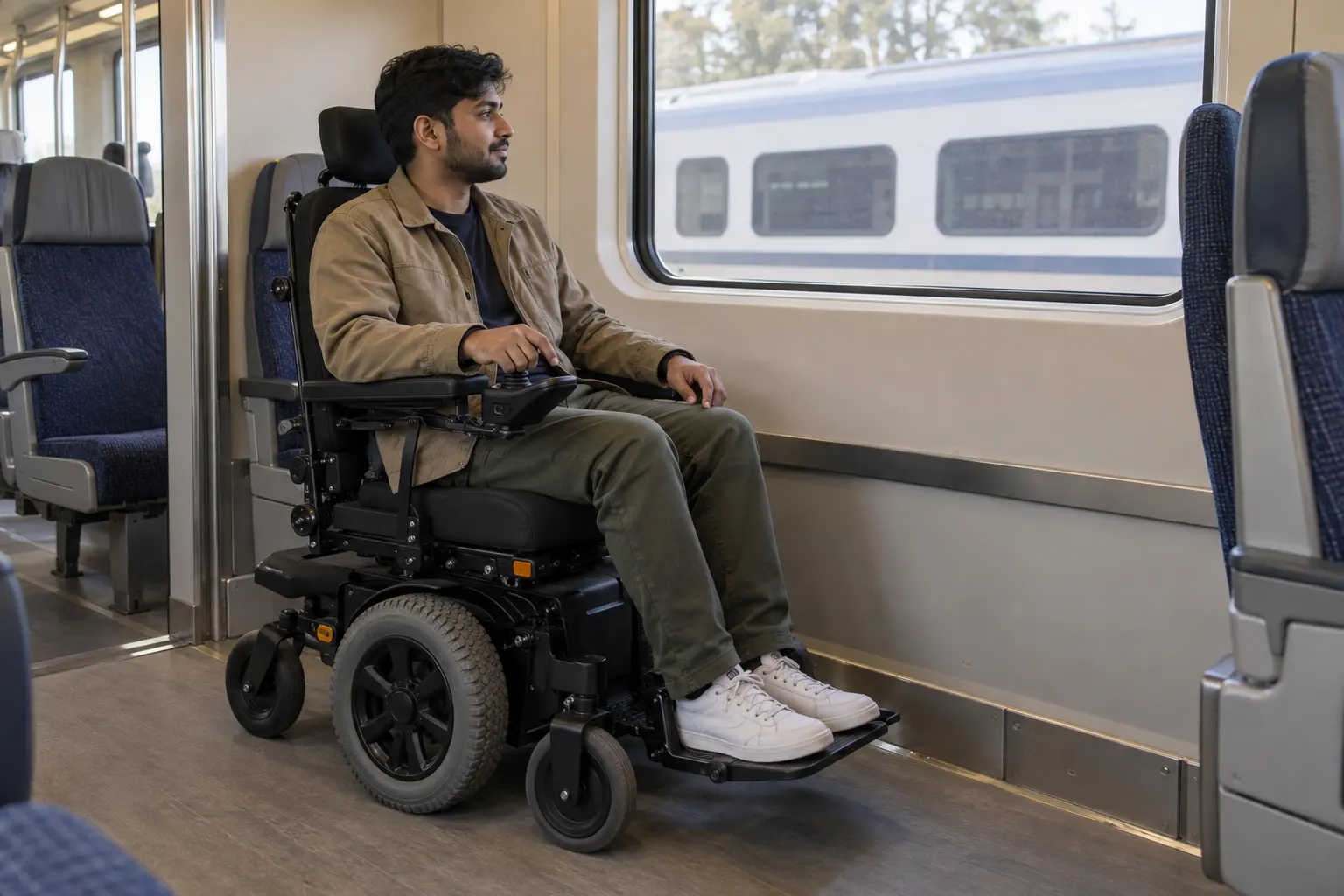
Use this table to compare the two services before selecting a departure. Both offer wheelchair accommodations, but neither should be treated as universally preferable for every traveler.
| Comparison factor | Sounder S Line | Amtrak Cascades |
|---|---|---|
| Service type | Regional commuter rail | Reserved intercity rail |
| Seattle–Tacoma stations | King Street Station to Tacoma Dome Station | King Street Station to Amtrak Tacoma Station |
| Normal schedule | Weekday service; special-event exceptions may occur | Date-specific scheduled intercity trains |
| Seat reservation | Not normally required | Required for Amtrak Cascades travel |
| Accessible boarding | Marked raised platform area with conductor-assisted ramp | Operator-assisted boarding using equipment appropriate to station and railcar |
| Wheelchair accommodation | Designated onboard areas; confirm space and device fit | Reserve a wheelchair space or appropriate accessible seating arrangement |
| Published device dimensions | Confirm the actual device and onboard requirements with Sound Transit | Amtrak lists a 29.5-inch route-specific width reference; other dimensional requirements apply |
| Restroom information | Accessible-design restrooms; some large wheelchairs may not fit | Confirm accessible restroom availability and route for the specific train |
| Payment | ORCA, valid Sounder ticket, and other accepted Sound Transit methods | Amtrak ticket purchased through its reservation channels |
| Best planning use | Trips matching the current commuter timetable | Reserved intercity travel and departures outside regular Sounder periods |
The comparison does not guarantee that accessible space is available on a particular departure. Check current train equipment, service alerts, and the relevant station route before travel.
Sounder Tickets and ORCA
Sound Transit accepts ORCA fare payment on Sounder. Riders using ORCA should tap before boarding and tap off at the destination station because Sounder fares are calculated by distance.
Tickets can also be purchased through station ticket machines or other accepted Sound Transit payment options. Check the current Sound Transit fare information before departure.
Amtrak Cascades uses a separate intercity ticketing and reservation process. Do not assume that a regional Sounder fare or pass provides travel on Amtrak Cascades.
Questions to Ask Before Booking or Boarding
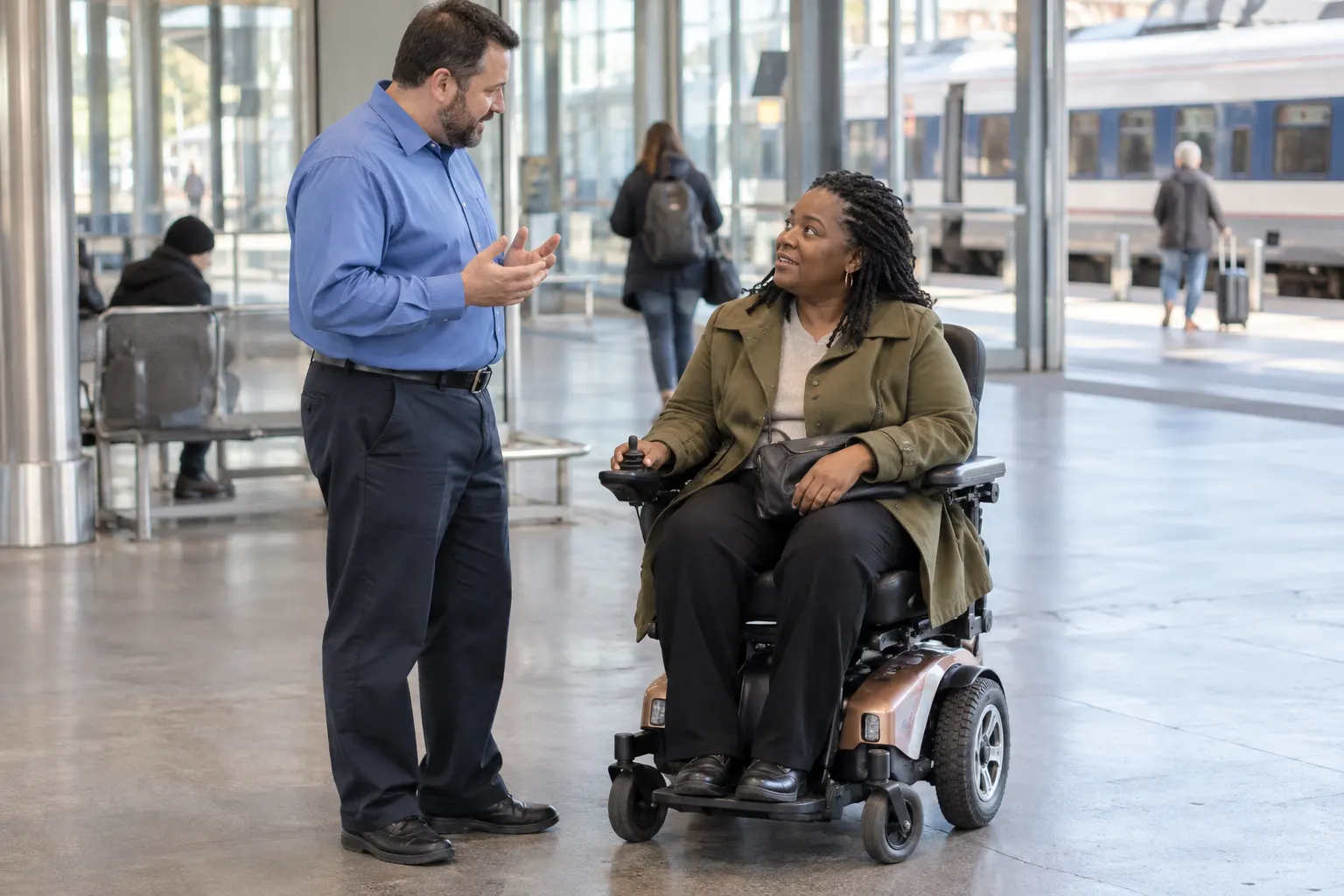
Before using either service, ask questions that identify the exact train, station, and wheelchair arrangement.
- Does this exact train operate on my travel date and in the direction I need?
- Is the departure operated by Sounder S Line or Amtrak Cascades?
- Which station entrance and platform should I use for accessible boarding?
- Will the conductor or station staff provide a ramp, lift, or other boarding assistance?
- Do I need to reserve an onboard wheelchair space before arriving?
- Can I remain seated in my own wheelchair throughout the journey?
- If I plan to transfer to a passenger seat, what accessible seating and wheelchair storage arrangement applies?
- Can the assigned car and boarding equipment accommodate my wheelchair’s exact dimensions and occupied weight?
- Is an onboard accessible restroom available for my equipment?
- Are any station routes, lifts, platforms, or boarding arrangements affected by current service alerts?
- What happens if the assigned railcar or accessible boarding equipment changes?
For Amtrak Cascades, contact 1-800-USA-RAIL (1-800-872-7245) or use its accessible reservation options at Amtrak.com.
For Sounder, check the current S Line schedule and service alerts or contact Sound Transit customer service at 888-889-6368.
Wheelchair Accessible Train Seattle to Tacoma: Frequently Asked Questions
Is Sounder S Line Wheelchair Accessible?
Yes. Sound Transit states that Sounder platforms have marked accessible boarding areas and conductors provide ramps to help passengers using mobility devices board and exit the train. Check the current station route and schedule before travel.
Can You Take a Power Wheelchair on Amtrak Cascades?
Yes, Amtrak permits qualifying powered mobility devices. Its Cascades route-specific wheelchair width reference is 29.5 inches, while other dimensions, occupied weight, and ground clearance requirements also apply. If your device is larger, contact Amtrak to determine whether the specific equipment can accommodate it.
Do You Need to Reserve Wheelchair Space on Amtrak Cascades?
Amtrak Cascades requires reservations for travel. Passengers using wheelchairs should select the appropriate accessibility accommodation when booking. Accessible wheelchair spaces and transfer-accessible seating are limited, so reserving in advance is recommended.
Does Sounder Run Between Seattle and Tacoma on Weekends?
Sounder’s normal S Line timetable is weekday-only. Special-event trains may operate outside that pattern, but they are not a substitute for checking the published schedule for the exact date and direction of travel.
Can You Stay in Your Wheelchair During the Train Trip?
Both services provide accommodations for wheelchair users. Sounder has onboard wheelchair areas, while Amtrak offers options for passengers who remain in their mobility devices or use accessible seating arrangements. Confirm the appropriate setup for your chair and train before traveling.
Are Seattle King Street and Tacoma Stations Accessible?
The relevant Sound Transit and Amtrak station pages identify accessible services at Seattle King Street Station and Tacoma. However, accessibility of the overall station does not establish that every entrance, platform connection, or temporary route is available on the date you travel.
Can You Use an ORCA Card on Sounder?
Yes. Sounder accepts ORCA payments. Riders should tap at the departure station and tap off at the destination to ensure the correct distance-based fare is calculated. Amtrak Cascades follows a separate ticket reservation process.
Final Checklist Before Traveling From Seattle to Tacoma
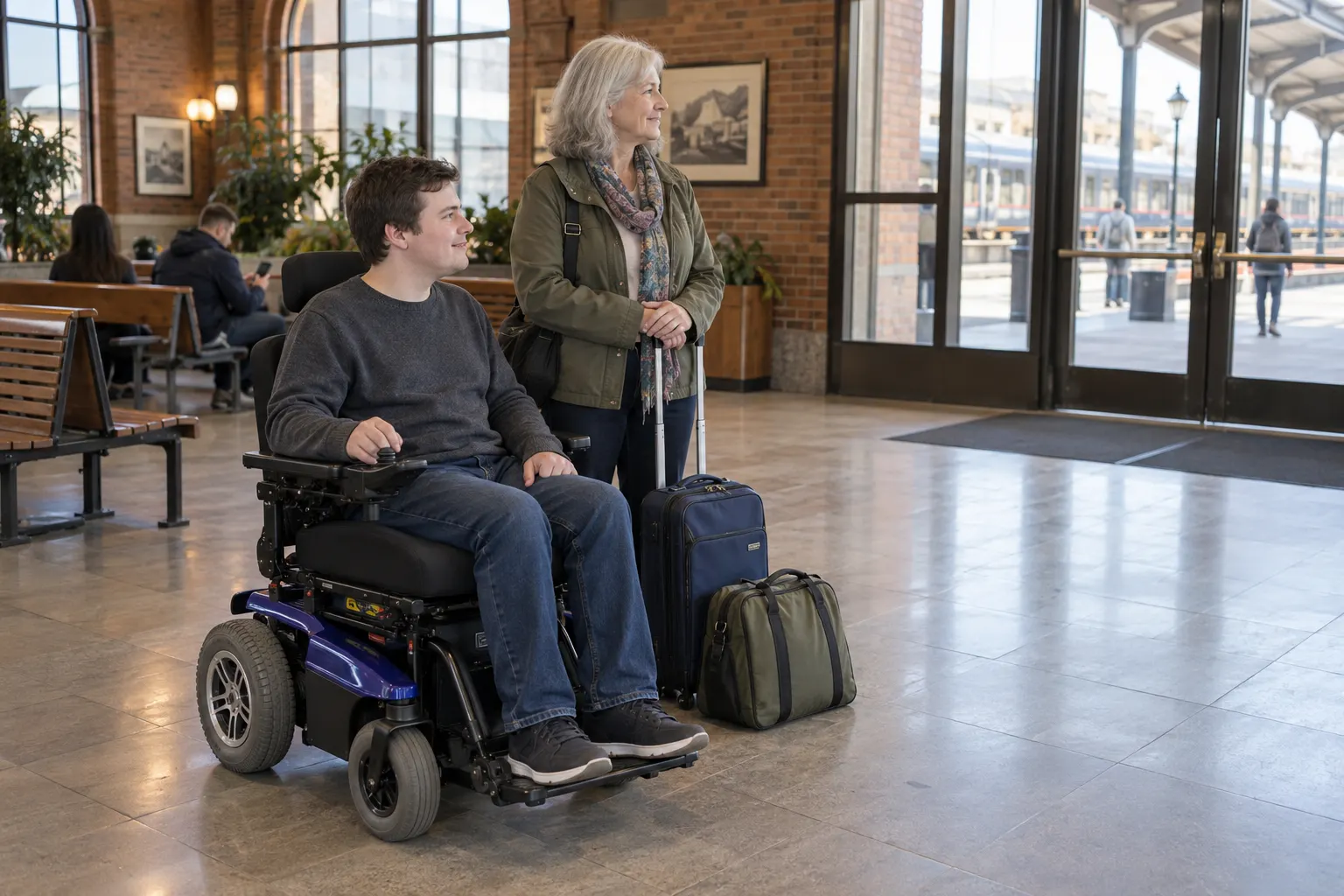
Use the following checklist before boarding a wheelchair accessible train between Seattle and Tacoma:
- I confirmed the exact date, departure direction, and train operator.
- I checked the Sounder timetable or reserved the correct Amtrak Cascades departure.
- I identified my wheelchair as manual, power/electric, or transport, with model information available when needed.
- My wheelchair’s dimensions and occupied weight have been checked against the operator’s applicable requirements.
- I confirmed whether I will remain seated in the wheelchair or use a separate accessible seat.
- I know where the accessible boarding area is located at my departure station.
- I confirmed whether staff or conductor assistance is needed for boarding and exiting.
- I reviewed the station’s accessible entrance and route to the train.
- I checked current service alerts, construction notices, and relevant equipment changes.
- I confirmed the accessible exit route and onward transportation at the destination.
- I checked the return journey rather than assuming the same service operates in both directions at the times I need.
For a wheelchair accessible train from Seattle to Tacoma, choose the service based on schedule, boarding requirements, and your specific mobility device. Sounder S Line may fit a weekday commuter journey, while Amtrak Cascades provides reserved intercity rail service with separately managed accessibility accommodations.
Neither option should be considered universally more accessible without checking the specific departure, wheelchair configuration, and station route. Use the current operator instructions rather than general assumptions about train accessibility.
This guide is for travel planning and does not provide clinical wheelchair fitting advice, transfer instructions, or a guarantee that a particular device will be accommodated on a specific departure. For equipment dimensions and operation, consult the actual wheelchair manufacturer documentation. For boarding, reservations, and accessible rail travel, rely on the responsible train operator.
Source review: October 27, 2026. This article references Sound Transit Sounder S Line schedules, Sound Transit accessibility guidance, Sound Transit accessibility policies, Amtrak Cascades accessibility information, Amtrak wheeled mobility-device services, Amtrak route-specific wheelchair dimensions, Seattle King Street Station, and Amtrak Tacoma Station. Timetables, train equipment, accessible-space availability, fares, and station arrangements may change. Wheelchairs Factory provides this independent information guide and is not affiliated with Sound Transit or Amtrak.
Video: Powerchair Loading onto Amtrak Cascades in Olympia Washington (2019) — GrandyMarty (Third-Party Travel Video)