
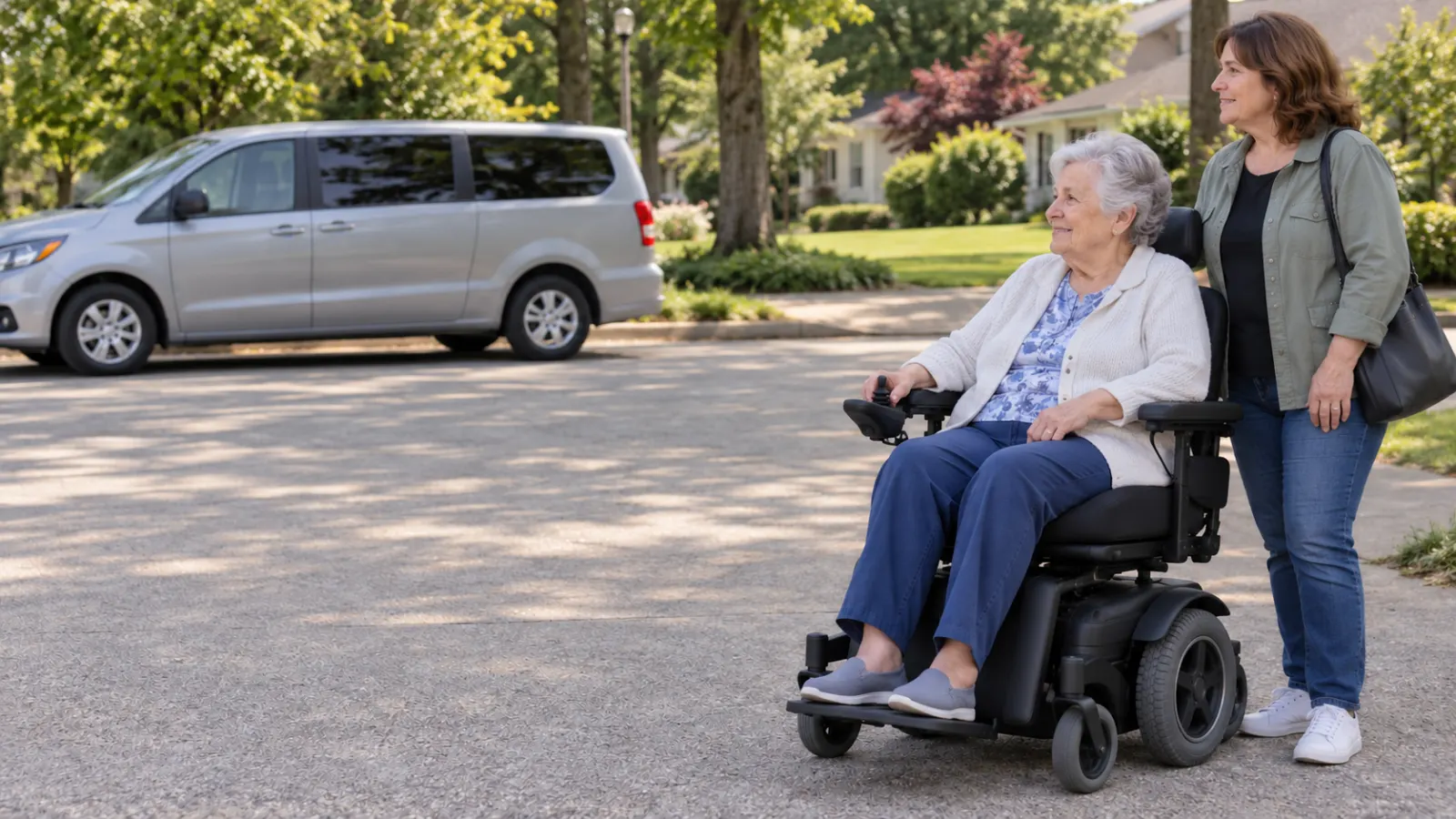
Comparing Metro Flex vs Access Transportation starts with two questions: are you eligible for the service, and do you need a ride now or a trip booked ahead? Metro Flex provides public on-demand rides within designated King County zones. Access Transportation provides shared paratransit trips for eligible, registered riders.
For wheelchair users, the next checks are the trip’s coverage, booking requirements, and mobility-device fit. Metro Flex can automatically assign an accessible vehicle once that need is recorded in your profile. A separate invitation-based option, Metro Flex Access On-Demand (AOD), is available to selected Access customers.
Quick Answer: Which Ride Can You Request?

- Choose ordinary Metro Flex for a local on-demand trip when both addresses are within the applicable service zone and it is operating. Access certification is not required.
- Use Access Transportation when you have established eligibility and registration. Most trips must be booked one to seven days ahead; the service area also depends on the travel day and time.
- Consider Access On-Demand only if Metro has invited and enrolled you. Having Access eligibility or downloading the Metro Flex app does not automatically enroll you in the pilot.
You can compare services for different trips. Eligibility for Access does not prevent you from using ordinary Metro Flex when its zone and operating hours suit your journey.
Metro Flex: Request an Accessible Vehicle in Your Zone
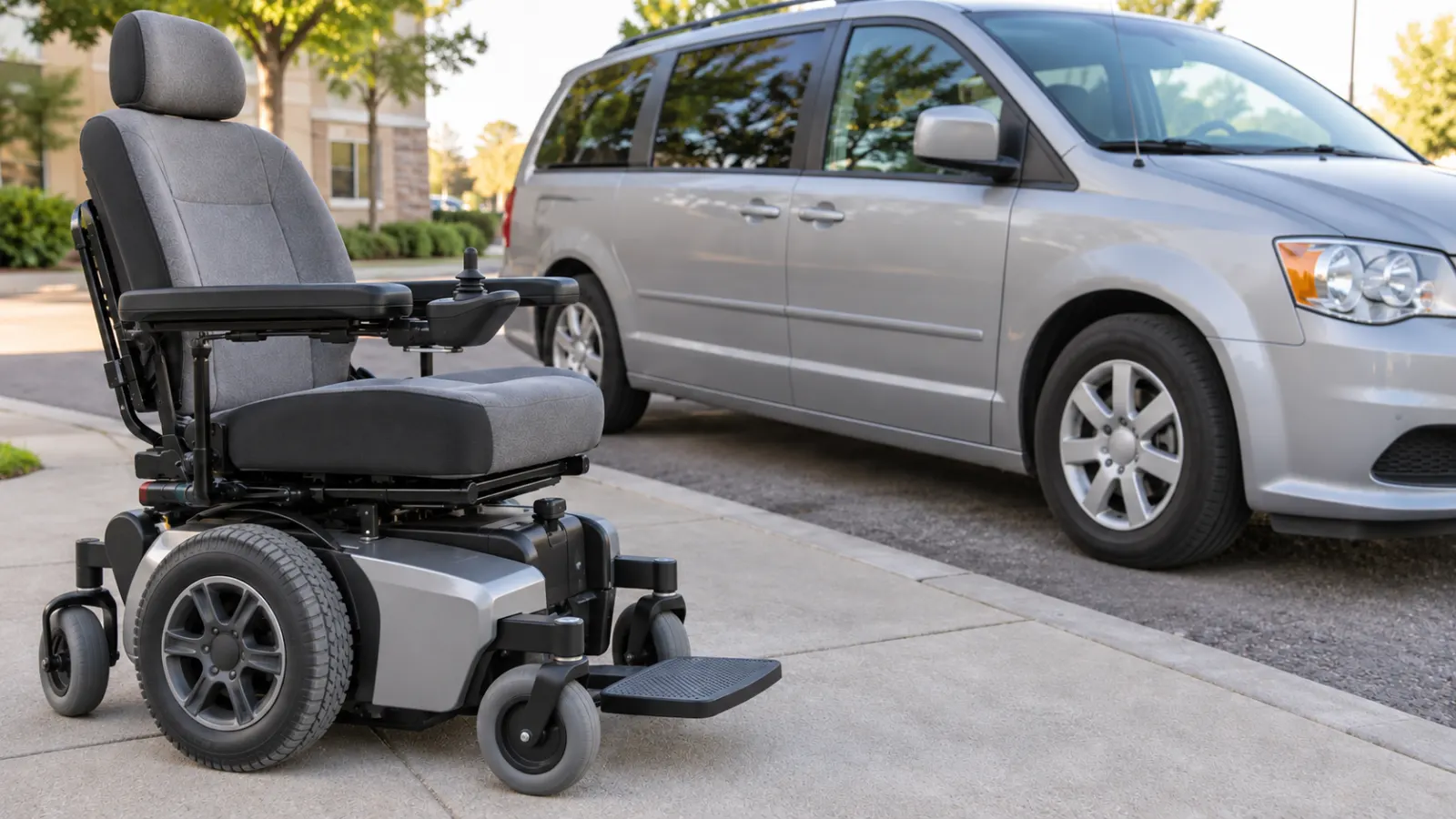
Use the current Metro Flex service map and hours to check both ends of your journey. The service connects places within a zone; it should not be treated as a countywide ride service. Hours differ between zones, including weekday-only pilot services.
- In the app: Set your wheelchair-accessible vehicle requirement under “fare/service type” in your Metro Flex profile.
- By phone: Call 206-258-7739 and tell the agent about your mobility and pickup needs.
- Online: Use the Metro Flex booking portal and include your mobility requirements.
Metro confirms that an accessible vehicle is automatically assigned after the need is saved in your profile. Its current instructions also say that riders with recorded mobility needs are not required to walk to a virtual pickup or drop-off point. Ask about any specific assistance you need beyond boarding.
Metro Flex requests are made on demand. You cannot reserve an ordinary Flex ride for a future pickup time, so allow time to review the offered arrival estimate before accepting.
Access Transportation: Eligibility and Advance Booking

Access Transportation is King County Metro’s ADA paratransit service for people aged 6 or older whose disability prevents them from using regular bus or rail service for some or all trips. Wheelchair use alone does not establish eligibility. Start with Metro’s application process; certification help is available at 206-263-3113.
Coverage generally follows areas within three-quarters of a mile of Metro bus routes or Link stations, during the days and hours those services operate. Check the Access Service Map and confirm the actual trip with Access. The available service area changes with the transit schedule.
- Booking window: Schedule most trips one to seven days ahead, by 5 p.m. on the day before travel.
- Phone reservations: Call 206-205-5000, daily from 8 a.m. to 5 p.m. Washington Relay: 711.
- Online reservations: Access Trip Manager is available around the clock, with the same advance-booking deadline.
Reservation hours are Seattle local time. For a trip crossing county boundaries, the published previous-day deadline is earlier: 4:30 p.m.
Access On-Demand: An Invitation-Based Metro Flex Pilot

Metro’s current website describes Access On-Demand as a pilot for selected Access customers. It uses Metro Flex vans and booking tools, with its own enrollment, service area, and trip conditions. It does not replace Access Transportation’s advance-booking service.
After enrollment, follow the AOD first-ride instructions: sign in using your enrolled phone number and choose Access On-Demand in the Metro Flex app. Phone and web booking are also available. Choosing a wheelchair preference in an ordinary Flex profile is not pilot enrollment.
The linked pilot page currently lists a 10-mile trip limit and monthly ride allowances that vary by rider. It describes pickup in about 30 minutes, subject to availability. Use your invitation and the current pilot map to confirm your options; that approximate pickup time is not a promise for ordinary Metro Flex.
Check Wheelchair Dimensions and Boarding Needs

Manual, power/electric, and transport chairs all need to fit the vehicle and boarding equipment. Record the chair’s overall width and length in the configuration you will use, its weight, the rider-plus-device weight, and any assistance required. Seat width or chair category alone does not establish fit.
| Service | Published equipment information | What to confirm |
|---|---|---|
| Metro Flex | One wheelchair passenger per vehicle. Rear-ramp capacity up to 800 pounds; wheelchair width up to 36 inches. | Provide actual device dimensions and occupied weight, particularly if close to the published figures. |
| Access Transportation | The linked Ride Guide specifies rider and device combined under 800 pounds, with the chair under 32 inches wide and under 52 inches long at lift-platform level. | Some extra length above the lift roll stop can fit. Ask Access to assess a new or different device. |
Sources: Metro’s published Flex ramp information and the Access Ride Guide, page 24. The guide currently linked by Metro is revised May 2023; consult Access about later updates or your specific configuration.
The Flex page describes a ramp capacity without explicitly defining the weight calculation. Give the booking team both the device weight and rider-plus-device total when confirming fit. Do not substitute the Flex width figure for Access’s lift dimensions.
Tell the provider whether you will remain in your wheelchair and whether someone will assist you. Access’s guide describes device securement by the driver, but drivers cannot physically transfer a rider into or out of a wheelchair or operate a powered chair for them. Arrange the assistance you need before travel.
Plan Your Pickup, Destination, and Return Trip

- Write down the full journey. Include exact addresses, the travel date, any appointment arrival time, and the return journey.
- Check the applicable service. Use the Flex zone, Access trip coverage, or your enrolled AOD service area for those addresses.
- Record your mobility needs. Include the actual wheelchair configuration and any companion, personal care attendant, or boarding assistance required.
- Follow the booking model. Reserve Access within its advance window. For an on-demand service, review the pickup estimate and trip offer when you are ready to travel.
- Plan the return separately. Confirm that service will still be available at the expected return time, and keep the booking details and contact number handy.
An outward ride does not establish the return schedule. This matters when an appointment ends near the close of a Flex zone’s hours or when Access coverage changes later in the day.
Metro Flex vs Access Transportation: Fares and Payment

The following fares were checked on October 21, 2026. Reduced-fare eligibility and Access paratransit eligibility are separate questions.
| Service | Single-ride fare | Payment to prepare |
|---|---|---|
| Metro Flex | $3 standard adult fare; $1 with an eligible RRFP or ORCA LIFT fare; riders 18 and younger free. | ORCA, Transit GO Ticket, or card payment through the app or phone agent. No cash. |
| Access Transportation | $1.75 for eligible riders age 19+; youth riders free. An approved personal care attendant rides free. | Cash, eligible Metro or Transit GO tickets, or a qualifying monthly pass arranged with Metro. |
| Access On-Demand pilot | Follows Metro bus fares; the pilot page confirms the $1 RRFP/ORCA LIFT fare. | ORCA, Transit GO Ticket, or credit/debit card. No cash; pilot enrollment is still required. |
Use the current King County Metro fare table, Access payment instructions, and AOD program information. RRFP means Regional Reduced Fare Permit; ORCA LIFT is Metro’s income-qualified reduced-fare program.
An ORCA E-purse balance alone does not pay an Access fare. The Access Ride Guide distinguishes E-purse from accepted monthly passes, and Metro requires pass acceptance to be arranged in advance. For Flex, bank-card payments go through the app or agent; do not assume you can tap a bank card aboard the van.
Questions to Ask About Your Wheelchair Ride
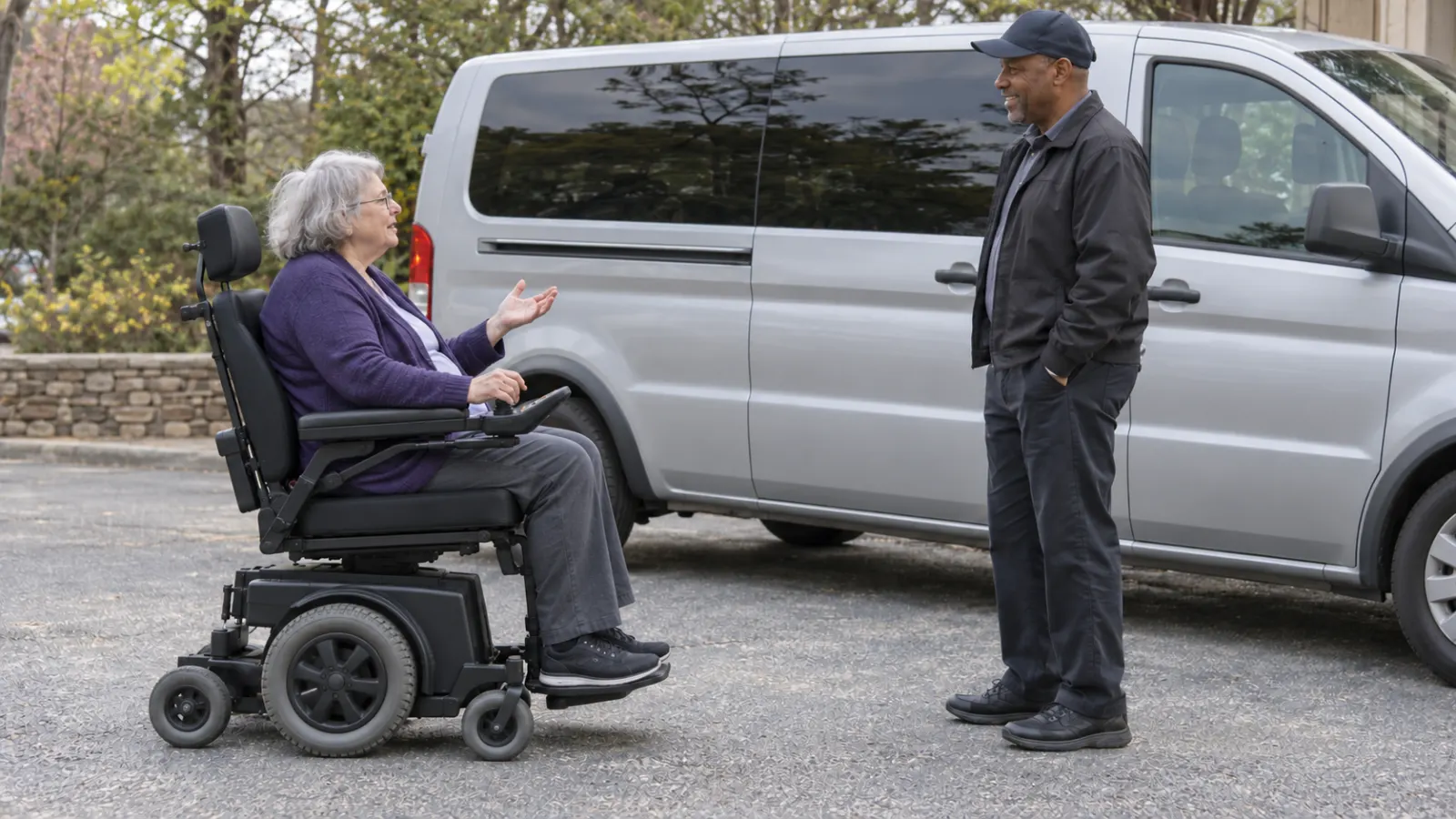
Use the service’s booking or support team to resolve the details that remain unclear:
- “Is my wheelchair-accessible vehicle requirement saved correctly, along with any pickup assistance I need?”
- “My device is [width] by [length], and the rider-plus-device weight is [weight]. Do you need a device assessment or any further measurements?”
- “I need [specific boarding or transfer assistance]. What can the driver provide, and what should my attendant handle?”
- “How should I register my companion or personal care attendant, and which fare or pass will be accepted?”
If you change wheelchairs, add equipment, or develop different assistance needs, update the provider before the next trip. For an AOD participant, make sure the pilot team has the current information as well.
Metro Flex vs Access Transportation: Common Questions

Does Metro Flex Guarantee a Ride When I Am Inside the Zone?
No. Metro’s Flex FAQ says a request may not be accepted during very high demand or when another transit service serves the trip. Accessible-vehicle assignment and ride availability are separate matters. Check the offered trip and allow time for alternatives when arrival timing matters.
Can a Visitor Use Access Transportation?
Yes, through recognized eligibility or an approved visitor arrangement. Contact the Access Certification Office before travel. Qualifying visitors can use the service for up to 21 days in a 365-day period before needing regular local eligibility.
Does an AOD Invitation Replace My Access Service?
No. The pilot guidance says participants can continue using Access Transportation and ordinary Metro Flex. Compare the options for each trip, taking account of coverage, timing, and any pilot ride allowance.
Source review: Checked October 21, 2026 using the official King County Metro pages and the AOD operator resources linked from Metro. Recheck current maps, hours, fares, and pilot enrollment terms before travel. King County Metro handles service eligibility and bookings; Wheelchairs Factory provides this planning guide.
Video: How to Request Metro Flex — King County Metro (2026 Tutorial)