

A Seattle farmers market vendor application is not one citywide form. Different markets use different organizers, product eligibility rules, fees, and application procedures. Before applying, identify whether your products fit Neighborhood Farmers Markets (NFM), Seattle Farmers Market Association (SFMA), or Queen Anne Farmers Market (QAFM).
NFM starts with a vendor inquiry, SFMA uses a formal paid application, and Queen Anne Farmers Market is accepting applications for its 2027 season. Farmers, food processors, prepared-food businesses, and selected craft producers may face different requirements at each organization.
This guide compares the three organizers, their published product rules, application stages, fees, deadlines, and documents to prepare. Information was reviewed on October 26, 2026. The comparison covers three major organizers, not every farmers market operating in Seattle.
Seattle Farmers Market Vendor Application: 3 Organizer Paths
Seattle has several independent farmers market organizations. The organizer determines which products may be sold, how prospective vendors apply, and how available stall space is allocated.
The three organizers compared here are:
- Neighborhood Farmers Markets (NFM): Operates markets including University District, West Seattle, Capitol Hill, Columbia City, Lake City, Phinney, and Magnolia. It prioritizes Washington farms and locally sourced food businesses.
- Seattle Farmers Market Association (SFMA): Operates markets including Ballard, Central District, Wallingford, Madison Park, and South Lake Union. It prioritizes farmers and accepts limited numbers of other eligible vendors.
- Queen Anne Farmers Market (QAFM): An independently operated, producer-focused market in Queen Anne. Its 2027 vendor application is currently open.
Each organization makes its own decisions about product mix, vendor eligibility, available space, and participation. Approval at one market does not mean approval at another.
Start with the official organizer pages: NFM Become a Vendor, SFMA Become a Vendor, and Queen Anne Vend With Us.
1. Neighborhood Farmers Markets: Start With a Vendor Inquiry
Neighborhood Farmers Markets does not treat its Vendor Inquiry Form as an application to sell. New prospective vendors must first submit an inquiry through the organization’s official process.
NFM reviews inquiries according to available stall space and whether the business fills a product need in its markets. Only vendors whose products and available space appear to match may be invited to submit a formal Application to Sell.
Which Products Does NFM Accept?
NFM prioritizes Washington State farms and food businesses that support regional agriculture. Its published eligible categories include:
- Farm products: Produce, fruits, meat, fish, dairy, and other qualifying products grown or raised by Washington farms.
- Processed foods: Value-added products such as bread, preserves, and pickles made with Washington-grown ingredients.
- Prepared foods: Food businesses preparing meals at the market while sourcing ingredients from Washington farms as much as possible.
NFM states that all participating farmers and food businesses must be based in Washington State and hold a Washington State business license. The organization gives farmers priority when allocating space.
Which Products Does NFM Exclude?
NFM’s published restrictions exclude several categories:
- Non-food businesses, including ordinary arts and crafts.
- Pet food businesses.
- Imported, nationally distributed, or out-of-state products.
- Resale and second-label products.
- Espresso carts and food trucks.
- Product demonstrations, promotional sampling booths, or marketing-only activations.
Most NFM markets also do not provide vendor electricity. A business that requires substantial electrical equipment should check whether its proposed setup is practical before submitting an inquiry.
What Happens After You Submit the NFM Inquiry?
The process has two distinct stages:
- Vendor Inquiry Form: Submit your business information and proposed products using the official NFM inquiry form linked from its vendor page.
- Invitation to Apply: If the organizer identifies available space and a need for your products, you may receive an invitation to complete the actual Application to Sell.
NFM states that it only responds to inquiries when suitable space and product demand exist. A lack of response does not necessarily mean the business has been formally rejected; it means no invitation is currently available.
The organization retains inquiries for possible future needs and advises prospective vendors that submitting more than one inquiry per year does not improve their chances.
Returning vendors from the previous season follow a different process and are normally invited to reapply directly.
First action: Read the NFM Become a Vendor page and complete the Vendor Inquiry Form if your product category qualifies. Do not describe the inquiry confirmation as approval to sell.
2. SFMA: A Formal Application With Published Fees
Seattle Farmers Market Association uses a formal vendor application process, with a nonrefundable application fee and an organizer review before approval.
SFMA prioritizes farmers. A limited number of food processors, prepared-food vendors, and selected crafts businesses may also be accepted, depending on the market’s product needs and space.
Which Products Fit SFMA?
Product eligibility is narrower than a general craft fair or retail market. Important published rules include:
- Farmers receive priority in the selection process.
- Processors and prepared-food businesses may be considered when they fit the market’s product mix.
- Kitchen-related crafts, including pottery, cutting boards, and cutlery, may be considered.
- Clothing vendors and resellers are not accepted.
- SFMA does not allow coffee as a product category because coffee is not grown in Washington State.
- Ballard Farmers Market does not accept to-go coffee or tea vendors under its published rules.
The organizer also explains that Ballard Farmers Market is highly competitive. It generally does not accept brand-new businesses without previous farmers market experience and encourages newer vendors to build experience through seasonal markets first.
SFMA 2026 Vendor Application Fees
SFMA’s current vendor page remains labeled for the 2026 application season and publishes the following fee schedule:
| Application period | Published fee | Important condition |
|---|---|---|
| Early registration: November–December | $48 | Nonrefundable application fee. |
| Regular registration: January–September | $68 | Nonrefundable application fee. |
| Applications to multiple SFMA markets | One application fee | Only one application fee is required when applying to more than one SFMA market. |
October 2026 application warning: Although the official SFMA page still says that 2026 applications are available, the published regular registration period ends in September. Applicants checking the page in October 2026 should confirm whether late submissions are being accepted and which fee applies. Do not assume the stated schedule automatically applies to 2027.
SFMA states that applications typically take up to eight weeks to review. Processing may take longer during busy spring and summer periods. Incomplete applications are not reviewed, and approval is not guaranteed.
The organizer uses statuses including Received, Pending, Incomplete, Approved, Waitlisted, and Declined. A waitlisted status applies only to the application year; vendors must reapply to be considered in a later year.
First action: Read the current SFMA Become a Vendor page and its Vendor Handbook before paying the application fee. For questions about application procedures, contact vendors@sfmamarkets.com. The organizer does not provide advance approval decisions by email.
3. Queen Anne Farmers Market: Apply for the 2027 Season
Queen Anne Farmers Market is accepting vendor applications for its 2027 season. Its official application page lists a closing date of March 21, 2027, with application evaluation beginning in January 2027.
Applications are managed through Manage My Market. Prospective vendors must create or use an account and complete the application provided by the organizer.
Which Products Fit Queen Anne Farmers Market?
The 2027 Queen Anne Farmers Market Guidelines & Policies describe a producer-focused market for Washington State farms and businesses.
The principal product categories include:
- Fresh farm products: Washington-grown produce, fruit, vegetables, herbs, mushrooms, flowers, plants, and qualifying animal or seafood products.
- Value-added farm foods: Qualifying preserved or processed foods made from ingredients grown or produced by the vendor.
- Processed foods: Locally produced baked goods, preserves, pasta, granola, and other qualifying take-home foods that meet ingredient and production requirements.
- Prepared foods: Foods cooked or prepared for immediate consumption at the market, subject to applicable sourcing and permit requirements.
- Farm-derived crafted products: Certain dried flower arrangements, wreaths, baskets, and other products made primarily from materials produced by the vendor.
QAFM’s policies also allow a very limited number of other non-food products on a case-by-case basis when they support the market’s mission. This is not a general invitation for all handmade goods or ordinary resale merchandise.
The organization requires vendors to identify the products they propose to sell. Vendors must be active owners or operators of their businesses, and the published guidelines restrict franchise arrangements.
Queen Anne 2027 Dates and Fees
The current official application page identifies these dates:
- Application status: Open for the 2027 season.
- Application review: Begins January 2027.
- Application deadline: March 21, 2027.
The linked 2027 guidelines contain a participation-fee section whose heading still refers to 2019. Consequently, those amounts should not be treated as independently confirmed 2027 application or stall fees.
Before paying, confirm the current application fee, daily stall fee, possible percentage-of-sales charge, electricity requirements, and parking costs directly with the market.
First action: Open Queen Anne Farmers Market’s official vendor page, review its 2027 Guidelines & Policies, and follow the linked Manage My Market application. For questions, contact director@qafm.org.
Keep 2026 and 2027 Vendor Application Dates Separate
Vendor applications do not operate on one shared Seattle-wide calendar. NFM, SFMA, and Queen Anne Farmers Market have separate application stages and review schedules.
| Organizer | Published application stage | What to do as of October 26, 2026 |
|---|---|---|
| Neighborhood Farmers Markets | Vendor inquiry before invitation to apply. | Submit one eligible inquiry using the current official form; wait for an invitation if space and product needs match. |
| Seattle Farmers Market Association | Official page still shows the 2026 application cycle. | Confirm late-2026 availability and the next season’s application schedule before submitting or paying. |
| Queen Anne Farmers Market | 2027 applications open; deadline March 21, 2027. | Review the 2027 guidelines and submit the formal application within the published period. |
Do not copy SFMA’s 2026 fees onto a Queen Anne 2027 application. Similarly, do not treat an NFM inquiry submitted in 2026 as a formal application for a specific 2027 market date.
Save the organizer’s name, application year, submitted form, and confirmation date together. That makes it easier to track multiple market applications without mixing their statuses.
Which Seattle Farmers Market Organizer Fits Your Product?
The most practical way to choose an organizer is to classify your product before choosing an application form.
The table below summarizes published product categories and exclusions. A category being considered does not mean a stall is available or that the organizer will approve a particular business.
| Product category | NFM | SFMA | Queen Anne |
|---|---|---|---|
| Washington-grown produce and farm goods | Core priority. | Farmers prioritized. | Core eligible category for producer-operated businesses. |
| Locally processed foods | Considered with strong Washington-grown ingredient sourcing. | Limited selection based on product needs and space. | Eligible when production, sourcing, permits, and other requirements are met. |
| Prepared foods sold for immediate eating | Eligible category, with local sourcing requirements. | Limited opportunities. | Eligible category subject to sourcing and permit requirements. |
| Ordinary handmade crafts | Excluded. | Kitchen-centric crafts may be considered. | General crafts are not a core category; only limited qualifying exceptions. |
| Farm-derived crafted items | Confirm whether the item is accepted as part of a qualifying farm offering; ordinary non-food businesses are excluded. | Ask whether the specific product fits an approved category. | Specified farm-derived crafts, including wreaths and flower products, may qualify. |
| Imported or resale goods | Excluded. | Resellers excluded. | Producer-only rules make ordinary resale unsuitable. |
| Coffee or espresso business | Espresso carts excluded. | Coffee excluded; to-go coffee and tea specifically restricted at Ballard. | Confirm the exact beverage product and business model before applying. |
For a Washington farm: NFM, SFMA, and QAFM are all worth examining, subject to their product mix and available space.
For a small food processor: Compare your local ingredient sourcing, production method, permitted kitchen, and past market experience against each organizer’s rules.
For a handmade non-food product: Do not submit automatically to all three. NFM excludes non-food businesses, SFMA focuses on kitchen-related crafts, and QAFM’s non-food exceptions are narrow.
For a reseller or importer: These producer-focused markets are generally not appropriate sales channels. Investigate a separately operated retail market or other event with rules allowing your type of merchandise.
Licenses, Permits, Insurance, and Application Documents
Before completing a Seattle farmers market vendor application, separate the organizer’s participation requirements from the licenses and permits required by government agencies.
The applicable documents depend on your products and operating methods. A farmer selling whole produce may have different requirements from a prepared-food vendor using cooking equipment, or a processor selling packaged foods.
Business Registration and Product Information
Prepare the basic information needed to identify your business and proposed products:
- Business name, owner or operator, and contact information.
- Washington State business registration or applicable license information.
- Detailed list of products to be sold.
- Where products are grown, manufactured, processed, or prepared.
- Local sourcing information and supporting supplier or farm records when required.
- Applicable insurance, food safety, and production documents.
NFM explicitly requires its farmers and vendors to hold Washington State business licenses. QAFM’s 2027 guidelines also require applicable business, permit, and insurance documentation.
Specific City of Seattle licensing obligations may differ by business type. Confirm applicable exemptions and requirements rather than assuming every farm or food business needs the same combination of licenses.
Food Safety and Temporary Event Permits
The City of Seattle’s Farmers Markets and Temporary Events guide explains licensing and public health requirements for food businesses operating at markets.
Businesses that prepare, serve, or sample food may need a temporary food service permit from Public Health – Seattle & King County. The city’s guidance states that applicable temporary event permit applications should be submitted at least two weeks before the event or market.
A business with a separate WSDA or USDA permit may still have additional retail or sampling requirements. Home-based food businesses may need an appropriate Washington Cottage Food license when the product and production process qualify.
Check the specific requirements with the relevant permitting authority. Do not rely on market acceptance as evidence that all government approvals have been obtained.
Stall Equipment and Operational Readiness
Market organizers may also require vendors to supply and manage their own equipment. Confirm whether the market expects:
- Canopy, approved weights, tables, and product displays.
- Business signage, price labels, ingredient information, and sourcing claims.
- Certified scales when goods are sold by weight.
- Approved refrigeration, cooking, handwashing, or other food-service equipment where applicable.
- Appropriate insurance and supporting documentation.
- Vendor loading, parking, waste management, and electricity arrangements.
NFM states that most of its markets do not provide electricity. Queen Anne’s policies also restrict and separately manage electrical access. These practical conditions can affect whether a product is feasible to sell even when its category is eligible.
Use the organizer’s current handbook and the City of Seattle business guidance to confirm responsibilities before purchasing equipment or committing to recurring stall dates.
Seattle Farmers Market Vendor Application Checklist
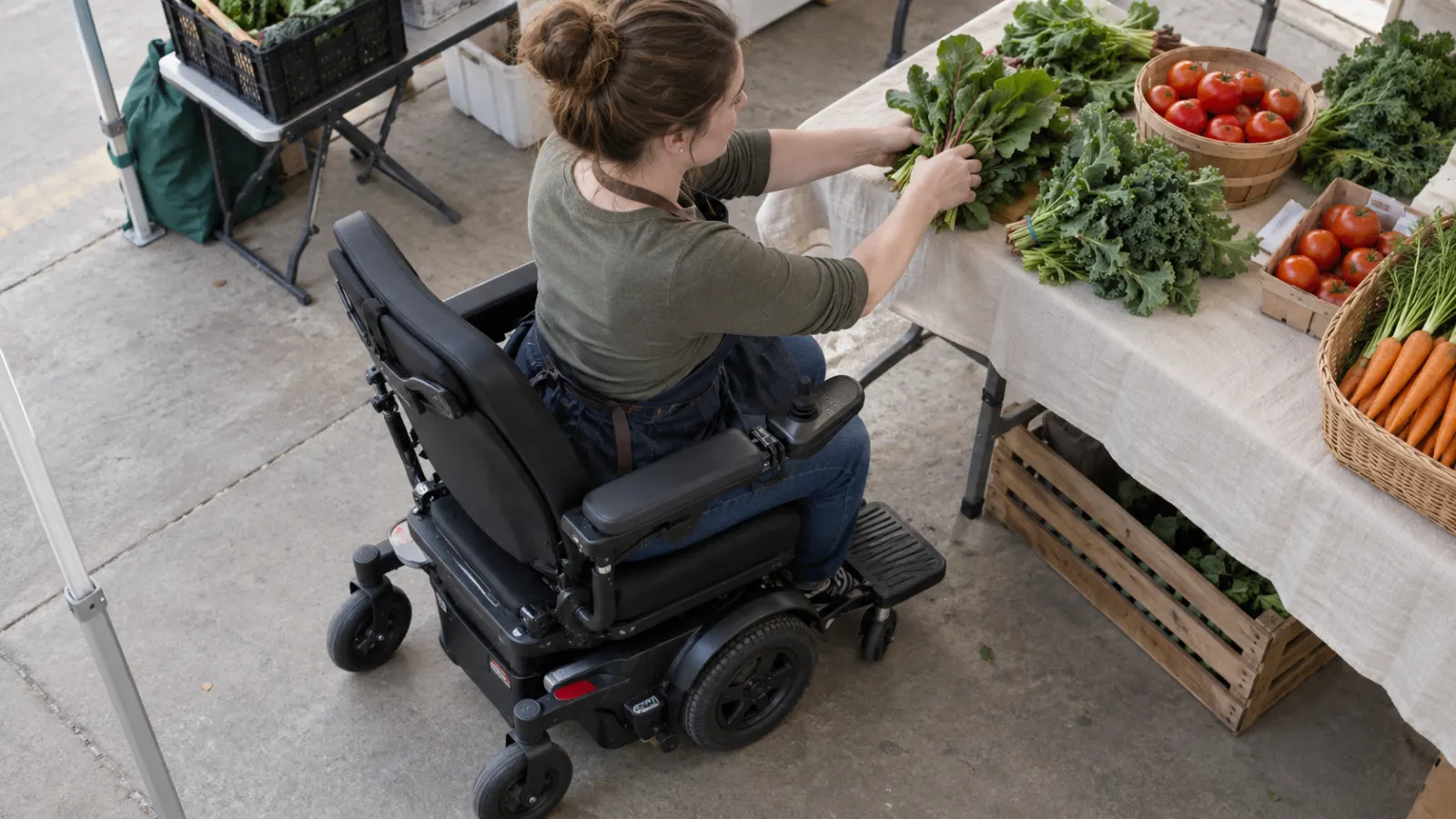
Before sending an inquiry, completing a formal application, or paying a vendor fee, review the following checklist.
- I identified the correct market organizer and official vendor page.
- I checked whether my exact product category is accepted, limited, excluded, or subject to case-by-case review.
- I confirmed whether the first form is an inquiry or a formal application to sell.
- I recorded the correct application year and season.
- I verified the current deadline, application fee, and whether the fee is refundable.
- I confirmed whether one application covers more than one market operated by the same organization.
- I reviewed business registration, food permits, insurance, and local sourcing requirements.
- I checked electricity, booth setup, parking, and equipment responsibilities.
- I saved the application confirmation and current organizer requirements.
- I understand that an application, waitlist status, or inquiry confirmation does not guarantee a stall.
For applications spanning multiple organizations, maintain a separate record for NFM, SFMA, and Queen Anne. Do not treat a status from one organization as applicable to another.
Seattle Farmers Market Vendor Applications: Common Questions
Is There One Application for All Seattle Farmers Markets?
No. Neighborhood Farmers Markets, Seattle Farmers Market Association, and Queen Anne Farmers Market operate separate application and vendor selection processes. Other organizations, including Pike Place Market, also maintain their own procedures.
Is the NFM Vendor Inquiry Form a Full Application?
No. NFM explicitly describes its Vendor Inquiry Form as a formal statement of interest, not an Application to Sell. Prospective vendors may receive an invitation to complete an application only when suitable space and product demand exist.
How Much Does the SFMA Vendor Application Cost?
The current SFMA vendor page lists a $48 early registration fee for November–December and a $68 regular registration fee for January–September in its 2026 application information. Fees are nonrefundable. Confirm late-2026 or 2027 application pricing directly because the published regular registration window has already ended as of October 26, 2026.
When Do Queen Anne Farmers Market 2027 Applications Close?
The official Queen Anne Farmers Market vendor page lists March 21, 2027 as the 2027 application deadline. Application evaluations are scheduled to begin in January 2027. Submit through the organizer’s linked Manage My Market application.
Can You Sell Handmade Crafts at a Seattle Farmers Market?
It depends on the organizer and product. NFM excludes non-food businesses and ordinary crafts. SFMA considers selected kitchen-related crafts. Queen Anne permits specified farm-derived crafted products and very limited other non-food products on a case-by-case basis. Do not assume general handmade retail products are eligible.
Do Seattle Farmers Market Vendors Need Permits and Insurance?
Applicable business registration, product permits, food safety approvals, and insurance may be required. The exact combination depends on the product, production method, and organizer. The City of Seattle and Public Health – Seattle & King County publish separate requirements for food vendors and temporary events.
Which Seattle Farmers Market Organizer Should You Contact First?
For a Seattle farmers market vendor application, start by matching your product to the organizer’s published eligibility rules rather than completing every available form.
Choose NFM’s inquiry process if you operate a Washington farm or qualifying locally sourced food business and want to be considered when space becomes available.
Review SFMA’s formal application if your business fits its permitted product categories, can meet its licensing requirements, and is prepared for a nonrefundable application fee. Confirm the relevant season and fee before applying.
Review Queen Anne’s 2027 application if you are an eligible Washington producer or food business planning for the next season. Its current published deadline is March 21, 2027, but current participation fees should be confirmed separately.
The most useful outcome is a product-specific application plan containing the correct organizer, season, required form, supporting documents, deadline, and fee. A submitted form is only one stage in the process; final approval depends on the organizer’s selection and available market space.
Source review: October 26, 2026. This guide uses the official Neighborhood Farmers Markets vendor information, Seattle Farmers Market Association application page, Queen Anne Farmers Market 2027 application page and linked policies, and City of Seattle farmers market business guidance. Application dates, product eligibility, fees, and permit requirements may change. Wheelchairs Factory provides this informational comparison and does not operate these markets, issue vendor permits, or guarantee vendor acceptance.
Video: Farmers Market Vendor Preparation — Sheraton Park Farms (General Guide, 2021)