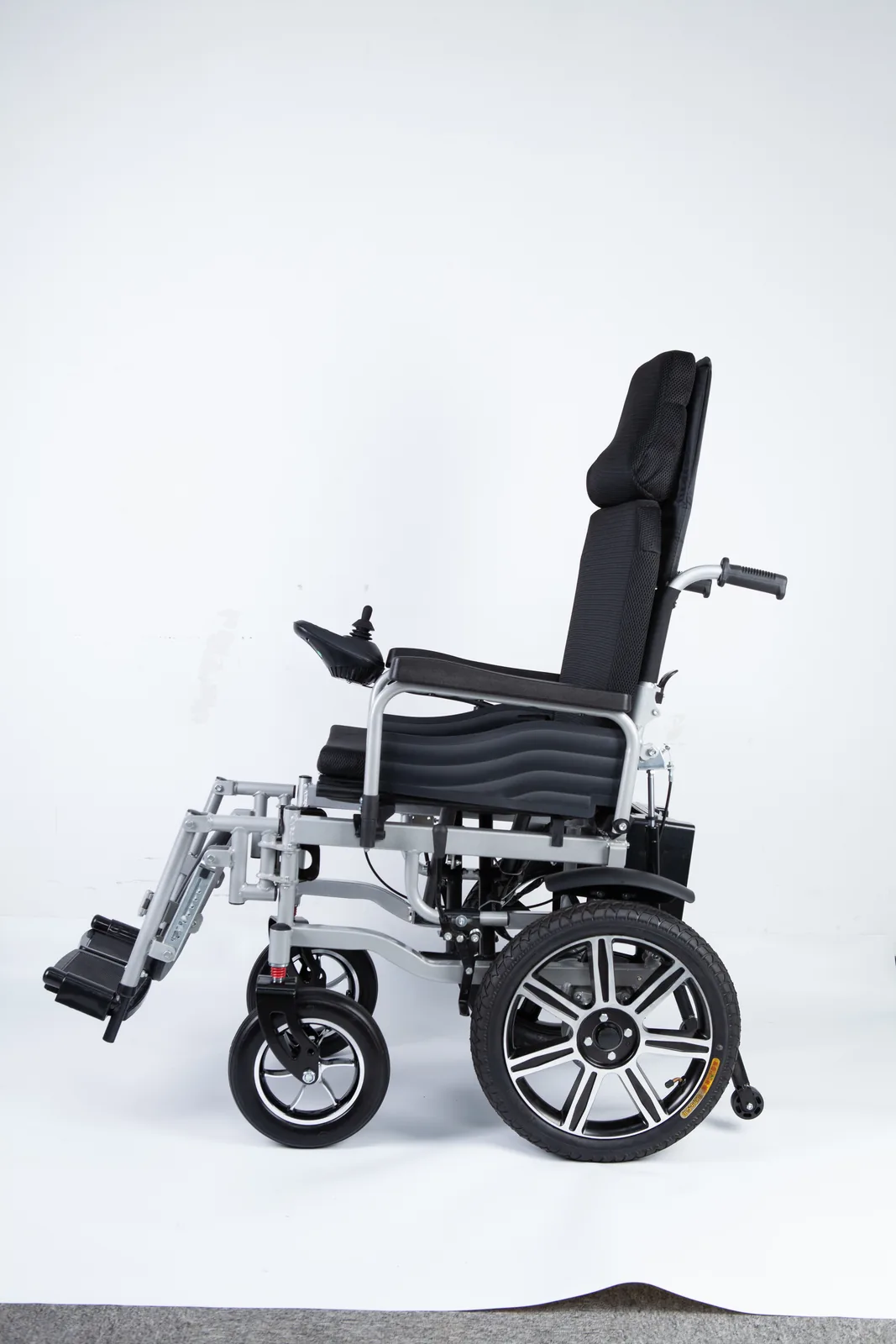

A power wheelchair airline battery checklist helps travelers verify which battery rules apply before a US flight. The most important details are the battery chemistry, watt-hour rating where applicable, whether the battery is removable, how it is protected inside the wheelchair, and the operating airline’s handling arrangements.
There is no single 300 Wh limit for every electric wheelchair battery. Under FAA guidance, lithium-ion batteries adequately protected within a wheelchair may remain installed when the applicable conditions are met. Different restrictions apply when a lithium battery must be removed or when spare batteries are carried. Lead-acid and other battery chemistries have separate requirements.
This guide provides seven essential checks before flying with an electric wheelchair in the United States. It draws on Federal Aviation Administration (FAA), US Department of Transportation (DOT), Transportation Security Administration (TSA), and International Air Transport Association (IATA) guidance. It is a documentation and travel-planning resource, not an authorization for a particular flight or an instruction to modify a wheelchair battery.
Power Wheelchair Airline Battery Checklist: Why Rules Differ
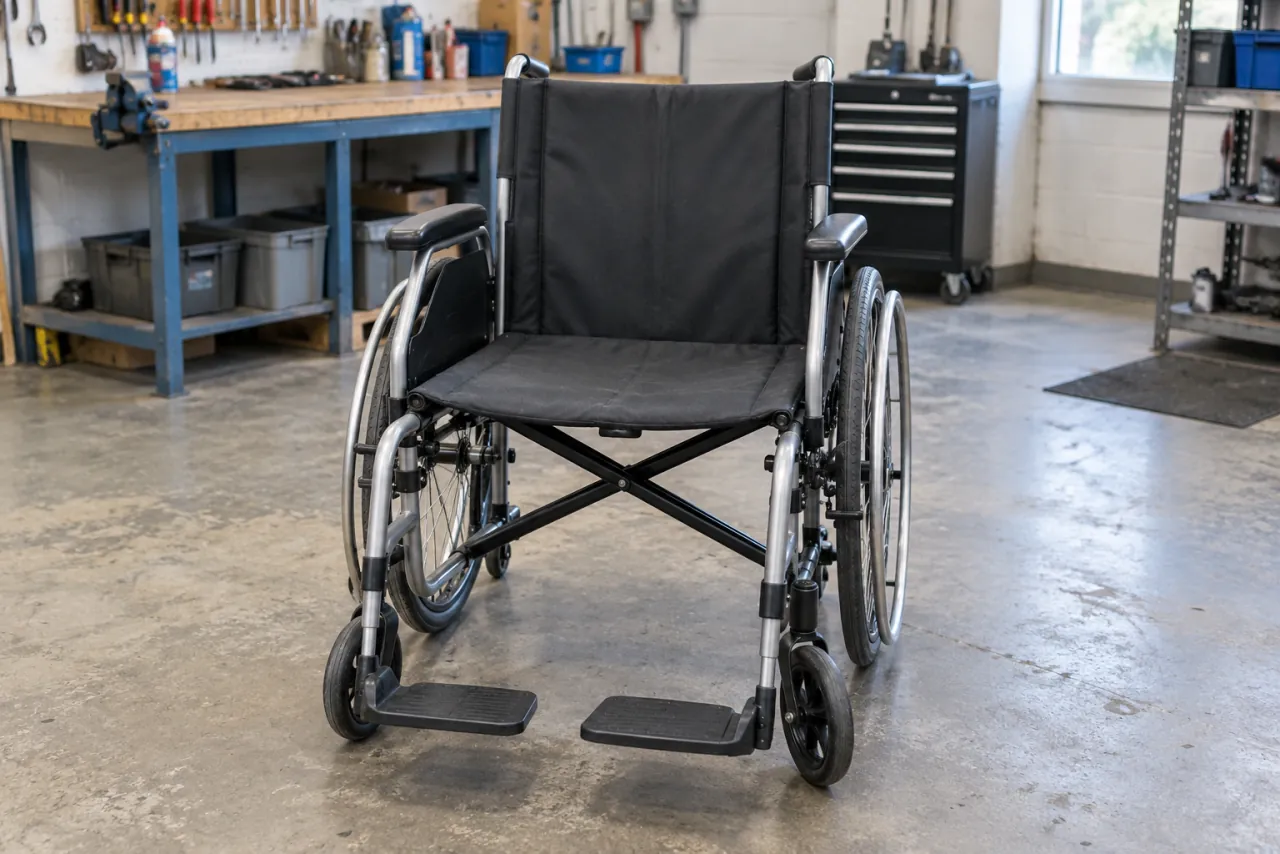
Power wheelchairs are assistive mobility devices, but their batteries can be subject to dangerous-goods transportation rules. These requirements are not determined by battery chemistry alone.
Four factors affect the travel arrangements:
- Battery chemistry: Lithium-ion, non-spillable wet, dry, and spillable wet batteries have different handling provisions.
- Wheelchair design: A securely installed battery protected by the wheelchair structure may be treated differently from a removable or exposed battery.
- Aircraft and airline: Cargo compartment dimensions, loading arrangements and operating airline procedures must be checked for the actual flight.
- Airport screening: TSA screening procedures are separate from FAA dangerous-goods restrictions and airline handling decisions.
The FAA publishes separate entries for these situations in its PackSafe Wheelchairs and Mobility Devices guidance.
The US Department of Transportation also protects the rights of passengers with disabilities under the Air Carrier Access Act. Airlines generally must accept battery-powered wheelchairs when they fit the aircraft’s cargo compartment and can be transported consistently with applicable safety and security requirements.
For the exact journey, confirm both the safety requirements and the practical loading arrangements. A wheelchair accepted on one aircraft type is not automatically confirmed for every connecting flight.
7 Essential Checks Before Flying With a Power Wheelchair
Use these seven items to organize your travel information. Record each answer from the responsible airline, manufacturer or government source rather than guessing from a general product description.
1. Identify the Exact Battery Chemistry
Start by checking the wheelchair manufacturer’s documentation or the battery identification label.
Common battery classifications relevant to powered mobility aids include:
- Lithium-ion: Rechargeable lithium battery systems, including lithium iron phosphate (LiFePO4) designs.
- Non-spillable wet: Certain sealed lead-acid designs, including qualifying AGM and gel batteries.
- Dry battery: Batteries classified under the applicable dry battery provisions.
- Spillable wet: Batteries containing liquid electrolyte that may require specific upright transportation or removal arrangements.
- Other chemistries: Confirm the appropriate classification and current transportation provisions with the airline.
Do not identify a battery as non-spillable merely because the housing appears sealed. The applicable classification must be supported by the manufacturer’s documentation.
2. Record the Wheelchair Model and Battery Specifications
Identify the exact wheelchair manufacturer, model and battery part number. For lithium batteries, record the watt-hour rating shown on the battery or in the applicable manufacturer document.
Where the manufacturer provides nominal voltage and ampere-hour capacity, nominal watt-hours can be calculated as:
Watt-hours (Wh) = Nominal voltage (V) × Rated capacity (Ah)
This arithmetic helps interpret an electrical specification. For airline documentation, use the manufacturer’s confirmed rating rather than substituting an estimate when the actual battery designation is uncertain.
Also record whether the wheelchair uses one battery, multiple installed batteries, removable modules or a manufacturer-approved folding or transport configuration.
Do not assume that the appearance of two batteries tells you how they are electrically connected or how transportation restrictions apply. Confirm the actual design.
3. Confirm Whether the Battery Can Remain Installed
Battery protection and installation are central to the FAA’s rules.
For lithium-ion batteries that are securely installed and adequately protected by the wheelchair design, FAA guidance provides a route for the battery to remain installed in the wheelchair during checked transportation, subject to the applicable conditions.
If the lithium battery is not adequately protected from damage by the device, removal may be required. A removed battery must be protected against damage and short circuits and carried in the aircraft cabin under the applicable limits.
For other battery chemistries, different conditions may govern remaining installed, preventing accidental activation, and keeping a spillable battery upright.
Do not independently remove, disconnect or modify the battery to make it appear compliant. Ask the airline which approved handling arrangement applies and provide the manufacturer instructions for the exact wheelchair.
4. Check Advance Notice and Airport Arrival Requirements
Under DOT disability travel rules, passengers generally are not required to provide advance notice simply because they use a wheelchair.
However, an airline may require up to 48 hours of advance notice and an earlier check-in for certain specified accommodations, including transporting a power wheelchair on an aircraft with fewer than 60 passenger seats or providing certain hazardous-materials packaging services.
DOT guidance also advises travelers using battery-powered wheelchairs to arrive one hour before the normal check-in time so the equipment can be handled appropriately.
Before traveling, ask the operating airline:
- Whether any advance-notice condition applies to this flight and wheelchair.
- What time the traveler should arrive for check-in.
- Whether the airline has a mobility-device information form.
- Whether the airline needs battery or wheelchair dimensions in advance.
- Whether the aircraft and cargo compartment can accommodate the wheelchair.
- Whether handling requirements differ on connecting flights.
See the DOT General Travel Tips for Persons with Disabilities and Assistive Device Stowage Guidance.
5. Confirm the Actual Aircraft and Loading Arrangement
Even when a battery configuration complies with applicable requirements, the airline must still be able to load and stow the wheelchair safely.
Ask whether the wheelchair’s dimensions and weight are compatible with the aircraft’s cargo compartment and loading procedures.
Provide the complete-chair dimensions and weight in the manufacturer-approved transport configuration. If the chair folds or uses removable components, supply the applicable manufacturer instructions and the actual resulting dimensions.
Do not treat a folding wheelchair as automatically approved for cabin storage. Even a compact power chair may need to travel in the aircraft’s cargo compartment.
If the aircraft type changes before departure, reconfirm any relevant loading or battery-handling arrangements with the operating airline.
6. Separate TSA Screening From Airline Acceptance
The Transportation Security Administration handles passenger and security screening at US airport checkpoints. Airline handling and dangerous-goods transportation rules are separate matters.
For travelers requiring assistance through screening, TSA provides its TSA Cares service. Travelers are encouraged to contact TSA Cares approximately 72 hours before departure when requesting assistance from a Passenger Support Specialist.
Contact TSA Cares at 855-787-2227 for screening-related questions.
Successful screening does not mean that an airline has confirmed a battery configuration for carriage. Similarly, a wheelchair approved for transportation still must complete applicable security screening.
Use the TSA Cares information for screening assistance and the FAA PackSafe mobility-device guidance for battery transport requirements.
7. Obtain Manufacturer Instructions and Airline Confirmation
Collect the wheelchair manufacturer or battery manufacturer’s relevant travel and handling documents.
The documentation may need to describe battery chemistry, installation, protection, power-off or freewheel arrangements, transport dimensions and approved handling procedures.
Ask the operating airline to confirm how those documents apply to the booked flight, including the planned departure, any connections and the aircraft equipment.
Keep the airline’s written reply, case reference or other documented communication with the travel records.
If the airline’s instructions conflict with the wheelchair manufacturer’s instructions, ask both parties to clarify the discrepancy. Do not improvise a battery modification or disassembly procedure.
FAA Battery Rules for Electric Wheelchairs: Comparison Table
Battery handling depends on the actual design and applicable rule. This table summarizes the main FAA distinctions but does not replace the full current requirements.
Important lithium battery distinction: The 300 Wh limit associated with a lithium-ion wheelchair battery that must be removed should not automatically be applied to a battery adequately protected while installed in the mobility device.
Nor should a spare battery allowance be interpreted as permission to carry an unlimited number of battery modules or to place removed lithium batteries into ordinary checked baggage.
For complete regulatory conditions, consult the FAA PackSafe guidance and the relevant requirements in 49 CFR 175.10.
The IATA dangerous-goods passenger guidance also links to its 2026 Battery-Powered Wheelchair and Mobility Aid Guidance Document. This provides additional information for airlines handling battery-powered mobility aids.
Manual, Transport and Electric Wheelchairs: Which Need Battery Checks?
Not every wheelchair carries a propulsion battery. Identify the device category before gathering airline battery documentation.
| Wheelchair type | Propulsion battery | Preflight focus |
|---|---|---|
| Manual wheelchair | Normally none. | Check airline handling, dimensions, folding and any attached power-assist equipment. |
| Transport chair | Normally none. | Check standard mobility-device handling and any separately powered accessories. |
| Power or electric wheelchair | Battery-powered propulsion. | Confirm chemistry, battery installation, protection, handling, dimensions and airline procedures. |
| Manual wheelchair with powered add-on | Depends on the installed power-assist system. | Identify the exact add-on and its battery documentation; verify the combined transport configuration. |