
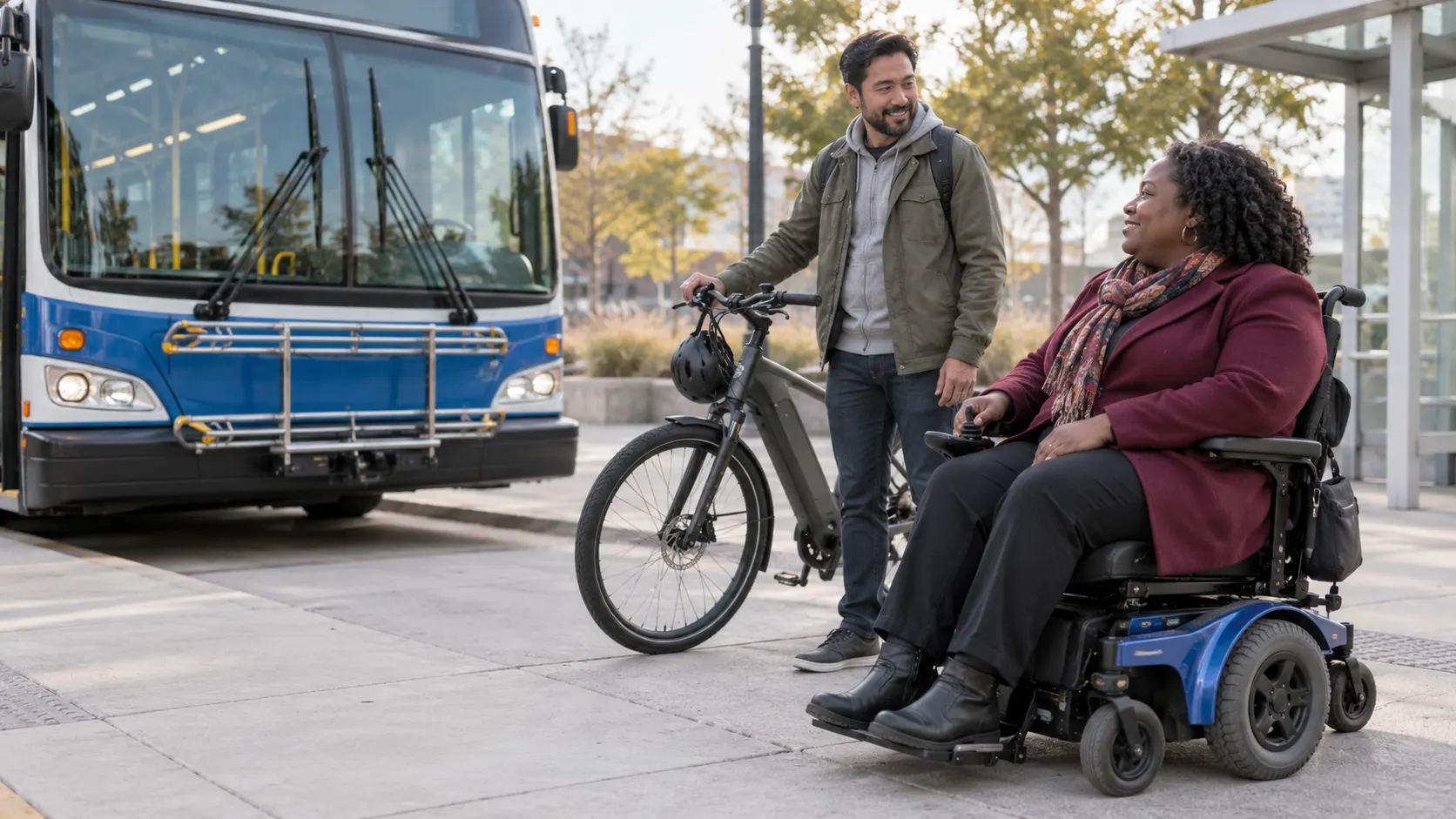
Can you put an e-bike on a bus rack? Yes, on some US transit systems, but not all. The answer depends on the transit operator’s rules, your electric bike’s weight and dimensions, its battery configuration, and whether the front rack can accommodate the bicycle.
Five major transit systems illustrate these differences. LA Metro does not allow motorized bicycles on bus racks. TriMet, Denver RTD, Orange County Transportation Authority (OCTA), and Miami-Dade Transit permit qualifying e-bikes, but their weight limits, tire restrictions, and battery requirements differ.
This guide compares five US transit rules for carrying an e-bike on a bus rack, explains how to check your bicycle’s specifications, and identifies the questions to resolve before arriving at a bus stop. Official operator policies were reviewed on October 26, 2026.
E-Bike on a Bus Rack: 5 US Transit Rules Compared

The five operators do not follow one national rule for electric bicycles. Some permit e-bikes that meet standard bicycle dimensions, while others add specific restrictions based on battery construction, ownership, or operating conditions.
Use the comparison below as a starting point. A bicycle meeting the published limits must still fit securely on the actual rack, and space is not guaranteed.
| Transit operator | E-bikes on front racks? | Weight limit | Important restrictions |
|---|---|---|---|
| LA Metro — Los Angeles | No | 55 lb limit for permitted non-motorized bikes | Motorized bicycles are prohibited from bus racks. Metro Rail has different rules. |
| TriMet — Portland | Yes, if eligible | 55 lb | Sealed battery compartment, 20–29-inch wheels, maximum 44-inch wheelbase, tires up to 2.35 inches. |
| RTD — Denver | Yes, if eligible | 55 lb | Tires up to 2.3 inches; electric, sealed, undamaged battery; rental/dockless and lead-acid-powered e-bikes excluded. |
| OCTA — Orange County | Yes, if eligible | 55 lb | 20–29-inch wheels, maximum 44-inch wheelbase; current rack page lists 2.5-inch tire width, while another official guide lists 2.35 inches. |
| Miami-Dade Transit — Miami | Yes, if eligible | 75 lb | Personally owned battery-powered e-bikes only; commercial rentals prohibited; bike must fit securely on the exterior rack. |
The table summarizes published bus rules rather than rack-manufacturer specifications. For example, a rack capable of supporting a certain weight does not override LA Metro’s prohibition on motorized bicycles.
Official policy sources: LA Metro Biking With Metro, TriMet Bike Policies, Denver RTD E-Bike Policy, OCTA Bike Rack Rules, and Miami-Dade Bike & Ride.
Why a Bike That Fits the Rack Can Still Be Refused
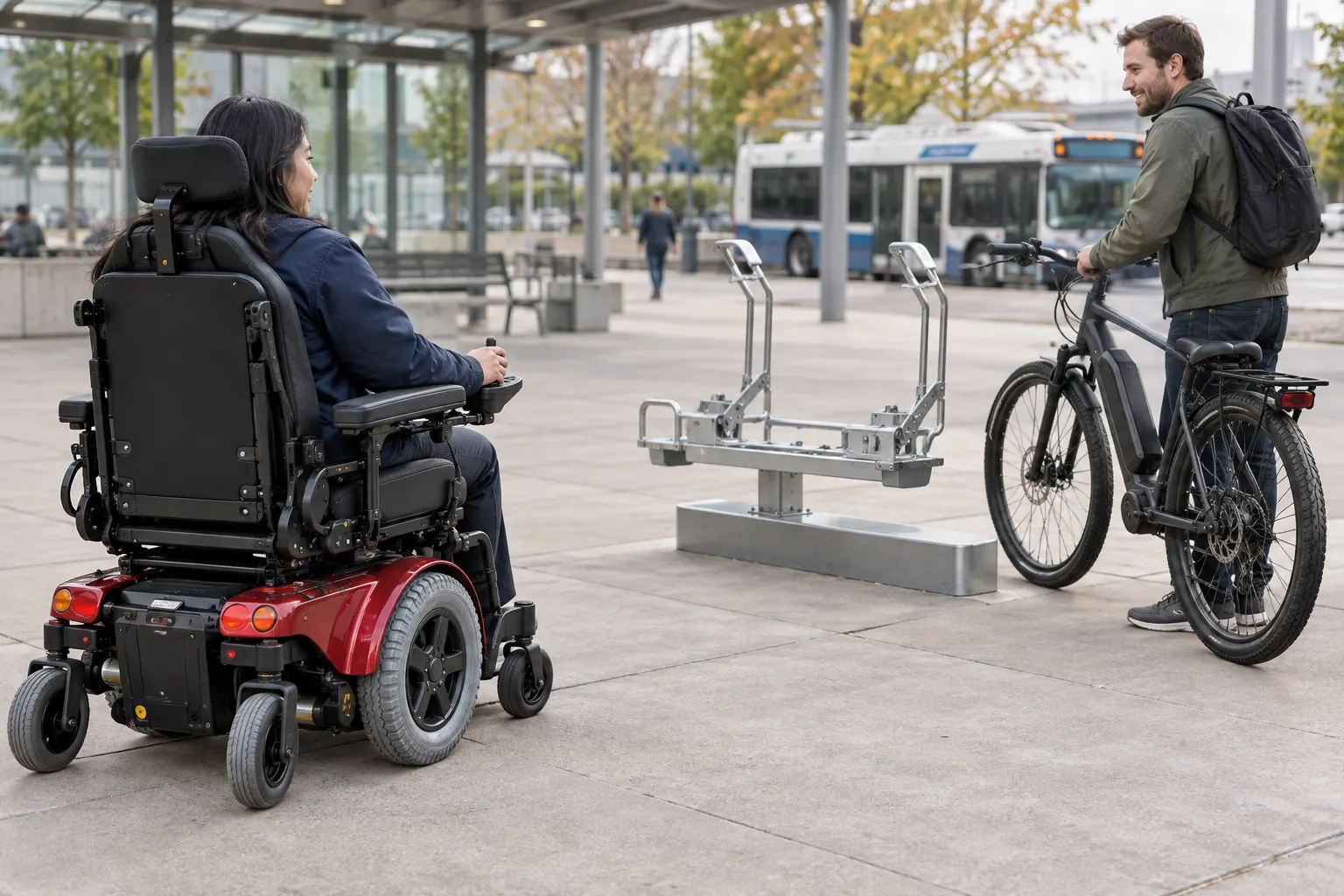
Bus racks have physical limits determined by their design. A typical front-mounted rack supports bicycles by their wheels and uses a retaining arm or similar mechanism to secure them.
However, physical fit and transit permission are separate questions.
- Operator permission: The transit agency must allow motorized bicycles on its bus racks.
- Weight: The e-bike must not exceed the agency’s applicable rack weight limit.
- Wheel and tire fit: Wheel diameter, wheelbase, and tire width must fall within the relevant restrictions.
- Battery requirements: Some agencies specify sealed batteries, exclude certain battery chemistries, or prohibit damaged equipment.
- Actual capacity: Even an eligible e-bike may not board if the rack is full, unavailable, or unable to hold the bicycle securely.
For example, an e-bike weighing 50 pounds may meet the published weight limits of all four operators that permit e-bikes. But it is still prohibited on LA Metro’s front bus racks under its motorized-bicycle rule.
The reverse is also important: an operator may allow electric bicycles in principle, but a specific bike with oversized tires, an unusually long wheelbase, or an incompatible frame may not fit the rack.
Do not use the rack manufacturer’s capacity as proof that your transit agency will carry the bike. Check both the operator policy and the actual bicycle specifications.
Five Transit Agencies: Detailed E-Bike Bus Rack Rules
Each of the following rules comes from the transit operator’s own published guidance. These policies apply to the specified bus systems; they should not be transferred automatically to commuter rail, light rail, ferries, or another city’s buses.
1. LA Metro: Motorized Bicycles Are Not Allowed on Bus Racks
LA Metro explicitly prohibits motorized bicycles on its front-mounted bus racks. Its current Biking With Metro page also excludes bicycles weighing more than 55 pounds.
This is a permission restriction, not simply a weight limit. A lightweight electric bicycle is not automatically eligible because it weighs less than 55 pounds.
LA Metro provides front-mounted bicycle racks on its buses for eligible non-motorized bicycles. Riders are responsible for loading and unloading their own bikes and following the operator’s instructions.
LA Metro Bus vs Metro Rail
LA Metro’s train policy is different. Its rail guidance permits electric bicycles that are comparable in size to conventional bicycles, subject to additional conditions and possible security inspection.
Do not use that rail allowance to justify placing an electric bicycle on a Metro bus rack.
Similarly, non-motorized folding bicycles with wheels of 20 inches or less may be taken inside Metro buses when properly folded and stored without blocking aisles. That exception should not be interpreted as general permission to bring a folding electric bicycle onto a bus.
Official source: LA Metro — Biking With Metro.
2. TriMet: E-Bikes Allowed With a Sealed Battery Compartment
TriMet permits qualifying electric bicycles on its front bus racks. Its current bike policy specifically allows e-bikes with a sealed battery compartment, provided the bicycle meets the rack’s size and weight requirements.
TriMet publishes these limits:
- Maximum bike weight: 55 pounds.
- Wheel diameter: 20 to 29 inches.
- Maximum wheelbase: 44 inches.
- Maximum tire width: 2.35 inches.
- E-bike battery: Sealed battery compartment.
TriMet also prohibits certain bicycle configurations, including tandems, bicycles with three or more wheels, trailers, and internal-combustion engines.
Its front-mounted bus racks normally hold two bicycles, subject to available space. Some folding bikes can travel inside buses when folded to an appropriate size, but the agency’s ordinary folding-bike rule should not be assumed to exempt electric models from the applicable restrictions.
If your bike has an oversized tire, non-standard wheelbase, or an unusual battery enclosure, obtain clarification before boarding.
Official sources: TriMet Types of Bikes Allowed and How to Load Your Bike on a TriMet Bus.
3. Denver RTD: Weight, Battery and Rental Restrictions
Denver’s Regional Transportation District (RTD) allows qualifying battery-powered e-bikes on bus-mounted front bicycle racks. Its restrictions cover weight, tire width, battery construction, and whether the bike is a rental.
RTD’s published front-rack requirements include:
- Maximum weight: 55 pounds per bicycle.
- Maximum tire width: 2.3 inches.
- Battery: Electric power with a sealed, undamaged battery compartment.
- Excluded power sources: Gasoline-powered and lead-acid-battery-powered bicycles.
- Rental restrictions: Rented bicycles and dockless-system bicycles are prohibited.
RTD also publishes a general maximum bicycle size of 80 inches in length and 40 inches in height. Check all applicable dimensions rather than considering the 55-pound rack limit alone.
Passengers must be able to lift their bicycles onto the front rack. Bikes are not permitted inside ordinary RTD buses.
RTD Regional Bus Luggage Compartments
RTD has a separate arrangement for some regional buses, including Flatiron Flyer and SkyRide services. Where luggage compartments are provided, the operator may determine whether an additional eligible bicycle can be carried there.
This is not permission to place a bike anywhere inside a bus. The vehicle must have suitable luggage storage, and the loading arrangement remains subject to the operator’s instructions.
RTD’s e-bike policy also prohibits charging electric bicycles on board its transit vehicles.
Official sources: RTD E-Bike Policy and RTD Bikes and Scooters on Buses.
4. OCTA: E-Bikes Allowed, but Check Tire Width Carefully
Orange County Transportation Authority (OCTA) expressly allows qualifying e-bikes on OC Bus front-mounted bicycle racks. The electric bicycle must have a suitable standard bicycle profile, fit securely, and meet the agency’s published size and weight restrictions.
OCTA’s dedicated Bike Rack page lists:
- Maximum weight: 55 pounds per rack position.
- Wheel diameter: 20 to 29 inches.
- Maximum wheelbase: 44 inches.
- Maximum tire width: 2.5 inches on the dedicated Bike Rack page.
There is an important inconsistency in the official material: OCTA’s broader Bicycling in Orange County guide still lists a maximum tire width of 2.35 inches.
Therefore, if an electric bicycle has tires wider than 2.35 inches but no wider than 2.5 inches, confirm the current enforceable limit with OCTA before depending on bus rack access.
Most OCTA bus front racks hold three bicycles and operate on a first-come, first-served basis. If the rack is full, ordinary bicycles generally cannot be brought into the bus, apart from the operator’s limited last-trip exception.
The transit operator is not required to help riders lift bicycles onto or remove them from the rack.
Official sources: OCTA Bike Rack Rules and OCTA Bicycling in Orange County.
5. Miami-Dade Transit: Up to 75 lb With Rental Restrictions
Miami-Dade Transit allows eligible electric bicycles weighing no more than 75 pounds on Metrobus exterior bicycle racks. Its published weight limit is higher than the 55-pound limits used by TriMet, RTD, and OCTA.
However, weight is only one condition. The policy states:
- Maximum weight: 75 pounds for an e-bike using the bus rack.
- Battery: Motorized e-bikes must be battery-powered.
- Power status: Motorized e-bikes must be switched off while on transit vehicles or within stations and bus terminals.
- Ownership: Commercial rental and dockless-system motorized e-bikes are prohibited from transit vehicles.
- Rack fit: Oversized, small-wheeled, and fat-tire designs may not fit safely despite meeting the weight limit.
Miami-Dade Transit separately permits certain compact folding electric bicycles inside Metrobus vehicles when folded, provided they do not block doors, aisles, seating, or other passengers.
That limited exception does not permit ordinary full-size e-bikes to be carried inside a bus instead of using the rack.
If the exterior rack is full, missing, or out of service, the agency instructs riders to wait for another bus.
Official source: Miami-Dade County — Bike & Ride on Transit.
How to Check If Your E-Bike Meets a Bus Rack Limit

Before planning a bus trip with an electric bicycle, collect its specifications from the manufacturer and compare them against the transit agency’s current requirements.
Focus on five details.
- Bike weight: Find the manufacturer’s stated weight and confirm whether the operator assesses the complete bicycle, including its installed battery and accessories.
- Wheel diameter: Check the wheel size listed in the bicycle specifications.
- Wheelbase: Confirm the distance between the front and rear wheel axles, rather than using the bicycle’s total length as a substitute.
- Tire width: Check the actual tire marking and any operator-specific width restriction. Fat-tire e-bikes may exceed standard bus rack limits.
- Battery and ownership: Confirm sealed-battery requirements, prohibited battery types, and any restriction on rental or dockless bicycles.
Do not assume removing a battery automatically makes a bicycle eligible. The operator may still prohibit the bicycle category or apply other weight, handling, battery, and equipment rules. Battery removal or separate transport should only be considered when explicitly permitted under the current operator and equipment instructions.
Example: Can a 60 lb E-Bike Go on a Bus Rack?
Consider a personally owned electric bicycle weighing 60 pounds with a sealed battery compartment.
- LA Metro: Not permitted on the front rack because motorized bicycles are prohibited.
- TriMet: Exceeds the 55-pound limit.
- Denver RTD: Exceeds the 55-pound limit.
- OCTA: Exceeds the 55-pound limit.
- Miami-Dade Transit: Within the 75-pound weight limit, but still subject to bicycle configuration, fit, ownership, and other requirements.
The example demonstrates why the same e-bike can be ineligible in one city and potentially accepted in another. It does not guarantee that the 60-pound bicycle fits Miami-Dade’s actual rack.
Example: What If Your E-Bike Has 2.4-Inch Tires?
A bicycle with 2.4-inch tires exceeds TriMet’s published 2.35-inch limit and RTD’s 2.3-inch limit.
OCTA’s dedicated bike rack page lists a 2.5-inch maximum, but another official OCTA guide lists 2.35 inches. Riders close to that boundary should request current confirmation instead of relying on one conflicting figure.
Miami-Dade does not publish the same specific numerical tire-width limit on its Bike & Ride page, but warns that oversized or fat-tire bicycles may not fit.
The tire’s width is therefore only one part of the evaluation. Wheelbase, wheel diameter, bicycle weight, and safe rack fit remain relevant.
Questions to Ask Before Bringing an E-Bike to a Bus Stop

If your bicycle is close to a published limit or has an unusual design, contact the transit agency before traveling.
Ask the operator the following questions:
- Are privately owned electric bicycles permitted on the front rack of this bus service?
- What is the maximum permitted bicycle weight, and how is that weight assessed?
- What wheel diameter, wheelbase, and tire-width restrictions apply?
- Are sealed battery compartments required, and are certain battery chemistries prohibited?
- Are commercial rental or shared electric bicycles excluded?
- Can a small folding electric bicycle be carried inside the bus, or must all e-bikes use exterior racks?
- Does the particular route use buses with a front rack or approved luggage compartment?
- What happens when the rack is full or cannot safely secure the bike?
For a more precise response, provide the manufacturer, model, weight, tire size, wheelbase, and battery type of the exact e-bike.
A general confirmation that the operator carries bicycles may not be sufficient. Ask specifically about motorized electric bicycles on bus-mounted front racks.
Where possible, save the operator’s written answer and the date. Transit agencies may update requirements as rack equipment and fleet configurations change.
What These Bus Rack Rules Do Not Cover
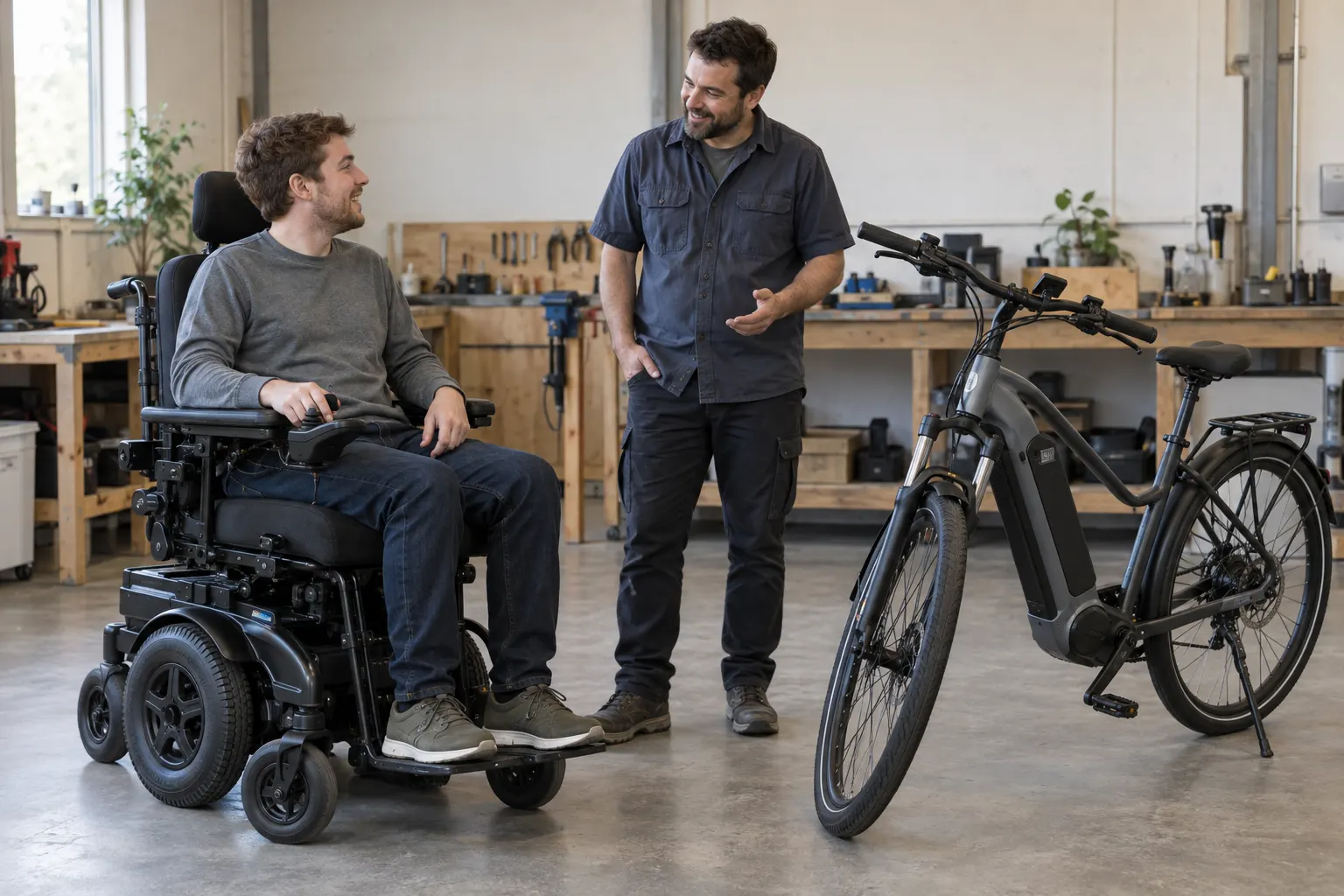
These rules concern electric bicycles carried as bicycles. They do not establish a universal policy for electric wheelchairs, mobility scooters, electric motorcycles, or other powered devices.
Wheelchairs and Mobility Scooters Follow Separate Accessibility Rules
An electric wheelchair used as a mobility aid is not automatically classified as an e-bike for bus rack purposes. It generally travels within the vehicle through the operator’s passenger accessibility arrangements, subject to applicable equipment and boarding requirements.
Do not apply a bus bicycle rack’s 55-pound or 75-pound limit to the eligibility of an occupied wheelchair. Wheelchair boarding, securement, and accessibility policies are separate from bicycle carriage.
Bus Rules Are Not Train or Ferry Rules
LA Metro, Denver RTD, Miami-Dade Transit, and other operators may allow e-bikes on certain rail services under conditions different from their bus rack policies.
A bike accepted on a train is not automatically accepted on a bus, and an e-bike permitted on a bus rack does not establish that it can travel on a ferry or intercity rail service.
Check each mode separately, especially when a journey involves transfers between different transit operators.
No Universal Battery Removal or Lifting Procedure
This article does not recommend removing batteries, modifying a frame, changing tires, or lifting an e-bike using an improvised method to meet a transit limit.
Battery handling, bicycle weight, rack compatibility, and operator rules require model-specific confirmation. A battery configuration accepted by one operator should not be assumed acceptable on another service.
E-Bikes on Bus Racks: Frequently Asked Questions
Can You Put an Electric Bike on a Bus Rack?
Yes, some US transit agencies permit qualifying electric bicycles on front bus racks. TriMet, Denver RTD, OCTA, and Miami-Dade Transit publish conditional e-bike allowances. LA Metro currently prohibits motorized bicycles from its bus racks.
What Is the Maximum E-Bike Weight for a Bus Rack?
There is no national limit. TriMet, Denver RTD, and OCTA publish 55-pound maximums, while Miami-Dade Transit permits e-bikes up to 75 pounds. LA Metro prohibits motorized bicycles regardless of whether they fall below its general 55-pound bicycle limit.
Are Fat-Tire E-Bikes Allowed on Bus Racks?
Only if the operator permits e-bikes and the tires fit its approved rack. TriMet lists a 2.35-inch maximum tire width and Denver RTD lists 2.3 inches. OCTA’s official sources differ between 2.35 and 2.5 inches. Miami-Dade warns that fat-tire configurations may not fit safely.
Can You Bring a Folding E-Bike Inside a Bus?
It depends on the operator. Miami-Dade Transit expressly permits certain compact folding e-bikes inside Metrobus vehicles if they are folded and do not obstruct passengers, seating, doors, or aisles. Do not assume another agency provides the same exception. LA Metro’s stated interior folding-bike allowance applies to non-motorized folding bicycles.
Can Rental E-Bikes Be Carried on Public Transit?
Not universally. Miami-Dade Transit excludes commercial rental motorized e-bikes from its transit vehicles. Denver RTD also prohibits rented and dockless bicycles under its published policy. Check the exact operator before attempting to carry a shared or rented e-bike.
Does Removing the E-Bike Battery Make It Eligible?
Not automatically. Some restrictions concern bicycle type, dimensions, ownership, or battery construction rather than weight alone. Do not remove or transport a battery separately to work around a rule unless the operator and equipment manufacturer expressly permit that arrangement.
Final Checklist Before Taking an E-Bike on a Bus
Before bringing your electric bicycle to the bus stop, confirm these details:
- The exact transit agency permits electric bicycles on its front-mounted bus racks.
- The bicycle meets the published weight limit.
- Wheel diameter, wheelbase, and tire width meet the operator’s requirements.
- The battery configuration complies with the current policy.
- The bike is not excluded because of commercial rental or dockless ownership status.
- The actual bus service has an available and compatible rack or another permitted storage arrangement.
- The rider can meet the operator’s loading and unloading requirements.
- Any uncertain limit or conflicting official guidance has been clarified before departure.
- Train, ferry, and mobility-device rules have been checked separately where relevant.
Can you put an e-bike on a bus rack? The answer depends on the operator, not just the rack. LA Metro prohibits motorized bicycles on front racks, while TriMet, Denver RTD, OCTA, and Miami-Dade Transit allow qualifying electric bicycles under different restrictions.
Check the exact bicycle specifications and official operator policy before traveling. A weight limit does not guarantee a secure fit, and permission on one mode or transit system does not transfer to another.
Source review: October 26, 2026. This article uses LA Metro’s Biking With Metro policy, TriMet’s bicycle acceptance rules, Denver RTD’s E-Bike Policy, RTD’s Bikes and Scooters on Buses guidance, OCTA’s Bike Rack instructions, OCTA’s additional bicycle guidance, and Miami-Dade Transit’s Bike & Ride policy. OCTA’s published tire-width figures differ, so confirm any borderline configuration directly. Transit rules, equipment, and service availability may change. Wheelchairs Factory provides this independent reference guide and does not operate the named transit services.