
When comparing aluminum vs steel wheelchair frames, neither material is automatically lighter in the finished product, stronger in every configuration, or more durable for every application. Aluminum has lower material density and generally better resistance to ordinary rusting, while steel can provide high stiffness and competitive material costs. The actual performance of a wheelchair depends on its frame design, alloy or steel grade, manufacturing process, surface finish, and assembled components.
For distributors, durable medical equipment (DME) buyers, importers, and institutional procurement teams, the best comparison is between specific wheelchair models with documented specifications, not between broad material labels. A steel wheelchair can be engineered for lower weight, and an aluminum wheelchair can become comparatively heavy when its wheels, seating, folding mechanism, or accessories are included.
This guide compares aluminum and steel wheelchair frame trade-offs, explains how manual, transport, and power wheelchairs differ, and provides six buyer verification checks covering complete-chair weight, load capacity, durability evidence, corrosion protection, service support, and manufacturing consistency.
Aluminum vs Steel Wheelchair Frames: Start With the Wheelchair Type

Frame material is only one part of wheelchair selection. A buyer sourcing a basic folding manual wheelchair should not apply the same weight, durability, or service assumptions to a powered wheelchair platform.
Manual Wheelchairs: Material and Frame Geometry Both Matter
Manual wheelchairs use both steel and aluminum frames. Carbon steel is common in economical standard folding chairs, while aluminum alloys appear frequently in lightweight models. Higher-strength alloy steels are also used in some performance-oriented designs.
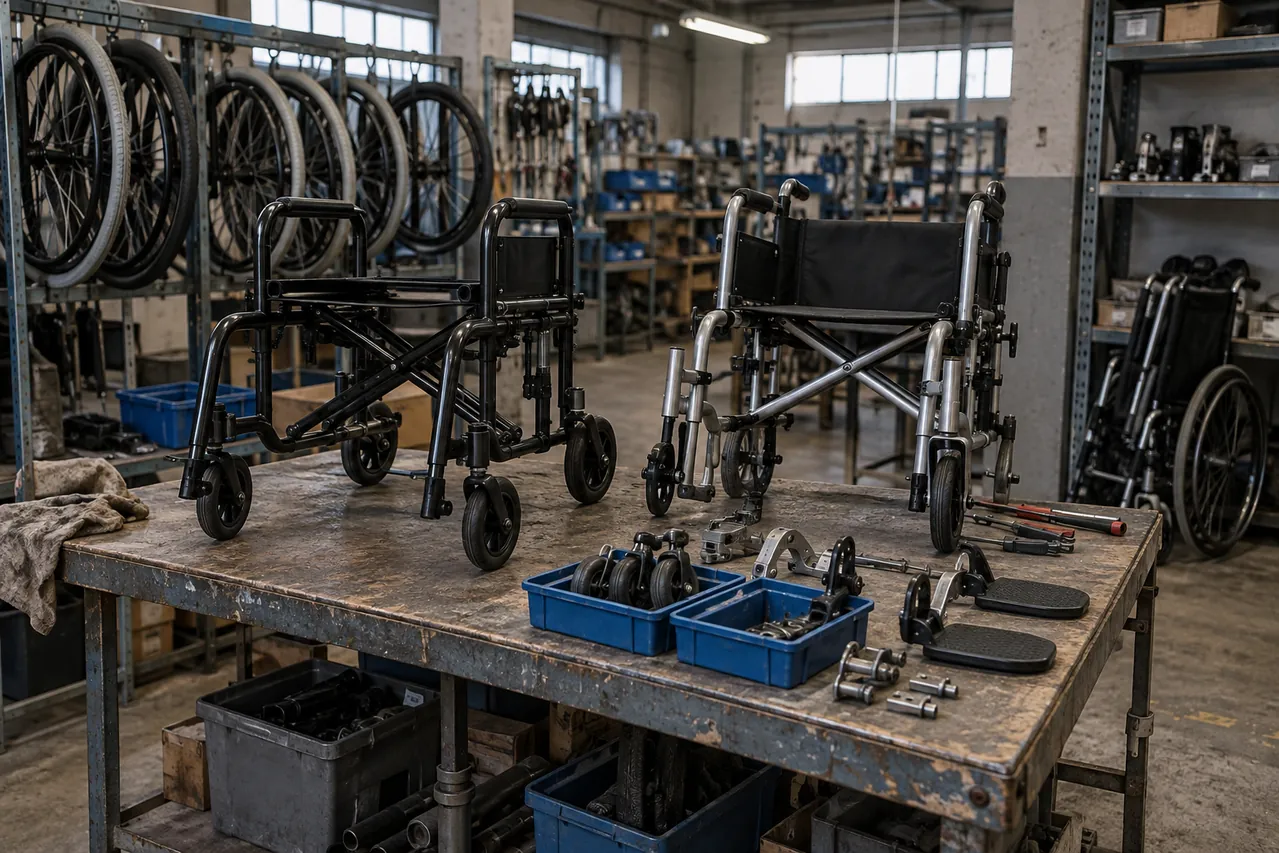
The first distinction is between a rigid and a folding frame. Folding wheelchairs usually have cross-brace mechanisms, pivots, and additional hardware. Rigid designs may use fewer moving frame components but have different transport and storage characteristics.
A lightweight aluminum folding chair and a steel rigid-frame chair cannot be compared accurately using material density alone. Ask for the complete assembled weight, frame configuration, rear-wheel arrangement, and installed accessories.
For model-specific procurement, review our manual wheelchair sourcing category and request current configuration sheets for the models under consideration.
Transport Wheelchairs: Check What an Attendant Must Actually Lift
Transport chairs are typically attendant-propelled, with smaller rear wheels than conventional self-propelled manual wheelchairs. They are frequently selected for assisted travel, short transfers within facilities, and situations where folded storage is important.
Aluminum can be attractive for this category because of its lower density, but a supplier’s claim of a lightweight frame does not establish how much the complete transport chair weighs.
Request the ready-to-use weight, the weight of the configuration that would actually be lifted or stored, and the folded dimensions. If footrests or other components must be removed to achieve the advertised transport weight, those exclusions should be documented.
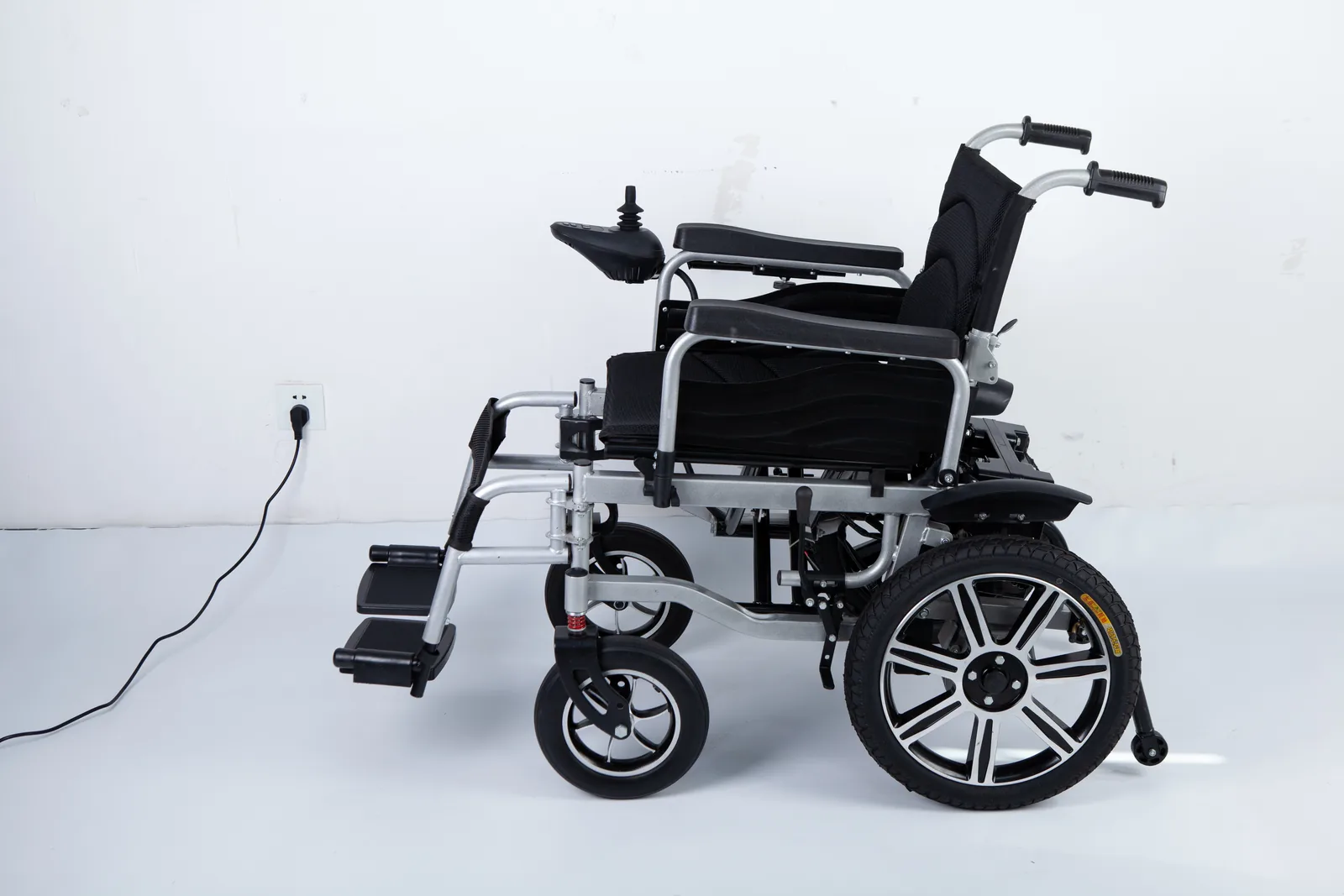
Electric Wheelchairs: Evaluate the Entire Power Platform
Electric wheelchairs may incorporate structural members, drive motors, batteries, suspension components, and seating systems that contribute substantially to the total mass.
For a power wheelchair, the frame material is only one factor in overall product weight and service performance. Battery configuration, folding mechanisms, motor arrangement, and power-base construction can have a greater effect on the finished chair than the headline material description suggests.
Ask for the exact frame construction, complete operating weight, battery-inclusive weight, rated user capacity, and the documents supporting the selected model’s load and durability claims.
Buyers comparing powered mobility products should use the electric wheelchair product category as a separate sourcing path rather than transferring manual-wheelchair specifications to a power-chair platform.
Aluminum vs Steel Wheelchair Frames: Weight, Strength, Corrosion and Cost

Aluminum and steel have different material properties, but those differences do not translate directly into wheelchair performance. Manufacturers can adjust tube geometry, wall thickness, frame joints, alloy grades, and components to meet different product targets.
Use the following comparison as an engineering and procurement starting point.
Why Aluminum Is Lighter as a Material but Not Always as a Complete Wheelchair
Aluminum alloys typically have about one-third the density of steel. At the same volume, an aluminum component weighs considerably less than a steel component.
However, wheelchair frames do not necessarily use identical tube dimensions or equal volumes of material. An aluminum design may require different tube diameters, wall thicknesses or reinforcing arrangements to achieve its required performance.
Moreover, finished wheelchair weight includes much more than the frame. Rear wheels, casters, armrests, footrests, upholstery, seating systems, folding mechanisms and accessories all contribute.
For procurement, always compare the actual model weight in the same configuration. A supplier’s bare-frame mass is not a substitute for the weight of the chair a customer receives.
Is Steel Stronger Than Aluminum?
Not as a universal wheelchair comparison. Material strength depends on the particular steel or aluminum alloy and its treatment. Structural performance also depends on how the frame is designed and manufactured.
Steel generally has a higher elastic modulus than aluminum, meaning it is stiffer when compared using similar section geometry. But stiffness is not the same as strength, and neither property alone establishes fatigue life or safe occupant capacity.
An aluminum frame with well-designed tubing may meet a different weight and stiffness target from a steel frame. Buyers should request evidence for the complete wheelchair, rather than treating a material grade as proof that the final assembly meets a load requirement.
Manufacturer design processes illustrate this distinction. For example, Sunrise Medical describes hydroforming as one method of modifying aluminum tube geometry and wall distribution to achieve structural performance targets. That example does not establish the construction method or performance of another manufacturer’s wheelchair.
Which Frame Material Resists Corrosion Better?
Aluminum generally offers better resistance to ordinary rust than unprotected carbon steel because aluminum forms a protective surface oxide layer. However, aluminum is not immune to corrosion, particularly around dissimilar metal joints or under aggressive environmental conditions.
Steel frames may rely on paint, powder coating, plating or another protective finish. If the protective layer is damaged, exposed carbon steel can corrode.
Stainless steel has different corrosion characteristics from ordinary painted carbon steel and should not be grouped with low-cost steel frame materials without identifying the actual grade.
For hospitals, coastal locations, humid climates and facilities using frequent cleaning or disinfection, request written finish specifications and manufacturer-approved cleaning instructions.
Do not assume an aluminum frame can tolerate any disinfectant or that a painted steel frame will fail prematurely. The correct assessment depends on the exact materials, finish, exposure and maintenance requirements.
A Four-Step Process for Comparing Wheelchair Frame Quotations
For a useful steel vs aluminum wheelchair frame comparison, collect information from two or more actual product quotations rather than comparing broad material descriptions.
- Step 1 — Match the product category: Compare manual wheelchairs with manual wheelchairs, transport chairs with transport chairs, and electric models with equivalent powered mobility products. Match the required use case, size, options and rated occupant capacity before reviewing material differences.
- Step 2 — Normalize weight and dimensions: Ask both suppliers to identify complete-chair weight, the exact installed configuration, transport weight if separately advertised, folded dimensions where applicable, and the components excluded from each figure.
- Step 3 — Review the environment and frame design: Confirm whether the chair is intended for indoor facilities, routine outdoor use, humid environments, or frequent folding and handling. Compare coatings, joints, structural design and the model’s applicable performance evidence.
- Step 4 — Check service support and commercial requirements: Compare spare parts, warranty coverage, approved maintenance procedures, replacement lead times, sample approval, order quantities and total purchasing costs.
Do not make a final choice until the quotations use comparable assumptions. A low initial price may have limited value if the model cannot meet the required configuration, documentation or service conditions.
6 Wheelchair Frame Buyer Checks Before Approving a Model
These six checks help distributors and institutional purchasing teams compare aluminum and steel wheelchair frames using documented evidence rather than material-related marketing claims.
Check 1: Exact Frame Material and Construction
Ask for the frame material description in the current model specification. Where available and relevant, request the steel grade or aluminum alloy designation, temper, structural construction and finish.
A label such as “aircraft-grade aluminum” or “high-strength steel” is not a substitute for an identifiable material specification and finished-product evidence.
Also confirm whether the chair uses a welded rigid frame, folding cross-brace, bolted connections or a combination of construction methods.
Check 2: Complete-Chair Weight and Folded Dimensions
Request weight measurements for the actual supplied configuration, not just a frame-only figure or the lightest option available in the product range.
Identify the following values separately where relevant:
- Complete-chair weight: The assembled ready-for-use model with the specified equipment.
- Transport or lifting weight: The weight after removing precisely identified components, if the supplier uses this term.
- Folded dimensions: Length, width and height in the specified folded configuration.
- Shipping weight and package size: The packed unit, including packaging and any separately packed accessories.
Do not compare a steel wheelchair’s fully assembled weight with an aluminum model’s bare-frame weight. The measurement basis must be consistent.
Check 3: Load Rating and Structural Test Evidence
Obtain the exact model’s declared user weight capacity and applicable structural test documentation. A maximum user weight should not be inferred from the frame material alone.
For wheelchair durability, one relevant international reference is ISO 7176-8:2014, which covers requirements and test methods for static, impact and fatigue strength. ISO confirmed this edition as current in 2026.
For measurements of wheelchair dimensions and mass, ISO 7176-5:2008 specifies methods for determining and disclosing relevant measurements.
For procurement, ask which standard and edition were used, which model and configuration were tested, and whether the supplied report supports the exact product being quoted.
Important: A supplier mentioning an ISO standard does not establish that its wheelchair has passed the tests. A company-level quality management certificate also does not automatically prove the performance or market authorization of an individual wheelchair model.
Check 4: Corrosion Protection and Cleaning Compatibility
Ask the supplier to identify the surface treatment and any documented environmental or corrosion testing applicable to the selected model.
For ordinary carbon steel, review coating type, coating coverage, and how the manufacturer handles finish damage. For aluminum, examine the specified finish and the corrosion considerations for joints, fasteners and other attached components.
Healthcare and institutional buyers should also request the manufacturer’s current cleaning and disinfection instructions. Do not assume a finish is compatible with every cleaning chemical.
If a buyer requires a particular corrosion test, the purchase specification should identify the test method, acceptance criteria and exact product scope rather than merely requesting “rustproof” or “corrosion-resistant” construction.
Check 5: Spare Parts, Warranty and Authorized Repair
Ask which service components are stocked, whether frame assemblies can be replaced, and how the manufacturer handles structural damage or failed welds.
Do not assume a cracked steel or aluminum wheelchair frame can be repaired by any local welding shop. Welding, drilling, grinding or other unauthorized structural modifications may affect the frame and invalidate relevant warranty terms.
For example, Sunrise Medical’s Quickie TS owner manual warns that unauthorized modifications can create safety hazards and recommends consulting an authorized supplier before making modifications.
That warning is specific to the manufacturer’s equipment. The correct warranty and repair requirements for the wheelchair being purchased must come from its own manufacturer.
Ask for written clarification of warranty coverage, approved service providers, parts availability and the process for handling suspected structural defects.
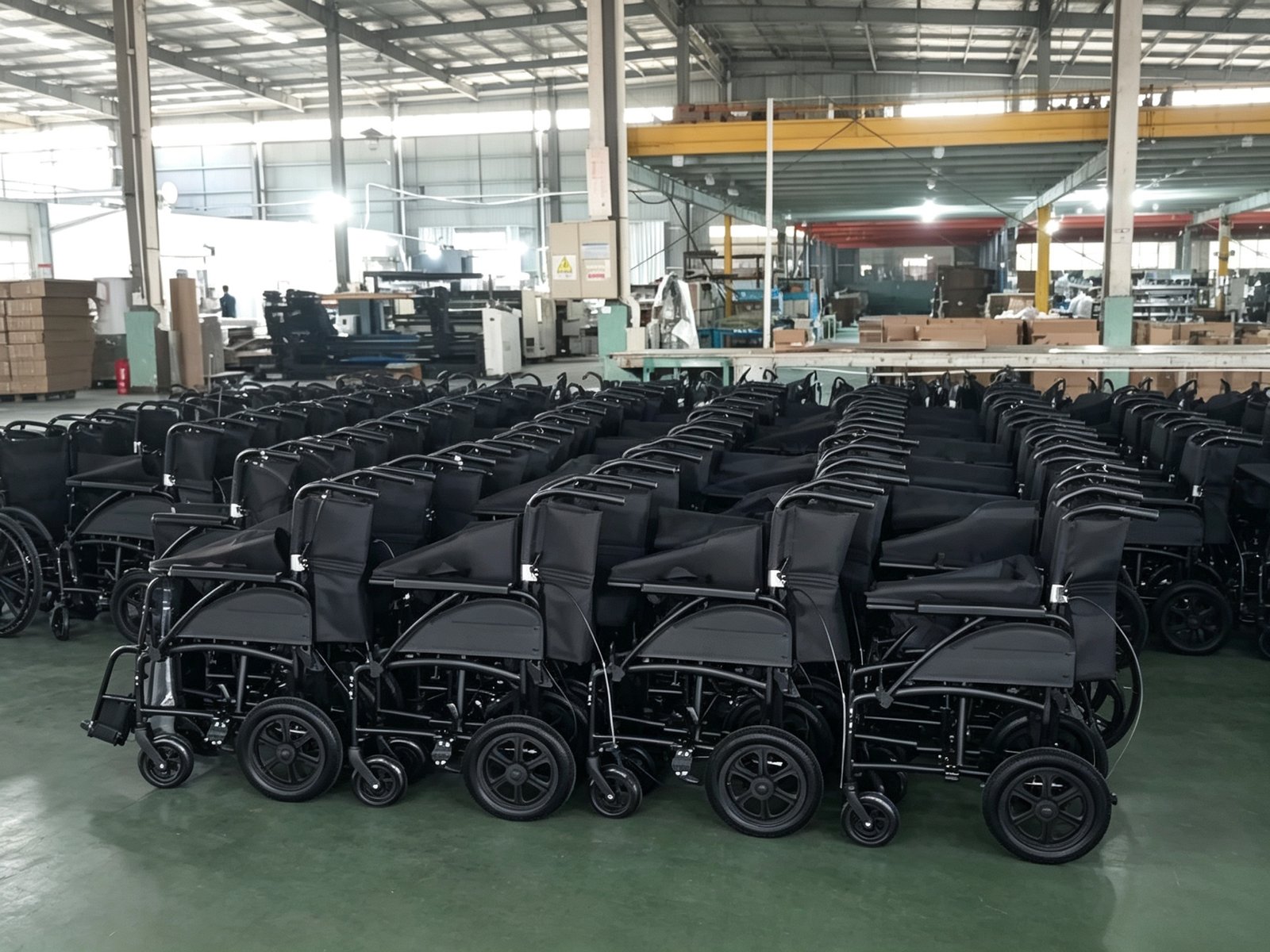
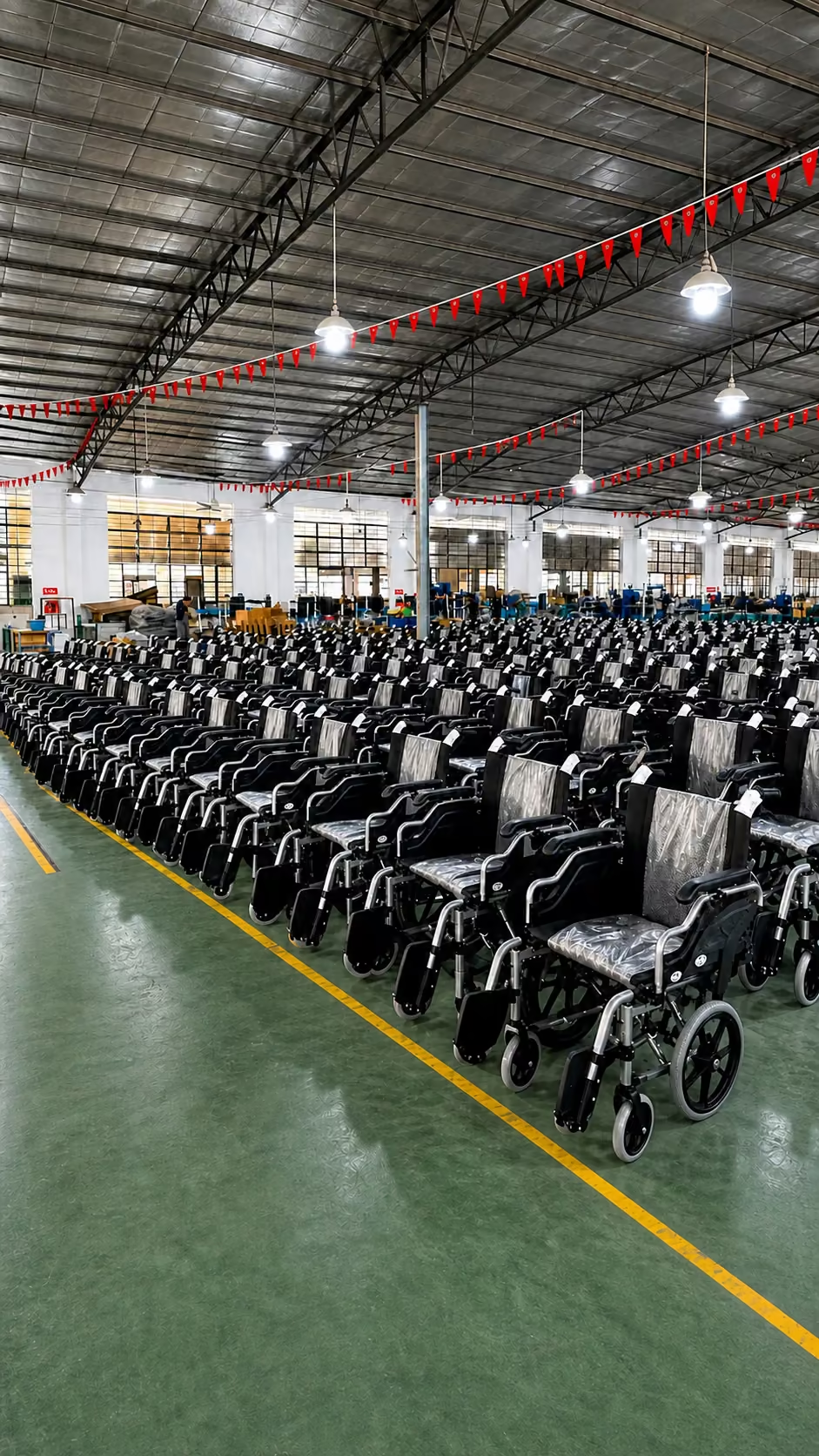
Check 6: Sample Approval and Production Consistency
For wholesale and institutional orders, request a sample or documented approval process matching the proposed production configuration.
Review frame finish, weld appearance, functional assembly, folding operation where applicable, included components and dimensional consistency against the approved product specification.
A visual sample inspection cannot establish structural fatigue life or regulatory compliance. Use it alongside the applicable test reports and approved product documentation.
Before volume production, identify how changes to frame materials, tube dimensions, welding procedures, components or finishes will be reviewed and approved.
Buyers should also confirm the commercial terms: minimum order quantity (MOQ), sample cost, lead time, packaging configuration, replacement parts policy and the agreed quality inspection process.
What Evidence Should a Wheelchair Frame Supplier Provide?
Use this procurement worksheet to keep material claims separate from the proof needed for a purchasing decision.
| Buyer requirement | Document or evidence to request | Common gap |
|---|---|---|
| Frame material | Exact-model material and construction specification. | Marketing terms without a material grade or construction description. |
| Chair weight | Complete-chair mass and clearly defined configuration. | Frame-only weight presented as total chair weight. |
| Transport dimensions | Overall and folded dimensions for the specified model. | Dimensions from a different seat width or accessory arrangement. |
| Load capacity | Declared user weight rating and supporting model documentation. | Capacity assumed from steel or aluminum alone. |
| Structural performance | Relevant test reports, including ISO 7176-8 where applicable. | A generic testing claim without model identification. |
| Corrosion and finish | Finish specification and relevant testing or maintenance instructions. | Unqualified rustproof or weatherproof claims. |
| Maintenance | Owner/service manuals, authorized repair rules and parts information. | Unsupported promises of local frame welding or repair. |
| Regulatory scope | Destination-specific documents that cover the proposed product and market. | Company certificate presented as product-level authorization. |
| Bulk supply | Approved sample, specification revision, QC plan, MOQ and lead time. | Different production configuration from the reviewed sample. |
Not every buyer will require every document in the same format. The applicable requirements depend on the wheelchair type, intended use, destination market and commercial agreement.
However, statements about material, performance, capacity and compliance should be traceable to the exact product model rather than copied from another wheelchair in the supplier’s catalog.
Which Frame Material Fits Different Procurement Priorities?
The following examples illustrate how a purchasing decision may change according to the buyer’s goals. They are screening considerations, not universal material recommendations.
In any of these cases, buyers should compare the total procurement requirements rather than selecting a model solely because the frame is described as aluminum or steel.
Questions for Wheelchair Distributors and Institutional Buyers
If you are purchasing manual, transport or electric wheelchairs for distribution, private labeling, institutional use or resale, send a structured request rather than asking only for an aluminum or steel wheelchair price.
Useful supplier questions include:
- Which exact wheelchair models are available with aluminum and steel frames?
- What are the specified frame materials, available configurations and complete-chair weights?
- Which frame types are available: rigid, folding, transport or powered platform?
- What are the declared occupant weight limits and the applicable model-specific test results?
- What finish options are available for the expected climate and cleaning environment?
- Which service parts are available in the destination market, and what structural repairs are authorized?
- Can you provide the applicable documentation for our destination country’s product and regulatory requirements?
- What are the MOQ, sample process, production lead time, packaging details and quotation terms?
- Are OEM or private-label branding, frame colors and selected configuration options available for the intended order?
For a useful quotation, include your intended destination market, wheelchair category, estimated annual volume, target price range, required configuration and specific documents needed for your distribution or institutional program.
You can review manual wheelchair models or submit a model-specific sourcing inquiry to Wheelchairs Factory. Product options, finishes, documentation and commercial terms should be confirmed individually rather than assumed to be available across every model.
Aluminum vs Steel Wheelchair Frames: Frequently Asked Questions
Are Aluminum Wheelchairs Always Lighter Than Steel Wheelchairs?
No. Aluminum has lower material density, but complete wheelchair weight depends on the frame geometry and all installed components. A supplier’s frame-only weight should not be compared with another manufacturer’s fully assembled chair weight.
Is a Steel Wheelchair Frame Stronger Than Aluminum?
Not universally. Steel and aluminum alloys have different mechanical properties, but finished-wheelchair strength depends on the exact material, tube construction, joints and manufacturing quality. Compare model-specific ratings and relevant test results rather than assuming one material guarantees higher capacity.
Do Aluminum Wheelchair Frames Rust?
Aluminum does not develop the same red rust associated with carbon steel, but it can still corrode under certain environmental conditions. The complete wheelchair may also contain steel fasteners, axles or other parts that require separate corrosion protection and maintenance.
Is Steel Better for Heavy-Duty Wheelchairs?
Not automatically. Both steel and aluminum can be used in wheelchair structures designed for different load requirements. For heavy-duty procurement, the deciding evidence is the exact model’s load rating, construction, testing and intended-use documentation.
Can a Damaged Aluminum or Steel Wheelchair Frame Be Welded?
Do not assume that welding is an approved repair. A cracked frame or damaged weld is a structural concern. The appropriate inspection, replacement or possible repair process must be determined under the manufacturer’s instructions by an authorized or qualified service provider.
Which Standards Help Buyers Compare Wheelchair Frames?
ISO 7176-8 addresses static, impact and fatigue strength testing for applicable wheelchair types. ISO 7176-5 addresses the determination and disclosure of dimensions and mass. Buyers should request reports or specifications that match the actual model and configuration rather than treating a reference to either standard as proof of compliance.
Final Buyer Checklist: Compare the Model, Not Just the Metal
Before approving an aluminum or steel wheelchair frame for purchasing, confirm these points:
- The wheelchair category, model and frame construction are clearly identified.
- The supplier states the actual material and relevant grade or alloy information.
- The quoted weight refers to a defined, complete configuration.
- Folded dimensions and transport weight are documented where relevant.
- Rated user capacity is supported by the exact model’s specifications.
- Relevant durability and dimensional test evidence is available for review.
- Surface finish and cleaning requirements are suitable for the intended environment.
- Warranty, replacement parts and authorized service procedures are confirmed.
- Destination-market documentation has been reviewed for the actual product.
- A sample or written specification is approved before volume production.
Aluminum vs steel wheelchair frames is ultimately a model-level purchasing decision. Aluminum offers lower raw-material density and useful corrosion-resistance characteristics. Steel can offer competitive costs and high material stiffness. Neither automatically guarantees a lower finished weight, better durability, higher user capacity or easier repair.
For distributors, DME suppliers and institutional procurement teams, the most reliable comparison uses complete-wheelchair specifications, relevant test evidence, finish details, service documentation and commercial requirements. Request a model-specific quotation with the intended use, destination and order volume before selecting the frame material.
Source review: October 28, 2026. Technical references include ISO 7176-8:2014 — Static, Impact and Fatigue Strength, ISO 7176-5:2008 — Dimensions, Mass and Manoeuvring Space, Sunrise Medical’s Frame Technology Overview, and Sunrise Medical’s Quickie TS Owner’s Manual. These sources provide technical context and model-specific examples. They do not certify or establish the performance of any Wheelchairs Factory product. All material declarations, product ratings, tests, warranties and destination-market documentation must be verified against the exact model being purchased.