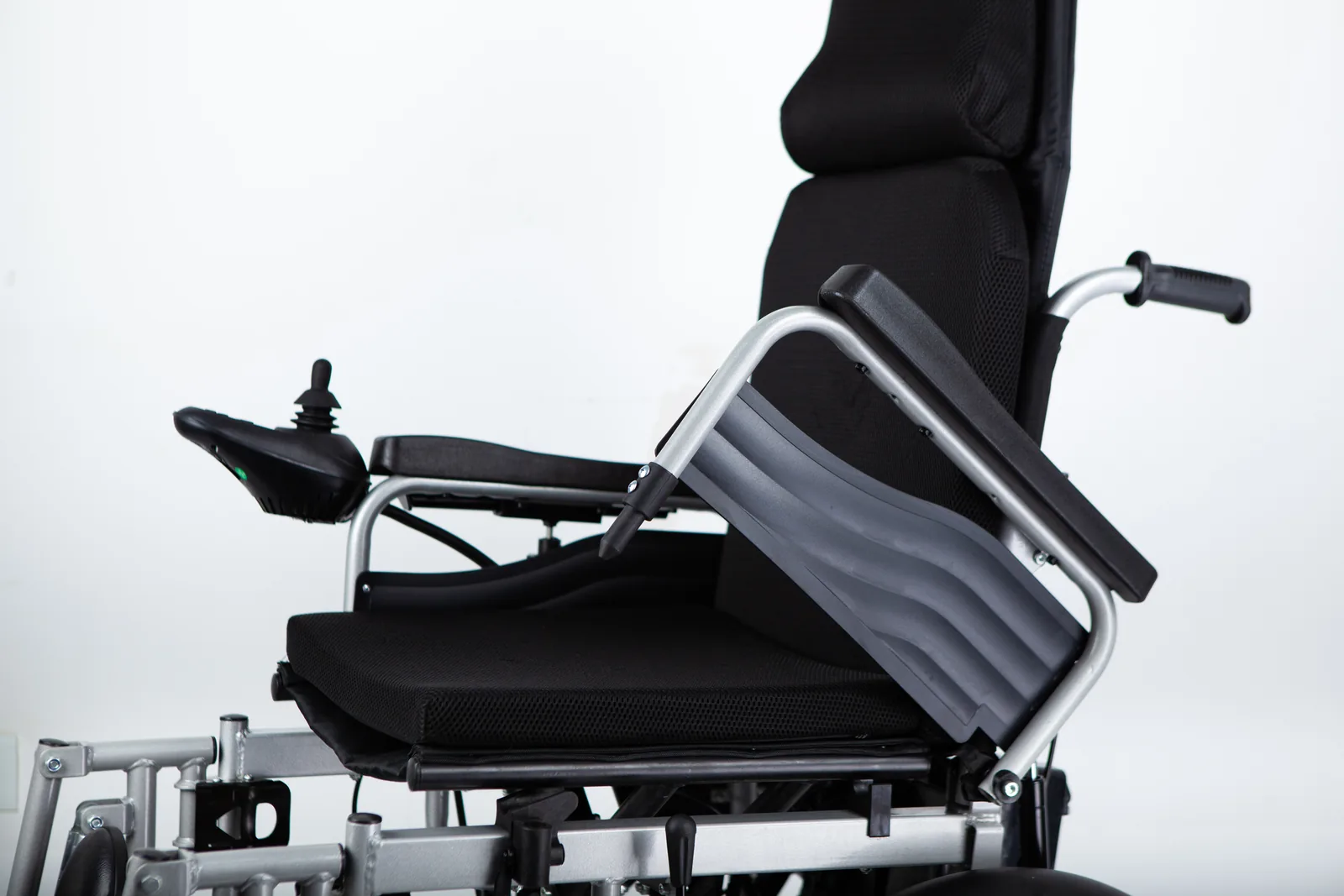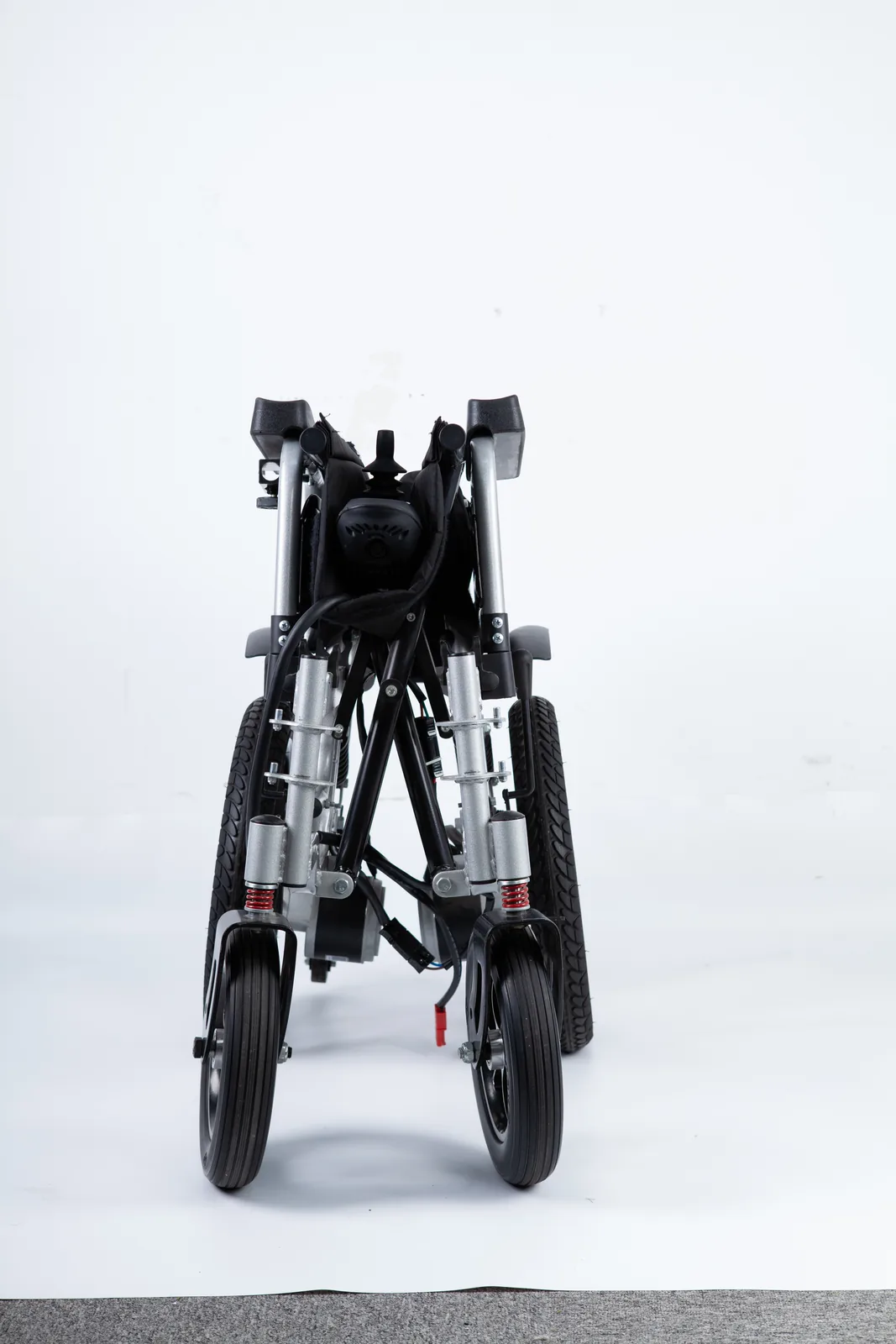
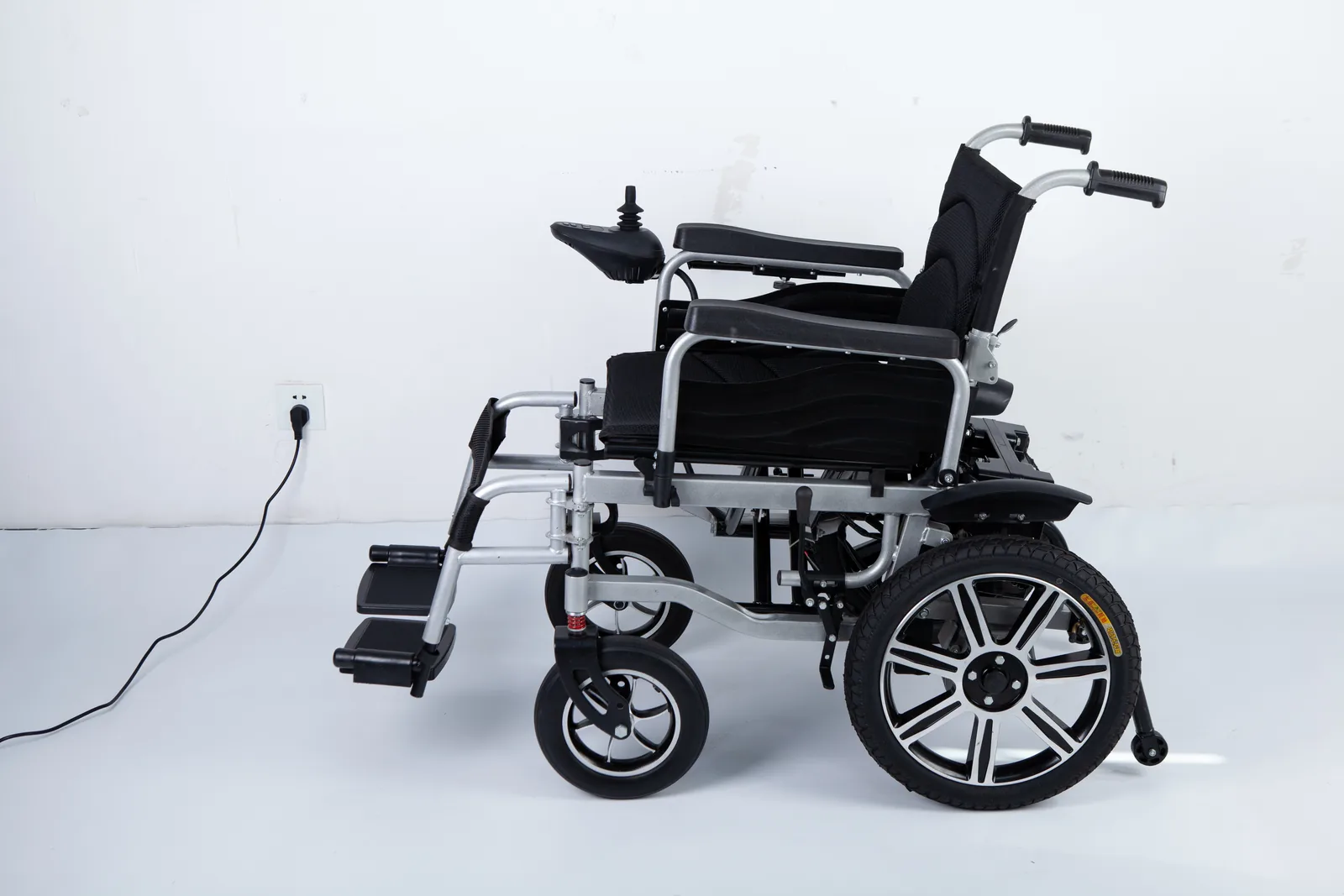
You are choosing a power chair or advising a customer, and the charging spot is tight: a hallway corner, a small apartment, a car trunk, a clinic storage room. The battery comes out, so the obvious question is whether it can also charge away from the chair. Electric wheelchair removable battery charging is therefore a configuration question, not a category feature.
A removable battery is not automatically a separately chargeable one. Off-chair charging depends on the exact model, the battery it ships with, the charger the manufacturer approves, and any adapter that charger needs. Confirm all four in writing before you rely on it.
This guide separates those four items so you can compare named models and ask precise questions, rather than assuming that "removable" means "charges anywhere." The aim is a shortlist you can defend with documents, not a guess based on a product photo or a marketing phrase.
Electric wheelchair removable battery charging: Identify the chair, battery and instructions
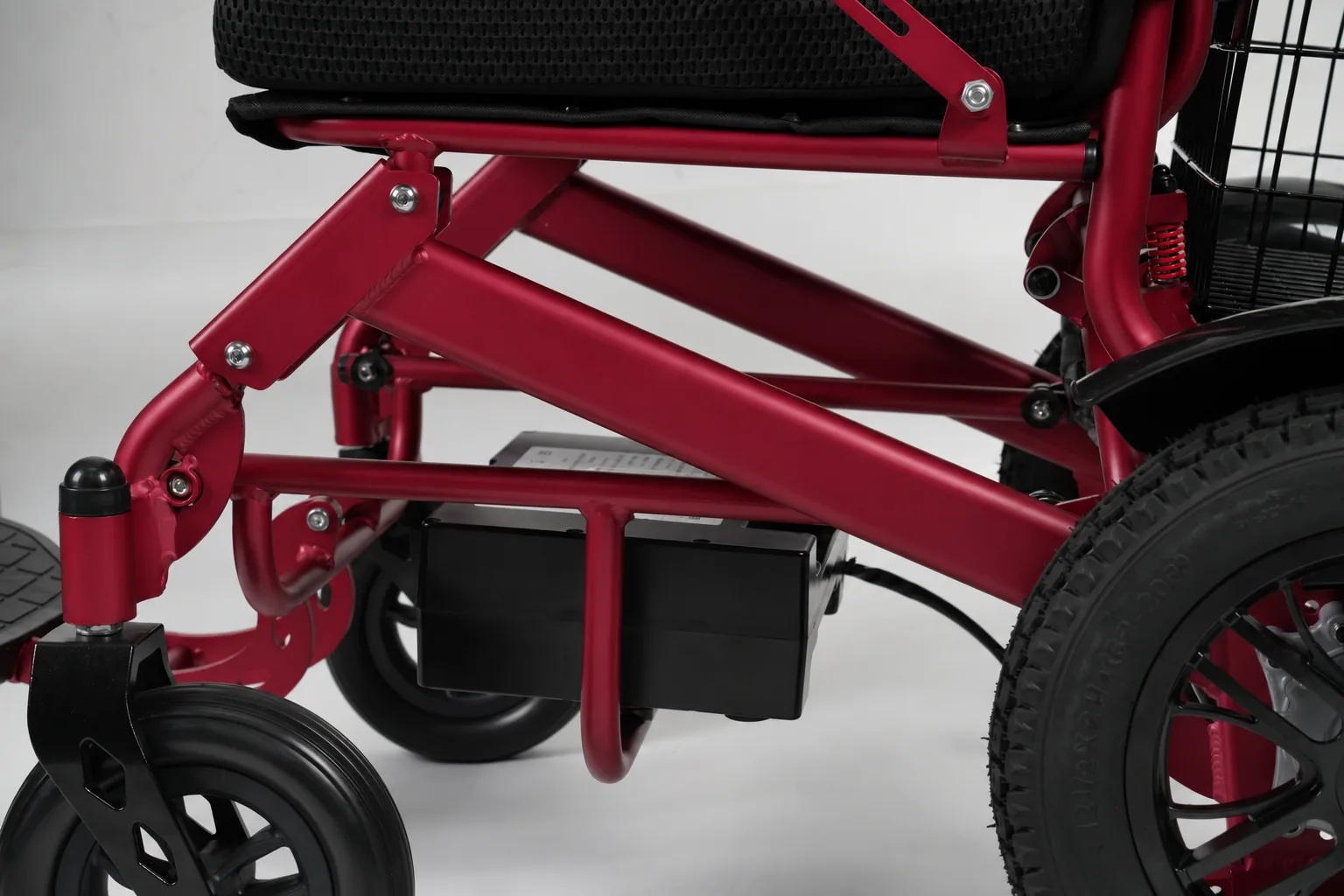
Start with the equipment in front of you, not with the category. Two chairs that both advertise a removable battery can differ in how that battery is wired, what connector it uses, and whether the manufacturer documents off-chair charging at all. The only reliable starting point is the exact model plus the document that covers that model.
Write down four identifiers before reading further: the chair's model name and number, the battery's part number or label details, the charger's model number, and the revision or version date of the instructions you are using. A quick guide, a full manual, and a retailer's product page are three different documents, and they can disagree or cover different configurations. When they do, the manufacturer's document for that exact model carries the most weight, and a retailer listing is a lead to verify rather than a specification.
This matters because the charging answer is only as good as the document behind it. A manual that covers the chair frame but not the battery variant tells you less than it appears to. A charger label that matches the manual's part number is stronger evidence than a plug that happens to fit. Treat each identifier as a separate check, and record where each one came from, so a later question can be traced back to a specific page rather than to memory.
Check model and document version
Model names drift. A suffix, a regional variant, or a later production run can change the battery or connector while the marketing name stays the same. That is why the version line matters as much as the model line: a quick guide marked V2.0 may describe a different adapter requirement than an earlier sheet for the same chair family.
A practical habit is to photograph the label on the chair and the label on the battery, then match both against the document. If the document you have does not show your battery's part number, treat the charging question as unanswered rather than filling the gap with a similar model's instructions. A near-match is not a match when the question is whether a specific pack may be charged outside a specific chair.
For a dealer, this identification step is also a record-keeping step. Note the model, battery part number, charger part number, and document version in the customer file, so a later question about charging can be answered from the same evidence rather than reconstructed from memory. If the customer later asks whether the pack can be charged on a kitchen counter, the file already shows which document governs the answer and which accessory part numbers apply.
Compare charging on and off the chair
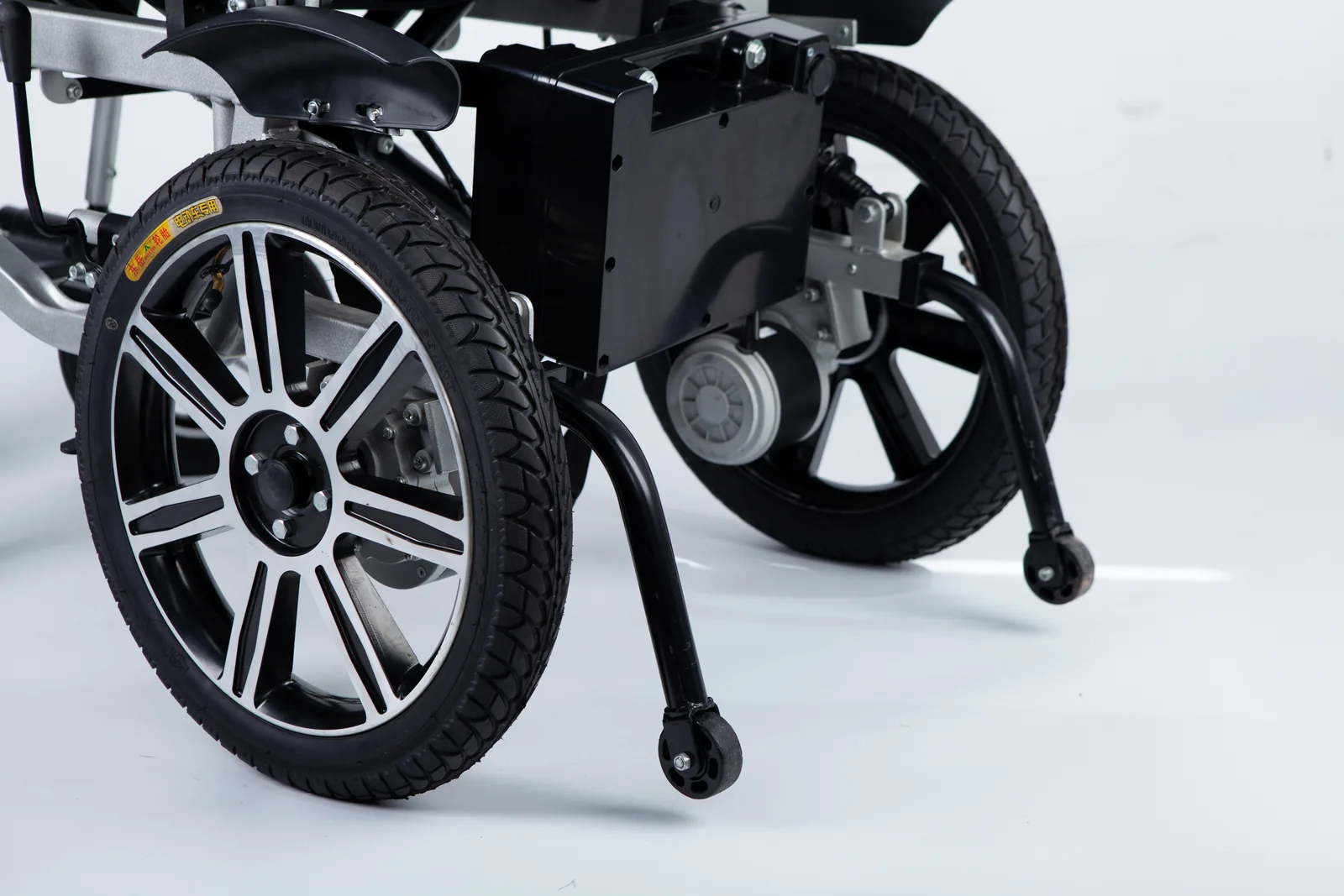
On-chair charging means the battery stays in the chair and the approved charger connects to the chair's charging point. Off-chair charging means the battery is removed and charged through whatever arrangement the manufacturer documents for that battery. These are two different procedures, and a model may support one, both, or neither in the documents you have.
Some named products do describe removal for charging. A retail listing for the IQ-9000 power chair states that its battery can be taken out for charging, which is a useful example of a manufacturer-side claim reaching a product page. It is still a claim about that model, not a rule for removable batteries in general, and it does not tell you which charger or adapter applies. Read it as a lead: the listing suggests the feature exists for that chair, and the manual for that chair is where the procedure and accessory details would need to be confirmed.
Off-chair charging can matter for reasons other than convenience. A user may not be able to bring the chair to the outlet, or the outlet may sit where the chair cannot park. A dealer may need to charge a display unit in a back room. A small apartment may have no floor space for the chair beside a socket. None of these situations changes what the hardware permits; they change which configuration is worth prioritizing in a shortlist. A chair that only charges on-board is not a poor choice for every buyer, but it does mean the charging space has to accommodate the whole chair.
Distinguish battery location from charger location
This is the distinction that causes most confusion. "The battery comes out" describes where the battery sits. "The charger plugs in here" describes where the charger connects. A chair can have a removable battery that is nonetheless charged through the chair, with the pack seated in place during charging. Another can have a fixed battery charged through an external port. The two facts are independent.
When you compare models, build two separate notes: one for battery removal, one for charging connection points. A model that scores well on the first may still require the chair to be positioned at the outlet. A model with a fixed battery may still offer a charging point that is easy to reach. Keeping the notes apart stops a removable pack from being read as a charging solution.
| What to record | Why it matters | Where to confirm it |
|---|---|---|
| Chair model and variant | Instructions are model-specific | Chair label and manual cover |
| Battery part number | Packs can differ within a model family | Battery label |
| Battery removable? | Separate question from charging method | Manual procedure section |
| Charging connection point | Chair port, battery port, or both | Manual diagram and text |
| Approved charger model | Wrong charger is a safety and warranty issue | Manual and charger label |
| Adapter required? | Some off-chair setups need a named adapter | Manual accessory list |
| Document version and date | Older sheets may describe older hardware | Manual revision line |
Use the table as an evidence checklist, not a scorecard. A row you cannot fill from a document is an open question, and open questions belong in the enquiry, not in an assumption. Two chairs can look identical in a showroom and still differ on the adapter row, which is exactly the row that decides whether off-chair charging is a documented option or an improvised one.
Verify the approved charger and any adapter
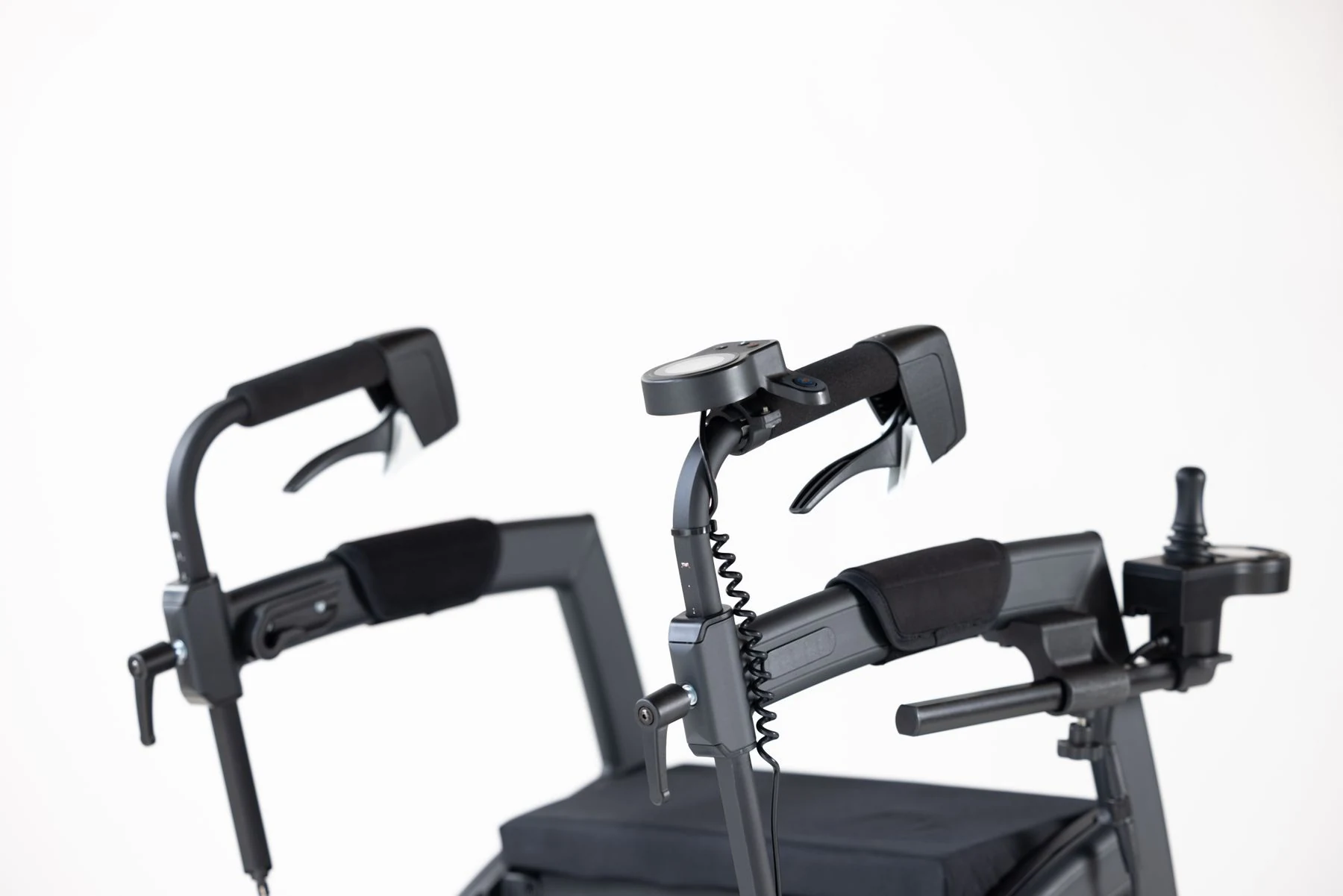
The charger is the part most often treated as interchangeable, and it is the part where guessing is least appropriate. Chargers are matched to battery chemistry, voltage, and connector, and the manufacturer's approved charger is the reference point for that model. A charger that fits the plug is not thereby approved for the pack.
The eFOLDi Power Chair quick guide, hosted by a retailer as a manufacturer document, is a concrete example of how specific this gets: for that model, charging the battery independently of the chair requires a designated adapter. That single sentence does three things. It confirms off-chair charging exists for that model, it ties the method to a named accessory, and it warns against improvising a connection. It says nothing about any other chair, including other folding power chairs.
So when you verify, ask for the charger model number and, if off-chair charging is claimed, the adapter part number and how it attaches. Ask whether the adapter is supplied with the chair, sold separately, or region-specific. Ask what the manual says about charging the pack while it is removed versus seated. These are configuration questions with document answers, not opinions.
It also helps to ask what the charger is designed to do rather than only what it looks like. A charger intended for one pack may carry a different connector, a different output rating, or a different set of instructions for the removed pack. None of those differences is visible from a photograph, and none should be resolved by trying a charger that appears to fit. The safe answer is the documented one: the charger and adapter named for that model and that battery.
A forum thread can show that other users are asking the same question, and a Reddit discussion about charging batteries separately from the chair does exactly that. It is useful as a signal that the question is common. It is not a source for wiring, adapter substitution, or procedure, and unverified connection advice in a thread should not be carried into a purchasing decision. The same caution applies to a video that shows one owner's setup: it may illustrate a question worth asking, but it does not establish what your model permits.
Compare charging space and battery handling
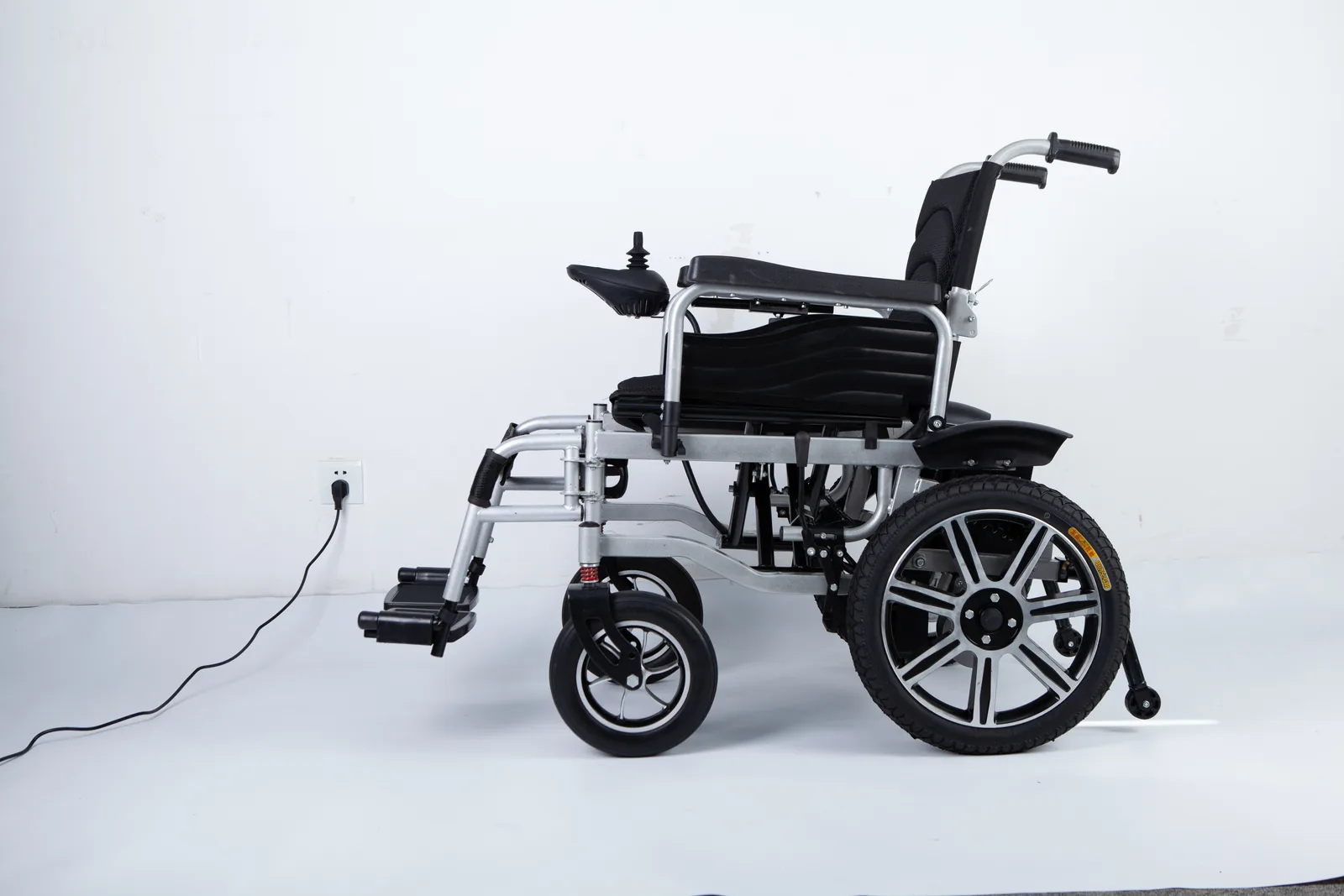
Once you know off-chair charging is documented, the next comparison is physical: what space the charging setup needs and what handling the battery requires. These are practical constraints that vary by user and by room, and they are worth measuring in your own environment rather than estimating from a photo.
For space, note the footprint of the chair when parked for charging, the reach distance to the outlet, and whether the charger and any adapter need their own surface. Off-chair charging may free floor space by letting the pack sit on a bench or shelf near the outlet, but only if the documented procedure allows that placement and the surface is suitable. Do not assume a pack can be charged on any surface; follow the manual's placement guidance.
For handling, note the battery's documented weight and how it is released and carried. A pack that lifts out with one hand and a pack that needs two hands and a clear path are different daily realities. This is where the earlier WCF article on the heaviest piece versus total weight is a useful companion: the battery may or may not be the heaviest single component, and that changes what "removable" costs in effort. Similarly, the lithium versus lead-acid comparison matters because chemistry affects pack weight and charging characteristics, though it does not by itself tell you whether off-chair charging is approved.
| Comparison point | On-chair charging | Off-chair charging (where documented) |
|---|---|---|
| Floor space at the outlet | Chair must park within reach | Pack can sit nearer the outlet |
| Lifting required | None for the pack | Depends on documented removal and weight |
| Charger placement | Near the chair's charging point | Near the pack and any adapter |
| Cable route | Chair to outlet | Pack, adapter, and charger to outlet |
| Storage between charges | Pack stays in chair | Pack needs a safe resting place |
| Verification needed | Approved charger and port | Approved charger, adapter, and procedure |
Read the table as a set of questions for your own room, not as a ranking. A household with a wide hallway and a nearby socket may find on-chair charging simpler. A household where the chair cannot reach the socket may find the off-chair route worth confirming, provided the documents support it. Neither preference changes the model's approved configuration.
There is also a routine to consider. If the pack must be removed for every charge, the removal and replacement steps become part of daily life, and a documented procedure that is easy in a showroom may be less convenient in a cramped hallway. If the pack stays in the chair, the constraint moves to parking. Comparing the two routines honestly, rather than comparing only the feature list, is what makes the space comparison useful.
Ask for a written model-specific answer

The final step is to convert your shortlist into a written answer you can keep. Verbal reassurance at a showroom or on a call is easy to misremember, and charging questions tend to surface later, when the chair is at home and the manual is in a drawer. A short written confirmation closes that gap.
A good request names the exact configuration and asks for a yes or no plus the supporting document. For example: for this chair model and this battery part number, is off-chair charging supported; if so, which charger and adapter part numbers apply; is the adapter included; and which manual revision describes the procedure? That structure gives the supplier something specific to check rather than a general question about removable batteries.
Wheelchairs Factory's quote request page at https://wheelchairsfactory.com/get-a-quote/ is the appropriate place to put configuration questions to the supplier. Whether a particular model, battery, charger, or adapter combination is available or supported must be confirmed for that configuration; a general product category does not settle it. Dealers advising a customer should pass the same written answer along, so the end user is not left to interpret a product page.
If the answer comes back vague, ask again with the document named. If no document exists for the configuration, that is itself an answer: treat off-chair charging as unconfirmed and plan the charging space around the chair until the manufacturer provides a procedure. A written "not documented" is more useful than a verbal "should be fine," because it tells you what to plan for and what to ask again later.
Frequently asked questions
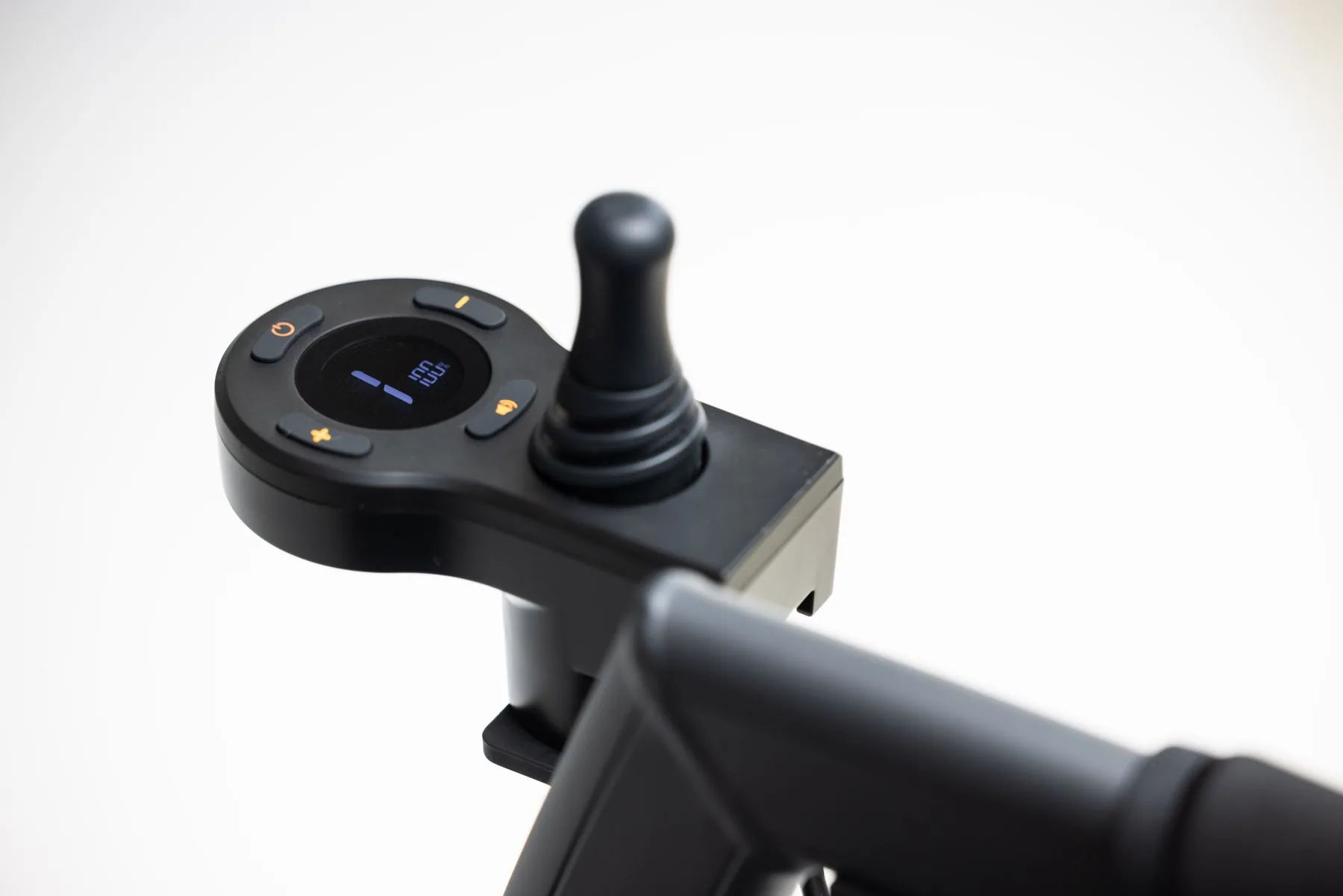
Does a removable battery always mean it can charge off the chair? No. Removal and off-chair charging are separate features. Some models document charging only with the pack seated in the chair. Check the manual for the exact model before planning around off-chair charging.
Is a separate adapter always needed? Not always, but sometimes. The eFOLDi Power Chair quick guide specifies a designated adapter for independent charging on that model. Other models may differ, so the adapter requirement has to be confirmed per model and per battery.
How do I confirm the right charger? Match the charger model number to the manual for your exact chair and battery, and check the charger label against it. A plug that fits is not proof of approval. Ask the supplier for the approved charger part number in writing.
What if the manual does not mention off-chair charging? Treat it as unsupported until the manufacturer confirms otherwise. Do not infer a procedure from a similar model or from forum advice. Ask for a model-specific written answer, and plan charging space around the chair in the meantime.
Conclusion
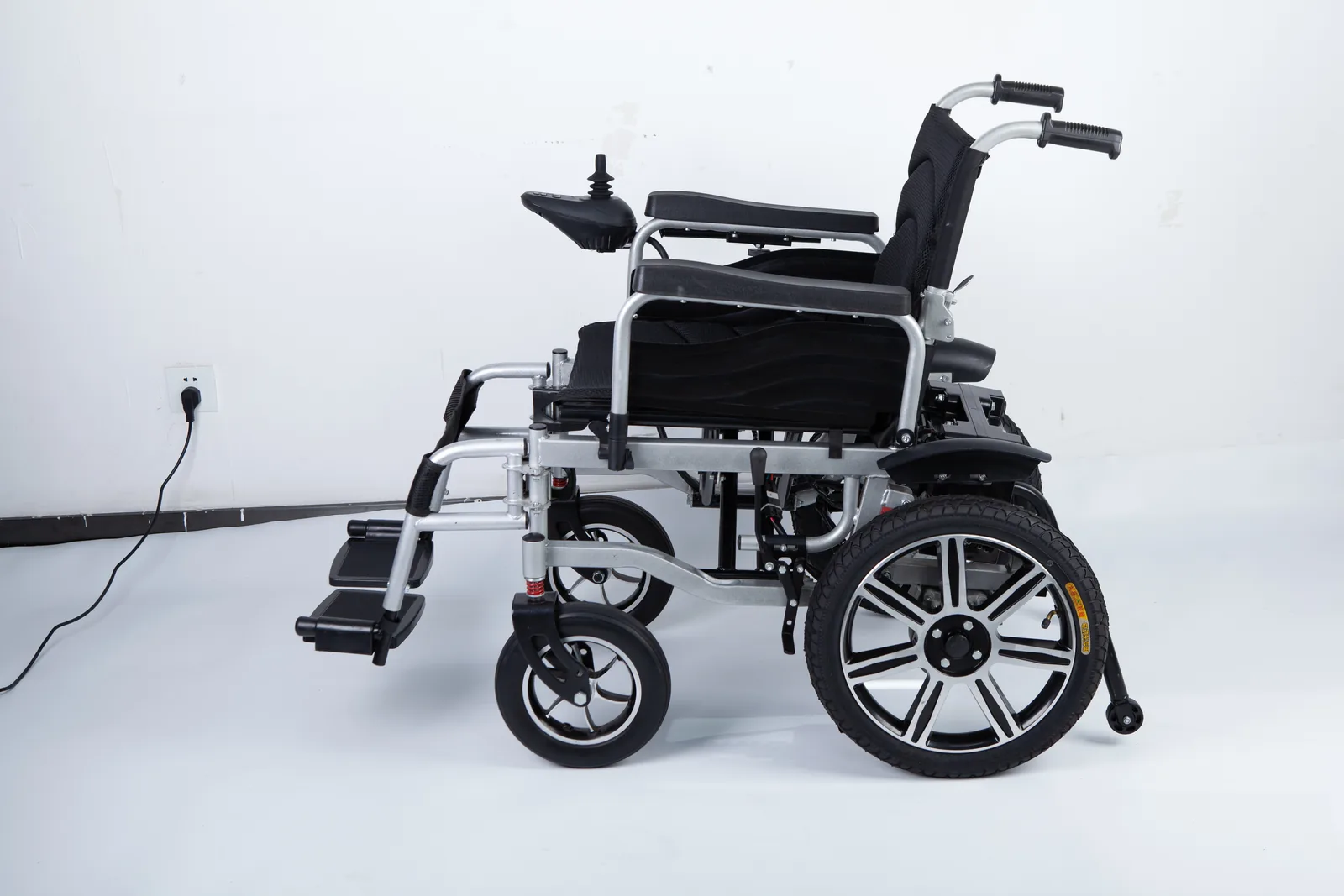
Confirm the exact model, battery, charger, and adapter in writing before relying on off-chair charging. Then measure your charging space around that answer.
Video: Can I charge the battery in and out of the electric Wheelchair?