Learning to move a manual wheelchair efficiently is a skill, not an instinct. Many people are handed a chair and expected to figure out self-propulsion alone, even though the movement repeats thousands of times a day. Understanding the push and recovery phases gives you a shared vocabulary for training and equipment conversations.
Manual wheelchair propulsion techniques describe how a user applies force to the handrims to move the chair, then releases and repositions the hands for the next stroke. The cycle has two parts: a push phase that drives the wheel and a recovery phase that returns the hands to the starting position.
This article explains those phases using named hospital and manufacturer education sources, then shows which chair settings and training questions belong in a conversation with your seating team or a qualified instructor. It does not prescribe a stroke pattern, cadence, or training plan for any individual.
Manual wheelchair propulsion techniques: What manual propulsion involves
Manual propulsion covers two distinct activities that are often blurred together: a wheelchair user propelling themselves by gripping and turning the handrims, and a caregiver or assistant pushing the chair from behind. The first depends on the user's reach, grip, strength, trunk control, and the chair's setup. The second depends on the assistant's position, the chair's push handles, and the route ahead. Both move the same chair, but they involve different body mechanics, different risks, and different training needs.
Self-propulsion through the handrims is the focus here. St. Jude Children's Research Hospital's guide on how to use a wheelchair describes handrim propulsion as the standard way a manual wheelchair user moves independently, with the hands contacting the rims to turn the rear wheels. Sunrise Medical's education resource on manual wheelchair propulsion frames the same activity as a repeating cycle rather than a single motion, which is why the push and recovery phases are usually discussed together. Permobil's education blog on propulsion patterns and efficiency adds that different users adopt different stroke patterns, and that the pattern a person uses interacts with how efficiently they travel.
That framing matters for readers. If propulsion is a cycle, then the moment your hands leave the rim is not a pause between efforts; it is part of the technique. A chair that fits well for the push may still be awkward during recovery, and a training goal that focuses only on pushing harder can miss the repositioning that makes the next stroke possible. The distinction between self-propulsion and being pushed also clarifies who needs which information: a user learning handrim technique, a caregiver learning to push safely, and a service team checking that the chair supports both.
It is also worth separating the two activities when you describe a problem. Saying "the chair is hard to move" could point to a user's stroke, a tire or surface issue, or a chair that no longer matches the user's position. Saying "my hands slip when I start a push" or "I have to lean forward to reach the rim on the way back" gives a seating team or instructor something specific to observe. Caregiver pushing has its own version of this: handle height, the assistant's stride, and the route surface all affect the effort, and those are different questions from how a user contacts a handrim. Keeping the two lists separate prevents a caregiver's pushing concern from being mistaken for a propulsion-technique issue, or the reverse.
For a broader map of the components involved, see Parts of a Wheelchair: Names and Functions Explained. That page names the handrim and rear wheel among the chair's parts; it does not teach a stroke technique, which is why this article stays focused on the propulsion cycle itself.
Understand the push and recovery phases
Sunrise Medical's manual wheelchair propulsion resource describes propulsion as a two-part cycle: a push phase, in which the hands apply force to the handrim, and a recovery phase, in which the hands release and return to a position where the next push can begin. St. Jude's guide similarly presents handrim use as a repeating action rather than a one-time effort. The value of naming the phases is that each one can be discussed, observed, and practiced separately, and each one places different demands on the hands, arms, and shoulders.
What the sources do not provide is a universal stroke angle, cadence, or force target. Permobil's blog notes that users adopt different propulsion patterns, which implies that technique varies between individuals and contexts. A reader should therefore treat the phase descriptions below as a shared framework for discussion, not as a prescribed movement to copy exactly.
Push phase
In the push phase, the hands are in contact with the handrim and apply force to turn the rear wheels. This is the part of the cycle that most people picture when they think about wheelchair propulsion, and it is the phase where the chair's resistance, the tire and surface, and the user's position relative to the wheels all matter. A handrim that is hard to reach or a seat position that places the shoulders awkwardly can change how force is applied, even if the user's effort is unchanged.
The push phase is also where the handrim itself becomes relevant. Handrim diameter, surface, and mounting are equipment details that a seating team can review alongside the user's hand function. They are not a substitute for technique, and a different handrim does not automatically improve propulsion. The push phase is best understood as the product of the user's movement and the chair's configuration together.
Recovery phase
The recovery phase is the part of the cycle between pushes. After the hands release the handrim, they travel back to a position where the next push can begin. Sunrise Medical's description of the propulsion cycle treats this return as a defined stage rather than dead time, and that is a useful way to think about it: recovery is where the hands, wrists, and shoulders reset for the next contact.
Because recovery involves repositioning rather than driving the wheel, it is often where chair setup problems show up. If the handrim is difficult to reach, the return motion may require more shoulder movement or trunk adjustment than the user expects. If the seat or rear-axle position places the wheels in an awkward relationship to the body, the recovery may feel rushed or strained. None of this can be judged from a description alone; it is something a seating team or instructor observes with the actual user in the actual chair.
The table below organizes the two phases as discussion points rather than instructions. The right-hand column lists what to confirm with a qualified professional, since the sources do not supply individual targets.
| Phase | What happens | What it depends on | What to confirm with your team |
|---|---|---|---|
| Push | Hands contact the handrim and apply force to turn the rear wheels | Handrim reach and surface, seat position, surface and resistance, user's strength and positioning | Whether the current setup lets you contact the rim comfortably; whether any equipment change is appropriate |
| Recovery | Hands release the rim and return to a position for the next push | Shoulder and trunk movement, handrim access, chair geometry, pacing | Whether your recovery feels strained; whether seating or axle position should be reviewed |
| Whole cycle | Push and recovery repeat as a continuous pattern | Pattern choice, environment, fatigue, training | Which pattern you use and whether training or equipment review would help |
Reading the table as a checklist of things to raise, rather than a set of rules to follow, keeps the focus on the individual. Two users with the same chair may describe very different recovery experiences, and that difference is exactly what a seating team needs to hear. The same applies across environments: a cycle that feels manageable on a smooth indoor floor may feel different on carpet, a slope, or a threshold, and describing where the difficulty appears helps the team connect the phase to the setting rather than to the person alone.
Discuss chair configuration with the seating team
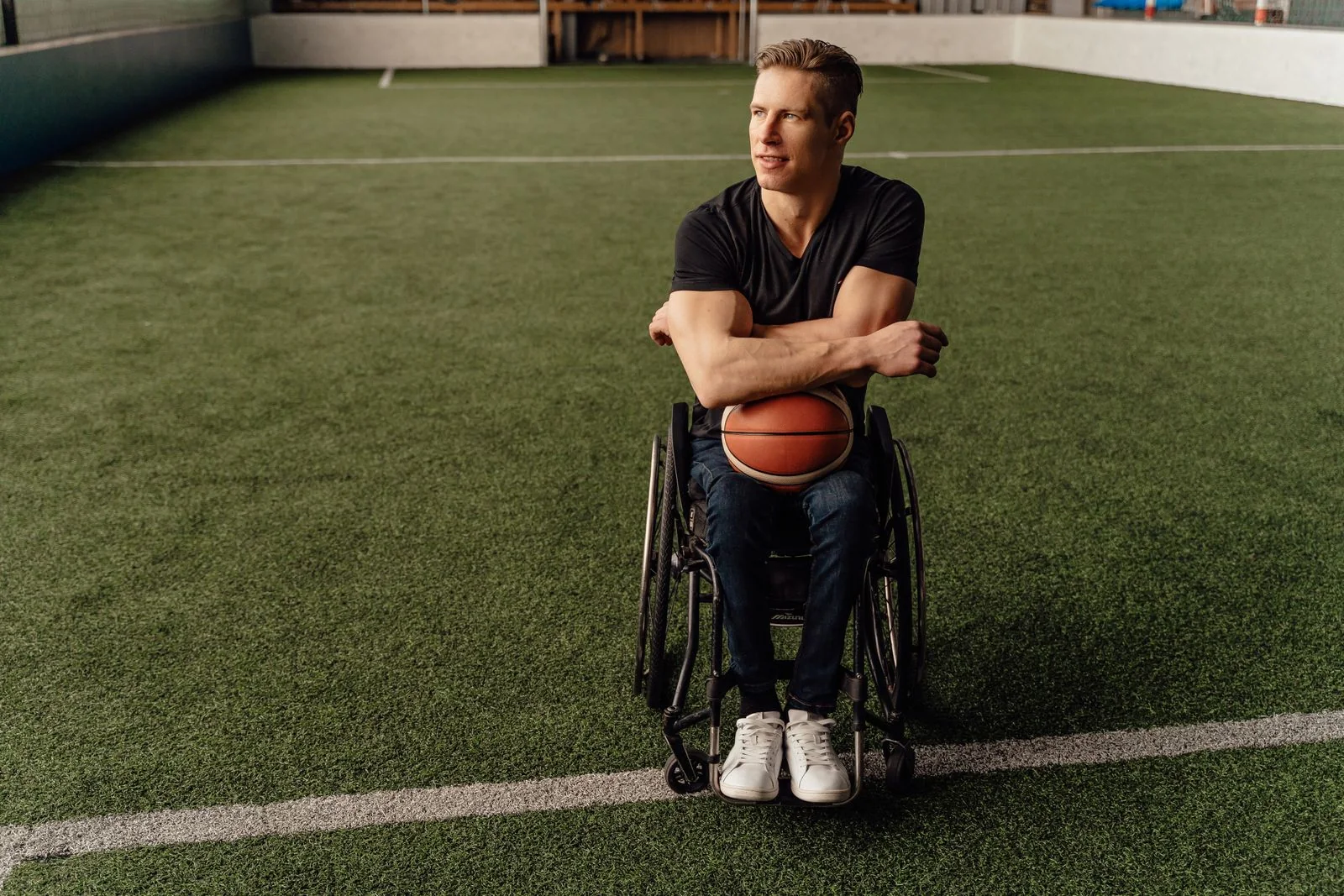
Chair configuration affects both phases of propulsion, but the relevant settings are individual and should be reviewed with the people responsible for the user's seating and mobility. Three areas come up most often in propulsion conversations: handrim reach, seat surface and position, and the rear-axle setup. Each one interacts with the others, which is why adjusting one in isolation can create a new problem elsewhere.
Handrim reach depends on where the wheels sit relative to the user's shoulders and arms. A handrim that is easy to grip at the start of a push may be awkward at the end of recovery, and vice versa. Seat height and seat angle influence how the arms approach the rims, while the rear-axle position influences how the chair balances and how much of the wheel is within reach. WCF's article on wheelchair center of gravity and rear-axle setup explains how rear-axle position relates to the chair's balance and handling; it is a configuration topic, not a propulsion training guide, and it should be read alongside the manufacturer's manual for the exact model.
What this means for a reader is that configuration questions are best brought to the seating team as observations, not as requests for a specific adjustment. Useful observations include where on the handrim your hands naturally land, whether recovery feels rushed, whether you find yourself shifting in the seat during the cycle, and whether any part of the stroke feels strained. The team can then compare those observations with the chair's manual and the user's assessment. This article does not provide instructions for adjusting axle position, seat height, or handrims yourself, because the correct setting depends on the individual and on the specific chair's documented limits.
It also helps to separate equipment questions from technique questions. A different handrim, a different tire, or a different axle position may change how propulsion feels, but none of them teaches a stroke pattern. If the goal is efficiency or comfort, the seating team and a qualified instructor usually need to work together: the team reviews the chair, and the instructor reviews how the user moves with it. A service team can support that work by keeping the chair's model, configuration, and any accessory details on record, so a later conversation about a change starts from what the chair actually is rather than from memory. That record also helps when a user moves between settings, such as a home chair and a chair kept at a workplace or clinic, because the two setups can then be compared on paper before anyone changes anything.
Practice with a qualified instructor
Technique is learned through practice, and practice is most useful when it is guided by someone who can observe the user in their own chair. A qualified instructor, often an occupational or physical therapist with wheelchair skills training, can watch the push and recovery phases, ask about discomfort, and connect what they see to the user's goals and environment. This article cannot replace that observation, and it should not be read as a training program.
Preparation makes the session more productive. Before meeting an instructor, it helps to record a few things: the environments you use the chair in (indoors, outdoors, ramps, thresholds, public transport), how long you typically propel before resting, what feels difficult during the push or recovery, and any sensations you want to raise. A simple written log is enough. The point is not to self-diagnose but to give the instructor and seating team concrete information to work with.
It also helps to know what to ask. The questions below are starting points for a training or seating conversation, not a self-assessment test.
- Which propulsion pattern am I using, and is it working for the environments I travel in?
- Does my recovery feel strained, and could that be related to chair setup?
- Are there handrim, seat, or axle questions I should raise with the seating team?
- What should I practice between sessions, and what should I stop and report?
- Who should I contact if I notice new discomfort or a change in how the chair moves?
Permobil's discussion of propulsion patterns and efficiency suggests that pattern choice is a real variable in how people travel, which supports treating technique as something worth reviewing rather than a fixed habit. At the same time, no source here promises that a particular technique prevents injury or improves a clinical outcome, and readers should not assume that copying an example stroke will produce a specific result. The appropriate next step is a conversation with the people who can assess the individual and the chair together.
A useful way to prepare for that conversation is to think about what a session should leave you with. Rather than expecting a single correct stroke, you might ask for a description of what the instructor observes during your push and recovery, which parts of the cycle they would review first, and how you would know whether a change is helping. Those answers give you something to check against your own experience in the following weeks, and they give the seating team a shared reference if equipment questions come up. If an instructor or clinician is not yet involved, a rehabilitation service or the chair's supplier may be able to point toward appropriate local support; this article does not provide a referral service or a training program of its own.
FAQ

What is the recovery phase? The recovery phase is the part of the propulsion cycle after the hands release the handrim and before the next push begins. Sunrise Medical's manual wheelchair propulsion resource describes it as the return stage of a repeating cycle, during which the hands reposition for the next contact with the rim. It is a phase to observe and discuss with an instructor, not a fixed movement to copy.
Does a different handrim automatically improve propulsion? No. A handrim is one part of the chair, and its diameter, surface, and mounting interact with the user's hand function, seat position, and technique. Changing a handrim does not by itself change how a person pushes or recovers, and the sources here do not support a claim that any handrim improves propulsion. Handrim questions belong with the seating team, who can review the exact model and the user's needs.
Who should help with technique? A qualified instructor, such as a therapist with wheelchair skills training, is the appropriate person to observe and guide technique. The seating team reviews chair configuration, and the manufacturer's manual covers the specific model. This article is an orientation to the push and recovery phases, not a substitute for individual assessment or training.
Conclusion
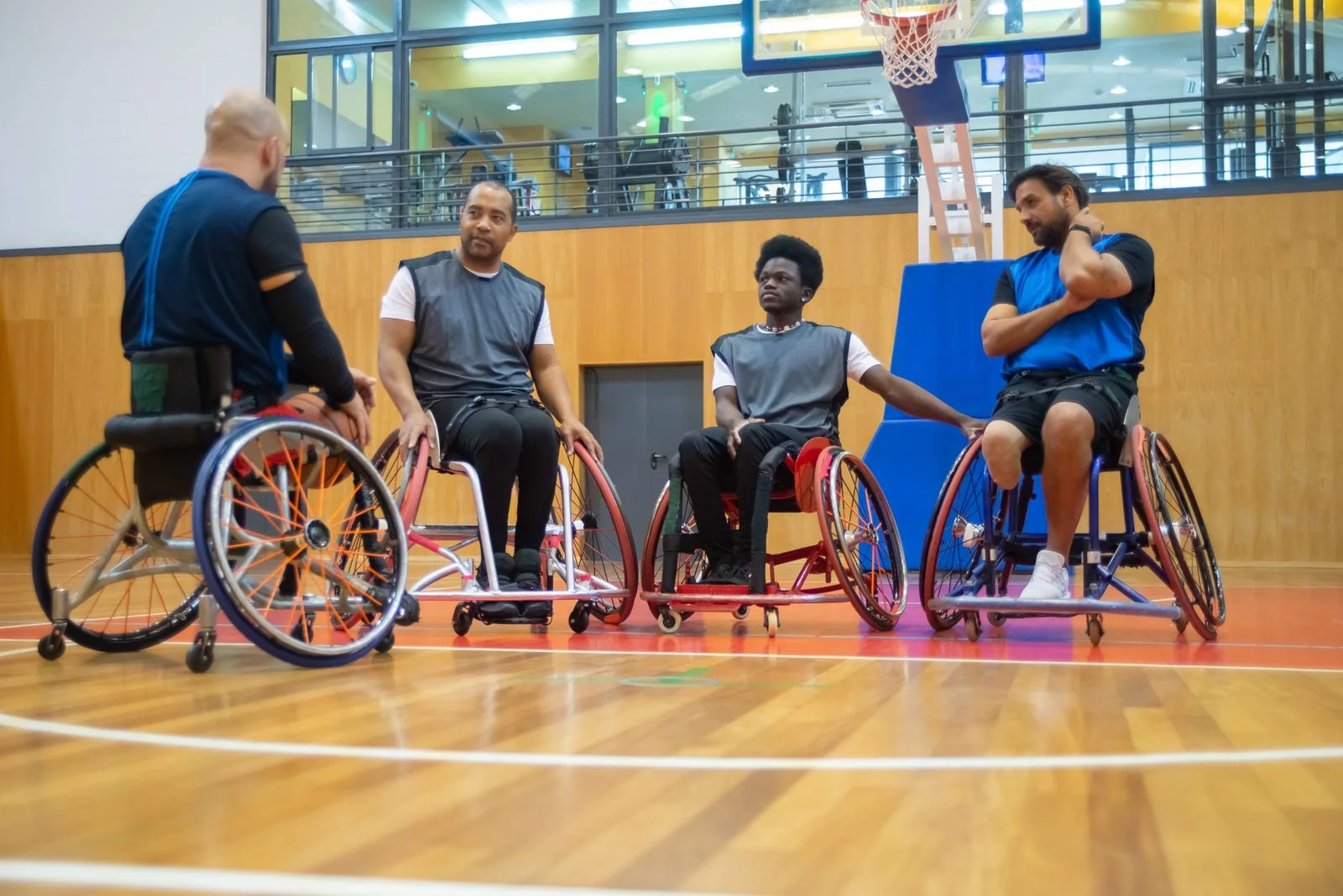
Push and recovery are two halves of one repeating cycle. Use them as conversation points with your seating team and a qualified instructor, not as a self-taught prescription.
Video: Efficient Self Propel