A light rain starts while you are out, or a puddle sits between you and the only ramp. You need to know what your chair’s own documentation says before you decide anything. If you are asking can electric wheelchairs get wet, the honest starting point is that the answer lives in your exact model’s manual, not in a general rule.
There is no single answer for every electric wheelchair. Moisture limits come from your exact model’s manual, and the safe next step is to check that manual and the manufacturer’s current guidance rather than a general rule. Rain on the frame, water under the wheels, and washing are different situations, and each may be treated differently. The same is true of storage in a damp garage and of plugging in a charger after a wet trip. Each of those is a separate question with its own wording in the documentation.
Can electric wheelchairs get wet: Rain exposure is different from being waterproof
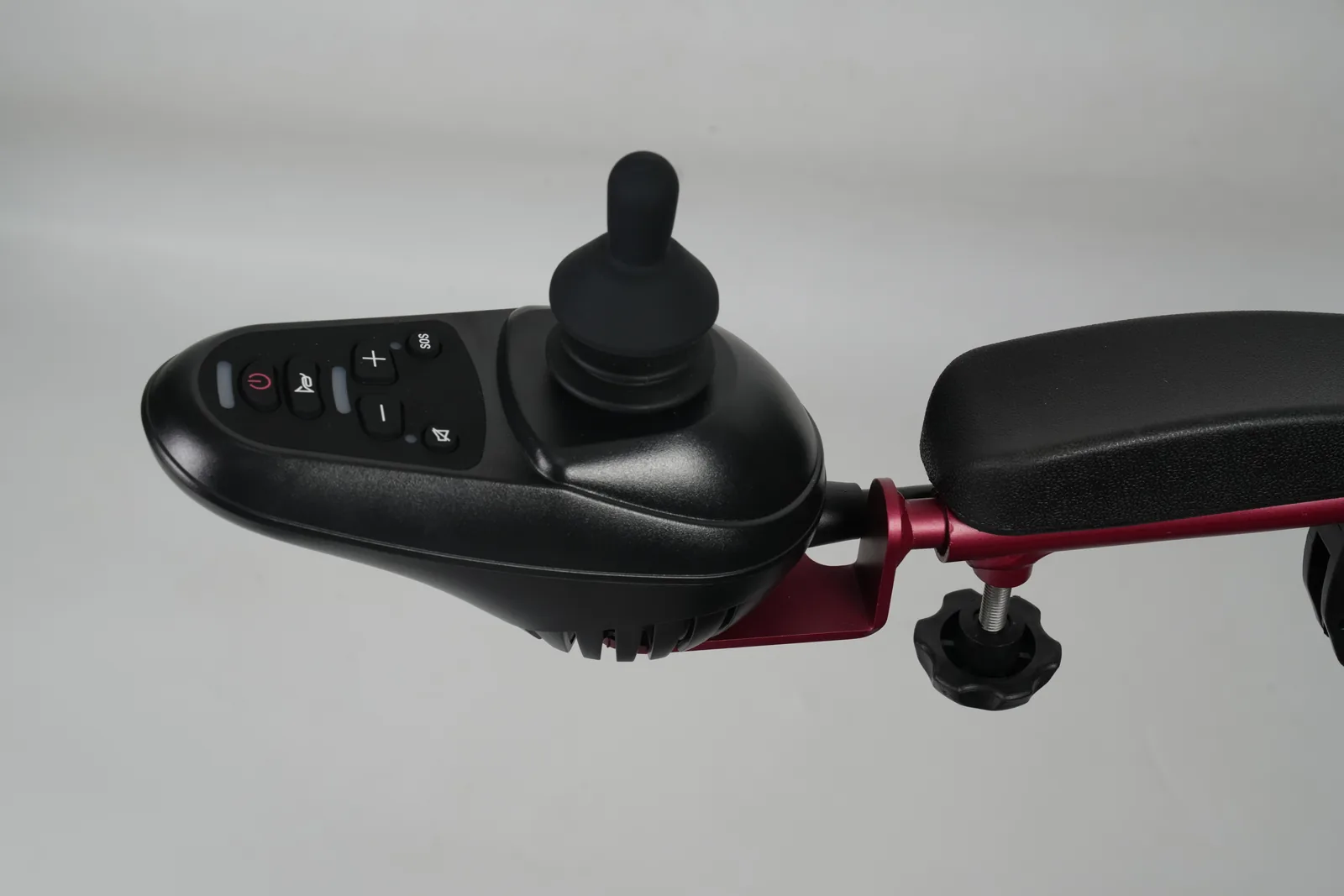
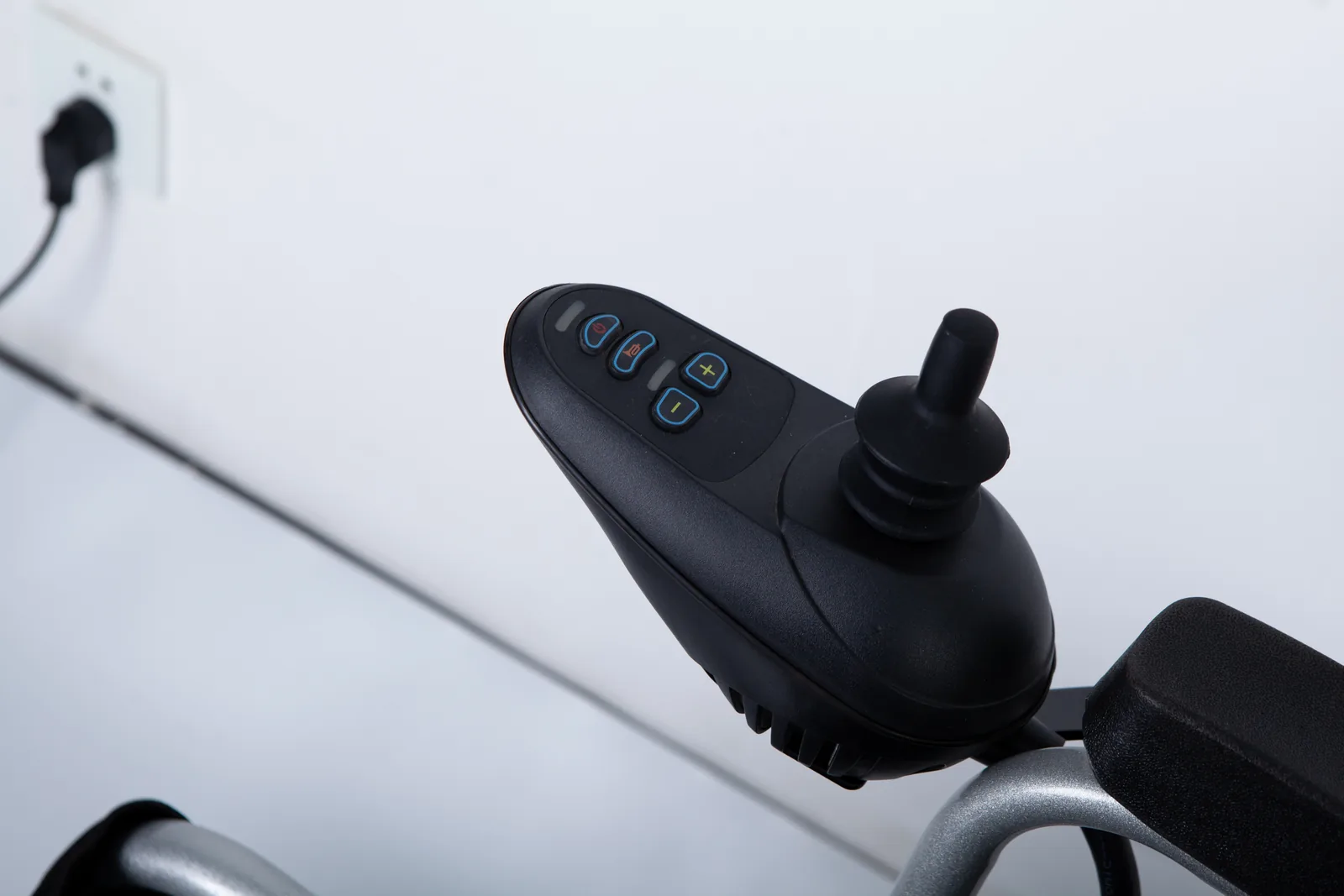
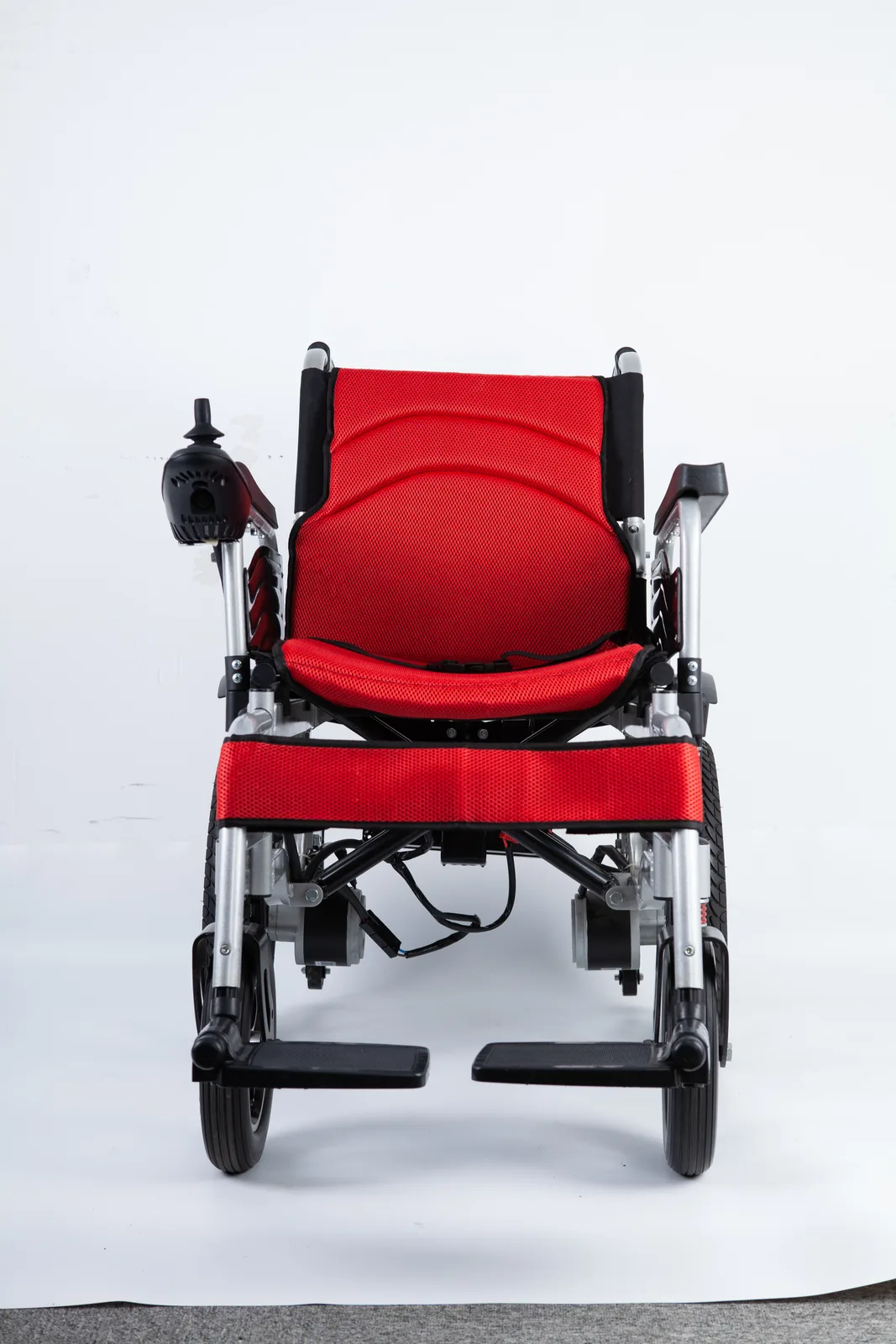
Start with the wording your chair’s documentation actually uses. “Water-resistant,” “weatherproof,” “splash-proof,” and “waterproof” are not interchangeable, and a marketing phrase on a product page is not the same as an operating limit in a manual. A chair may tolerate brief surface moisture while its controller, motor connections, joystick, charger port, and battery compartment remain the parts most likely to be named in a manufacturer’s caution. Those components are also the ones a user cannot assess by looking at the frame, which is why a visual check after rain tells you less than it seems to.
A useful way to think about it is that three separate questions hide inside “can it get wet”:
- What kind of water? Rain falling on the chair, spray from a passing vehicle, a puddle deep enough to reach the motors, a garden hose, and a bucket of soapy water are different exposures.
- For how long, and where? A few minutes of drizzle on an outdoor route is not the same as a chair left outside overnight or stored in a damp garage.
- What does the maker require afterward? Some documentation asks the user to stop, dry, or contact service; some says nothing specific. The absence of a warning is not permission.
Manufacturer FAQs on this subject tend to explain moisture exposure and then direct the owner toward service escalation rather than publishing a universal allowance. That pattern matters: it tells you the manufacturer treats water exposure as a model-and-situation question, not a yes-or-no feature. Pride Mobility’s own FAQ on whether an electric wheelchair can get wet is written in that spirit, and any drying interval mentioned there belongs to that source and that model context. It should not be copied onto a different chair, and it should not be turned into a personal rule of thumb.
A second distinction is between environmental testing and everyday use. A product may be described as tested under certain conditions, but a test description does not automatically become a user instruction such as “you may drive through standing water.” If your manual contains a test reference but no operating allowance, treat the operating allowance as unconfirmed and ask the manufacturer or your service provider. The same caution applies to a chair described as suitable for outdoor use: outdoor capability is not a statement about water depth, electrical protection, or what happens after a soaking. A chair built for paths and gravel is not thereby cleared for a flooded curb cut.
Finally, separate the chair from the person. Whether you can safely be out in rain involves visibility, traction on wet pavement, battery range in cold and wet conditions, and your own comfort and health. Those are practical planning questions, not product specifications, and they belong in the outing plan later in this article. Keeping the two questions apart makes both easier to answer: the chair question goes to the manual, and the trip question goes to your own judgment and the people helping you.
Compare two manufacturers’ water warnings

Two named sources in this topic show how differently manufacturers frame the same question, and comparing them is useful precisely because you should not merge them. Pride Mobility addresses moisture exposure in an electric wheelchair FAQ and points owners toward service escalation. Sunrise Medical’s Magic Mobility power wheelchair FAQ covers general product questions, notes that range varies with usage, build, weather, stops, and terrain, and its water FAQ warns against driving through water.
The comparison below keeps each statement attached to its own source. It is a reading aid, not a merged rulebook.
| Question | Pride Mobility FAQ (electric wheelchairs) | Sunrise Medical / Magic Mobility FAQ (power wheelchairs) |
|---|---|---|
| What the source addresses | Moisture exposure and what to do about it | General power wheelchair use, including a water warning |
| Direction given on water | Explains exposure and directs owners to escalate to service | Warns against driving through water |
| Drying or waiting guidance | Any interval stays specific to that source and model | Not a substitute for another maker’s instruction |
| Range and weather | Not a range statement | Range varies with usage, build, weather, stops, and terrain |
| Can it be applied to your chair? | Only if your chair is covered by that documentation | Only if your chair is covered by that documentation |
Read the table as two separate columns, not a combined policy. The most common mistake is to take a permissive-sounding phrase from one manufacturer and a caution from another and build a personal rule out of the mix. If your chair is a Pride model, the Pride material is the relevant starting point; if it is a Sunrise Medical or Magic Mobility model, that FAQ is the relevant starting point; if it is another brand, neither applies directly, and you need that brand’s documentation. A dealer or service provider who works on your model is a better second opinion than a forum thread about a different chair.
The range note in the Sunrise Medical FAQ is worth keeping for a different reason. Weather is listed among the factors that change range, which is a reminder that a wet, cold outing may use battery differently than a dry one. That is not a water-tolerance statement, and it should not be read as one. It is a planning input: on a rainy day, the same route may draw more from the battery than it does in mild, dry conditions, so a plan that assumes identical range is fragile. If your usual route leaves little reserve, a wet-weather version of that route deserves more margin, not less.
What neither source gives you is a numeric water depth, a rain duration, or a universal “safe after X hours” figure. If you find yourself wanting one of those numbers, that is the point to stop comparing and start checking your own manual and asking the manufacturer or an authorized service provider. For general background on how WCF frames warranty, parts, battery, and labor questions, see the power wheelchair warranty, parts, battery, and labor page; it is context for the service conversation, not a water-tolerance specification.
Find the relevant sections in your manual

Your manual is the document that governs your chair, and water-related content is usually scattered rather than gathered under one heading. Before a wet-weather outing, locate the sections below and note the manual’s revision or print date, because instructions change between editions. If you cannot find the manual, request the exact-model document from the manufacturer or your dealer rather than relying on a similar model’s guide. A guide for a visually similar chair is not a substitute, because the electronics and the cautions around them can differ.
Weather and liquids
Look for wording about rain, moisture, liquid, splashes, puddles, and outdoor storage. Note whether the manual states a prohibition, a caution, or a procedure. A prohibition such as “do not drive through water” is an operating limit. A caution asking you to avoid prolonged exposure is different from a procedure telling you what to do after exposure. Record the exact wording in your own notes, because paraphrasing a caution into a permission is easy to do from memory. If the manual uses a term you are unsure about, write the term down and ask the manufacturer what it means for your model rather than deciding for yourself.
Storage and charging requirements
Charging and storage sections often carry moisture conditions that the operating section does not repeat. Check whether the manual says anything about the condition of the chair, the charger, the port, or the surrounding environment before charging. Do not assume that a chair which ran in light rain is ready to plug in; the manual, not convenience, should settle that. If the documentation is silent on a specific point, ask the manufacturer rather than improvising. For parts identification when a component is involved, the electric wheelchair spare parts page can help you organize a model and part question for a service conversation.
When the manufacturer requires you to contact service
Some manuals name situations that require professional attention rather than user action: water entering a controller, a chair that behaves unexpectedly after exposure, a charger or port that looks or smells abnormal. Find that list now, while the chair is dry and you have time to read. Write the service contact and your model and serial number where you can reach them quickly. If your manual does not include such a list, ask the manufacturer what they want you to do after moisture exposure, and write down the answer with the date. That note becomes part of your own record and saves time if you ever need to explain what happened.
| Manual section to locate | What you are looking for | Record in your notes |
|---|---|---|
| Weather and liquids | Prohibitions, cautions, or procedures about rain, splashes, puddles | Exact wording and page |
| Storage | Conditions for storing the chair, damp environments, covers | Any stated limits |
| Charging | Condition of chair, charger, and port before charging | Any stated requirement |
| Service escalation | Situations requiring professional attention | Contact route and hours |
| Document identity | Model name, manual revision, print or issue date | Revision and date |
Make a wet-weather outing plan
A wet-weather plan is mostly about the route and the return, not about proving the chair can take water. Decide before you leave whether the trip is worth doing at all, and give yourself an exit. Check the forecast for the hours you will actually be out, including the return window, and identify sheltered stopping points along the way: a covered entrance, a station concourse, a shop doorway with permission, a friend’s hallway. Knowing where you can pause changes how much rain exposure you are accepting, and it also changes how quickly you can stop if the chair starts behaving differently.
Plan the accessible return as carefully as the outward route. Wet pavement, leaf litter, and standing water can change which curb cuts, ramps, and crossings are usable, and a route that works in dry weather may not be the one you want in heavy rain. If your trip depends on public transport, check the operator’s current rules and the station’s access arrangements rather than assuming they are unchanged. Keep the service contact and your model details with you, and consider whether a companion or caregiver should be part of the plan if conditions worsen. A second person is useful not only for help but for noticing something about the chair that you, sitting in it, may not see or hear.
Covers deserve a specific caution. A rain cover or poncho over the chair may keep the seat drier, but it is not a guarantee that the controller, joystick, connectors, or battery compartment are protected. A cover can also trap moisture, obscure controls, or interfere with ventilation in ways the manual may address. Treat any cover as a comfort and surface-protection accessory, and check the manual and the accessory’s own instructions before relying on it in real rain. Do not let a cover change your judgment about puddles or deep water. The cover protects the seat; it does not rewrite the chair’s operating limits.
| Planning item | Question to settle before leaving | Where the answer comes from |
|---|---|---|
| Forecast window | Will rain fall during the outward or return hours? | Weather service |
| Sheltered stops | Where can I pause without blocking access? | Venue or route knowledge |
| Return route | Are curb cuts, ramps, and crossings usable when wet? | Local access information |
| Transport | What are the operator’s current wet-weather and access rules? | Operator |
| Battery margin | Does the route leave reserve given weather and stops? | Your own range experience and manual |
| Service contact | Can I reach the manufacturer or dealer today? | Your notes |
| Cover use | Does the manual or accessory instruction permit it? | Manual and accessory guide |
Record exposure for the service team
If your chair does get wet, a short written record helps a service provider understand what happened without you having to reconstruct it later. Record the time and date, the kind of exposure (rain while outdoors, spray, a puddle, cleaning, storage in a damp space), roughly how long it lasted, and what you observed afterward. Note visible symptoms in plain language: unusual sounds, a joystick that feels different, a display message, a charger that behaves unexpectedly, condensation you can see. Do not disassemble the battery or controller, do not test braking performance yourself, and do not announce that the chair is fine based on a fixed waiting period borrowed from another source.
Include the manual revision and model name in the record, because a service provider will want to check the instruction that applied to your chair. If the manufacturer’s documentation names a situation that requires professional attention, follow that route rather than continuing to use the chair on your own judgment. The record is not a repair instruction; it is a handover document that makes the service conversation faster and more accurate. It also helps the service team separate what you saw from what you concluded, which is exactly the distinction they need when they inspect the chair.
A good record answers the questions a technician would otherwise have to ask by phone: what happened, when, for how long, and what changed afterward. Keep it short enough that you will actually write it. A few lines on paper or a note on your phone is enough, as long as the date, the exposure type, and the observed symptoms are clear. If someone else was present, note who they were and what they saw, since a second account can be useful when symptoms are intermittent.
| Exposure record field | Example entry format |
|---|---|
| Date and time | Date, start and end time |
| Model and serial number | From the chair label |
| Manual revision | Revision or issue date printed in the manual |
| Exposure type | Rain outdoors, spray, puddle, cleaning, damp storage |
| Duration and conditions | Approximate minutes, shelter available or not |
| Visible observations | Sounds, display, joystick feel, charger behavior |
| Action taken | Moved indoors, stopped use, contacted dealer |
| Who was notified | Name, date, and what they advised |
Keep the record factual and avoid conclusions. “Joystick felt stiff after 20 minutes in rain; stopped use and called dealer” is useful. “Chair is waterproof, so it is fine” is not, and it may delay the service check the manufacturer’s documentation calls for. If you are unsure whether something you noticed is worth reporting, include it and let the service provider decide; an observation costs nothing to write down, while a missed symptom can cost a return trip.
FAQ
Does a rain cover make a wheelchair waterproof? No. A cover may reduce rain reaching the seat and some surfaces, but it does not establish that the controller, joystick, connectors, or battery compartment are protected, and it may trap moisture. Check your manual and the cover’s instructions, and do not treat a cover as permission to enter standing water.
Can I use a hose to clean a power chair? Do not assume so. Cleaning is a water-exposure situation like any other, and the manual’s cleaning section is the place to check for restrictions on hoses, pressure, or wetting specific components. If the manual does not address your cleaning method, ask the manufacturer or dealer before using it.
Can one manufacturer’s drying interval be used for another chair? No. Any drying or waiting guidance belongs to the source and model that published it. Pride Mobility’s and Sunrise Medical’s materials each apply to their own products, and neither should be transferred to a different brand or model. Use your own manual and the manufacturer’s current guidance.
Conclusion
Check your exact model’s manual before any wet-weather use, keep a simple exposure record, and contact the manufacturer or dealer when the documentation calls for it.