

Seattle mattress disposal offers several practical options: schedule a bulky-item pickup through Seattle Public Utilities (SPU), take your mattress to a Seattle transfer station, or arrange collection through a private hauler or recycling provider. The best choice depends on your address, mattress condition, transportation options, and the total cost.
For Seattle residents, the city currently lists mattress pickup at $31 per item, while its transfer stations publish a $37 minimum garbage-disposal charge per trip. These are different pricing structures, so the lowest-cost choice depends on how many items you have and whether you can transport them yourself.
This guide compares pickup, drop-off, reuse, and recycling arrangements using official Seattle Public Utilities information. It also explains why Seattle residents should not automatically use King County transfer station rules. Published rates were checked on October 22, 2026; verify current terms before booking or traveling.
Seattle Mattress Disposal: Which Option Should You Choose?

Start by deciding whether you can safely and conveniently transport the mattress. Then confirm the relevant service area, item count, and acceptance rules before comparing prices.
- Choose city bulky pickup if you have Seattle solid-waste service and prefer not to transport the mattress yourself.
- Choose a Seattle transfer station if you have suitable transportation and can visit during the station’s operating hours.
- Choose a private hauler or recycling provider if you need a different pickup arrangement, help moving the mattress from inside a building, or documented recycling services.
If the mattress is still in good condition, consider reuse or donation separately. A donation organization must confirm acceptance before you arrange delivery. Do not assume every mattress can be donated or recycled.
Mattress Pickup vs. Drop-Off in Seattle

The following comparison separates the three main disposal routes. Recycling and reuse opportunities should be checked with the receiving organization rather than assumed from a facility’s name.
| Disposal option | Best suited for | Cost basis | What to confirm |
|---|---|---|---|
| Seattle Public Utilities bulky pickup | Residents who prefer scheduled collection at their property. | Published rate: $31 per eligible large item. | Account authorization, item count, collection location, weather protection, and pickup confirmation. |
| Seattle transfer station | Residents who can transport and unload their mattress. | Published garbage rate: $37 minimum per trip, with weight-based charges above the minimum allowance. | Station opening hours, item acceptance, secure transport, payment, and unloading requirements. |
| Private hauling or mattress recycling | Residents needing carryout assistance, flexible scheduling, or a verified recycling destination. | Provider-specific quotation. | Full service price, item count, access conditions, mattress condition, and final disposal or recycling destination. |
Important: Seattle transfer stations accept mattresses for disposal, but that does not establish that the mattress will be recycled. King County’s mattress recycling information explicitly distinguishes its mattress recycling locations from Seattle’s disposal stations.
1. Check Your Seattle Address Before Booking
Seattle and King County are not interchangeable solid-waste service areas. Although Seattle is geographically within King County, the county’s ordinary solid-waste facility service area excludes the City of Seattle.
King County states this restriction on its solid waste facilities page. Therefore, do not assume that a King County recycling station, handling fee, or acceptance policy applies to waste generated at a Seattle address.
Seattle Public Utilities Bulky-Item Pickup
Seattle Public Utilities offers Special Item Pickup for mattresses, box springs, furniture, and other qualifying large items.
The utility account holder must authorize the pickup and related charges. Single-family account holders can request service online or by calling 206-684-3000.
For renters and multifamily residents, scheduling generally goes through the property manager or building owner responsible for the utility account. Residents of buildings with five or more units should coordinate the collection location with the property manager.
For single-family properties, SPU’s published instructions describe collection on the next regular garbage collection day after scheduling. Items must be placed at the designated, accessible collection location by 7:00 a.m. on the confirmed pickup day. They must be on a level surface without stairs and accessible to the collection vehicle.
Do not place a mattress outside before receiving pickup confirmation. SPU also requires large items to be covered on rainy days. Confirm any additional preparation requirements when arranging collection.
Seattle Transfer Station Locations
Seattle operates two municipal transfer stations for accepted waste and recycling streams:
- North Transfer Station: 1350 N 34th Street, Seattle, WA 98103. Check the official North Station page.
- South Transfer Station: 130 S Kenyon Street, Seattle, WA 98108. Check the official South Station page.
Use Seattle’s transfer station information to confirm opening hours, accepted materials, and unloading procedures before traveling.
City guidance lists mattresses as an accepted disposal item. A mattress taken to a Seattle transfer station should not automatically be classified as a free recycling-only load.
2. Check the Mattress Condition Before Choosing a Route

The mattress condition can affect whether an organization accepts it for reuse, recycling, or ordinary disposal. Check the actual acceptance rules before arranging transport.
Mattresses Suitable for Reuse or Donation
A mattress that is clean, dry, undamaged, and still usable may be a candidate for reuse. However, many donation programs have strict rules or may not accept used mattresses at all.
Ask the receiving organization about accepted mattress types, sizes, condition standards, required labels, pickup availability, and any fees. Do not deliver the mattress without confirmation.
Mattresses That May Be Accepted for Recycling
Some mattress recycling programs can recover steel, foam, fabric, and other materials. Their acceptance rules may differ from donation requirements.
For example, King County’s published mattress recycling program excludes wet mattresses but may accept some stained or torn items. Those are rules for its own program, not a general acceptance standard for Seattle recyclers.
Before using a private recycling provider, confirm the mattress type, size, condition, collection location, and whether the provider currently accepts material from your Seattle address.
Wet, Heavily Soiled, or Infested Mattresses
A wet, contaminated, or potentially bedbug-infested mattress may require special handling. Do not assume it can be donated, recycled, or handled through the same process as a clean mattress.
Inform the receiving facility or hauler about the condition before moving the mattress. Ask for their specific containment, packaging, transport, and acceptance instructions. Do not leave an infested mattress in a shared area or at the curb without an approved collection arrangement.
3. Compare Seattle Mattress Disposal Costs

Comparing the full cost is more useful than comparing headline prices. The number of items, pickup location, transport arrangements, and any additional services can change which option is more economical.
| Service | Published rate | What the rate covers |
|---|---|---|
| SPU large-item pickup | $31 per item | Eligible mattress or box spring pickup arranged through the utility account. |
| Seattle transfer station garbage disposal | $37 minimum per trip | Minimum garbage charge covering up to 420 pounds under the published rate schedule. |
| Garbage above the minimum weight allowance | $174 per ton | Weight-based garbage disposal charge, subject to the minimum. |
| Private hauling or recycling | Provider-specific quote | Depends on pickup, labor, item count, destination, and agreed services. |
Rate sources: Seattle Public Utilities’ Special Item Pickup page and Transfer Station Rates, which identify the posted 2026 charges. Recheck rates and applicable conditions before payment.
The $31 city pickup rate is charged per eligible large item, while the transfer station’s $37 minimum applies per garbage-disposal trip. If you have a mattress and a separate box spring, list both items when requesting pickup. Do not assume they are collected for one item charge.
For self-haul disposal, include vehicle rental, fuel, loading help, travel time, and any applicable unsecured-load fee in your comparison. Seattle’s transfer station rates are based on load type and weight, so the posted minimum is not a guaranteed final price for every load.
Questions to Ask a Pickup Provider
- Does your service cover my exact Seattle address?
- What is the total price for the mattress and any separate box spring?
- Does the quote include moving the mattress from inside the property, or only collection from an agreed outdoor location?
- Are stairs, elevators, long carry distances, or restricted loading access charged separately?
- What wrapping or protection is required?
- Can you provide a receipt showing the service performed and the disposal or recycling destination?
Questions to Ask a Drop-Off Facility
- Is the facility operated by Seattle, King County, or a private organization?
- Does it accept mattresses generated at my address?
- Will the mattress be classified as garbage disposal or a separately accepted recycling item?
- What fee applies to my complete load?
- Do I need to secure, cover, or otherwise prepare the mattress before arrival?
- What are the opening hours, payment options, and unloading requirements?
Seattle’s transfer stations accept cash, check, Visa, and MasterCard according to SPU’s published payment information. Confirm any additional requirements, especially when paying by check or arranging commercial disposal.
Mattress Recycling in Seattle vs. Ordinary Disposal
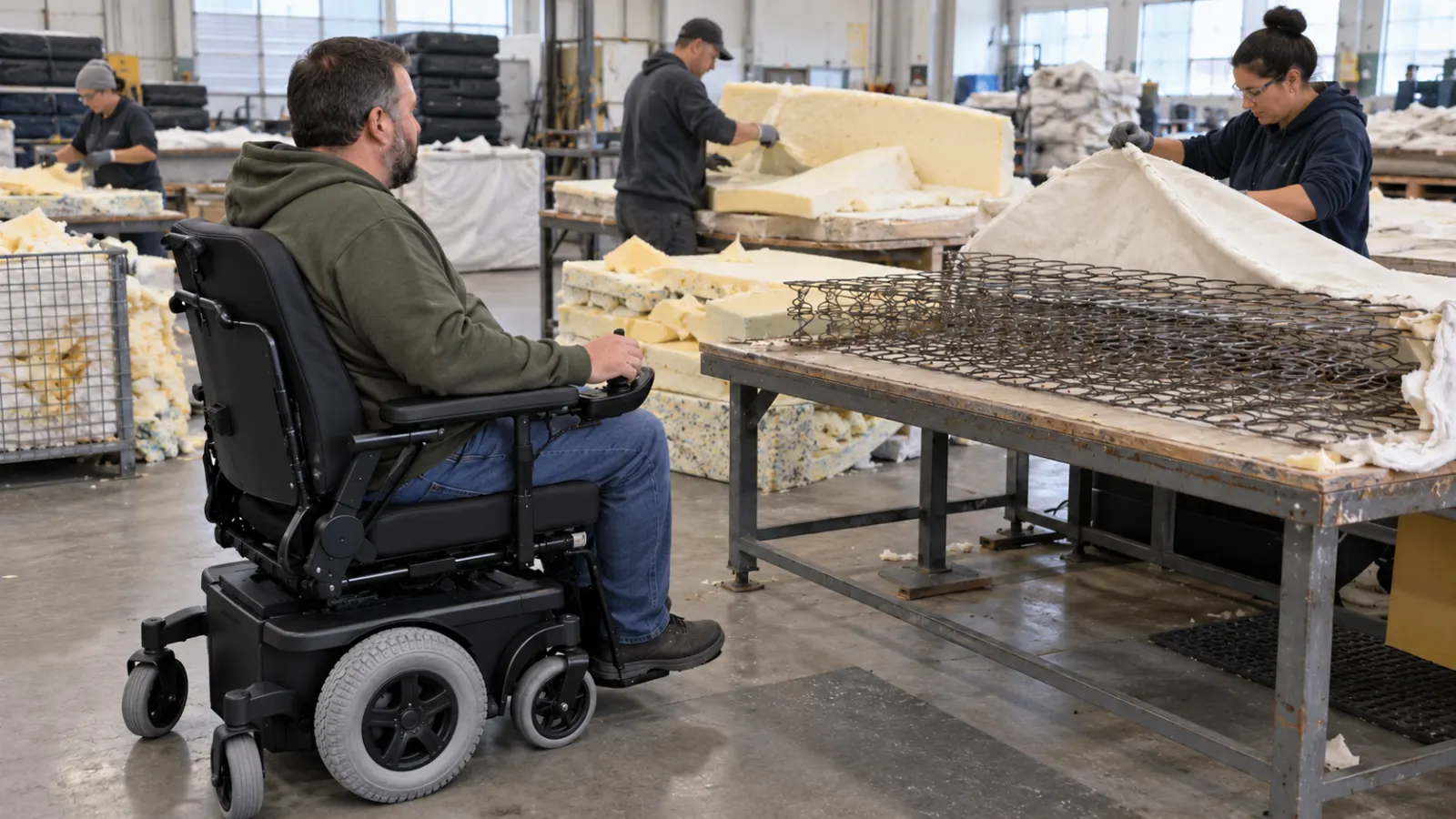
Mattress recycling and mattress disposal are not the same service. Recycling involves collecting the mattress for material recovery, while ordinary garbage disposal may send the item into the municipal waste system.
King County explains that mattresses contain potentially recoverable materials, including steel, foam, cotton, and wood. However, recovery rates and accepted mattress conditions vary between recycling providers.
Seattle’s municipal transfer stations accept mattresses for disposal. Do not assume the mattress enters a dedicated recycling process simply because the facility also accepts other recyclable materials.
If recycling is important to your decision, request a clearly identified recycling destination and written confirmation of the service.
- Does the provider accept mattresses for recycling rather than ordinary waste disposal?
- Which mattress types, sizes, and conditions are accepted?
- Does the quoted price include transport to the recycling facility?
- Can the provider identify which materials are recovered or the facility responsible for processing?
- Can the provider supply a collection receipt or other documentation?
Do not treat a general statement such as “eco-friendly mattress removal” as proof of recycling. Ask for the actual destination or processing arrangement, and record anything the provider cannot confirm.
Common Seattle Mattress Disposal Mistakes

Most avoidable disposal problems involve using the wrong service rules, overlooking separate items, or failing to confirm how the mattress must be presented for collection.
- Using the wrong service area: Do not apply King County solid-waste facility rules to a Seattle address without confirming eligibility.
- Leaving a mattress outside too early: Wait for scheduled pickup confirmation and follow the city’s setout instructions.
- Forgetting the box spring: A mattress and box spring may count as separate bulky items.
- Ignoring loading conditions: A private hauler may charge separately for stairs, interior carryout, or difficult access.
- Assuming transfer-station disposal means recycling: The city facility’s recycling services do not establish a dedicated mattress recycling outcome.
- Overlooking weather protection: Follow SPU’s rain-cover instructions and any additional preparation required by the receiving service.
- Using an outdated fee: Compare current official rates rather than relying on an old search snippet, screenshot, or third-party price list.
If a mattress is wet, contaminated, or potentially infested, disclose that condition to the provider before scheduling. Do not assume ordinary reuse or recycling acceptance applies.
Seattle Mattress Disposal for Apartments and Property Managers

For apartment buildings, property managers, and multi-unit housing teams, mattress disposal is often part of tenant move-out or property turnover.
SPU requires the person responsible for the utility account to arrange Special Item Pickup. Apartment residents should coordinate through the property manager or building owner rather than assuming they can independently schedule collection on the building’s account.
A simple building-level procedure can help reduce missed pickups and unexpected charges:
- Confirm the service area: Verify that the property’s solid-waste service and selected collection option cover the address.
- Record the item count: List each mattress, box spring, and other large item separately.
- Check the condition: Identify wet, damaged, or suspected infested mattresses before contacting the provider.
- Assign the booking owner: Identify the person authorized to schedule pickup and approve charges.
- Confirm the setout location: Make sure the collection vehicle can access the agreed location without relying on locked doors, keys, or restricted garages.
- Keep a record: Save the pickup confirmation, provider quote, item count, and receipt or completion record.
If your building has residents who cannot safely move a mattress to the required collection location, arrange appropriate assistance separately. Do not assume the city pickup service includes carrying large items out of an apartment or down stairs.
Seattle Mattress Disposal: Frequently Asked Questions
Will the City of Seattle Pick Up an Old Mattress?
Yes. Seattle Public Utilities lists mattresses and box springs under its Special Item Pickup service. An authorized utility account holder or property manager must arrange collection. The current posted large-item rate is $31 per eligible item.
How Much Does Mattress Disposal Cost in Seattle?
As of the published 2026 rate schedule, SPU lists large-item pickup at $31 per item. Seattle transfer stations list a $37 minimum charge per garbage-disposal trip, covering up to 420 pounds. Higher load weights and other applicable charges can affect the final amount. Private hauling and recycling prices depend on the provider.
Can You Drop Off a Mattress at a Seattle Transfer Station?
Yes. Seattle’s North and South transfer stations accept mattresses for disposal under the applicable facility rules and fees. Confirm current hours, transportation requirements, and the item’s condition before traveling.
Does a Seattle Transfer Station Recycle Mattresses?
Do not assume so. Official King County guidance distinguishes its dedicated mattress recycling facilities from Seattle transfer stations, which accept mattresses for disposal. If recycling is your objective, confirm a separate recycling arrangement and the receiving provider’s requirements.
Can Seattle Residents Use King County Transfer Stations?
King County’s ordinary solid-waste facility service area excludes the City of Seattle. For waste generated within Seattle, use the city’s applicable services or another provider that explicitly confirms acceptance. Do not rely on county mattress recycling fees without checking eligibility.
Final Checklist Before Scheduling Mattress Pickup or Drop-Off
Before arranging Seattle mattress disposal, confirm the following:
- Your exact address is covered by the chosen pickup or drop-off service.
- The provider accepts the mattress type, size, and current condition.
- The mattress and box spring have been counted separately where required.
- The current fee, payment method, and any additional charges are understood.
- Collection timing or transfer station opening hours are confirmed.
- Required wrapping, rain protection, and transport arrangements are clear.
- Any recycling or donation claim has been confirmed by the receiving organization.
- You have saved the booking information or provider’s written confirmation.
The simplest Seattle mattress disposal decision is usually between city pickup and city transfer station drop-off. Compare the actual item count, fees, and transport arrangements before choosing. If you want a verified recycling outcome rather than ordinary disposal, confirm that separately with an appropriate recycling provider.
Source review: October 22, 2026. This guide uses current Seattle Public Utilities pickup information, Seattle transfer station rates, and King County service-area guidance. Recheck fees, eligibility, and service conditions for your address before booking.
Video: Mattress Material Recovery — HandUp (Massachusetts Process Example)