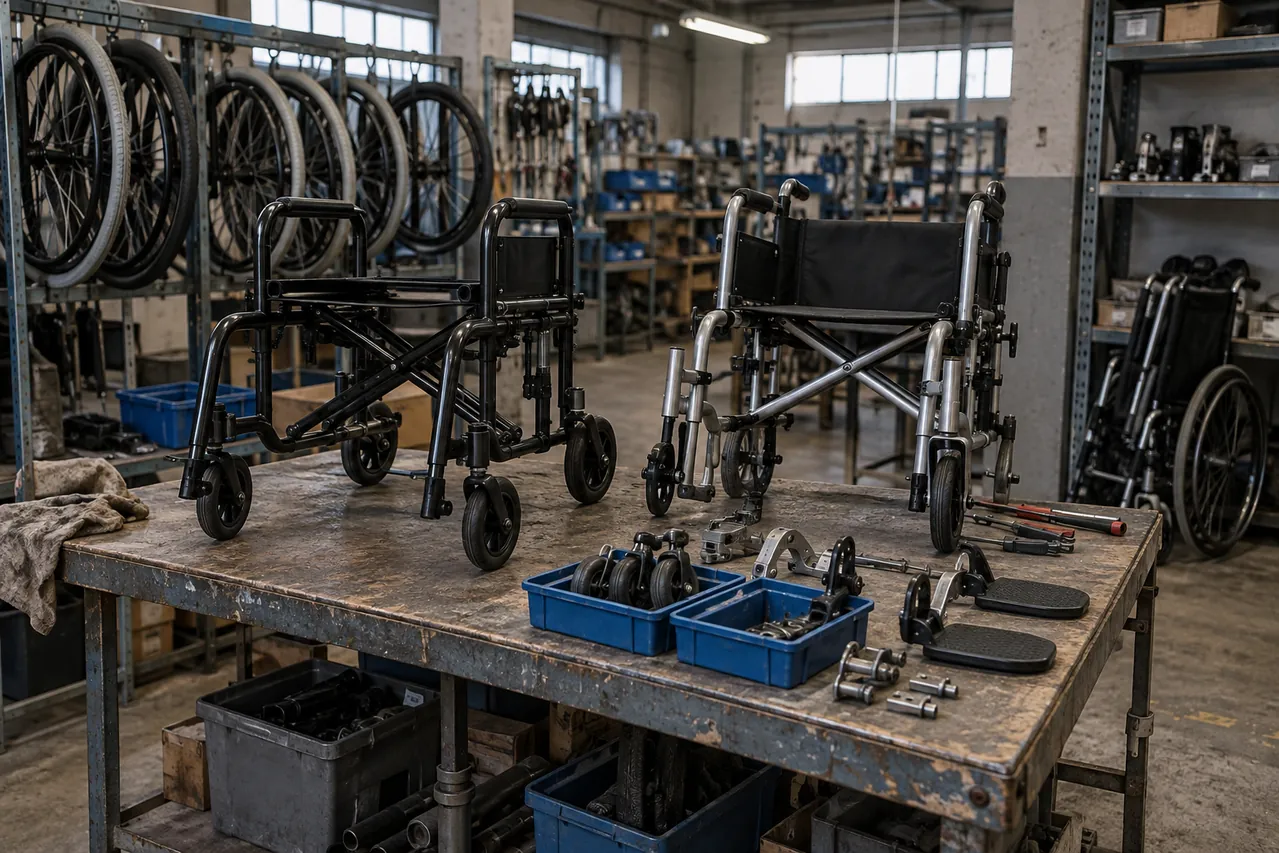
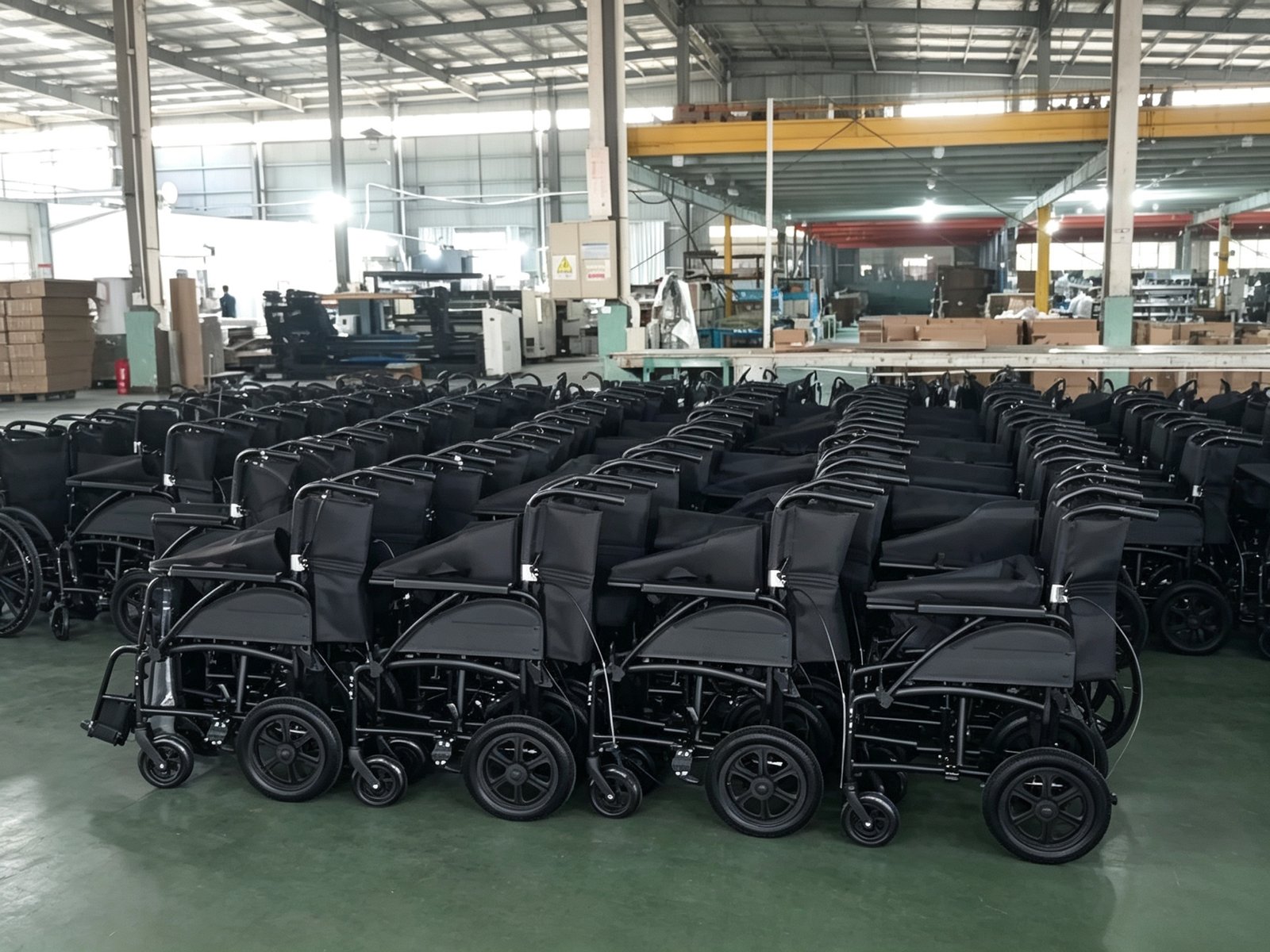
When comparing brushed vs brushless wheelchair motors, the main technical difference is how the motor switches electrical current to produce rotation. A brushed DC motor uses mechanical brushes and a commutator, while a brushless DC motor uses electronic commutation. Each technology can serve different design and commercial requirements.
For wheelchair distributors, importers and durable medical equipment (DME) buyers, the more important purchasing question is whether the motor, controller, battery, gearbox, braking system and service documentation form a verified power wheelchair configuration. A brushless label alone does not establish better range, lower noise, longer life or lower ownership cost.
This guide compares brushed and brushless electric wheelchair motors and explains six essential buyer checks covering motor identification, controller compatibility, battery integration, tested performance, after-sales service and destination-market documentation. It is intended for finished-wheelchair procurement, not consumer motor replacement or do-it-yourself electrical modifications.
Brushed vs Brushless Wheelchair Motors: Which Wheelchairs Are in Scope?
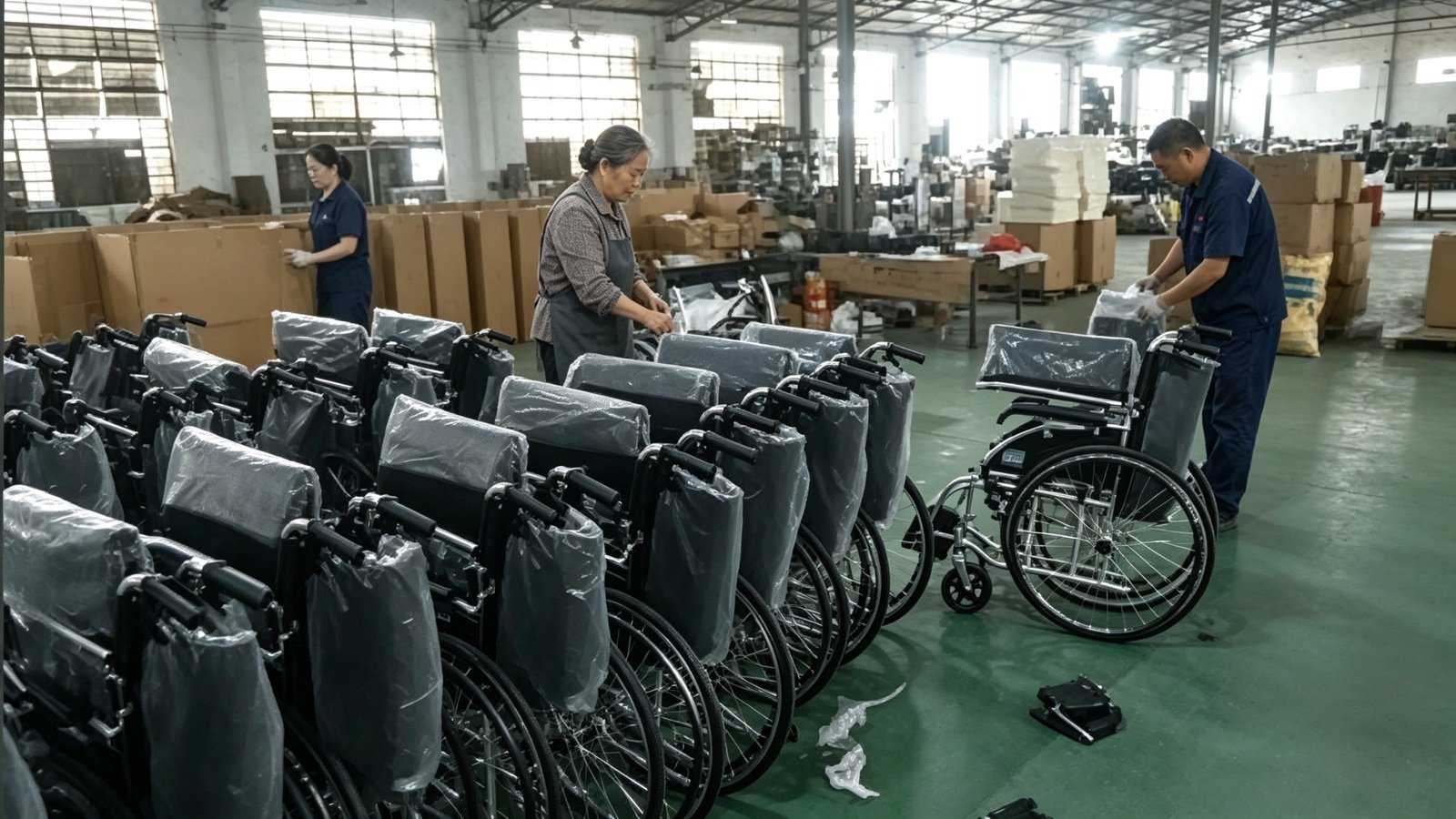
Before comparing motor technologies, confirm the wheelchair category. Brushed and brushless drive motors are relevant to powered mobility systems, not conventional unpowered manual or attendant-propelled transport chairs.
- Electric wheelchair or power chair: Uses a battery-powered drive system incorporating motors and electronic controls. This is the product category covered by this comparison.
- Manual wheelchair: Typically propelled by the user or an attendant without integrated powered propulsion. Add-on power-assist systems have separate technical requirements.
- Transport wheelchair: Generally attendant-propelled and not equipped with a motorized drive system.
The analysis below concerns motors installed in completed electric wheelchairs. It does not establish that a particular manual wheelchair power-assist kit or mobility scooter uses the same motor, controller or service arrangement.
For a distributor comparing finished products, begin with the electric wheelchair product category and request the current motor and controller configuration for the exact model under consideration.
Brushed vs Brushless Wheelchair Motors: Key Technical Differences

Both brushed and brushless motors convert electrical energy into mechanical motion. Their commutation methods differ, which can affect motor construction, control electronics, maintenance requirements and system design.
How Does a Brushed DC Wheelchair Motor Work?
A brushed DC motor uses physical brushes contacting a commutator to switch current through its rotating windings. This mechanical commutation process allows the motor to operate without the separate electronic commutation circuitry required by a brushless motor.
The presence of brushes introduces a potential wear mechanism. Depending on the motor’s construction and manufacturer’s service policy, brushes may be inspectable or replaceable, or the motor may be supplied as a non-serviceable assembly.
Do not assume that every brushed wheelchair motor requires routine field brush replacement. Request the exact maintenance manual and approved service parts list.
How Does a Brushless DC Wheelchair Motor Work?
A brushless DC motor uses electronically controlled switching of current through its windings. The commutation system is designed to energize the motor phases in the appropriate sequence, often using rotor-position feedback or a suitable sensorless method.
Because it does not use mechanical commutator brushes, a brushless motor avoids that specific wear mechanism. However, bearings, gearboxes, connectors, electronic components and other parts can still require inspection, maintenance or replacement.
The motor requires a compatible electronic commutation system, which may be integrated into the motor drive electronics or provided by a separate controller architecture.
Texas Instruments’ Brushless DC Motor Fundamentals explains the distinction between mechanical commutation in brushed motors and electronic commutation in brushless designs.
Wheelchair Motor Comparison Table
Use the following comparison as a technical discussion framework. It does not represent measured performance from any particular Wheelchairs Factory product.
Key distinction: Brushless does not automatically mean maintenance-free, and brushed does not automatically mean unreliable. The correct comparison uses manufacturer-supported system specifications and evidence from the complete wheelchair.
6 Essential Checks Before Buying Brushed or Brushless Power Wheelchairs
For distributors, importers and institutional purchasers, these six checks help separate verified specifications from motor-related marketing claims.
Check 1: Identify the Exact Motor and Gearbox Assembly
Ask the supplier to identify whether the specific wheelchair uses brushed or brushless motors and provide the motor manufacturer’s part number or another traceable identifier.
The documentation should distinguish a bare motor from an integrated geared motor or drive assembly.
Request:
- Finished wheelchair model and SKU.
- Motor manufacturer, part number and brushed or brushless designation.
- Number and arrangement of drive motors.
- Applicable nominal voltage and rated electrical information.
- Gearbox or transaxle assembly part number, where applicable.
- Installed motor configuration and relevant product revision.
If a supplier offers multiple motor options under the same wheelchair model name, ask whether those options are documented as separate configurations or revisions.
Do not assume that a replacement motor with the same advertised wattage or voltage is interchangeable with the original drive assembly.
Check 2: Verify the Matched Controller and Approved Configuration
A wheelchair motor must operate with a suitable drive controller. This requirement applies to both brushed and brushless systems, although their commutation arrangements differ.
For the exact finished-chair configuration, request:
- Controller manufacturer and model number.
- Power module and joystick or remote-control part numbers, where applicable.
- Applicable controller software or firmware version.
- Approved configuration or parameter revision.
- Motor and controller compatibility confirmation.
- Service diagnostics, fault-code references and authorized programming arrangements.
Brushless electronic commutation may be provided through dedicated electronics, while brushed motors can still require sophisticated wheelchair controllers for current limiting, directional control, braking and other system functions.
Therefore, do not assume that brushed controllers are always simple or that every brushless wheelchair has a separately programmable motor controller.
Where software configuration is relevant, confirm the approved versions and which personnel are authorized to change settings. A controller’s firmware version and its programmable operating parameters are not necessarily the same thing.
Check 3: Verify Battery, Current and Electrical Integration
The motor must be evaluated as part of the wheelchair’s electrical system. Battery voltage, available current, controller ratings, protection arrangements and wiring can all affect system compatibility.
Ask for the manufacturer-approved electrical configuration, including:
- Battery chemistry and installed battery part number.
- Nominal system voltage and the relevant operating range.
- Controller electrical ratings and applicable protection information.
- Motor electrical specifications under the manufacturer’s defined conditions.
- Connector, wiring and protection-system documentation.
- Approved charger and battery-to-controller compatibility.
Do not treat nominal wattage alone as evidence that the motor can safely operate with a proposed controller, battery or wiring arrangement.
If a buyer requests a motor or battery configuration change, ask the manufacturer whether the change requires additional engineering review, testing or revised documentation.
Check 4: Compare Whole-Chair Performance Under Defined Test Conditions
A supplier may claim that a brushless wheelchair is quieter, smoother, more efficient or capable of longer range than a brushed model. These claims should be supported by comparable test data.
Where the supplier provides performance comparisons, confirm:
- The exact wheelchair models and motor configurations tested.
- Battery type, capacity and state during testing.
- User or test load.
- Surface, route and environmental conditions.
- Operating speed and applicable drive settings.
- Measured parameter, test method and result.
- Whether the stated result comes from a complete wheelchair or only from a motor test bench.
For example, a motor supplier’s efficiency curve may help describe an individual motor’s behavior, but it does not directly establish the travel range of a complete power wheelchair.
ISO 7176-4:2008 provides a method for determining theoretical travel range using energy consumption measurements and the wheelchair battery’s nominal energy capacity.
That theoretical range should not be presented as a guaranteed real-world driving distance. The actual outcome can change with load, terrain, driving behavior, temperature and equipment condition.
If a supplier claims a noise or efficiency advantage, request the actual comparison conditions instead of accepting an unsupported percentage improvement.
Check 5: Confirm Braking, Safety and Complete-System Testing
Power wheelchair safety involves more than motor rotation. The control system must work with the vehicle’s approved drive and braking arrangements.
Many powered wheelchair systems incorporate motor-related parking brakes, controller-managed deceleration and defined freewheel procedures. The exact design and functional behavior vary by manufacturer.
For procurement, verify whether the motor assembly, controller and brake components have been assessed together in the complete product configuration.
Relevant international standards include:
- ISO 7176-14:2022: Requirements and test methods for powered wheelchair power and control systems, together with its applicable 2025 amendment.
- ISO 7176-21:2025: Requirements and test methods for electromagnetic compatibility of powered wheelchairs and relevant battery chargers.
- ISO 7176-2:2017: Test methods for dynamic stability of electrically powered wheelchairs.
- ISO 7176-4:2008: Energy consumption measurement for determining theoretical wheelchair distance range.
These standards address different aspects of complete-wheelchair performance. A motor datasheet or component certificate cannot automatically substitute for the applicable whole-chair test evidence.
Ask the supplier to identify the tested model, controller and motor configuration, relevant standard edition, report date and any limitations.
Safety note: Changing drive motors, controllers, firmware, braking parameters or wiring without manufacturer authorization can affect wheelchair operation and safety. This guide does not provide adjustment, programming or retrofit instructions.
Check 6: Verify Service Parts, Warranty and Regional Support
Distributors should compare the after-sales system rather than assuming one motor technology will always require less maintenance.
For brushed motors, confirm whether brushes are replaceable parts, how wear is assessed and which service personnel are authorized to perform maintenance.
For brushless motors, confirm the availability of replacement motors, compatible controllers, feedback sensors where fitted, drive electronics and other approved service parts.
Request:
- Manufacturer-approved maintenance schedule.
- Motor and gearbox replacement part numbers.
- Controller, brake and cable assembly part numbers.
- Availability of brushes or other wear parts where applicable.
- Fault-code references and service documentation.
- Warranty duration, scope and exclusions.
- Spare-parts lead times and regional service arrangements.
- Repair, replacement and return authorization procedures.
A brushless motor with no mechanical commutator brushes may still have expensive assembly-level service requirements. A brushed motor may be inexpensive to replace as a complete unit or may support approved component-level maintenance.
The correct comparison is based on actual replacement costs, documented maintenance requirements, regional support and expected equipment availability.
Why Motor, Controller, Battery and Brakes Must Be Verified Together
A power wheelchair drive system integrates multiple components. The motor provides mechanical output, but the controller, batteries, wiring and braking system determine how that output is managed within the finished wheelchair.
The controller may manage drive commands, current limits, acceleration, deceleration, fault responses and interfaces with the vehicle’s braking system. The actual functions depend on the manufacturer and system architecture.
For brushless drives, suitable electronic commutation is essential. For brushed drives, mechanical commutation does not eliminate the need for compatible vehicle-level drive control.
Use the following verification sequence for a complete wheelchair program:
- Identify the finished wheelchair SKU: Record the model, configuration and relevant production or serial revision.
- Identify the drive motors: Confirm brushed or brushless topology, motor part numbers and any associated gearbox assemblies.
- Identify the controller: Request approved controller part numbers, relevant software or configuration versions and compatibility documentation.
- Confirm electrical integration: Verify the installed battery, rated electrical system and manufacturer-approved connections.
- Confirm braking functions: Review how the approved motor, controller and parking brake arrangements work as one system.
- Review complete-chair evidence: Request applicable test reports and service documentation that cover the proposed product configuration.
Do not approve a controller substitution simply because two units use the same battery voltage. Electrical ratings, control architecture, communication methods, brake interfaces and configuration requirements can differ.
Similarly, replacing a brushed motor with a brushless motor should not be treated as a direct field upgrade. The original wheelchair may require a different controller, electrical architecture, service documents and additional manufacturer verification.
Any proposed modification should be assessed and approved by the responsible manufacturer before it becomes part of a production or service configuration.
Brushed vs Brushless Wheelchair Motors: Distributor Verification Checklist
Use these eight checkpoints before approving a motor configuration for distributor supply or institutional procurement.
- Motor identification: Does the manufacturer identify the exact brushed or brushless motor and drive assembly?
- Controller pairing: Are the installed controller, relevant software configuration and approved motor combination documented?
- Battery compatibility: Are the electrical system and approved battery configuration identified?
- Performance evidence: Are speed, range, noise, efficiency or other claims supported by stated test conditions?
- Service instructions: Does the supplier provide model-specific maintenance and authorized repair documentation?
- Replacement parts: Are compatible motors, controllers, brakes, connectors and applicable wear parts available for the intended market?
- Whole-chair traceability: Does the documentation identify the finished wheelchair model and relevant product revisions?
- Destination documentation: Are applicable product test records, labeling and market-specific requirements confirmed?
If the supplier cannot provide a particular document, record it as not supplied or pending confirmation. Do not replace missing technical information with assumptions about the motor type.
Motor Supplier Evidence Worksheet
For comparing two finished power wheelchair models, use one line for each verified specification.
A comparison is only meaningful when the measured conditions and quoted product configurations are equivalent. If one supplier provides motor-only efficiency data and the other provides whole-chair range data, those results should not be treated as directly interchangeable.
What to Include in a Power Wheelchair Motor RFQ
If you are requesting a quotation for an electric wheelchair distribution or private-label program, define the whole-chair requirements before comparing brushed and brushless motor options.
Include the following information in your request for quotation (RFQ):
- Wheelchair model or category: Specify the existing model or intended finished power wheelchair configuration.
- Motor preference: State brushed, brushless or open to both, and explain any specific performance or service requirement.
- Controller and drive system: Request the approved controller, motor, gearbox and braking configuration.
- Battery requirements: Specify the required battery type and ask for the manufacturer’s validated electrical system arrangement.
- Performance requirements: Identify the intended speed, range, user load and operating environment as product requirements for feasibility review.
- Destination market: State the countries, distribution channels and technical or regulatory documents needed.
- Commercial scope: Include sample quantity, initial order, estimated annual volume, target price band and delivery requirements.
- Service expectations: Request the relevant spare parts, approved maintenance procedures, warranty terms and regional technical support arrangements.
Ask the supplier to identify which requirements are supported by an existing documented model and which require additional engineering, production or regulatory review.
For B2B electric wheelchair sourcing, submit the model, estimated quantity, destination market and required supporting documents through the Wheelchairs Factory quotation request page.
Any particular brushed or brushless motor availability, configuration, customization, warranty commitment or documentation package must be confirmed in writing for the exact product. This article does not establish that every motor option is available across the current Wheelchairs Factory range.
Brushed vs Brushless Wheelchair Motors: Frequently Asked Questions
Are Brushless Wheelchair Motors Better Than Brushed Motors?
Not automatically. Brushless motors avoid mechanical commutator brush wear and may offer advantages in suitable designs. However, whole-chair performance depends on the motor, controller, gearing, battery, software configuration and intended operating conditions. Compare actual wheelchair test data rather than assuming a universal winner.
Do Brushed Wheelchair Motors Need Brush Replacement?
Some brushed motors have replaceable brushes, while others are maintained or replaced as complete assemblies. The manufacturer determines whether brush inspection or replacement is an approved service activity and whether an inspection interval applies.
Are Brushless Wheelchair Motors Maintenance-Free?
No. Brushless motors do not use mechanical commutator brushes, but the complete drive system can still contain bearings, gearboxes, electronics, sensors, connectors and braking components that require service. Review the exact manufacturer’s maintenance instructions.
Do Brushless Motors Make Electric Wheelchairs Quieter?
They can reduce some noise associated with mechanical commutation, but actual wheelchair noise also depends on the gearbox, motor mounting, wheel contact, controller strategy and operating conditions. Request comparable whole-chair noise measurements before making a marketing claim.
Can You Replace a Brushed Wheelchair Motor With a Brushless Motor?
Do not assume a direct replacement is possible. The electronic commutation requirements, motor controller, wiring, braking interfaces and operating configuration can differ. Any proposed conversion requires manufacturer authorization and appropriate engineering and safety verification. This article does not provide retrofit instructions.
Does a Brushless Motor Give a Power Wheelchair Longer Range?
Not necessarily. Range depends on the complete wheelchair system and test conditions. A motor may be efficient at a particular operating point, but that does not establish that the completed wheelchair will travel farther. ISO 7176-4 describes methods for determining theoretical travel range from wheelchair energy consumption and battery capacity.
Which Standards Should Distributors Request for Power Wheelchair Motors?
For applicable complete power wheelchairs, ISO 7176-14 covers power and control systems, ISO 7176-21 covers electromagnetic compatibility, ISO 7176-4 addresses energy consumption and theoretical range, and ISO 7176-2 addresses dynamic stability. The exact standards and destination-market obligations depend on the product and intended use. A reference to a standard does not establish that a model has passed its tests.
Final Buyer Checklist: Compare the Complete Drive System
Before approving a brushed or brushless electric wheelchair configuration for procurement, confirm the following:
- The exact wheelchair SKU and drive-motor topology have been identified.
- Motor, gearbox and controller part numbers are traceable to the approved product configuration.
- Battery and electrical system compatibility have been confirmed by the manufacturer.
- Controller configuration and any relevant software revision are documented.
- Braking and freewheel arrangements are included in the system review.
- Efficiency, noise, range and other performance claims are supported by appropriate test data.
- Applicable ISO 7176 and destination-market requirements have been reviewed.
- Authorized maintenance procedures and diagnostic information are available.
- Motor, controller, brake and other relevant spare-part support is documented.
- Warranty, pricing, lead time and service responsibilities are confirmed in writing.
Brushed vs brushless wheelchair motors is ultimately a complete-system procurement decision. Brushed motors use mechanical commutation and may involve brush-related maintenance. Brushless motors use electronic commutation and avoid mechanical commutator brushes, but their controllers and related components introduce their own design and service requirements.
For distributors and institutional buyers, neither topology should be selected solely from a marketing description. Request the exact wheelchair model, approved motor-controller-battery combination, relevant test evidence, service parts and commercial documentation.
The strongest supplier comparison is one that links every technical claim to a defined, traceable and manufacturer-supported finished-wheelchair configuration.
Source review: October 28, 2026. Technical references include Texas Instruments — Brushless DC Motor Fundamentals, ISO 7176-14:2022 — Power and Control Systems and its 2025 amendment, ISO 7176-21:2025 — Electromagnetic Compatibility, ISO 7176-4:2008 — Energy Consumption and Theoretical Distance Range, and ISO 7176-2:2017 — Dynamic Stability. These sources explain motor technology and applicable wheelchair testing frameworks. They do not verify the motor type, compliance status, performance or availability of any particular Wheelchairs Factory product. Confirm all specifications and supporting documents for the actual wheelchair model and destination market before purchasing.