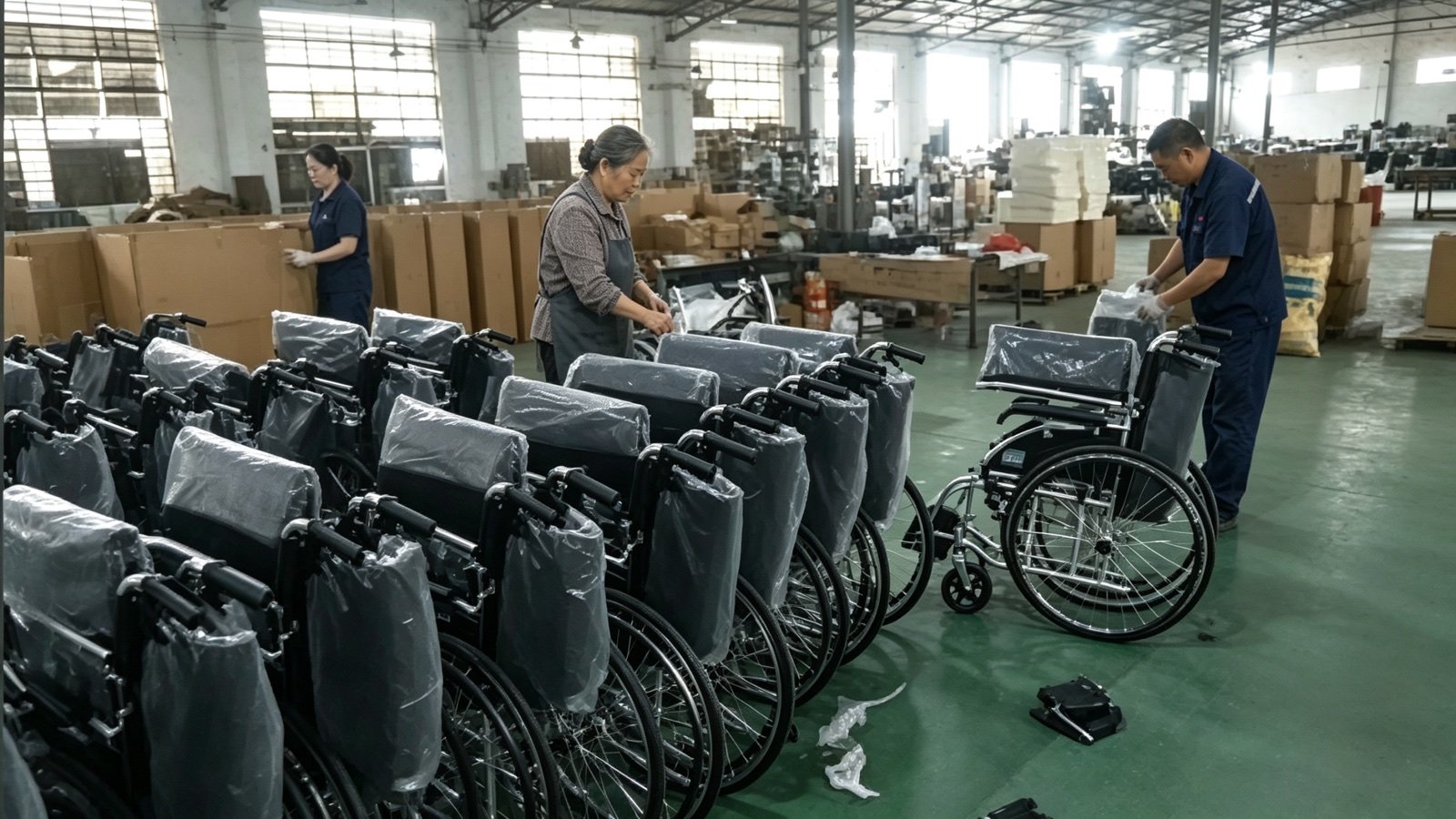

Export preparation is easier when the purchasing, production and logistics information is aligned before cartons reach the loading area. For wheelchair distributors and importers, a final review should connect the purchase order to the exact model mix, packaging instructions, destination requirements and shipping plan.
This practical workflow can be used as a discussion guide with the supplier and freight partners. The final checklist should always be adapted to the actual order and destination.
1. Freeze the model and quantity matrix
Start with one controlled order list. Record the model code, configuration, color or finish, accessories, quantity and any spare parts for each line. Where electric wheelchairs are included, identify the agreed battery, charger, controller position and plug or power-related requirement in the order record.
Use the same naming across the purchase order, quotation, packaging list and internal production reference. If a late change is necessary, update every affected document and confirm the revised version with the responsible parties.
2. Confirm packaging and label instructions
Packaging requirements should be agreed before final packing. Confirm the carton style, product protection, accessory placement, outer marks, handling symbols, model labels and any approved private-label artwork. If manuals or inserts are required, identify the language and final approved file.
Buyers should provide verified branding and label content. Suppliers should confirm how that content will be applied to the specific product and carton. A sample label or artwork proof can help both sides check spelling, model references and placement before the full batch is completed.
3. Align destination and document requests
Share the destination country, destination port, buyer or consignee information and the requested shipping terms early. The required documents may vary by product, market and transaction, so request confirmation for the actual order rather than relying on a general list.
Commercial documents, packing information and any product-related files should use consistent model names and quantities. The buyer remains responsible for checking current import and market requirements with the appropriate local parties.
4. Build the loading plan from carton data
Before booking transport, confirm carton dimensions, carton quantity, gross weight and total volume for the final order. Use these figures with the freight partner to plan the vehicle or container type, collection date, loading sequence and destination routing.
Mixed-model orders may need a clear loading map or carton numbering system so that the buyer can reconcile the shipment after arrival. Keep frequently checked labels visible where practical, and agree how the final loaded quantity will be recorded.
5. Agree the pre-shipment review
A pre-shipment review should focus on the agreed order, not assumptions. Confirm which evidence the buyer requires, such as finished-product photos, carton and label photos, quantity records, packing details or loading images. Any sample-based inspection method should be agreed before the review takes place.
If an issue is found, record the affected model or carton, the agreed corrective action and the responsible follow-up. A clear written record reduces confusion when several teams are involved.
Export preparation checklist
- Final model, configuration and quantity matrix
- Approved accessories, spare parts and electrical options
- Confirmed carton, protection, label and manual instructions
- Destination, consignee, shipping terms and port information
- Order-specific document request
- Carton count, dimensions, gross weight and volume
- Collection date, loading plan and agreed evidence
Preparing these points before loading gives the buyer, supplier and freight partners one shared reference. SANYANG can discuss the shipment plan after the wheelchair models, quantities, destination and packaging requirements are confirmed.