
OEM vs ODM wheelchair sourcing is a decision about more than branding and factory pricing. The practical differences involve who develops the product, who controls the design and bill of materials, who owns tooling, which company holds regulatory responsibilities, and how engineering changes are managed after production begins.
In a typical OEM wheelchair manufacturing project, the buyer or its engineering partner provides defined specifications that a factory uses for production. In a typical ODM wheelchair manufacturing project, the factory offers an existing product platform that the buyer may brand or configure within an agreed scope. However, suppliers use these commercial terms differently, and neither label automatically establishes legal manufacturer status or intellectual property ownership.
For wheelchair distributors, importers, durable medical equipment (DME) suppliers and institutional buyers, the right sourcing route depends on the product category, destination market, required customization, production volume and long-term service obligations. This guide covers seven essential checks before requesting a wheelchair OEM or ODM quotation.
OEM vs ODM Wheelchair Sourcing: What Is the Difference?
OEM (Original Equipment Manufacturing) commonly describes a contract manufacturing arrangement in which production is based on specifications agreed with the buyer. The buyer may provide detailed engineering drawings, product requirements, a bill of materials (BOM), and acceptance criteria.
ODM (Original Design Manufacturing) commonly describes an arrangement in which the supplier develops or controls the underlying product platform and offers it to buyers with agreed branding, accessory, appearance or configuration options.
These are commercial descriptions, not universal legal definitions. A project called OEM may include supplier engineering services. An ODM project may involve substantial customization. The actual division of responsibilities must be established in the specifications, quality agreement and commercial contract.
OEM vs ODM Wheelchair Manufacturer Comparison
Use the following comparison before discussing prices, development schedules or minimum order quantities.
The central distinction is design control, not simply whose logo appears on the wheelchair. An OEM arrangement can give a buyer greater control over specifications, while an ODM arrangement may reduce some early development work. Neither automatically provides exclusive ownership, regulatory approval or guaranteed shorter lead times.
7 Essential Checks Before Requesting an OEM or ODM Wheelchair Quote

Before requesting a price, prepare a consistent set of requirements. This helps prevent suppliers from quoting different product configurations under the same broad OEM or ODM description.
1. Which Wheelchair Category and Destination Market Are You Targeting?
Begin with the wheelchair category: manual, transport or electric. Specify the intended product use, distribution channel and destination countries.
These details affect product design, applicable requirements, labeling, documentation and after-sales planning.
- Which wheelchair type and model family does the project cover?
- Is the product intended for retail distribution, DME supply, healthcare procurement or another channel?
- Which countries will receive the product?
- What intended-use claims, user-capacity ratings and configuration requirements must the product meet?
- Which destination-market regulatory documents and languages are required?
Do not assume that a wheelchair already sold in one market is automatically eligible for sale in another. Regulatory classification, registration, labeling and technical documentation requirements must be checked for the actual market and model.
2. Who Owns and Controls the Product Design?
For an OEM project, identify whether your business already has a production-ready specification. For an ODM project, identify which elements belong to the supplier’s existing platform.
Ask who controls the engineering drawings, CAD files, critical dimensions, approved materials and bill of materials.
- Who originated the design and who has the right to authorize changes?
- Which drawings and BOM revisions define the production configuration?
- Can the buyer review changes to safety-related components before approval?
- Which engineering files can be shared with the buyer, and under what confidentiality terms?
- Who maintains the master approved specification after launch?
A buyer providing a design does not automatically own every manufacturing process developed by the factory. Similarly, using an existing ODM platform does not automatically prevent agreed product exclusivity or custom development.
Define the ownership and permitted use of buyer-supplied materials, supplier background IP, and any jointly developed design elements in writing.
3. Are the Requested Changes Cosmetic, Configurable or Structural?
Not all customization requests have the same technical or regulatory impact. A carton artwork change is different from modifying a wheelchair’s frame geometry or rated load capacity.
Group proposed changes into clearly defined categories:
- Branding and packaging: Logo placement, carton artwork, labels, color presentation and manuals.
- Approved configuration options: Supplier-supported seat widths, armrests, footrests, caster options and compatible accessories.
- Structural or functional changes: Frame construction, folding mechanisms, user-capacity changes, braking systems or other performance-related features.
- Powered-system changes: Battery, motor, controller, charger, wiring, software or operating characteristics of an electric wheelchair.
Ask the factory which changes already exist as approved options and which require engineering review, revised technical documentation, additional testing or regulatory assessment.
A customized appearance does not establish a newly validated product configuration. Conversely, an apparently small component substitution can affect existing verification records if that component is relevant to safety or performance.
4. Who Holds the Regulatory Responsibilities?
This question must be resolved separately from the OEM or ODM business label.
Identify which organization is the legally responsible manufacturer in the destination market, which organization performs the physical manufacturing, and which parties act as importers, distributors, authorized representatives or other regulated entities.
United States: FDA Establishment and Manufacturing Roles
The U.S. Food and Drug Administration distinguishes several activities, including contract manufacturing, specification development, relabeling, and initial importing.
According to the FDA’s establishment registration guidance, a contract manufacturer produces a finished medical device to another establishment’s specifications. A specification developer develops device specifications and arranges manufacturing by another organization.
These roles can carry different registration, listing, quality-system and premarket responsibilities. The exact requirements depend on the device, applicable classification and actual activities.
On February 2, 2026, the FDA’s Quality Management System Regulation (QMSR) became effective. The updated regulation incorporates ISO 13485:2016 by reference into the U.S. medical device quality-system framework.
Do not automatically assume that every wheelchair model requires a 510(k) submission. Review its actual classification, applicable exemptions and requirements. Likewise, FDA establishment registration or device listing is not FDA approval or clearance.
European Union: MDR and Private-Label Responsibilities
Under Regulation (EU) 2017/745 (MDR), the applicable manufacturer, importer, distributor and authorized representative responsibilities depend on the legal arrangement and how the device is placed on the market.
Article 10 describes general manufacturer obligations, including responsibilities for conformity, technical documentation, risk management and applicable post-market activities.
Article 16 identifies situations in which an importer, distributor or other party may assume manufacturer obligations, including marketing a device under its own name or trademark, changing its intended purpose, or making changes that may affect compliance.
There is a specific exception for certain private-label arrangements where a manufacturer is identified as such on the label and an agreement assigns the applicable manufacturer responsibilities to that manufacturer.
Therefore, a distributor should not assume that buying an existing ODM wheelchair and adding its logo automatically leaves all regulatory responsibilities with the factory. Confirm the intended labeling arrangement, responsible legal entity and supporting documentation before the product enters the destination market.
See the European Commission’s Economic Operators guidance for an overview of these roles.
5. Who Pays for and Owns Tooling and Intellectual Property?
An OEM project may require tooling, welding fixtures, molds, gauges or other production equipment that is not available for an existing design.
An ODM project may use existing tooling, but exclusive configurations and structural changes can still create additional engineering or tooling charges.
Before paying a tooling charge, confirm:
- Which tools or fixtures are being purchased or modified?
- Is the charge a one-time engineering fee, a tooling purchase or a nonrefundable development charge?
- Who owns the physical tooling after payment?
- Where will the tooling be stored and maintained?
- Can the tooling be transferred to another approved supplier, and under what conditions?
- Who may use the tooling for other customers or products?
- What happens to tooling and engineering records when the project ends?
Tooling ownership and product design rights are separate issues. Paying for a mold or fixture does not necessarily transfer ownership of underlying CAD models, manufacturing know-how or third-party intellectual property.
For private-label buyers, also confirm any agreed territory protection, exclusivity period, minimum purchase commitments and rights to use the developed product with a second supplier.
6. What Verification, Sample Approval and Quality Records Are Available?
A sample can help buyers verify appearance, fit, configuration and assembly consistency. However, visual inspection of a sample is not proof of structural durability, regulatory conformity or production consistency.
Request a documented development and approval process appropriate to the product:
- Approved product requirements and model-specific specifications.
- Prototype or pre-production sample plan.
- Applicable design verification and test evidence.
- Documented sample review and acceptance criteria.
- Pilot production or first-article inspection arrangements, where appropriate.
- Production quality controls and a process for recording nonconformances.
- Change approval procedures before shipment and repeat orders.
For wheelchair testing, one important reference is ISO 7176-8:2014, which addresses static, impact and fatigue strength requirements for applicable manual and powered wheelchairs.
ISO 7176-5:2008 provides methods for determining dimensions and mass. For applicable electric wheelchair systems, ISO 7176-14:2022 addresses requirements and tests for powered and control systems.
These references do not establish that a particular wheelchair has passed testing. Request documents that identify the tested manufacturer, model, configuration, test methods and relevant report results.
For medical device quality systems, ISO 13485:2016 provides a recognized framework. ISO 14971:2019 addresses medical device risk management. Their applicability should be reviewed in the context of the target market and product.
An ISO 13485 certificate is not a product-level approval. Likewise, test evidence for one wheelchair configuration should not automatically be applied to a substantially modified ODM variant without a documented assessment.
7. What Are the Actual MOQ, Total Cost and After-Sales Obligations?
Compare the full project rather than only the factory’s advertised unit price.
Depending on the agreement, total sourcing costs may include engineering work, tooling, sample charges, testing, documentation, packaging, production inspection, shipping and after-sales spare parts.
Ask suppliers to itemize:
- Minimum order quantity (MOQ) by model and configuration.
- Unit prices at defined quantity bands.
- Sample, tooling and nonrecurring engineering charges.
- Test, validation and destination-market documentation costs where applicable.
- Packaging specifications, carton quantities and shipping terms.
- Sample, production and delivery lead times.
- Payment terms, quotation validity and the applicable Incoterms rule.
- Warranty scope, replacement parts, service manuals and technical support.
- Repeat-order pricing and change-control procedures.
An ODM project using an existing platform may reduce initial engineering requirements. However, private labeling, regulatory documentation, customized packaging and minimum production quantities can still influence its total cost.
An OEM project may require a larger early investment but can support a more buyer-controlled product specification when the necessary rights, technical resources and commercial arrangements are established.
Neither option is automatically cheaper. Request quotations using equivalent specifications, annual volume assumptions and after-sales obligations before comparing them.
OEM and ODM Requirements by Wheelchair Category
OEM and ODM sourcing questions become more specific when the wheelchair category is defined. Do not treat a manual wheelchair, an attendant-propelled transport chair and an electric power wheelchair as interchangeable product platforms.
Manual Wheelchair OEM vs ODM Sourcing
Manual wheelchair projects may involve frame material, frame geometry, seat dimensions, rear-wheel arrangements, caster types, brakes, folding mechanisms and accessories.
For OEM sourcing, an engineering-ready specification may include frame drawings, structural requirements, materials, approved component lists and documented acceptance criteria.
For ODM sourcing, buyers may start with an existing manual wheelchair model and select from the manufacturer’s approved options.
Before quoting either arrangement, confirm:
- Whether the frame is rigid or folding.
- Available seat widths and depths.
- Frame materials and finish options.
- Compatible wheel, caster and brake configurations.
- Declared occupant weight capacity and relevant test records.
- Replacement parts and service documentation.
Do not assume that changing a caster, wheel assembly or frame dimension is only a cosmetic modification. Ask whether the configuration is already included in the manufacturer’s documented product range.
Transport Wheelchair OEM vs ODM Sourcing
Transport chairs are generally designed for attendant propulsion and often use smaller rear wheels than self-propelled manual wheelchairs.
An existing ODM transport chair may provide a starting point for approved color, upholstery, footrest or packaging options. OEM sourcing may be appropriate when a buyer requires a defined structural design or a configuration unavailable in the supplier’s current platform.
Focus on folding mechanisms, frame structure, wheel locks, footrests, complete-chair weight, folded dimensions and product documentation.
Do not assume that a transport chair has lower safety or regulatory requirements simply because it uses smaller wheels or lacks a powered drive system. Confirm the requirements that apply to its intended use and market.
Electric Wheelchair OEM vs ODM Sourcing
Electric wheelchair sourcing includes the powered drive system as well as the frame and seating arrangement. Batteries, motors, controllers, wiring, chargers and electronic interfaces can create additional development and verification responsibilities.
For an ODM electric wheelchair, request the exact base-platform specification and identify which component choices are already documented and approved by the manufacturer.
For an OEM electric wheelchair, establish who is responsible for system integration, electrical safety considerations, control-system requirements, software versions and validation records.
Relevant supplier questions include:
- Which battery, motor, controller and charger combinations are supported?
- Who controls firmware or software revisions, where applicable?
- How are critical component changes approved and recorded?
- Which test reports apply to the exact powered configuration?
- Which replacement parts and diagnostic procedures are available?
- Which battery transport and destination-market requirements apply to the selected model and shipment?
Do not assume that an existing ODM platform’s test records automatically cover a different battery, controller, motor or power-system configuration. The responsible technical and regulatory parties should assess the change before approval.
Pre-RFQ Verification Checklist for Wheelchair OEM and ODM Projects
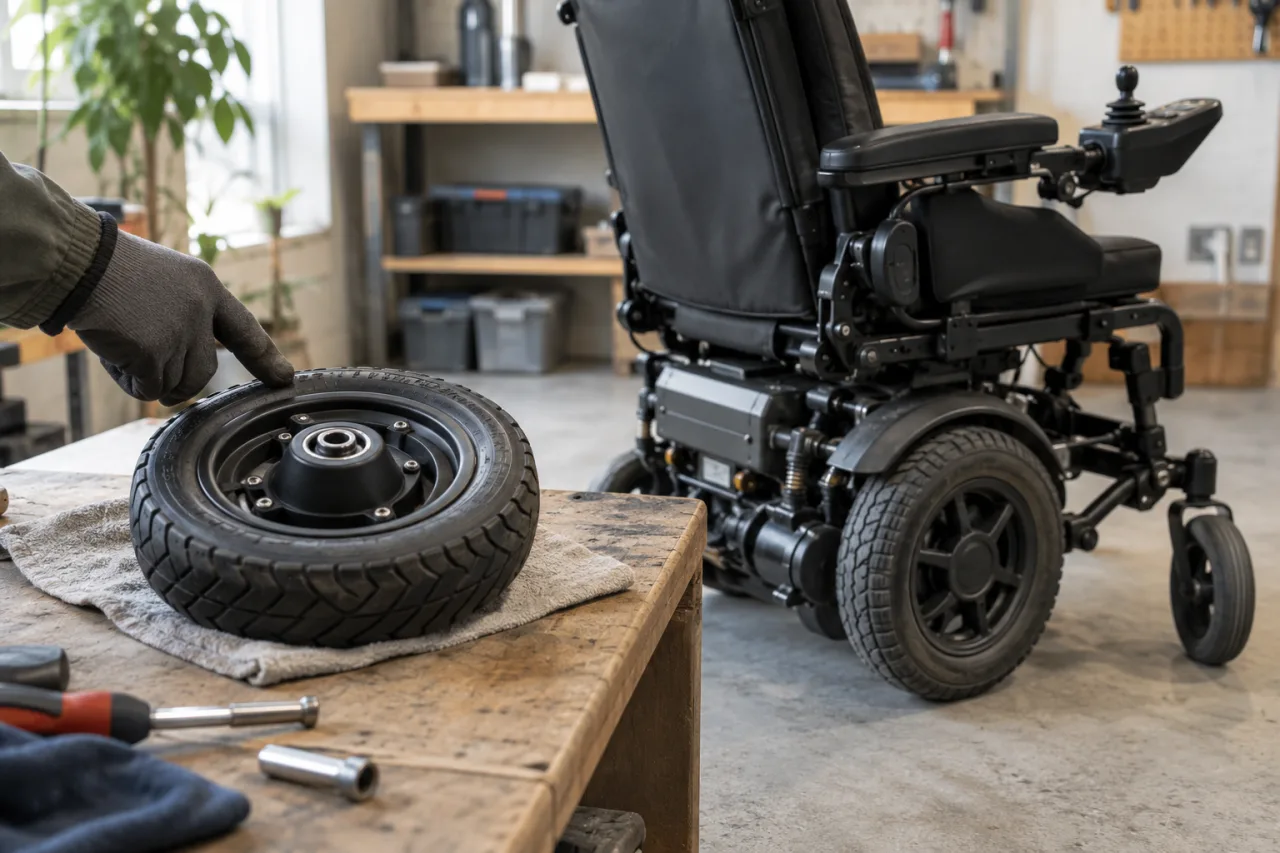
Use these six documentation groups to organize the results of the seven buyer checks before sending a formal request for quotation (RFQ).
- Product scope: The wheelchair category, intended market, product positioning and required configuration are clearly defined.
- Design control: The source of drawings, BOM, technical specifications and approval authority is documented.
- Customization: Branding, selectable options, structural changes and powered-system modifications are identified separately.
- Regulatory roles: The proposed legal manufacturer, importer, distributor and documentation responsibilities are identified for each target market.
- Verification: Sample acceptance criteria, model-specific testing, quality records and engineering-change controls are defined.
- Commercial and service: Tooling terms, IP rights, MOQ, pricing, lead time, warranty and spare-parts obligations are available for written review.
If the manufacturer cannot confirm a point at the inquiry stage, label it as pending feasibility review rather than treating the requirement as approved.
This is especially important for destination-market documentation, structural modifications and electric wheelchair configurations.
How to Review an OEM or ODM Wheelchair Supplier’s Documents
A supplier may provide a catalog, general company certificates or test documents during early discussions. The buyer still needs to establish whether those records apply to the actual model and intended transaction.
Use the following document comparison when evaluating supplier responses.
For U.S. sourcing, the FDA explicitly states that establishment registration and device listing do not themselves demonstrate FDA clearance, approval or authorization. Review the actual device classification and applicable marketing requirements rather than accepting a registration screenshot as a product certificate.
Official reference: FDA — Important Reminders About Registration and Listing.
For EU sourcing, confirm the applicable MDR conformity assessment route, manufacturer identification, technical documentation responsibilities and any importer or authorized representative obligations.
Specific documents may be unavailable for an uncompleted development project. In that case, identify which party must create them, the applicable milestones and the acceptance criteria before commercial release.
What Should Be Included in Your First Wheelchair OEM or ODM RFQ?
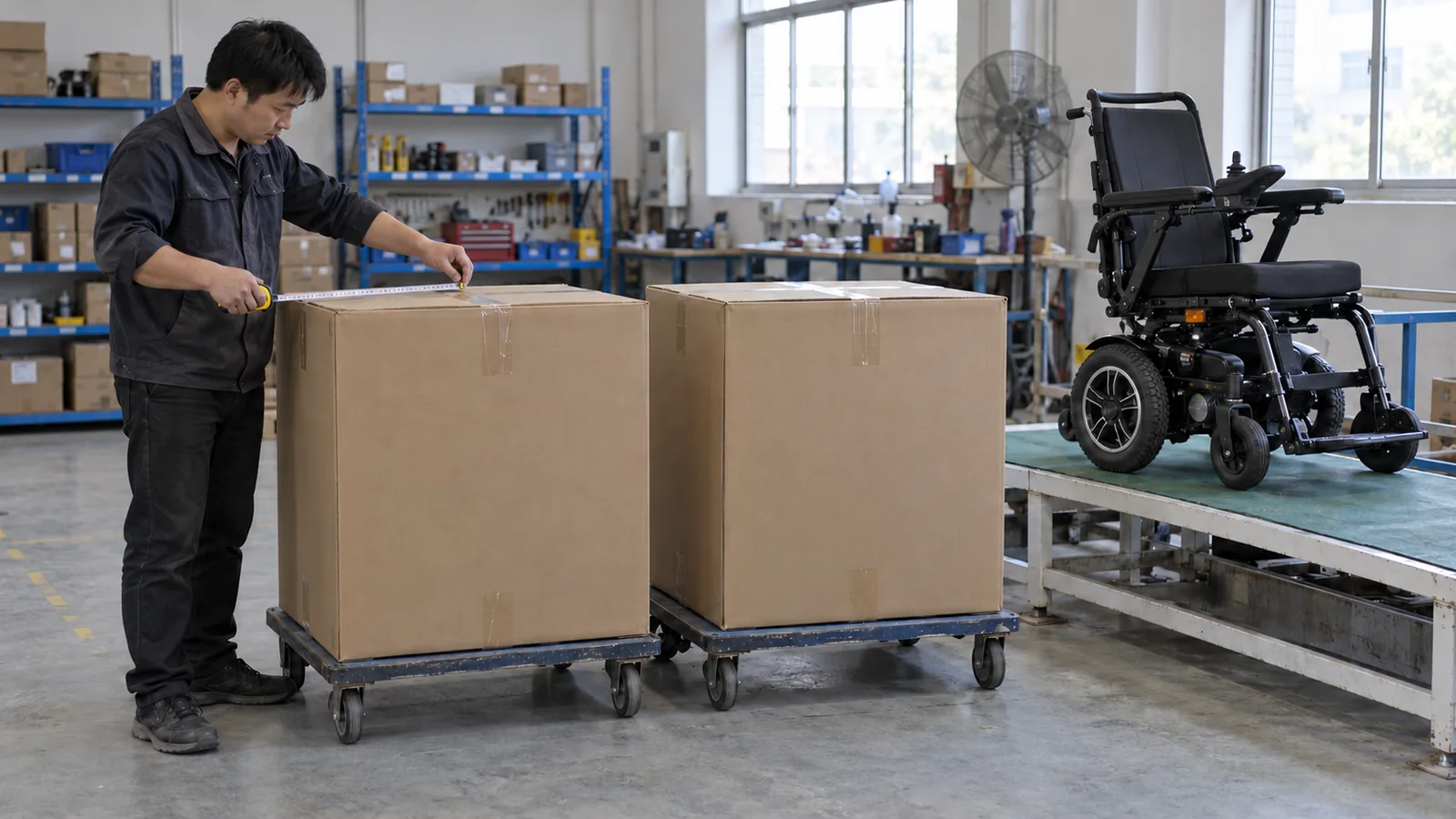
An effective RFQ gives the manufacturer enough information to screen technical feasibility, product documentation and commercial requirements without relying on assumptions.
Include the following project information:
- Buyer and destination: Business type, destination country, intended distribution channel and relevant market requirements.
- Product category: Manual, transport or electric wheelchair, with the preferred model or intended use.
- Design source: Existing buyer-owned design, defined OEM requirements or proposed ODM platform.
- Required changes: Branding, colors, seat configurations, accessories, structural changes, electric components or packaging.
- Technical and regulatory documents: Required specifications, test evidence, labeling, service documents and market-specific requirements.
- Volume and timeline: Estimated initial quantity, annual demand, sample needs, target approval date and expected delivery window.
- Commercial and service conditions: Target price band, delivery destination, tooling expectations, spare-parts support, warranty and inspection requirements.
RFQ Information Worksheet
The following worksheet can be used internally before submitting a supplier inquiry.
Use not confirmed or requires supplier assessment for unknown items. Do not invent an MOQ, certification, production capability or engineering lead time merely to make the RFQ appear complete.
Wheelchairs Factory OEM and ODM Inquiry Process
Wheelchairs Factory provides an OEM and ODM sourcing information page for distributors, importers and private-label buyers evaluating wheelchair configurations, branding, packaging and documentation.
The process begins by identifying the intended destination market, product or model, estimated order quantity, required changes and supporting documents.
Buyers can submit these requirements through the Wheelchairs Factory quotation request form. The feasibility of any particular customization, tooling arrangement, document package, lead time or service commitment must be confirmed for the selected project.
The inquiry process is intended to establish an accurate product and commercial scope. It should not be treated as a guarantee that every OEM or ODM request can be manufactured or supplied.
OEM vs ODM Wheelchair Sourcing: Frequently Asked Questions
What Is the Difference Between an OEM and ODM Wheelchair Manufacturer?
In a typical OEM arrangement, a factory manufactures a wheelchair according to defined buyer or customer specifications. In a typical ODM arrangement, the supplier provides an existing design platform with agreed configuration or branding options. Actual design ownership, quality responsibilities and manufacturing scope must be documented in the contract.
Is OEM Wheelchair Manufacturing Always More Expensive Than ODM?
No. An OEM project can require additional engineering, tooling and verification costs, while an ODM platform may reduce some development work. However, ODM customization, regulatory documentation, minimum order quantities and commercial terms can still create substantial costs. Compare equivalent project requirements rather than assuming one route is always cheaper.
Does Private Labeling Make the Buyer the Legal Manufacturer?
Not automatically in every jurisdiction, but private labeling can change regulatory responsibilities. In the EU, MDR Article 16 identifies circumstances where a distributor or importer assumes manufacturer obligations, along with defined exceptions. In the United States, the FDA distinguishes activities such as specification development, contract manufacturing, relabeling and importing. Review the actual market requirements and labeling arrangement before finalizing the contract.
Can an Existing ODM Wheelchair Be Customized Without New Testing?
That depends on the change and the existing evidence. A supplier-approved configuration may already fall within the documented product scope, while structural, load-related or powered-system changes may require further verification or regulatory assessment. Request a written change assessment rather than assuming that existing test reports automatically cover a modified product.
Does ISO 13485 Certification Mean a Wheelchair Is Approved for Sale?
No. ISO 13485 is a medical device quality management system standard. Certification may provide evidence about the scope of an organization’s quality management system, but it is not a product approval or proof that a particular wheelchair meets every destination-market requirement.
Who Owns OEM Wheelchair Tooling and Drawings?
Ownership depends on the applicable intellectual property rights and written agreements. Paying for tooling does not necessarily transfer the supplier’s background engineering or manufacturing knowledge. Define ownership, permitted use, access, maintenance and transfer rights before making tooling payments.
What Should a Wheelchair Distributor Send for an OEM or ODM Quote?
Provide the wheelchair category, destination market, design source, required configuration, estimated quantity, target timeline, packaging requirements and documentation needs. Identify any special tooling, intellectual property or after-sales expectations. A structured RFQ allows suppliers to evaluate feasibility and quote a clearly defined product.
Final Buyer Checklist: Confirm Responsibilities Before Production
Before choosing between an OEM and ODM wheelchair manufacturing arrangement, confirm that the following points are documented:
- The product category, intended use and destination markets are defined.
- OEM and ODM terms have a clear project-specific meaning.
- Design ownership, approved drawings, BOM and revision control are established.
- Branding changes, approved configurations and structural modifications are distinguished.
- The applicable legal manufacturer and other regulatory roles are identified.
- Model-specific technical and quality records are available or assigned as development deliverables.
- Tooling payment, ownership and intellectual property rights are addressed in writing.
- Sample and pilot approval criteria are agreed before mass production.
- MOQ, price, packaging, lead time and shipping terms are tied to the approved specification.
- Spare parts, warranty, service records and engineering-change responsibilities are defined.
OEM vs ODM wheelchair sourcing is ultimately a question of design control, regulatory responsibility and commercially sustainable production. OEM may be suitable when a buyer has defined product requirements and needs greater control over the design. ODM may be suitable when an established platform meets the intended requirements and customization can remain within an agreed technical scope.
Neither route should be approved solely because of a lower quoted unit price, faster promised launch date or broad certification claim. For wholesale and institutional programs, compare exact models, documentation, manufacturing responsibilities, quality evidence and long-term service obligations.
For a project-specific review, submit the wheelchair category, destination country, estimated quantity and required documents through the Wheelchairs Factory RFQ form. All product configurations, manufacturing capabilities and commercial terms remain subject to written feasibility review.
Source review: October 28, 2026. Regulatory and technical references include the FDA Quality Management System Regulation, FDA Establishment Roles, EU Medical Device Regulation 2017/745, ISO 13485:2016, ISO 14971:2019, ISO 7176-8:2014, ISO 7176-5:2008, and ISO 7176-14:2022. These sources establish general regulatory and technical principles; they do not certify any specific Wheelchairs Factory product or confirm a particular supplier’s manufacturing capability. OEM/ODM roles, documentation, intellectual property and commercial obligations must be verified for each contract and destination market.